Non-surgical · custom fit
Effective after adaptation
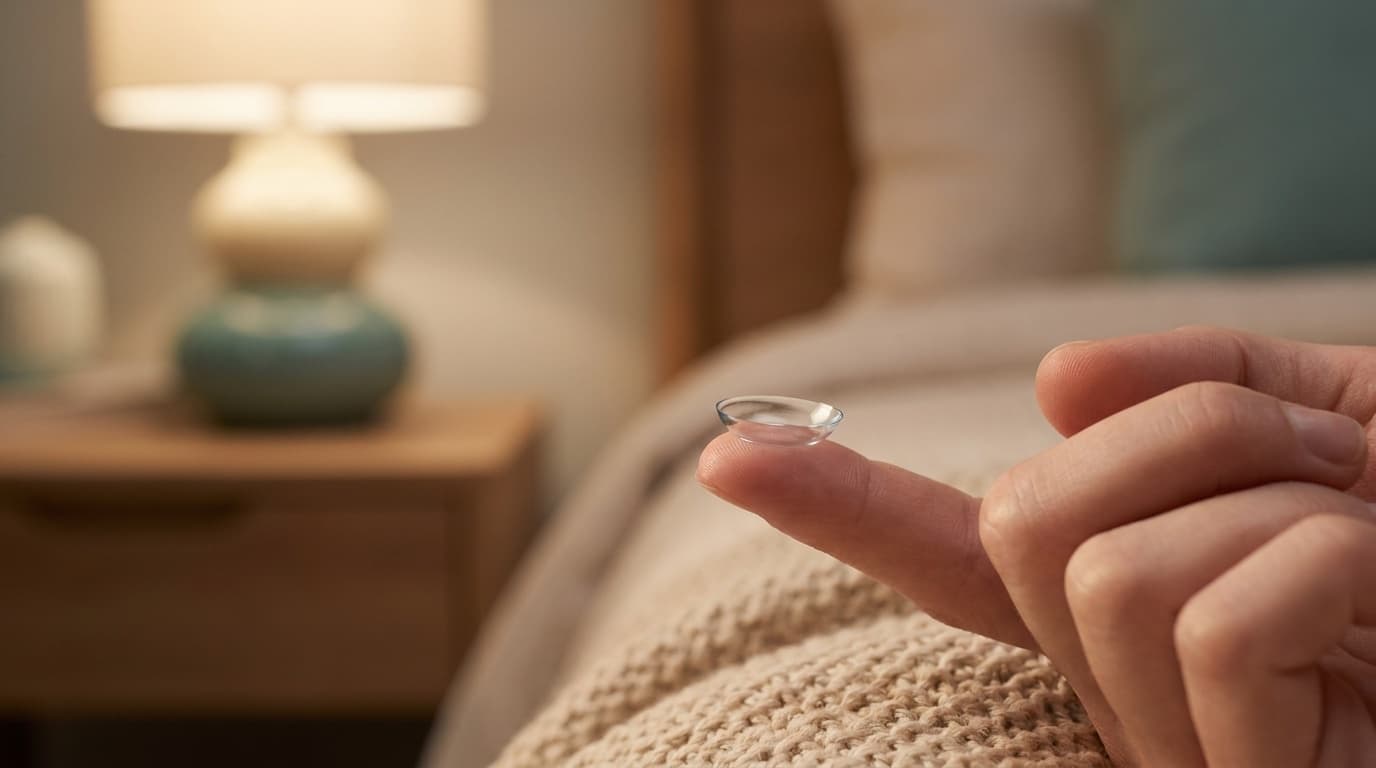
Imagine opening your eyes in the morning and the world is already in focus. Dream Lens — ortho-k, or orthokeratology — is a non-surgical method worn only while you sleep, gently reshaping the cornea so you spend the day without glasses or contacts. It's an especially meaningful choice for those not yet ready for surgery or wary of it, and for growing children whose myopia is still progressing. Because nothing is cut and the effect is reversible — the cornea returns to its original shape when you stop — it gives real peace of mind to patients and parents alike.
A special lens worn while sleeping temporarily reshapes the cornea so you can go glasses-free during the day. Great for those wary of surgery and for myopia control in growing children.
- Non-surgical
- Myopia control
- Suitable for children
Is it right for me?
A good fit if
- Those not yet of an age for surgery, or wary of vision-correction surgery itself — a good fit if you want a knife-free, reversible approach.
- Parents of growing children whose myopia is advancing quickly — overnight wear can help slow how fast the myopia progresses.
- Anyone who wants to play sports, swim, or be outdoors glasses-free during the day — especially handy for active students and working adults.
- Those with low-to-moderate myopia and a suitable cornea — the achievable range depends on your prescription and corneal curvature and shape, confirmed precisely by exam.
- Those who can keep up with hygiene and regular check-ups (or, for a child, a guardian who helps) — daily cleaning and storage habits are central to safe use.
Consider carefully if
- With high myopia, or astigmatism or corneal shape outside the workable range, ortho-k alone may not be enough, and we'd look at other options together.
- If you have dry eye, conjunctival or corneal inflammation, or frequent eye conditions, we first settle the eye's condition and then reassess suitability.
- If your lifestyle makes nightly consistent wear and hygiene hard to keep up, we'll honestly suggest a different method for the sake of effectiveness and safety.
1What Dream Lens is, and how it differs from surgery
Dream Lens is a specialized rigid lens worn overnight that gently presses the corneal surface to reshape it temporarily. Remove it in the morning and you keep clear vision through the day; stop wearing it and the cornea returns to its original shape gradually over a few days. Unlike LASIK, LASEK, or SMILE, which remove corneal tissue, it doesn't permanently alter tissue — being reversible is the key difference. That's why it suits growing children whose prescription may still change, and anyone who doesn't want a permanent change.
2Precise exam and custom lens design — why accuracy matters
The effectiveness and safety of Dream Lens depend on how accurately we read the cornea. I review the curvature and shape with corneal topography, together with your prescription, tear film, and pupil size, then design a lens made for that eye alone. Even a small mismatch in curvature can leave daytime vision unstable or cause more foreign-body sensation, so the first design matters most. After fitting, I watch how the cornea responds and fine-tune as needed, refining it until it sits as naturally as possible on your eye.
3Myopia management in growing children — what parents ask most
A child's myopia can advance quickly, much like a growth spurt. Dream Lens does more than correct the prescription as glasses do — through overnight wear it can help slow how fast the myopia progresses, which is why many parents seek it out. Hygiene and regular check-ups matter especially for children, so I help establish wearing, cleaning, and storage habits together with guardians from the very start. Because the same doctor tracks your child's changing prescription over time, we can adjust the plan carefully as they grow.
4Adaptation and safety — care that matters because it's non-surgical
There may be a slight foreign-body sensation at first, but since you wear it while sleeping, most people adapt within a few days and daytime vision steadily stabilizes. Because it's non-surgical, the result isn't a one-time event — it's a process of protecting both effectiveness and eye health through daily hygiene and regular check-ups. During the adaptation stage I regularly check the corneal condition and tear film, and respond right away to any signs like redness or dryness. As long as cleaning and storage are done properly, Dream Lens — being reversible — is a method you can continue with confidence.
5Support for patients coming from abroad
Healing Eye sits right in front of Sinnonhyeon Station, a one-minute walk, and is about 70 minutes from Incheon Airport. On-site interpreters in Japanese, Traditional Chinese, and English mean you can fully discuss everything in your own language, from the first fitting consultation to your child's myopia-management plan. Since regular check-ups are central to Dream Lens, your first visit concentrates on the exam, lens design, and wearing instruction, and we then map out the follow-up schedule and remote consultation options so the process isn't interrupted by distance. As an MOHW-registered institution for international patients, we can guide you from the moment you arrive at the airport.
How the surgery goes
- 1
Detailed exam
We measure curvature and shape with corneal topography and check your prescription, tear film, and pupil size to judge precisely whether ortho-k suits you.
- 2
Custom lens design
Based on the results, we design and craft a lens made for that eye alone, matching every detail of curvature to maximize the accuracy of the first design.
- 3
Wearing and care training
Our team personally guides you step by step on putting in, removing, cleaning, and storing the lenses. For children, we build the habits together with guardians.
- 4
Begin overnight wear
Wear the lens overnight and remove it in the morning; over a few days your daytime vision settles into being progressively clearer and more stable.
- 5
Follow-up and fine-tuning
We regularly check how the cornea responds and the tear film, fine-tuning the lens when needed so it fits as naturally as possible.
Recovery timeline
When you remove the lens, you'll notice vision is much clearer. It isn't fully stable yet, though, so it may blur a little toward the later part of the day.
An adaptation period during which daytime vision gradually holds clear all day. You come in for check-ups in this window, and we make any needed fine-tuning.
As long as you keep up nightly wear, daytime vision stays stable. Regular check-ups and hygiene are the key to protecting both the effect and your eye health.
The cornea gradually returns to its original shape over a few days. Being reversible, you can stop safely, and the same doctor discusses next steps with you.
Why Healing Eye
From prescription and design through adaptation and follow-up, your 1:1 dedicated surgeon stays with you to the end. Since steady care is central to Dream Lens, the same doctor tracks your child's changing prescription and promises lifetime aftercare.
On-site interpreters in Japanese, Traditional Chinese, and English mean you can fully understand the exam results and your child's myopia plan in your own language before deciding. Even from far away, communication is never a barrier.
International patients pay exactly the same as Korean patients. There's no added charge for being foreign, and the precise cost based on your exam and lenses is explained transparently in a free consultation.
Dr. Kim Sun-young — a cornea, glaucoma, and cataract specialist — reads the cornea and designs the lens herself. Her experience as a clinical professor at Catholic Univ. and ESCRS membership, plus a Google 4.8★ rating with 154+ reviews, back that trust, and being a one-minute walk from Sinnonhyeon Station makes regular visits easy.
Dream Lens (Ortho-K) — see if it fits you in 1 minute
Your exact candidacy and cost are confirmed in a free 1:1 consultation. No pressure, in your own language.
Frequently Asked Questions
Can children use it? From what age?
Dream Lens can help slow myopia progression in growing children, so it's often used for kids. The suitable age depends on the child's degree of myopia, corneal condition, and whether they — or a guardian — can keep up with hygiene, so we decide by exam. Feel free to check first whether it suits your child through a free LINE or WhatsApp consultation, together with a guardian.
Does the effect last? What happens if I stop?
Because it temporarily reshapes the cornea, daytime vision holds while you wear it consistently every night. If you stop, the cornea gradually returns to its original shape over a few days — and that very reversibility is also the advantage of being safely adjustable. We'll explain a wearing routine that fits your lifestyle in detail during a free consultation.
Does it hurt or feel uncomfortable when I first wear it?
The first few days may bring a slight foreign-body sensation, but it's more a gentle adaptation than pain, and since you wear it while sleeping, most people get used to it quickly. Our team personally guides you step by step on wearing and care, and checks your eyes regularly during the adaptation stage. If adaptation worries you, we're glad to explain the process in detail in a free consultation.
How long do I need to stay in Korea? Is it doable from abroad?
Dream Lens involves an exam, custom design, lens fabrication, and wearing instruction, so the schedule differs from a same-day procedure like LASIK. Your first visit concentrates on the exam and wearing instruction; the overall timeline — including lens-fabrication time and adaptation checks — varies with your eyes, so we'll outline it in advance. For those traveling from abroad, we can plan the schedule and ongoing care together in a free consultation.
Is it safe? Are there side effects or risks?
A big safety advantage of Dream Lens is that it's reversible and doesn't cut the cornea — but neglecting hygiene can lead to problems like redness or infection, so regular check-ups matter most. I keep checking the corneal condition and tear film during adaptation and respond right away to any signs like redness or dryness. As long as cleaning, storage, and check-ups are kept up, it's a method you can continue with confidence, and I'll answer your questions honestly in a free consultation.
How much does it cost? Do foreigners pay more?
International patients pay exactly the same as Korean patients, with no surcharge whatsoever for being foreign. The exact cost depends on your exam results and the lenses designed and made for you, so we'll explain it transparently after the exam in a free LINE or WhatsApp consultation. Feel free to ask first not just about cost but whether Dream Lens suits your child or you.
Ask today about a clearer tomorrow
Consultation is free. It only takes a minute to start.