~15 min (both eyes)
Back to daily life in 1-2 days
Imagine waking up and seeing the ceiling in sharp focus before you've even reached for your glasses. Implantable Collamer Lens (ICL) surgery places a thin, custom lens inside the eye without reshaping the cornea, opening a path for those with very high prescriptions or who've been told their cornea is too thin for LASIK or LASEK. Because the cornea itself is preserved, the burden of dry eye is lighter, and since the lens can be removed again if ever needed, it's a reversible procedure that offers real peace of mind. For anyone who gave up after being told vision correction simply wasn't for them, I'd gently like to offer the chance of clear sight once more.
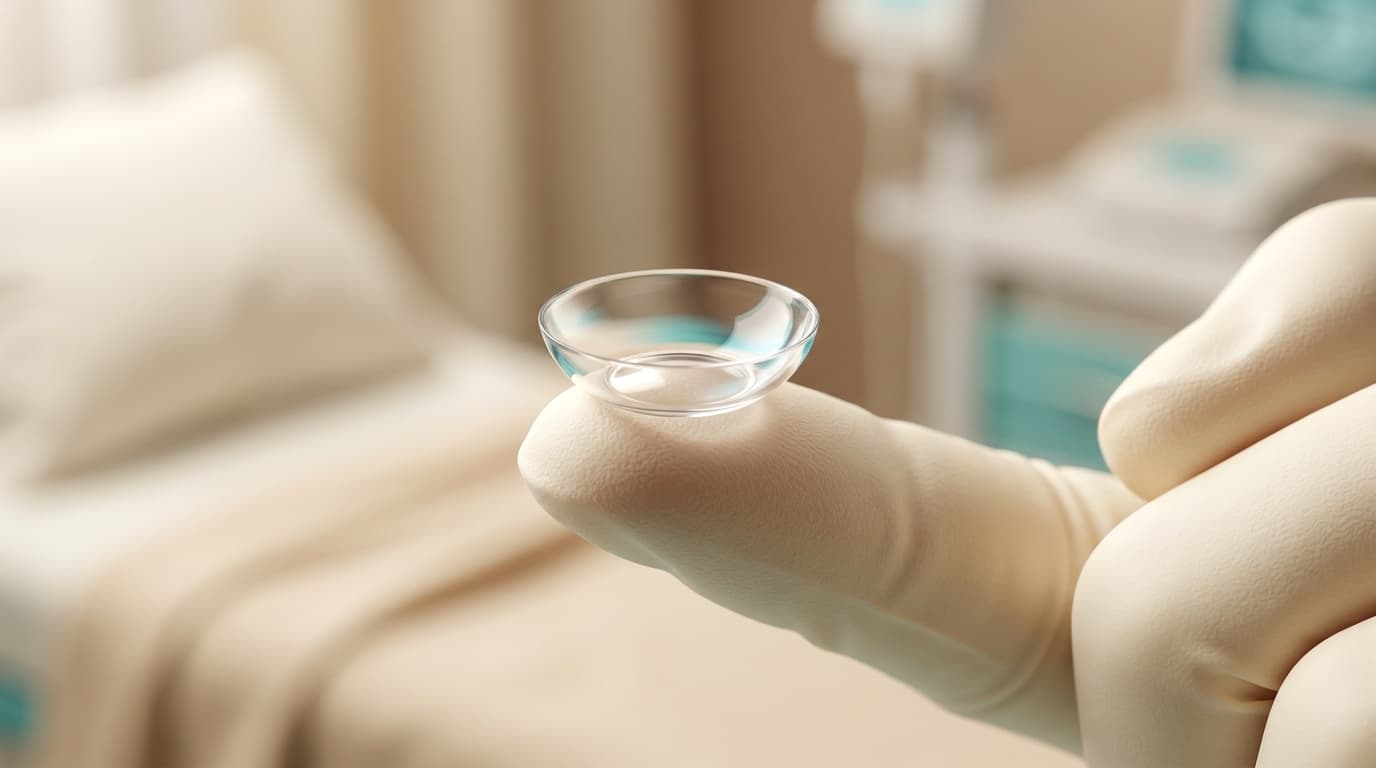
A special lens is implanted inside the eye without reshaping the cornea — ideal for extreme myopia or thin corneas unsuitable for LASIK/LASEK. Reversible and removable if needed.
- Cornea preserved
- Extreme myopia OK
- Reversible
Is it right for me?
A good fit if
- Those with very high, extreme myopia (often beyond -10D) who've been told there isn't enough cornea to safely reshape with laser
- People whose cornea is thin or whose corneal topography places them outside LASIK/LASEK candidacy and who are looking for another route
- Anyone who wants to keep the cornea untouched, or whose significant dry eye makes laser surgery uncomfortable to consider
- Those who want crisp visual quality while also valuing reversibility — the reassurance that it can be undone if circumstances ever change
- Overseas patients considering a trip to Korea who want one careful, thorough workup with a trusted surgeon and precision equipment
Consider carefully if
- If LASIK or LASEK can already correct you safely and fully, we won't push you toward ICL, which is intraocular surgery. ICL is not the right answer for everyone.
- If the anterior chamber is shallow or the corneal endothelial cell count is low, we may hold off on ICL or weigh other options, for the sake of lens-room space and long-term safety.
- If there are risk factors involving eye pressure or intraocular inflammation — such as glaucoma or uveitis — we weigh priorities and safety through detailed testing before deciding.
1What ICL is, and how it differs from LASIK and LASEK
Where LASIK and LASEK reshape the cornea with a laser to correct your prescription, ICL leaves the cornea entirely untouched. Instead, a very thin lens made of Collamer — a biocompatible material — is placed in the space between the iris and your own natural lens. Unlike cataract surgery, which removes your natural lens, ICL keeps your own lens in place and simply adds a lens in front of it. As a result, the eye's own structure is preserved; because there's no limit on how much cornea must be removed, it can correct even extreme myopia; and it gains reversibility, since the lens alone can be taken out if ever needed. If you also have astigmatism, a toric ICL corrects the astigmatic axis as well.
2Precision is safety — what we measure
Because ICL places a lens inside the eye, the heart of it is measuring the space where the lens must sit precisely and rest safely for the long term. I carefully check the anterior-chamber depth (the depth of the room the lens enters), the white-to-white diameter, the corneal endothelial cell count, pupil size, and eye pressure. Determining the lens size and power exactly to these figures is what keeps the lens at the right distance from your natural lens and iris, touching neither. The more precise the measurement, the more we can reduce nighttime glare and strengthen long-term safety — which is why I never rush the exam stage.
3How the day of surgery unfolds
First, numbing drops make the eye comfortable, then a very small incision is made at the edge of the cornea. The custom lens — crafted to your pre-op measurements — is gently folded and inserted into the eye, then unfolded and secured precisely in the space between the iris and your own natural lens. Since neither the cornea is cut nor the natural lens removed, the eye's own structure is fully preserved. The incision is small enough that stitches are usually unnecessary, and both eyes are typically finished in about fifteen minutes. The same dedicated surgeon stays beside you throughout, and an interpreter is present to guide you through every step in your own language.
4LASIK/LASEK or ICL — how to choose
The right answer depends on your prescription, your cornea, and your lifestyle. If your cornea is thick enough and your prescription is moderate, LASIK or LASEK may be the simpler, more sensible choice. But if your prescription is very high, or your cornea is thin with little room to remove, ICL — which preserves the cornea while correcting a wide range — becomes the safer path. For those with significant dry eye, ICL is also gentler, as it disturbs fewer corneal nerves. I don't decide on one method in advance and steer you toward it. We look at your detailed test results together, and since the price is the same either way, I advise you honestly on what truly fits your eyes best.
5Support for patients coming from abroad
Since you're traveling a long way, we help everything flow smoothly as one continuous process — from exam to surgery to aftercare. Healing Eye is a one-minute walk directly in front of Sinnonhyeon Station and about 70 minutes from Incheon Airport, so scheduling is easy. On-site interpreters in Japanese, Traditional Chinese, and English explain your test figures, the lens-selection process, and the precautions in your own language, so you can decide with confidence. As an MOHW-registered institution for international patients, we guide you from the moment you arrive at the airport, and foreign patients are seen at exactly the same price as Korean patients.
How the surgery goes
- 1
Detailed exam & candidacy review
We precisely measure anterior-chamber depth, white-to-white diameter, corneal endothelium, pupil size, eye pressure, and prescription. From this data we decide together whether ICL is safely suitable, or whether LASIK/LASEK would serve you better.
- 2
Custom lens selection & preparation
We determine the lens size and power exactly to your measurements. If you have astigmatism, a toric ICL accounts for the astigmatic axis, and the lens is prepared to fit your individual eye.
- 3
Numbing drops & micro-incision
Numbing drops make the eye comfortable, then a very small incision is made at the edge of the cornea. Because anesthesia is by drops rather than a needle, there's little burden of pain.
- 4
Lens insertion & positioning
The folded lens is gently placed into the eye and unfolded precisely into position between the iris and your own natural lens. Your natural lens stays in place, so the eye's structure is preserved.
- 5
Finish & same-day check
The small incision usually closes without stitches, and both eyes finish in about fifteen minutes. The same dedicated surgeon checks in person, that same day, that the lens position and eye pressure are stable.
Recovery timeline
There may be brief foreign-body sensation or light sensitivity, but it usually settles quickly. After checking eye pressure and lens position, we guide you to rest fully — and many patients already notice clearer vision that very day.
At the next-day check we confirm the lens is well seated and eye pressure is stable. Because the cornea wasn't reshaped, vision clears relatively quickly, and most people return to daily life within one to two days.
Use your prescribed eye drops on schedule and take care not to rub the eyes or expose them to strong impact. Those who notice nighttime glare often adapt gradually, and you can always ask questions with an interpreter on hand.
Since the lens rests within the eye, it's important to monitor eye pressure and corneal endothelial cells periodically. With Healing Eye's lifetime surgery guarantee, the same dedicated surgeon cares for your eyes consistently over the long term — and you can still reach us through an interpreter after you return home.
Why Healing Eye
One dedicated surgeon takes responsibility from exam through surgery to lifetime aftercare. Precisely because this is a procedure where a lens rests inside the eye, having the same doctor watch over your eyes consistently — under our lifetime surgery guarantee — is a real reassurance.
On-site interpreters in Japanese, Traditional Chinese, and English are with you. You can fully understand your test figures — like anterior-chamber depth and endothelial cells — and the lens-decision process in your own language before deciding, so language is never a source of worry.
Foreign patients pay exactly the same price as Korean patients — 100% the same. With no tourist markup, we give you a clear, transparent quote based on your detailed exam results in a free consultation.
Dr. Kim Sun-young — experienced across cornea, glaucoma, and cataract — performs the surgery herself. A surgeon who is an ESCRS member with multiple academic awards, a Google rating of 4.8 stars from 154+ reviews, and a convenient location one minute on foot from Sinnonhyeon Station all ease the burden of traveling a long way.
Implantable Lens (ICL) — see if it fits you in 1 minute
Your exact candidacy and cost are confirmed in a free 1:1 consultation. No pressure, in your own language.
Frequently Asked Questions
Isn't it dangerous to put a lens inside the eye?
To be honest, ICL is intraocular surgery, so I check safety conditions carefully — including anterior-chamber depth and corneal endothelial cells. The reassuring part is that ICL is a long-established, proven method, the lens is designed to rest stably within the eye, and it's reversible because it can be removed if needed. Let me fully address any safety questions in a free LINE or WhatsApp consultation.
Does the surgery hurt, and how long is recovery?
Anesthesia is by eye drops rather than a needle, so there's little burden of pain, and both eyes are usually finished in about fifteen minutes. Because the cornea isn't reshaped, vision clears relatively quickly and most people are back to daily life within one to two days. I do recommend the next-day check and the staged follow-ups afterward. We'll arrange the detailed schedule together in a free consultation.
Can it correct very high prescriptions, and astigmatism too?
A major strength of ICL is precisely its ability to correct a wide range, including extreme myopia beyond the reach of laser. If you also have astigmatism, a toric ICL corrects the astigmatic axis as well. Your individual range depends on eye condition, so after a detailed exam we'll tell you precisely, in a free consultation, whether your prescription and astigmatism can be corrected.
Will I feel the lens, and can it stay in for life?
The ICL lens is designed to settle naturally inside the eye, so it usually causes little to no foreign-body sensation and isn't visible from the outside. It's made to stay in the eye long-term, but a strength of ICL is that it can be removed or exchanged if your vision changes or another eye condition arises. That's why periodic checks of eye pressure and endothelial cells matter, and we'll explain this in detail during a free consultation.
How many days do I need to stay in Korea?
We usually plan the schedule to include the detailed exam, the surgery, and the next-day check. Recovery is relatively quick since the cornea isn't reshaped, but for safety I recommend having the day-after check before you fly home. If you reach out for a free consultation before booking flights, we'll design the exam, surgery, and follow-up schedule together with comfortable margins. Healing Eye is about 70 minutes from Incheon Airport and one minute on foot from Sinnonhyeon Station, so getting around is easy.
How much does it cost, and do foreigners pay more?
The exact cost depends on your exam results and the type of lens (whether astigmatism correction is included, and so on), so we give you an honest quote after the detailed exam. To be clear: foreign patients pay exactly the same price as Korean patients — 100% the same, with no tourist markup. We'll tell you the precise figure transparently in a free LINE or WhatsApp consultation, so please feel free to ask.
Ask today about a clearer tomorrow
Consultation is free. It only takes a minute to start.