~10 min (both eyes)
Back to daily life in 1-2 days
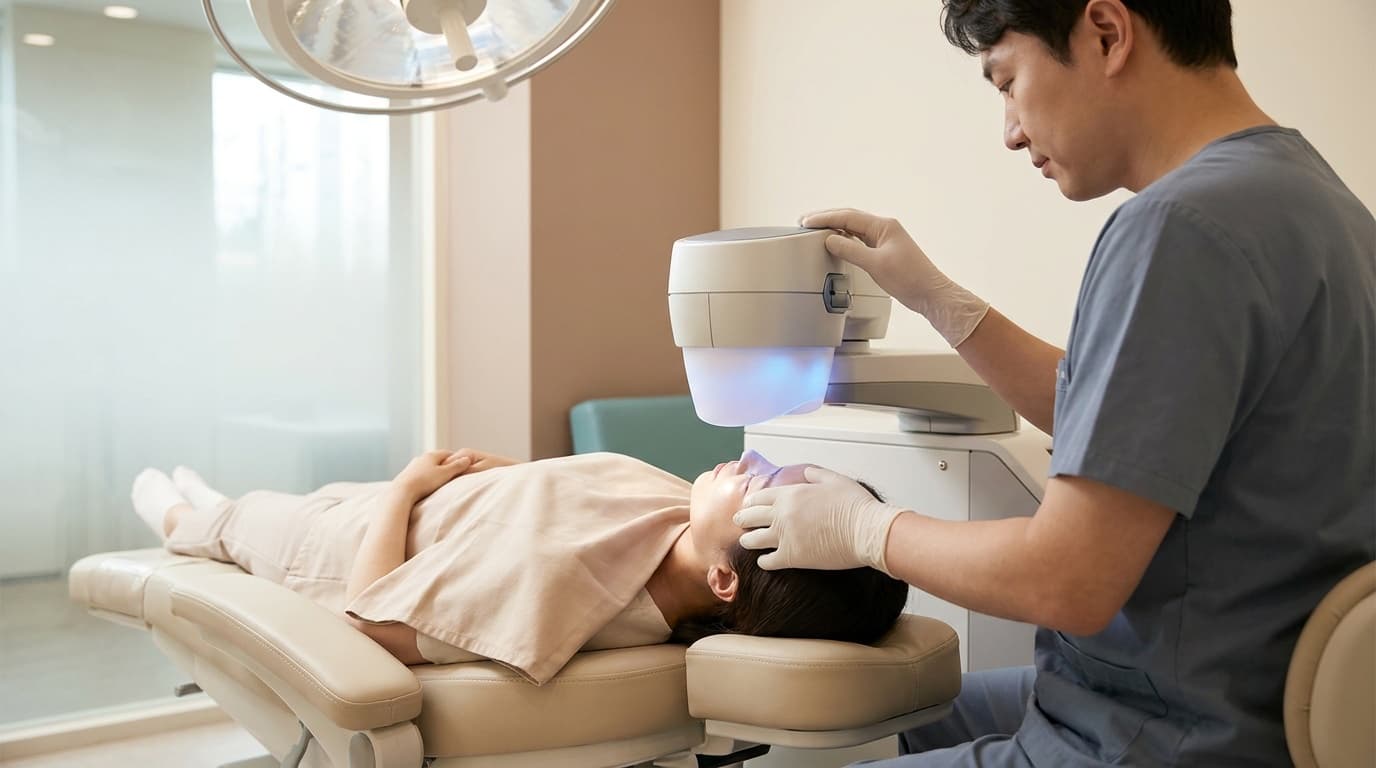
SMILE is a way to correct your vision without creating a corneal flap — the whole procedure goes through a tiny 2–4mm micro-incision. The laser shapes a thin lens of tissue (a lenticule) inside your cornea, and I gently remove it through that small opening. If you play sports, worry about an impact to the eye, or have hesitated over LASIK because you're prone to dry eye, SMILE is genuinely worth a closer look. If you're researching SMILE eye surgery in Korea, I'll tell you honestly which eyes it suits well — and which eyes are better served by a different option.
A flapless method that corrects vision through just a 2–4mm micro-incision, with no corneal flap. Less surface disruption means relatively less dryness, and its structural strength makes it a favorite for active, sporty patients.
- Flapless micro-incision
- Less dryness
- Great for active lives
Is it right for me?
A good fit if
- You're often a strong fit if you have low-to-moderate myopia (with or without astigmatism) and enough corneal thickness to work with safely.
- You enjoy contact sports, ball sports, or water sports where the eye might take a knock — with no flap, the cornea stays structurally stronger.
- You've put off surgery because you're worried about dry eye — the small incision disturbs fewer corneal nerves, so dryness tends to be milder.
- You're a busy professional or student who wants fast recovery — most people see clearly from the very next day.
- You'd rather travel to Korea for thorough testing, an interpreter, one dedicated surgeon, and lifetime aftercare — and have peace of mind doing it.
Consider carefully if
- If your prescription is very high or your cornea is thin, ICL (an implantable lens) may be safer with better visual quality — I'll tell you honestly after the exam.
- If your main goal is correcting farsightedness or presbyopia, SMILE has limited indications — we'd look at other options together.
- With corneal scarring, suspected keratoconus, severe dry eye, or an unstable prescription, the right call is to postpone any laser correction or take a different route.
1How SMILE differs from LASIK
In LASIK, I create a thin corneal flap, lift it, reshape the tissue with the laser, and lay the flap back down. SMILE skips the flap entirely. A femtosecond laser shapes a thin lens of tissue inside your cornea — exactly matching your prescription — and I remove that tissue through a 2–4mm opening. Because no large flap is lifted, more of the corneal surface and its nerves stay intact, which means less dry eye and a cornea that's tougher against impact. That small incision works in your favor for both recovery and long-term stability.
2Why 'no flap' matters
Any flap-based surgery leaves that flap edge in place for life. Rarely, a strong impact can affect that edge. SMILE has no flap at all, so that worry is gone, and it preserves more of the cornea's biomechanical strength. That's exactly why I often recommend it for soldiers, athletes, and anyone in vigorous activity. That said, 'no flap' doesn't automatically make it better for every eye — depending on your prescription and cornea, LASIK or ICL may suit you more, and I'll explain that too.
3What we check carefully before surgery
The outcome of SMILE is largely decided at the exam table. I check corneal thickness, topography, pupil size, tear film, and how stable your prescription is. If topography shows even a subtle sign of keratoconus, the rule is to hold off. If your pupils are large, I flag the possibility of night glare in advance; if your tear film is unstable, we treat the dry eye first. And if all of this leads to the conclusion that SMILE isn't right for you, I'll say so without hesitation. Not recommending a surgery that shouldn't be done is, to me, the most important promise I can make to protect your vision for life.
4SMILE vs LASIK vs ICL — what fits whom
There's no single right answer — only the one that fits your eyes. With moderate myopia, enough cornea, and an active lifestyle, SMILE is a strong choice. If more tissue removal is needed, or there's a farsighted/presbyopic element, LASIK or LASEK can be more flexible. If your prescription is very high or your cornea is too thin to remove enough tissue, ICL — which barely touches the cornea — wins on visual quality and safety. One more thing: SMILE enhancements work differently from LASIK touch-ups. Which option gives you the best result at the lowest risk is something we decide together, looking at your actual exam data.
5Support for patients coming from overseas
Healing Eye is right in front of Sinnonhyeon Station — a one-minute walk — and about 70 minutes from Incheon Airport. We have on-site Japanese, Traditional Chinese, and English interpreters, so you can fully understand your test results and the surgery in your own language before deciding. As an institution registered with the Ministry of Health & Welfare for international patients, we guide you from the moment you land. You won't pay a cent more for being a foreign patient — the price is exactly the same as for Korean locals. We'll usually arrange your exam, surgery, and next-day check into a short stay, so message us before you fly to plan it out.
How the surgery goes
- 1
1. Detailed exam & candidacy check
We measure corneal thickness, topography, pupil, tear film, and prescription to first decide honestly whether SMILE fits. If it doesn't, I'll recommend another option.
- 2
2. Numbing drops
We numb the surface of the eye with drops — no injection. There's almost no pain, and you stay awake throughout.
- 3
3. Shaping the lenticule (femtosecond laser)
The laser shapes a thin lens of tissue inside the cornea to match your prescription. It takes only tens of seconds, and you just see a soft light.
- 4
4. Removing it through the micro-incision
I gently lift the shaped lens of tissue out through the 2–4mm incision. This single step completes your correction.
- 5
5. Same-day check & home
Right after surgery I check your eyes and go over the drops and precautions. You usually go home the same day, and we re-check you the next day.
Recovery timeline
For a few hours you may have tearing, a gritty feeling, and slight blur. Rest your eyes that day and don't rub them — most people feel much better after a night's sleep.
Vision is usually clear enough for daily life and light work. At your next-day check, I confirm how you're healing in person.
Your visual quality steadily settles. Avoid swimming, saunas, and eye makeup for about a week, and ease back into exercise as guided. Keep using your drops exactly as prescribed.
One dedicated surgeon stays with you from exam to surgery to aftercare, backed by a lifetime surgery guarantee. Even after you fly home, you can keep asking us questions by message.
Why Healing Eye
The same surgeon stays with you from exam to surgery to lifetime aftercare. Your doctor never changes, and a lifetime surgery guarantee protects your eyes for the long haul.
We have on-site Japanese, Traditional Chinese, and English interpreters. You can understand your numbers and the surgery fully in your own language, then decide with confidence.
No foreigner markup, ever. You pay 100% the same price as Korean patients, and your exact quote is given transparently in the free post-exam consultation.
Dr. Kim Sun-young is a cornea, glaucoma, and cataract specialist, a former clinical professor at the Catholic University College of Medicine, and a member of ESCRS. Google rates us 4.8★ with 154+ reviews, a one-minute walk from Sinnonhyeon Station.
SMILE (Flapless Laser) — see if it fits you in 1 minute
Your exact candidacy and cost are confirmed in a free 1:1 consultation. No pressure, in your own language.
Frequently Asked Questions
Does SMILE hurt during the procedure?
Because we use numbing drops, there's almost no pain during surgery. Most people feel only mild pressure or a soft light. For a few hours afterward you may notice a gritty feeling or tearing, but it usually eases by the next day. If you'd like to know more about how it feels, just ask us on LINE or WhatsApp.
How long is recovery, and when can I get back to normal life?
SMILE recovery is fairly fast. Most people see clearly from the next day and can manage daily life and light work, with visual quality settling over 1–4 weeks. Just avoid swimming, saunas, and eye makeup for about a week, and ease back into exercise as guided. It varies by person, so we'll tailor the exact timeline in your post-exam consultation.
Am I a candidate for SMILE?
If you have moderate myopia (with or without astigmatism), enough corneal thickness, and an active lifestyle, you're likely a good candidate. But if your prescription is very high or your cornea is thin, ICL may be safer, and with suspected keratoconus or severe dry eye, holding off is the right call. Ultimately it comes down to your topography, thickness, and tear film. I'll tell you honestly based on your data — feel free to message us anytime.
How many days do I need to stay in Korea for the surgery?
We usually arrange your exam, surgery, and next-day check into a short stay. Depending on your results, I may suggest one extra day, so it's best to consult before booking flights. We're a one-minute walk from Sinnonhyeon Station and about 70 minutes from Incheon Airport, so getting around is easy. Message us on LINE/WhatsApp before you fly and we'll plan the schedule together.
Is SMILE safe? Are there side effects?
With no flap, it's structurally stable and tends to cause less dry eye — clear advantages. Still, since it's surgery, I should be honest that temporary dryness, night glare, and the chance of over- or under-correction exist. That's exactly why the pre-op exam matters, and why I won't recommend it for an eye it doesn't suit. SMILE enhancements also differ from LASIK touch-ups, which I'll explain fully in consultation. Our lifetime surgery guarantee means we stay with you afterward.
How much does it cost? Is it more expensive for foreigners?
Foreign patients pay 100% the same price as Korean locals — there's no tourist surcharge. The exact cost depends on your cornea and the approach we use, so we give you a transparent quote in the free post-exam consultation. If you'd like a rough idea beforehand, send your prescription and situation via LINE/WhatsApp and I'll guide you as far as I can.
Ask today about a clearer tomorrow
Consultation is free. It only takes a minute to start.