Best LASIK in Korea? 4 Things You Can Actually Verify
Searching for the best LASIK in Korea? A Gangnam surgeon explains why rankings mislead, and four things you can check yourself before choosing a clinic.

Dr. Kim Sun-young, Director
Cornea · Glaucoma · Cataract
Contents
I'm Dr. Kim Sun-young, medical director of Healing Eye Clinic in Sinnonhyeon, Gangnam, Seoul. I served as a clinical professor of cornea and cataract surgery at a university hospital, and now I see international patients every week with an English interpreter in the room.
A question I get on WhatsApp almost daily: "Dr. Kim, I've read ten lists of the best LASIK in Korea, and they all disagree. Who do I believe?"
If you're searching best lasik in korea, you've probably met those lists too. I understand the frustration — it feels like everyone is ranked first somewhere.
So I'll be honest from the start: "best" is not something a list can tell you. It's something you can check, clinic by clinic, with four questions. I'll give you those questions and our own answers, so you can hold us to them too.
What does "best LASIK in Korea" actually mean?
A ranking compares clinics. But the question that decides your outcome is narrower: is this clinic right for your cornea, and will the person who measured it be the one who operates?
That's why I'd swap the ranking for four checks.
1. Does the surgeon who reads your exam also operate?
The doctor deciding how much tissue can safely come out should be the doctor who studied your corneal data.
When a case is passed between people, that link breaks. Ask directly: "Who reads my scan, who operates, and who sees me the next day?" If those are three different answers, keep asking.
2. How complete is the exam?
A proper LASIK exam measures corneal thickness and topography, pupil size in the dark, tear film and eye pressure — at minimum.
It's like a pre-flight checklist. A clinic that rushes it to fit your schedule is telling you something about how it treats the rest of the process.
3. Do they ever say no?
This one is uncomfortable to ask, and that's why it works. A clinic that operates on everyone who walks in is not choosing carefully.
I ask people to wait when I see a thin cornea, early keratoconus signs, untreated dry eye or a prescription that's still changing. A good clinic will tell you its reasons for refusal without hesitation.
4. What happens after you fly home?
Your eyes keep healing for months after your flight. Ask what written record you'll take home, and who answers your messages if something feels off three weeks later.
Replace "Who is the best?" with four checks: same surgeon from exam to aftercare, a complete exam, a clinic willing to say no, and a clear plan for after you fly home. Any clinic worth choosing will answer all four plainly.
The full medical picture behind these questions is in my guide to LASIK in Korea.
Why I examine, operate and follow up myself
At our clinic, the doctor who examines you is the doctor who operates and the doctor who checks you afterwards. You're never handed along.
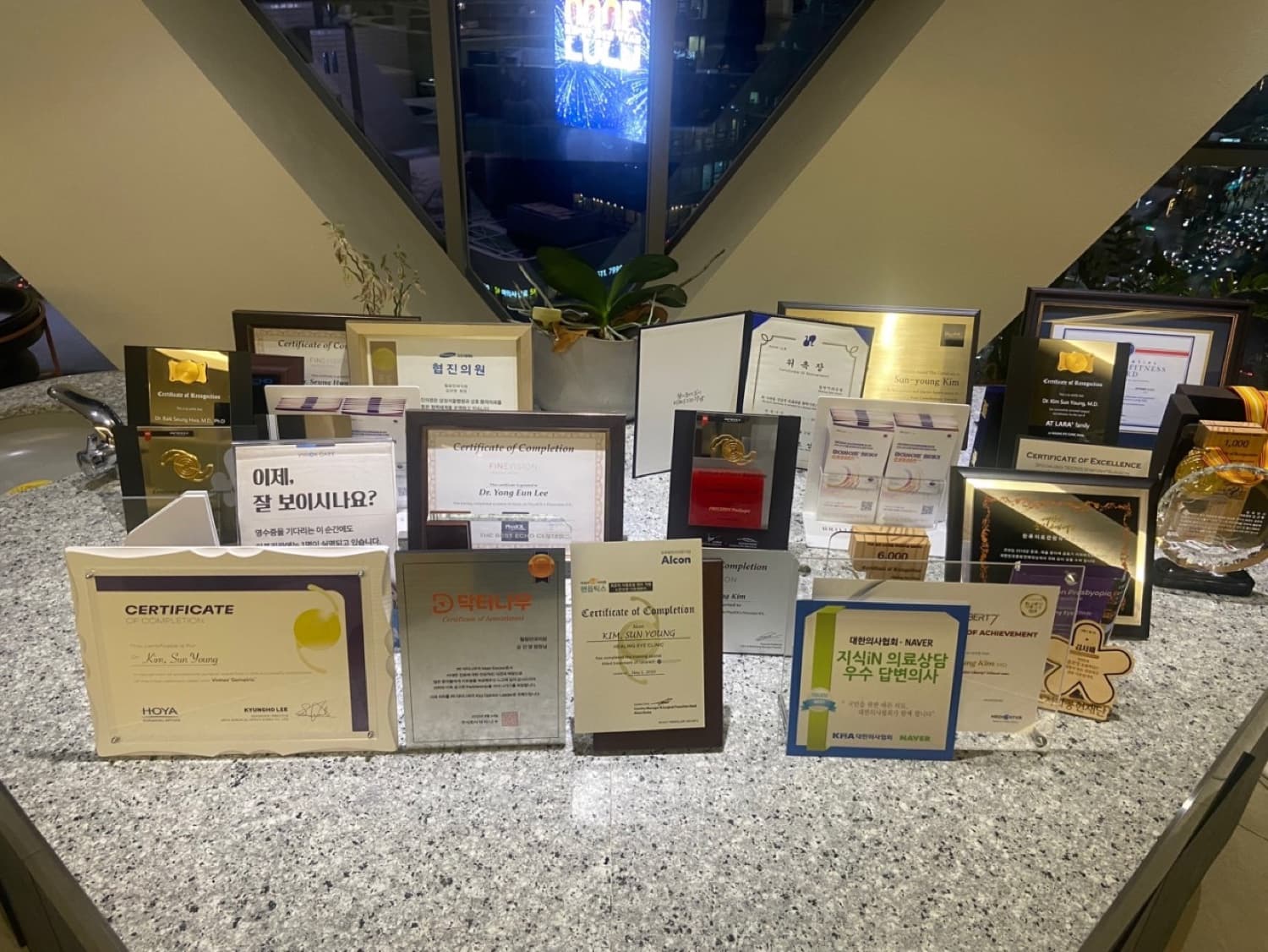
Here's what you can verify about us. International patients pay the same price as Korean patients. We hold 4.8 stars from 154 Google reviews. I'm a full member of ESCRS, the European Society of Cataract and Refractive Surgeons, and my credentials are listed on the head office's doctor profile page.
I'm not offering these as proof that we're "the best". I'm offering them because they can be checked.
So which procedure is "best" for me?
The honest answer is the one your measurements allow. This table is a rough starting point.
| If your exam shows | Usually the better fit |
|---|---|
| Healthy, thick-enough cornea, want fast recovery | Clear LASIK |
| Concern about night vision quality | Personal Custom LASIK |
| Thinner cornea or contact sports | LASEK |
| Very high prescription or thin cornea | ICL |
What the visit itself looks like — rooms, devices, who you meet — is in what happens inside a Korea LASIK clinic.
Price. Premium LASIK or LASEK is ₩1,990,000 for both eyes, Clear LASIK ₩2,700,000, and the full exam ₩150,000. Everything is on our price page.
Side effects, and who I turn away
No surgeon can promise a perfect result, and you should be wary of any clinic that sounds like it does.
- Dryness is common for the first months and usually eases with drops.
- Night glare and halos are more likely with large pupils.
- Regression — some return of prescription — can happen, especially with higher corrections.
I don't recommend LASIK for a cornea that's too thin, signs of keratoconus, untreated dry eye or a prescription that's still moving. Results vary from person to person.
Before you message any clinic
- Have your current prescription and how long it's been stable.
- Stop contact lenses before the exam: at least a week for soft lenses, longer for rigid.
- Plan at least three nights in Seoul, four if you can.
- We're one minute from Sinnonhyeon Station, about 70 minutes from Incheon Airport.
The questions people raise most in online forums, answered one by one, are in getting LASIK in Korea: the Reddit questions.
Don't pick the "best" clinic — pick the one that answers
My advice is simple: send the four questions above to every clinic on your list, and choose the one whose answers are specific.
It doesn't have to be us. But if you'd like our answers in writing, send your prescription, age and travel dates on WhatsApp. If your eyes aren't suited to LASIK, I'll say so plainly and explain what is.
I hope to meet you in Seoul.
— Dr. Kim Sun-young, Medical Director, Healing Eye Clinic (Sinnonhyeon, Gangnam, Seoul)
Frequently asked questions
What is the best LASIK in Korea?
There isn't one best LASIK for everyone. The right procedure is the one your corneal measurements support, done by a surgeon who examined you and who will see you afterwards. Judge clinics on things you can verify — who operates, how thorough the exam is, whether they ever say no, and what happens after you fly home.
Should I trust LASIK clinic rankings?
Treat them with care. Many lists are advertising, and none of them has examined your eyes. A ranking can't tell you whether your cornea is thick enough or whether the person who reads your scan is the person who operates.
What questions should I ask a Korean LASIK clinic?
Ask who reads my exam and who operates, which measurements the exam includes, how often you advise patients not to have surgery, whether foreigners pay a different price, and what written record I take home for my local doctor.
Is the newest LASIK technology the best choice?
Not automatically. LASIK, LASEK and SMILE are all established procedures, and each fits a different cornea. A newer name is not a reason to choose it if your measurements point elsewhere.
Do you ever turn patients away?
Yes, regularly. A cornea too thin for the correction, early keratoconus signs, untreated dry eye or a prescription still changing within the last year are all reasons I ask someone to wait or consider another option.
How much does LASIK cost at your clinic?
Premium LASIK or LASEK is ₩1,990,000 for both eyes and Clear LASIK is ₩2,700,000 for both eyes, plus a ₩150,000 full exam. International and Korean patients pay the same, and the final quote follows the exam.
Message us on official LINE / WhatsApp for a special offer
Your exact candidacy and cost are confirmed in a free 1:1 consultation.