Difference Between Presbyopia and Cataract: Focus vs Fog
The difference between presbyopia and cataract: one is a stiff lens, one a cloudy lens. A Seoul eye surgeon on telling them apart and lens options.

MS, Catholic Univ. College of Medicine · Ophthalmology specialist, Catholic Medical Center · Clinical Professor (Cornea & Cataract), Uijeongbu St. Mary's Hospital · 108th Korean Ophthalmological Society Research Award · KDCA epidemiology citation
Medically reviewed byDr. Kim Sun-young, Director· Medical Director
Edited by: Dr. Kim Sun-young
Contents
Trying to work out the difference between presbyopia and cataract before deciding whether a flight to Seoul for eye surgery is worth it? Presbyopia is the lens inside your eye losing its flexibility, so close-up focus fails while distance stays sharp. A cataract is that same lens turning cloudy, so vision dims and glares at every distance. Reading glasses manage the first, only cataract surgery removes the second, and when you have both, one lens replacement can handle the two together.
Hello, I'm Dr. Kim Sun-young, Medical Director at Healing Eye Clinic in Gangnam, Seoul. I trained in ophthalmology at the Catholic Medical Center and was a clinical professor of cornea and cataract at Uijeongbu St. Mary's Hospital, so this question sits squarely in my field. At our clinic the same surgeon does your exam, surgery and aftercare, and an English interpreter joins your consultation at no extra charge.
If you can't tell which of the two you're dealing with, photograph your most recent eye exam report or glasses prescription and send it on WhatsApp, along with the moment your eyes let you down most: the menu in a dim restaurant, or oncoming headlights at night. Messaging us is part of our free consultation.
What is changing inside your eye?
Behind your iris sits a clear lens roughly a centimeter across. When you look at something close, a ring of muscle around it relaxes its pull and the lens rounds up to add focusing power. Young lenses do this easily. From the early 40s the lens slowly stiffens, and by the mid-40s most people are holding their phone at arm's length. That's presbyopia. It happens to everyone, and it usually affects both eyes about equally.
A cataract is a different process in the same structure. Proteins in the lens clump together and the lens turns hazy, often with a yellow-brown tint, so light scatters on its way to the retina. Most cataracts come with age and tend to show from the 60s, though diabetes, long-term steroid use, an old eye injury or surgery, smoking and heavy sun exposure can bring them earlier.
Picture an old camera lens. Presbyopia is a focus ring that has gone stiff: the glass is still clear, it just won't turn far enough for a close-up. A cataract is the glass itself fogging over, and no turn of the ring gives you a crisp picture. That is why a pair of +2.00 readers can fix the first problem completely and do nothing for the second.
The US National Eye Institute is direct about it: new glasses and brighter light can ease early cataract symptoms, but surgery is the only way to remove a cataract.
Ask whether this applies to your eyes, which dates are open, and about the English interpreter.
Ask us on WhatsAppHow do you tell presbyopia from a cataract at home?
The difference between presbyopia and cataract shows up most clearly in how your eyes respond to light. With presbyopia, more light helps: a bright lamp or your phone's flashlight makes small print easier, and readers fix it. With a cataract, bright light can make things worse. Headlights grow halos, low sun on a windshield washes everything out, and you may need more light to read yet squint at the glare it brings.
A few other signs point toward the lens clouding rather than simply stiffening:
- Colors look faded or yellowed, especially whites and blues.
- One eye sees noticeably worse than the other when you cover each in turn; presbyopia is usually even between the eyes.
- A ghost or double image appears in one eye even with the other eye closed.
- Your distance glasses need changing more often than every couple of years.
One pattern catches people out. In your late 50s or 60s you notice you can read your phone without readers again, and it feels as if your eyes have improved. Often they haven't. A cataract that forms in the center of the lens can increase its focusing power and make you more nearsighted, which brings close print back into focus for a while. If your distance prescription has moved toward a stronger minus at two exams in a row after 55, the lens is the first thing worth checking.
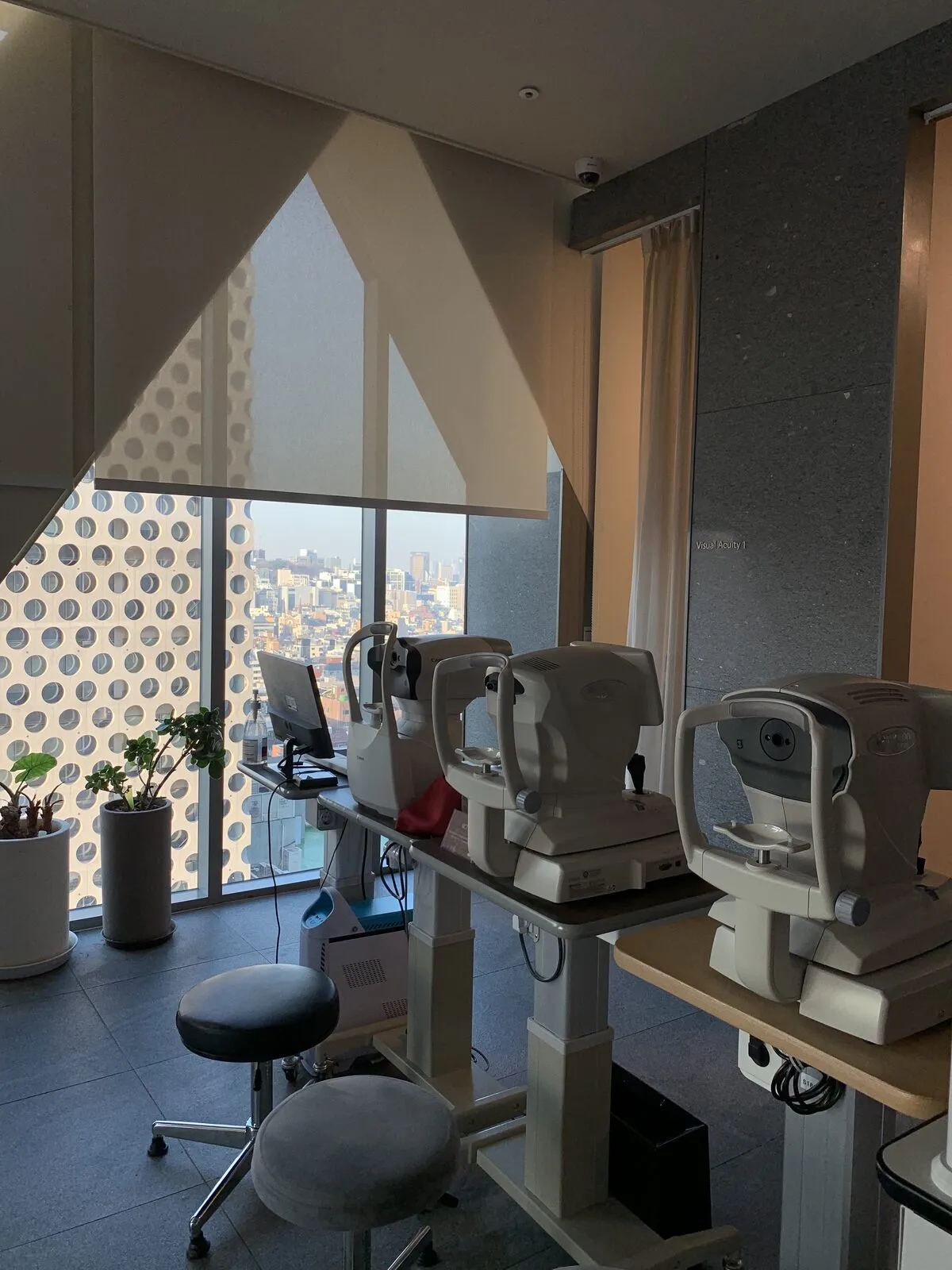
None of these home checks replaces a dilated exam, where the lens is seen directly under a slit lamp and the retina behind it is checked at the same visit.
Say you're 58 and both seem to be happening
Say you're 58, an architect in Denver, and you've worn readers since 47. Until recently they did the job. Now the +2.50s don't rescue a menu in a dim restaurant, oncoming headlights on the interstate turn into starbursts, and your distance glasses have changed twice in three years.
The readers explain the first decade. They don't explain the last two years. Night glare plus a distance prescription that keeps moving points to the lens itself, and at your age that usually means an early cataract layered on top of the presbyopia you already had. The question then shifts from which problem you have to whether the cloudiness is bad enough yet to justify surgery, and what you want to see without glasses afterward.
If the haze is mild and your days are fine, an updated prescription and better lighting may be the right answer for now. If driving at night has become a problem, lens replacement removes the cloudy lens, and the artificial lens you choose decides how much of your presbyopia is addressed at the same time. That choice is the part worth slowing down for.
Which treatment fits which problem?
In short, these are the options we offer across the two conditions, and who each tends to suit.
| Option | Who it tends to suit | The trade-off |
|---|---|---|
| Reading glasses | Presbyopia with a clear lens, at any age | Nothing to recover from, but you carry them everywhere |
| Presbyopic LASIK or LASEK | People in their 40s and 50s whose lens is still clear | Works on the cornea, so the lens keeps aging and a cataract can still come later |
| Cataract surgery with a monofocal lens | A cataract, with sharp distance and night driving as the priority | Reading glasses are usually still needed for close work |
| Cataract surgery with a premium multifocal lens | A cataract plus the wish to rely less on readers | Halos around lights at night are common early on, and it doesn't suit every eye |
Presbyopic laser treatment often blends the two eyes, setting one slightly for near. Some people adapt to that within weeks and others never like it, so trying the same setup with contact lenses first is worth asking about. Once a cataract has started, a corneal laser makes less sense, because the cloudy lens will still need replacing.
To be honest, the multifocal lens is the choice I slow people down on most. It splits incoming light between distance and near, which is how it reduces your need for readers, and that same split is why rings around headlights are common in the first months. Many people's brains learn to tune them out. For someone who drives long distances in the dark, or who already has glaucoma damage or a macular problem, a monofocal lens and a pair of readers is often the better trade.
Not pushing more than you need is a principle here, and a standard lens is sometimes exactly what's needed.
If you've already decided to deal with both at once, my piece on fixing presbyopia and cataract in one operation goes further into that route, and the presbyopia and cataract treatment page describes the premium multifocal lens option. Our Korean home site also keeps a page on premium intraocular lenses if you read Korean. The Healing Eye Clinic English homepage lists the doctors who examine and operate.
Halos, a cloudy capsule and dry eye: what lens surgery can bring
Cataract surgery takes about 15 to 20 minutes per eye. Most people are back to daily life within days, while vision keeps settling gradually over the following weeks. The first days commonly bring grittiness, light sensitivity and some blur, and the eye can stay dry for longer if your tear film was weak beforehand.
Less often, and usually months or years later, the thin capsule that holds the new lens turns cloudy. It feels like the cataract coming back, but it is treated with a short laser procedure rather than another operation. With a multifocal lens, halos and glare at night can persist in some people. Rare but serious complications include infection inside the eye, swelling at the center of the retina, a rise in eye pressure and retinal detachment.
Some people do better to wait or plan differently:
- diabetes with retinal changes that are not yet stable
- glaucoma that isn't controlled
- an active eye infection or inflamed eyelid margins
- severe dry eye, which is usually treated first so the lens measurements are reliable
How fast each eye settles differs from person to person, and the exam is where suitability is decided. After you fly home, the surgeon who examined and operated on you is the one holding your measurements, so ask for a copy of your lens type and measurement records to keep with you. If you notice worsening pain, a sudden drop in vision, a shower of new floaters, flashes or a dark curtain across your sight, see a local eye doctor that same day.
Does past LASIK or years of contacts change the plan?
Yes, in two ways people rarely hear about until the exam. Laser vision correction changes the shape of the cornea, and the formulas that choose the power of a new lens were built around untreated corneas. If you had LASIK or LASEK years ago, any record of your prescription from before that surgery helps the calculation, so dig it out now if it still exists.
Vision that drifts years after LASIK is sometimes the lens clouding rather than the cornea changing; LASIK regression and enhancement covers the corneal side of that question.
Contact lenses gently reshape the front of the cornea too, which can throw off the readings that lens power depends on. Most people are asked to stop wearing them for a while before the measurements; the exact number of days depends on your lens type and is confirmed at the consultation. The reasons are laid out in when to stop wearing contacts before an eye exam.
What to send first
Whether your trouble is a stiff lens, a cloudy one or both, I would rather settle it with a full exam than a guess, because a good result begins in the exam room, not on surgery day. Presbyopia on its own rarely needs more than readers or, for some people in their 40s and 50s, a laser option. A cataract that has started to cost you the night drive is a different conversation, and the lens you choose then deserves as much thought as the surgery itself.
What decides this for you is how cloudy your lens already is, and whether that cloudiness, rather than age alone, is behind the blur you notice most.
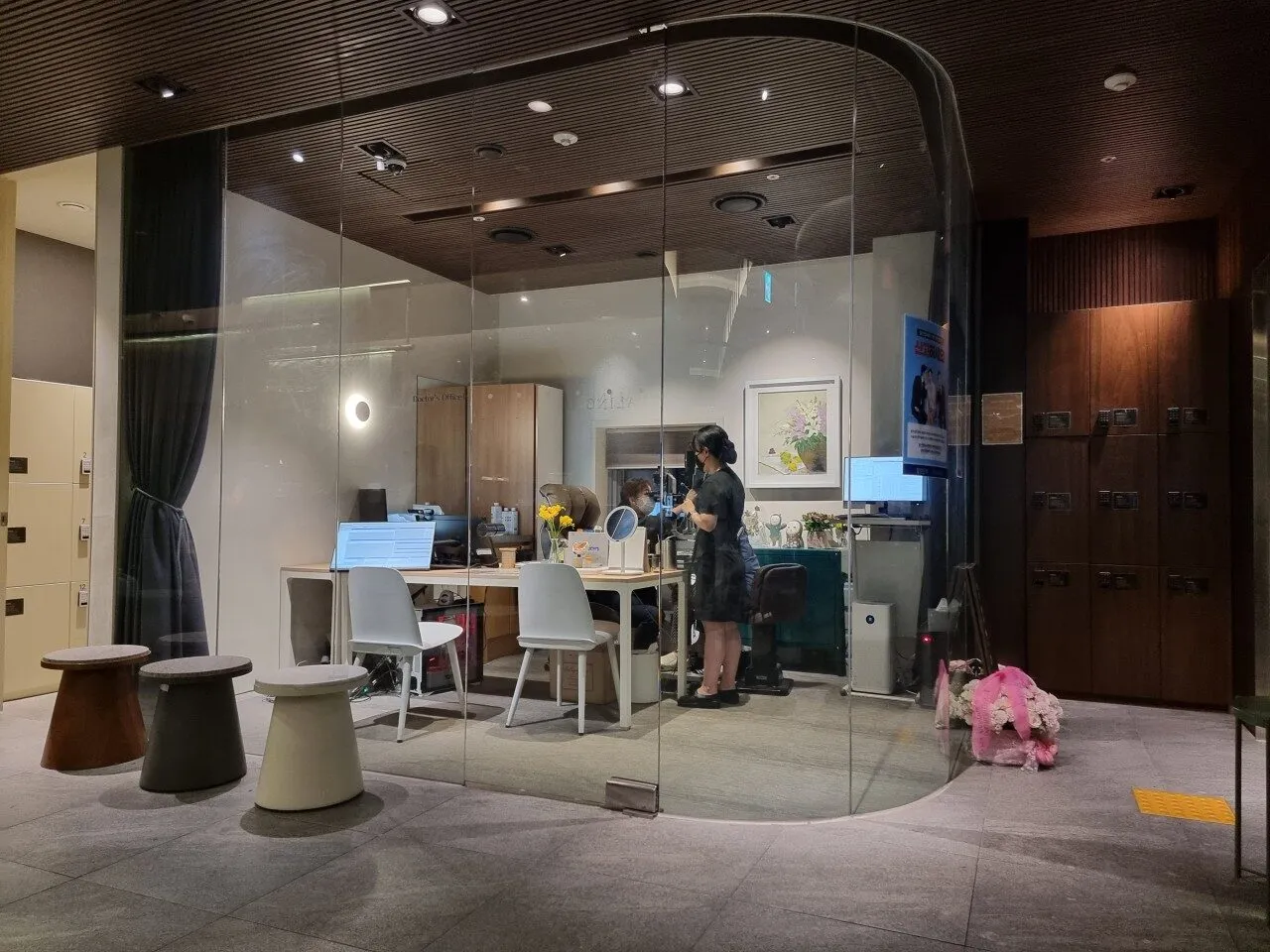
We're at 470 Gangnam-daero, 10–11F, Gangnam-gu, Seoul, a one-minute walk from Sinnonhyeon Station. Photograph your latest eye exam report or glasses prescription, send it on WhatsApp, and ask whether the change in your sight is coming from presbyopia, an early cataract or both. That conversation is part of our free consultation.
— Dr. Kim Sun-young, Medical Director
Frequently asked questions
Can presbyopia turn into a cataract?
No. They are separate changes in the same lens: one is a loss of flexibility, the other a loss of clarity. Because both come with age, many people in their 60s have both at once, which is why one lens replacement can sometimes address the two together.
Can eye drops clear a cataract?
No drops have been shown to clear a cataract. Early on, an updated prescription, brighter reading light and anti-glare lenses for night driving can buy time. Once the cloudiness gets in the way of driving or work, surgery is the treatment.
If I choose a monofocal lens, will I still need reading glasses?
Usually yes. A monofocal lens is set for one distance, most often far, so close work still needs readers. Some people set one eye slightly nearer to reduce that, and this setup is worth trying with contact lenses before surgery.
Is presbyopic LASIK still an option if a cataract is starting?
Generally it makes less sense. A corneal laser doesn't touch the clouding lens, the cloudiness keeps progressing, and lens surgery will still be needed. A past corneal laser also makes the later lens power calculation harder.
How many days should I plan in Seoul?
Each eye takes about 15 to 20 minutes in surgery. The days around it depend on whether one or both eyes are treated and on your check-ups, so the number of days is confirmed at the consultation. The clinic is open until 21:00 on Fridays and closed on Sundays and holidays, which matters when you book flights.
Questions about your own case or available dates? English interpreter on site.
Ask us on WhatsAppMessage us on official LINE / WhatsApp for a special offer
Your exact candidacy and cost are confirmed in a free 1:1 consultation.