LASIK Enhancement and Regression: If Your Vision Drifts Back
What happens if LASIK wears off over the years? I'm Dr. Kim — here's what regression really is, why it happens, how enhancement works, and why I built a lifetime guarantee around it.

Dr. Kim Sun-young, Director
Cornea · Glaucoma · Cataract
Contents
"Dr. Kim, I had LASIK six years ago and it was perfect — but lately the road signs are getting soft again. Did it wear off?"
This message, in various forms, lands in my inbox from people who had their surgery years ago, sometimes at other clinics, sometimes abroad. There's a particular disappointment in it: they finally stopped thinking about their eyes, and now they're thinking about them again. So let me explain what's most likely happening, because "it wore off" is usually too blunt a description.
Regression: what it is, and what it isn't
The reshaping LASIK performs on your cornea doesn't reverse itself. In that mechanical sense, LASIK is permanent. But the eye is living tissue, and a few things can shift over years.
Regression is a small drift back toward your original prescription. The cornea can slightly change its curvature over time, particularly after very high corrections, and a little of the myopia you corrected creeps back. For most people this never happens to a degree they notice. For a minority it does — and it's usually modest.
Crucially, regression is not the same as presbyopia, even though both make vision feel worse and both can show up years later. Presbyopia is the normal, universal stiffening of the lens inside the eye that costs everyone their easy near focus from the mid-forties on, LASIK or no LASIK. The blurry road sign at distance and the blurry menu up close are two completely different stories.
Before I call anything "regression," I measure. Soft distance vision years later might be a genuine prescription drift — or it might be presbyopia, dry eye, or even an early cataract. The fix depends entirely on which it actually is.
Why regression happens at all
A few factors raise the odds:
- Very high original prescriptions, because more corneal tissue was reshaped, leave more room for small changes to add up.
- The natural ageing of the eye, including ongoing subtle changes in the cornea and lens.
- Occasionally, healing patterns unique to an individual cornea.
This is also one reason I sometimes steer strong prescriptions toward ICL in the first place — a lens-based correction doesn't depend on permanently reshaping the cornea, so it sidesteps this particular kind of drift.
What a LASIK enhancement actually involves
If we measure and find a meaningful prescription has genuinely returned, an enhancement — a touch-up — is the usual answer. It's a second, smaller procedure to fine-tune the correction.
How we do it depends on your eye. If you have a healthy original flap and enough corneal tissue, we may be able to lift that flap and apply a small further treatment. In other cases, a surface procedure (working on the cornea's surface rather than relifting a flap) is the safer route. The right choice comes from re-measuring your cornea, not from defaulting to whatever was done the first time.
An enhancement is not an admission that the first surgery was wrong. It's a normal, planned-for path for the minority of eyes that drift — the way a well-fitted suit sometimes needs a later alteration.
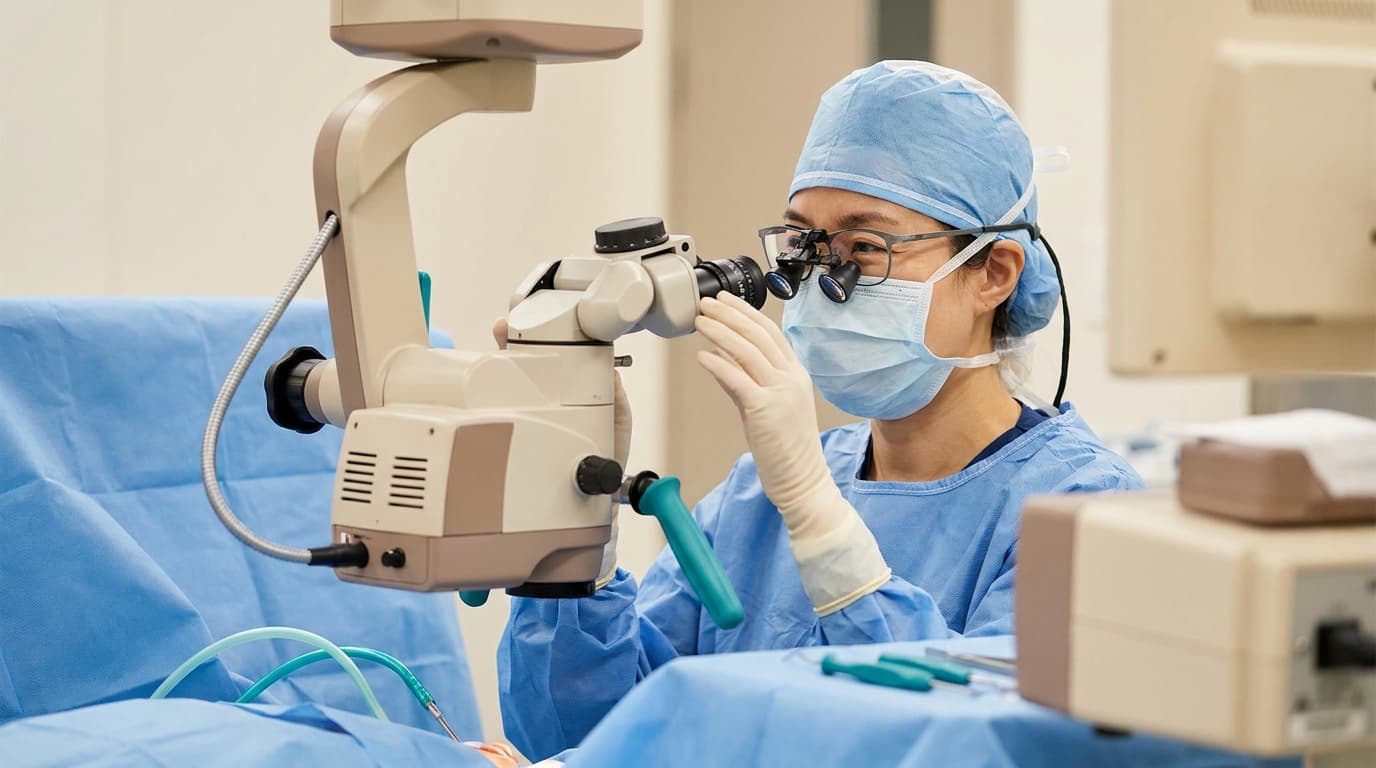
Why I built a lifetime guarantee around this
Here's the philosophy that shapes how our clinic runs. Refractive surgery isn't a transaction that ends when you walk out the door — your eyes keep living for decades. So we operate a lifetime surgery guarantee and a dedicated revision-surgery focus, and the same surgeon who examined and operated on you stays responsible for your case long-term.
That means if your vision drifts years later, you're not starting over with a stranger who doesn't know your history. We have your original measurements, we know exactly what was done, and we can tell quickly whether you're looking at regression, presbyopia, or something else — and what, if anything, to do about it.
The honest limitation
I won't dress this up: not every eye can be enhanced. A touch-up still needs enough remaining corneal tissue to perform safely. If your cornea is already thin — perhaps because your original prescription was high and used up much of the available tissue — then a second corneal procedure may not be on the table. In that situation we look at alternatives, such as a surface treatment or, occasionally, a lens-based option, but I'd be dishonest to imply every patient has an unlimited number of touch-ups available. Your cornea sets the budget.
And I can't promise you'll never experience any change. No surgeon truthfully can. What I can promise is honest measurement, a clear explanation of which kind of change you're facing, and a straight answer about whether an enhancement is safe for your particular cornea.
A practical note for patients abroad
If you had LASIK elsewhere and your vision has shifted, you can still come to us — bring whatever records you have from the original surgery, as they genuinely help. Plan at least 3 days and 2 nights in Seoul if an enhancement turns out to be appropriate; the next-day check-up matters and you shouldn't fly the same day. We're a one-minute walk from Sinnonhyeon Station in Gangnam, around 70 minutes from Incheon Airport. Stop contact lenses for some days before any exam — message us first, since soft and hard lenses differ. International patients pay exactly the same fee as Korean patients.
Write to me first, for free, in English on our official WhatsApp or LINE. Tell me when you had your original surgery, your original prescription if you know it, and what you're noticing now. I'll give you an honest first read on whether this sounds like regression, presbyopia, or something else worth examining — before you book any travel.
— Dr. Kim Sun-young, Medical Director, Healing Eye Clinic
Frequently asked questions
Does LASIK wear off over time?
For most people LASIK is permanent in the sense that the corneal reshaping doesn't undo itself. What can happen in a minority is regression — a small drift back toward your old prescription over the years — or the separate, universal arrival of presbyopia after the mid-forties. Regression is usually mild and often correctable with an enhancement.
What is a LASIK enhancement?
An enhancement, sometimes called a touch-up, is a second, smaller procedure to fine-tune your vision if a meaningful prescription returns. Depending on your cornea and the original surgery, it may involve lifting the original flap or using a surface treatment. It isn't a sign the first surgery failed — it's a planned-for option for the minority who need it.
How common is regression after LASIK?
Most patients keep their corrected vision long-term without needing a touch-up. Regression is more likely with very high original prescriptions, because more tissue was reshaped. When it does occur it's often small. I'd rather quote you that honest range than promise lifelong perfection that no surgeon can truthfully guarantee.
Can everyone get a LASIK enhancement if they need one?
Not automatically. An enhancement still requires enough remaining corneal tissue to do it safely, so we re-measure your cornea before agreeing to one. If there isn't enough tissue, we look at alternatives such as a surface procedure or, occasionally, a lens-based option. This is one honest limit of touch-ups, and I'm upfront about it.
Is regression the same as presbyopia?
No, and people often confuse them. Regression is a drift back toward your original distance prescription. Presbyopia is the normal age-related loss of near focus that arrives for everyone in the mid-forties, whether or not you've had LASIK. They feel different and are managed differently, so the first step is always to measure and identify which one you're actually experiencing.
Message us on official LINE / WhatsApp for a special offer
Your exact candidacy and cost are confirmed in a free 1:1 consultation.