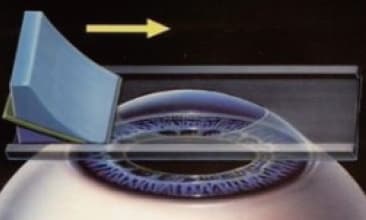
LASIK and Night Driving Glare: Halos, Starbursts, and the Truth
Worried about halos and glare when driving after LASIK? I'm Dr. Kim — here's why night vision symptoms happen, who's most at risk, how we screen pupil size, and what fades versus lasts.

Dr. Kim Sun-young, Director
Cornea · Glaucoma · Cataract
Contents
A patient who drove for a living messaged me last winter, and his question was very specific: "If I get LASIK, will the headlights on the motorway turn into starbursts? My whole income is night driving."
I respected that he asked the precise question rather than the vague one. Night-vision side effects — halos, glare, starbursts around lights — are one of the most genuine concerns with laser vision correction, and they're often discussed badly: either dismissed entirely or blown up into a horror story. Here's the measured version.
Why lights "bloom" at night after LASIK
To understand the symptom, picture what your pupil does in the dark. In bright daylight it's small. At night it widens to let in more light.
LASIK reshapes a central zone of your cornea — the optical zone — to focus light correctly. In good daylight, your small pupil sits comfortably inside that treated zone and everything is crisp. The trouble can come at night: if your pupil widens beyond the edge of the treated zone, some light enters through the transition area, where the cornea bends it slightly differently. Your eye reads that scattered, unfocused light as a halo or a starburst around a bright point — a streetlamp, an oncoming headlight.
Night glare is mostly a story about pupil size versus treatment zone. When your dark-adapted pupil stays within the treated optical zone, edge effects are minimal. The mismatch is what creates halos.
That's also why these symptoms show up at night and around bright lights specifically, and rarely bother people in daylight.
Temporary versus lasting — the distinction that matters
This is the part patients most need to hear clearly, so I separate it cleanly.
In the early weeks, glare and halos are common and largely a feature of healing. The corneal surface is still settling, there can be a little swelling, and your visual system is adapting. For the great majority, this fades steadily over weeks to a few months, and comfortable night driving returns.
A smaller group notices some residual night-vision effect that persists. This is the group I work hardest to identify before surgery — because much of that risk is predictable from measurements taken in the exam room, not discovered afterward.
Who carries more night-glare risk
The factors that push the risk up are largely measurable:
- Large pupils in dim light — the bigger your dark-adapted pupil, the more likely it overruns the treated zone.
- Higher prescriptions, which require a steeper reshape and can make edge effects more pronounced.
- Astigmatism, depending on its pattern.
- A smaller optical zone relative to your pupil, which is partly a planning decision the surgeon controls.
None of these are automatic disqualifications. They change how I plan — and sometimes which procedure I recommend.
How we screen, and how we reduce the risk
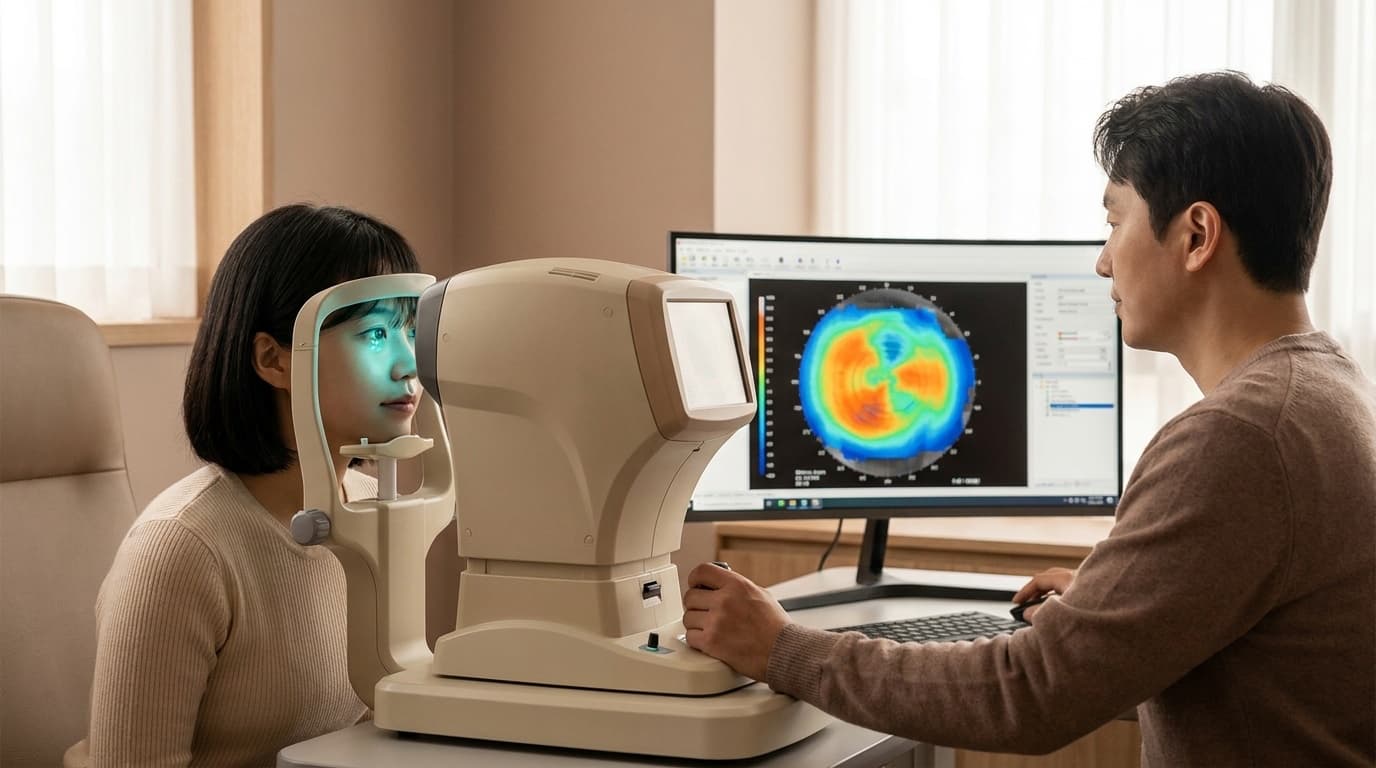
For anyone who asks about night driving, the exam goes beyond the basics. I measure your pupil size in dim light, not just in the bright room, because the dark-adapted size is the number that matters here. I map your corneal topography and your higher-order aberrations, and I look at your prescription and astigmatism together.
Then we plan around it. Where it helps, Custom (wavefront-guided) LASIK designs the correction with your specific aberrations, contrast, and night vision in mind. Choosing an adequate optical zone for your pupil reduces edge effects. And for some patients, SMILE or a surface procedure may be the better fit. The point is that the plan is built from your measurements, not from a default setting.
The honest limitation
Here's what I won't pretend. I can lower your night-glare risk with careful pupil measurement, the right optical zone, and a wavefront-guided design where appropriate. I cannot guarantee you'll see zero halos. Visual perception is individual; two people with similar eyes can adapt differently, and some residual glare is a real, if uncommon, possibility — particularly for large pupils with high prescriptions.
So if you drive at night for a living, I'll tell you that honestly before you decide, factor it heavily into the plan, and if your measurements suggest the risk is meaningful for your particular job, I'll say so rather than reassure you into surgery. Anyone promising perfect night vision with no possibility of glare is overselling.
Living through the early weeks
For most people the practical advice is simple: be cautious with night driving in the first weeks while glare is most noticeable, keep up your eye drops, and give your visual system time to adapt. Because the same surgeon follows you from exam to surgery to aftercare here, we track how your night vision is actually settling and adjust your follow-up to it. Our lifetime guarantee means if something about your night vision isn't behaving the way it should, you come back and we look — you're not left wondering.
For patients travelling in
Plan at least 3 days and 2 nights in Seoul, since the next-day check-up matters and you shouldn't fly the day of surgery. Be especially mindful that your vision will be light-sensitive right after surgery, so don't plan to drive yourself anywhere that evening. We're a one-minute walk from Sinnonhyeon Station in Gangnam, roughly 70 minutes from Incheon Airport. Stop contact lenses for some days before the exam — message us first, as soft and hard lenses differ. And international patients pay exactly the same as Korean patients, with no surcharge.
Write to me first, for free, in English on our official WhatsApp or LINE. Tell me your prescription, whether you know you have large pupils, and how much night driving your life involves. I'll give you an honest read on your glare risk before you commit to anything.
— Dr. Kim Sun-young, Medical Director, Healing Eye Clinic
Frequently asked questions
Is glare and halos after LASIK normal?
In the early weeks, yes — many patients notice halos around lights or starbursts when driving at night, and for most it settles steadily as the cornea heals over the following months. What I screen carefully for beforehand is the smaller group whose pupil size and prescription make lasting night-vision symptoms more likely.
Does night vision get better after LASIK?
For the large majority, yes. Early glare is usually part of healing and improves over weeks to months as the corneal surface stabilises and your brain adapts. A minority notice some residual night-vision effect, which is exactly why pupil size and treatment zone planning before surgery matter so much.
Why do large pupils increase glare risk after LASIK?
At night your pupil widens. If it widens beyond the treated optical zone of the cornea, light entering through the untreated edge isn't focused the same way, which the eye perceives as halos or starbursts. That's why I measure your pupil size in dim light and plan the treatment zone around it, rather than using a one-size setting.
Can custom or wavefront LASIK reduce night glare?
It can help. Custom (wavefront-guided) LASIK maps your eye's higher-order aberrations and designs the treatment with contrast and night vision in mind, and a well-sized optical zone reduces edge effects. It lowers the risk for many people, but it can't promise zero glare — your pupil size and prescription still set the baseline.
Will I be able to drive at night after LASIK?
Almost everyone returns to comfortable night driving once healing settles. I usually ask patients to be cautious with night driving in the first weeks while glare is most noticeable, then it typically eases. If you do a lot of night driving for work, tell me up front so I can factor it into the plan and the technique I recommend.
Message us on official LINE / WhatsApp for a special offer
Your exact candidacy and cost are confirmed in a free 1:1 consultation.