Early Cataracts on Your Report: Does It Mean Surgery Yet?
Told you have early cataracts? A Seoul cornea and cataract specialist explains the words on your report and what they mean for timing and next steps.

Dr. Kim Sun-young, Director
Cornea · Glaucoma · Cataract
Medically reviewed byDr. Kim Sun-young, Director· Medical Director
Edited by: Dr. Kim Sun-young
Contents
I'm Dr. Kim Sun-young. If the sheet from your eye exam says "early cataracts", an ophthalmologist has noticed some clouding in the clear lens behind your pupil, usually not enough yet to change how you live. For most people with early cataracts, the plan is to watch, update glasses if needed, and act when the cloudiness starts to take away something you care about.
If you've already opened four tabs on this, start with the vocabulary. The words on your report, and the words you'll hear in the exam room, decide what happens next.
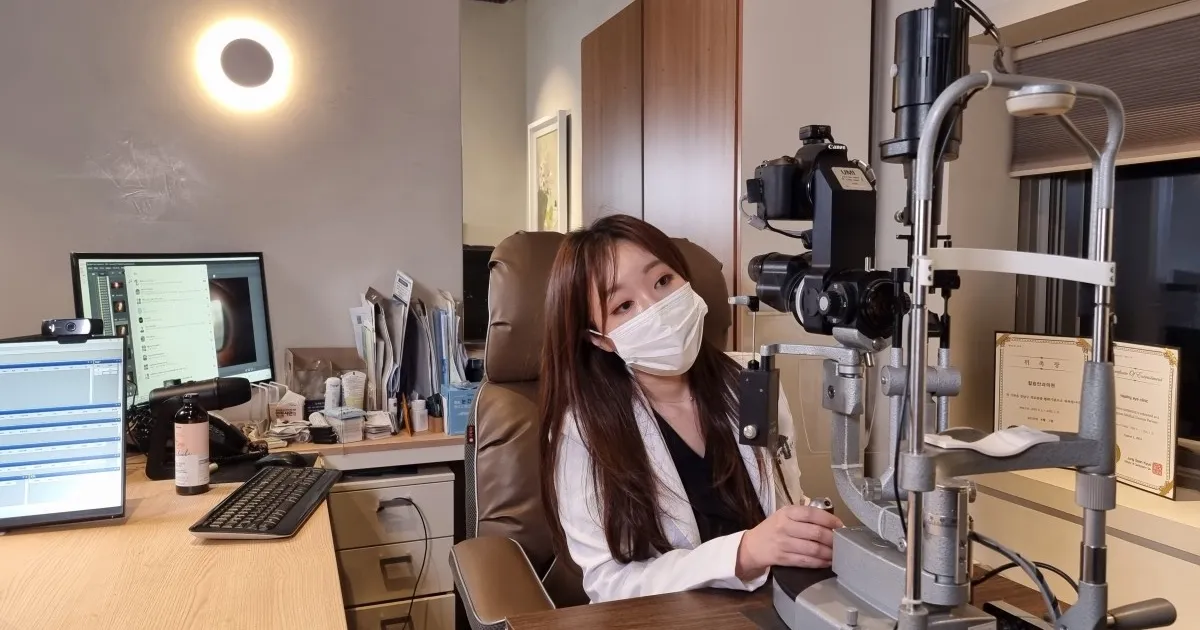
"Early" describes the lens, and the lens is only half the decision
A cataract is graded on how cloudy the lens looks under the microscope. Whether it needs treatment is decided by something else: how your vision and your daily life are affected. Two people with the same grade can need very different advice.
The American Academy of Ophthalmology puts the trigger plainly: surgery is worth considering when cataracts keep you from doing things you want or need to do. The National Eye Institute adds that most people don't need to rush into surgery. So the word "early" on its own is not a deadline.
What it is, though, is a starting point for tracking. A lens that is a little cloudy at 52 will usually be a little more cloudy at 57. The speed varies a lot between people, which is why a single report tells you less than two reports a year or two apart. At Healing Eye Clinic, one dedicated surgeon owns your care from exam to aftercare, so the same doctor compares the two.
What do nuclear, cortical and posterior subcapsular mean on my report?
The three terms name where in the lens the clouding sits. Location matters because it changes which symptoms show up first and how fast they start to bother you, even when the report says "mild" or "trace".
Nuclear (often written NS, for nuclear sclerosis). The center of the lens slowly hardens and turns yellow-brown. This is the common age-related pattern. It tends to move slowly, and early on it can make colors look a little duller or shift your glasses prescription.
Cortical. Spoke-like streaks start at the outer edge of the lens and point inward. Because they begin at the edge, many people notice little until the streaks reach the center of the pupil. Glare from headlights can be an early complaint.
Posterior subcapsular (PSC). A small cloudy patch forms at the back surface of the lens, right in the line of sight. Even a small PSC can make reading and bright light harder than its size suggests. It is the type that tends to come up in younger people, and it is associated with long-term steroid use and diabetes. If you're under 50 and see PSC on your report, it's worth asking your doctor about steroid medicines and blood sugar, because those associations change what else gets checked.
Reports often add a grade such as "1+" or "trace". The grading scales differ between clinics, so a "1+" from one ophthalmologist and a "grade 1" from another aren't always the same thing. If you bring old reports to a new doctor, bring the actual pages rather than a summary.
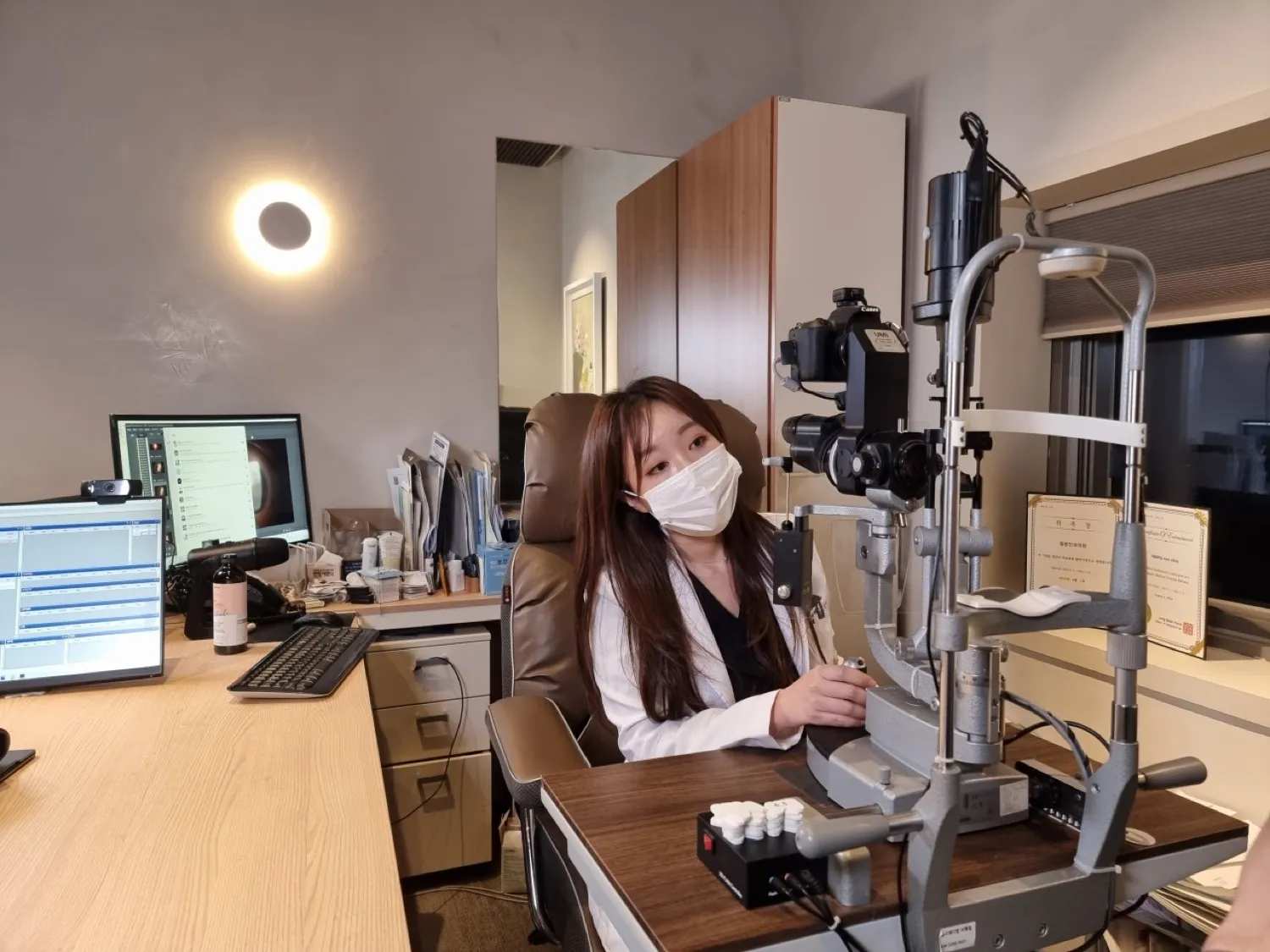
Which measurements decide whether early stays early?
Three measurements carry more weight than the cataract grade itself: corrected acuity, glare testing and your history of prescription changes. Together they show whether the cloudy lens is actually taking away sight.
Corrected visual acuity (BCVA on many reports) is the sharpest line you can read with the ideal lenses in front of your eye, not with your current glasses. If that number is still good, new glasses can usually solve the blur for now.
But a standard eye chart is black letters on a bright white card in a dim room, and real life is a wet road at night with headlights coming toward you. Glare testing tries to recreate that. Someone can read the chart well and still struggle badly at night, and that gap is often what moves the conversation forward.
The third clue is a myopic shift. As a nuclear cataract hardens the center of the lens, the lens bends light more strongly, so you become more nearsighted. Some people notice they can suddenly read without their reading glasses, sometimes called "second sight". It feels like an improvement, but it is usually the cataract changing your focus.
Timing is the hardest part of cataract care to explain in one sentence. The exam gives us the measurements. Only you can tell us what the change is taking from your days.
What can I do while the cataract is still early?
An updated glasses prescription, brighter light for reading and close work, and sunglasses outdoors cover most of what you can do. No eye drop or supplement has been shown to clear a cataract; the American Academy of Ophthalmology states that cataracts can be removed only with surgery.
The National Eye Institute lists the same everyday adjustments: brighter lights at home or work, anti-glare sunglasses, and magnifying lenses for reading. The AAO also suggests UV-blocking sunglasses and a hat, not smoking, and keeping diabetes under control. Long-term steroid use is also associated with cataracts, so if you've used steroid drops or tablets for a long time, ask the prescribing doctor whether the course is still needed.
If you already have early cataracts, keep a short record: the date of each new glasses prescription, and a note when night driving or reading in dim light gets harder. That record is worth more at your next exam than any search result. For a closer look at the signs people tend to notice first, see the quiet signs of early cataract.
Risks of acting too early, and who should not rush
Cataract surgery is still surgery inside the eye. With early cataracts and good corrected vision, the risks can outweigh the gain, so many people wait.
The possible problems after cataract surgery include temporary inflammation and dryness, raised eye pressure, swelling at the back of the eye, and a later clouding of the capsule behind the new lens (often treated with a short laser procedure). Retinal detachment is uncommon but serious, and people with high myopia are generally considered at higher risk. Results vary from person to person.
People who should think hardest before acting on an early finding include:
- those whose corrected vision is still good and who aren't troubled at night;
- those with high myopia, where the retina needs a careful look first;
- those with uncontrolled diabetes or active eye inflammation, which usually need attention before any lens surgery.
The in-person exam decides suitability, and for an early cataract the answer is often "not yet". Our post on how the timing of cataract surgery is decided goes further into that choice.
Words you'll hear later, if surgery does come up
If the cataract progresses, the conversation changes from "watch" to "which lens". The cloudy natural lens is removed and replaced with a clear artificial one, called an intraocular lens (IOL).
- Monofocal IOL: one focus distance, most often set for distance; you usually still need reading glasses.
- Multifocal or EDOF IOL: designed to give a range of focus and reduce dependence on reading glasses, with a trade-off of possible halos at night.
- Toric IOL: a version that also corrects astigmatism.
None of this needs deciding while the cataract is early. The prescription and astigmatism records you keep now feed into lens planning later, when the choice of lens can also address presbyopia and astigmatism in the same operation. Our cataract surgery page explains how that works at Healing Eye Clinic, and the clinic's Korean site has a page on what a cataract is. If you're planning a trip around it, one eye or both, and how long to stay covers the logistics.
What makes a second look in Seoul practical
At Healing Eye Clinic, one dedicated surgeon follows you from the exam through surgery and aftercare, so the person who reads your first report is the person who judges any change later. Consultations can be held with an English interpreter.
The clinic is at 470 Gangnam-daero, one minute on foot from Sinnonhyeon Station, and it's open until 21:00 on Fridays, which can help if you're flying in after work. The English homepage lists the clinic's doctors and treatments.
If you'd like a second reading of your situation, send a photo of your latest eye exam report on WhatsApp, along with your current glasses prescription and, if you have one, an older prescription for comparison, so your numbers are on hand when you discuss whether an in-person exam in Seoul makes sense.
Frequently asked questions
Can early cataracts go away on their own?
No. Once a lens has started to cloud, it doesn't clear by itself, and no drop or supplement has been shown to reverse it. What can change is the effect on your daily vision: updated glasses and better lighting can keep vision comfortable for years in many people.
How fast do early cataracts progress?
It varies widely. Many age-related nuclear cataracts change slowly over years, while a posterior subcapsular cataract can affect reading and glare sooner. Comparing two exams a year or more apart says more than a single report.
Can I get early cataracts in my 30s or 40s?
Yes, though it is less common than after 60. Long-term steroid use, diabetes, eye injury, previous eye surgery and high myopia are associated with cataracts appearing earlier. A dilated eye exam is how it is confirmed.
Should I still drive at night with early cataracts?
If headlights cause starbursts or you find yourself avoiding night driving, tell your eye doctor and consider limiting it until you've been examined. Glare is often the first everyday task early cataracts affect, even when the eye chart result looks fine.
Is it better to have cataract surgery early rather than waiting?
Not usually. Surgery is generally considered when the cataract gets in the way of daily activities. Operating on an eye that still sees well with glasses carries surgical risks without much gain, so the timing is decided case by case after an exam.
Message us on official LINE / WhatsApp for a special offer
Your exact candidacy and cost are confirmed in a free 1:1 consultation.