Korea Clear LASIK Reviews Korea Expats Post? Cost & Methods
Korea Clear LASIK reviews Korea expats post mostly cover day one. A Gangnam surgeon on the exam, cost factors, recovery and what to send on WhatsApp.

Medically reviewed byDr. Kim Sun-young, Director· Medical Director
Edited by: Dr. Kim Sun-young
Contents
Reading Korea Clear LASIK reviews Korea expats post on Reddit and still unsure whose word to trust before you fly in for eye surgery? Read this before you put a deposit down anywhere. You'll know which review claims hold up, which five questions show you how a clinic works, what decides the cost and how recovery fits a short trip, so you can choose a clinic and a method that suit your eyes and your budget.
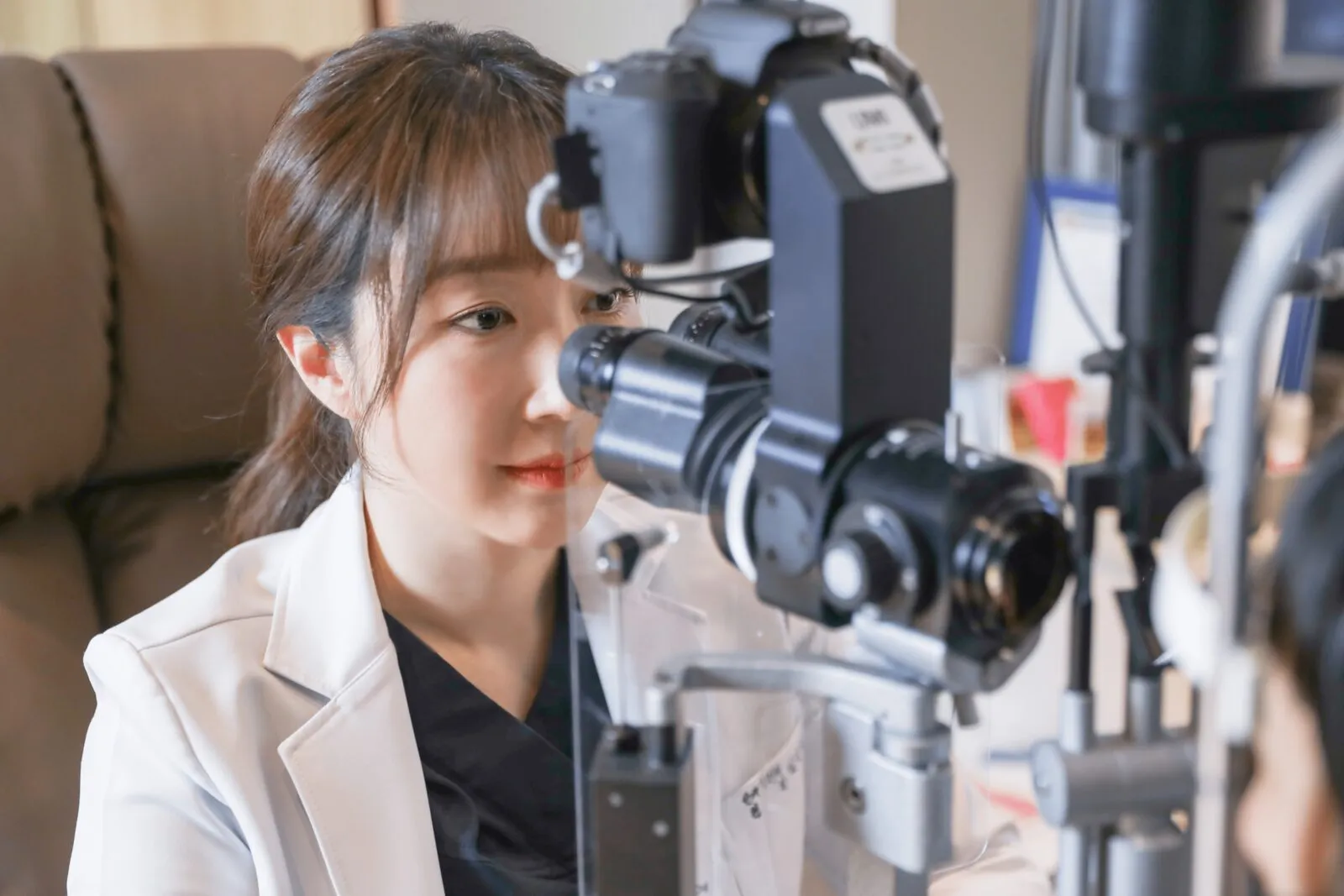
Hello, I'm Dr. Kim Sun-young, Medical Director at Healing Eye Clinic in Gangnam, and my specialty is cornea, glaucoma and cataract. Here, one dedicated surgeon stays with you from the exam through surgery and aftercare, international patients pay the same as Korean patients, and on-site interpreters in English, Japanese and Traditional Chinese go through your results with you. Clear SMILE LASIK is one of several methods I offer, next to LASEK, custom LASIK and lens implants.
I wrote this because most reviews describe the first two days, while the decision that matters gets made earlier, in the exam room.
Reviews tell you how the trip felt and how quickly vision came back for the person writing. They can't tell you whether your cornea suits a procedure that removes tissue from inside it, so judge a Korean clinic on its exam, on who operates, and on what happens after you fly home.
If you'd like a starting point, send your current glasses or contact lens prescription on WhatsApp, along with the one review claim that keeps nagging at you, and ask whether it applies to eyes like yours.
What do Clear LASIK reviews from Korea get right?
Most Korea Clear LASIK reviews Korea-based expats write are about day one: the numbing drops, the few minutes under the laser, the hazy evening, the clearer morning. That part is usually accurate. The procedure takes about ten minutes for both eyes, and many people are back to daily life within one to two days. A gritty, foreign-body feeling and some light sensitivity on surgery day are normal.
Three other claims come up again and again, and they deserve a closer look.
“Everyone in the thread qualified.” Threads are written by people who had surgery. People who were told no rarely post, so a thread can make it look as if nearly everyone is a candidate.
“Clear LASIK means the same thing at every clinic.” Names vary between clinics. With Clear SMILE at my clinic, the laser shapes a thin, lens-shaped piece of tissue (a lenticule) inside the cornea, and it comes out through one small incision. Before you compare quotes, read what each Clear SMILE LASIK name refers to, because two clinics can use similar words for different procedures.
“I had zero dryness.” Dryness in the first weeks after laser vision correction is common and usually settles. Because Clear SMILE keeps more of the corneal structure and nerves, dry eye afterward is relatively less likely than after standard LASIK. Less likely still leaves room for it, especially if your eyes were dry before surgery.
If you want to see how forum threads tend to be written, I've gone through LASIK in Korea threads on Reddit in a separate post.
Five questions to ask any Korean clinic before you book
You can put these to any clinic in Seoul, mine included. The way a clinic answers tells you more than its ratings do.
- Who measures my eyes, and who operates? If they're different people, ask how the surgeon checks the measurements. With us, one dedicated surgeon covers your exam, surgery and follow-ups, so the doctor who read your scans is the doctor at the laser.
- Which measurements decide whether I'm a candidate? Expect corneal thickness and shape (topography), pupil size, the tear film, how much cornea would remain after treatment, and a check for early signs of keratoconus. If a method is quoted before any of these are measured, ask what the quote is based on.
- What will you suggest if Clear SMILE isn't right for me? You want a clinic that can offer more than one method. A thin or irregular cornea often moves the conversation toward a surface treatment like LASEK or a lens implant (ICL), and a very high prescription often points to ICL.
- What happens after I fly home? Ask how you'll be followed and who you contact if something changes. After you leave Seoul, we keep following your progress by video call or messenger. The US Centers for Disease Control and Prevention also suggests arranging follow-up care at home before you travel for treatment.
- Is the price the same for local patients, and what does it include? At my clinic, international patients pay what Korean patients pay, and the detailed pre-op exam is charged separately from the surgery.
A clinic that answers all five plainly, in a language you understand, has told you more than a page of reviews.
Why does the exam matter more than the laser's name?
Clear SMILE changes the shape of the cornea by taking tissue out of it. Whatever cornea is left has to stay strong for the rest of your life, which is why thickness and the topography map matter more to me than the prescription number. A cornea that steepens unevenly toward the bottom can be an early sign of keratoconus, and removing tissue from a cornea like that can make the condition worse.
Pupils matter too. Large pupils are linked to glare and halos at night, so they need attention when the treatment is designed. The tear film tells me whether dryness needs settling before any surgery at all.
What decides the cost of Clear LASIK in Korea?
The method your exam points to is the first factor. Clear SMILE, custom LASIK, LASEK and ICL are separate procedures with separate prices, and you can't know which one applies until your eyes are measured.
The second is whether you need custom design. Custom (wavefront) LASIK is planned around the higher-order aberrations in your eye, and its cost moves with the exam results and the scope of the design. If your eyes show little higher-order aberration, I may not recommend custom design at all. Not pushing more than you need is our principle.
The third is the detailed pre-op exam, which is charged separately. The fourth is your stay: how many nights you spend in Seoul and where. Our partner hotel is the O'Cloud Hotel in Seocho-gu.
Your nationality doesn't move the price. International patients pay exactly what Korean patients pay. Exact costs are confirmed in a 1:1 consultation after the detailed exam; before that, ask on WhatsApp what your case would cost, with your prescription attached.
How does recovery fit a short trip to Seoul?
If your exam results allow it, the exam, surgery and next-day check-up fit into two days: exam in the morning, surgery in the afternoon, check-up the following day. For a less rushed trip I suggest two to three days, and we fit the exact schedule to your flights in the consultation.
Say you land at Incheon on a Thursday evening. The clinic is about 70 minutes from the airport and a minute's walk from Sinnonhyeon Station. On Friday we're open until 21:00, so the exam and surgery can share that day if your results allow it, with the check-up on Saturday between 10:00 and 14:00. We're closed on Sundays and public holidays, so a Sunday flight leaves no room for an extra visit, while a Monday flight leaves you one spare clinic day.
Hours, directions and the methods we offer are all on Healing Eye Clinic's English site.
The first week asks for a few habits more than anything else. The US Food and Drug Administration's LASIK guidance tells patients not to rub their eyes and to stay out of swimming pools and hot tubs for the first week or two. Light outings in sunglasses are usually fine once the first day has passed, but long screen sessions make dry eyes feel worse. What the rest of that week tends to feel like is covered in LASIK Korea reviews from the first week.
If the exam points you to LASEK instead, the surface of the cornea needs several days to heal, and the trip needs more days with it.
Risks and side effects to know
The common reactions are temporary. On surgery day expect a gritty feeling, watering and sensitivity to light. Over the first weeks, dryness and glare or halos around lights at night are common and usually ease over weeks to months. Less often, the correction lands slightly under or over target and may need an enhancement later. Infection and serious inflammation are rare, and they are the reason the drop schedule and the no-rubbing rule matter.
Waiting is wiser if your prescription has changed within the past year, if you're pregnant or breastfeeding, or if you have severe dry eye that should be stabilized first. A thin cornea, an irregular topography map or signs of keratoconus are reasons to compare LASEK or ICL instead, and a very high prescription often suits ICL better. The FDA's page on when LASIK is not for you also lists diseases and medicines that affect healing, and contact sports with a high chance of blows to the face.
ICL brings its own trade-offs, since it is surgery inside the eye: it needs enough space in front of your natural lens and carries risks such as raised eye pressure.
If pain gets worse instead of better, vision drops, or the eye turns red with discharge in the days after you fly home, see an eye doctor near you that same day, then message us with what you're noticing. Carry copies of your exam and surgery records; the CDC recommends taking your medical records home when you travel for treatment. If your vision drifts years later, we run a dedicated LASIK/LASEK revision center, and what a revision exam has to show explains how that decision is made.
If a clinic at home has already measured your corneas, send a photo of that thickness or topography printout on WhatsApp together with your prescription. That one page says more about your options than any thread.
If a parent or partner reads Korean, the Clear LASIK page of our main clinic in Korean is the one to forward to them.
Send your prescription with the dates you have in mind, and ask the one thing the reviews never answered for you. When you come to Gangnam, your dedicated surgeon will examine your eyes and recommend the method that fits them.
Frequently asked questions
Is Clear SMILE LASIK at Healing Eye the same as SMILE?
Both remove a lenticule through a small incision. Which of the methods suits you is decided from your own exam data, not from the name of the procedure.
Do international patients pay more at Healing Eye Clinic?
No. International patients pay exactly what Korean patients pay. The detailed pre-op exam is charged separately, and exact costs are confirmed in a 1:1 consultation after that exam.
Does Clear SMILE LASIK hurt?
Numbing drops are used before surgery, and most people describe pressure rather than pain during the short laser time. A gritty, foreign-body feeling and some light sensitivity on the day of surgery are normal and usually fade quickly.
Can I have Clear SMILE if my eyes are already a little dry?
Mild dryness doesn't automatically rule it out, and dry eye after Clear SMILE is relatively less likely than after standard LASIK. Severe dry eye is a reason to postpone surgery and stabilize the eyes first.
Should I stop wearing contact lenses before the exam?
Usually yes, because lenses temporarily change the shape of the cornea and can skew the measurements. The number of days depends on the lens type, so confirm it with us when you arrange your exam.
Message us on official LINE / WhatsApp for a special offer
Your exact candidacy and cost are confirmed in a free 1:1 consultation.