
Korea Hospital Eye Clinic or Specialist? 4 Real Differences
Korea hospital eye clinic or specialised eye clinic? A former university clinical professor compares waiting, cost and who operates for visitors.

Dr. Kim Sun-young, Director
Cornea · Glaucoma · Cataract
Contents
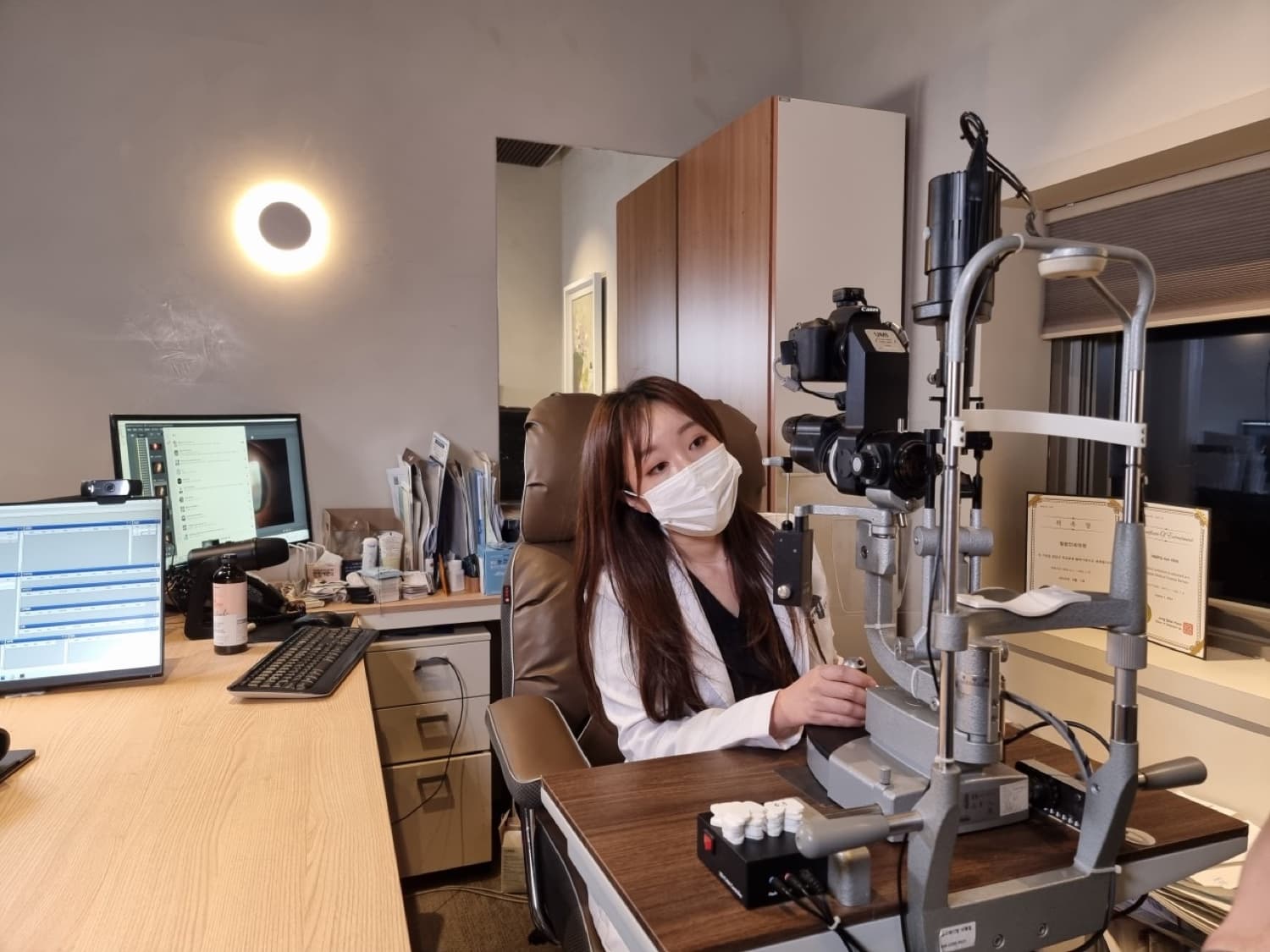
I'm Dr. Kim Sun-young, medical director of Healing Eye Clinic in Sinnonhyeon, Gangnam. Before I came here, I worked inside a university hospital as a clinical professor of cornea and cataract surgery at Uijeongbu St. Mary's, so I know both sides of this choice from the inside.
A question that arrives from abroad more often than you might expect: "Dr. Kim, wouldn't a big university hospital be safer than a private clinic?"
If you've searched korea hospital eye clinic, that's likely what's behind it. I completely understand — a famous hospital name feels like protection when you're far from home.
So let me be straight with you: a university hospital is the right place for some eye problems and an awkward one for others. The question isn't "which is better" but "which fits what you need on this trip." Here are the four differences I'd explain if you sat across from me.
Korea hospital eye clinic vs a specialised clinic: four differences
Korean university hospitals are excellent. They also exist to do a different job.
1. What each is built for
University hospital eye departments handle the hardest cases: complex retina and glaucoma, eye disease linked to other illnesses, and research and teaching.
A specialised clinic concentrates on a narrower set — vision correction, cataract and presbyopia lenses, dry eye. It's the difference between a general hospital kitchen and a restaurant that cooks five dishes every day.
2. Waiting
At a large hospital, a first visit with a specific professor can take weeks to arrange, and the day itself often involves several separate queues.
On a one-week trip, that's a real constraint. At a clinic, exam and surgery can usually fit inside the same stay if your eyes are suitable.
3. Who does what
University hospitals are teaching hospitals. A professor leads, and residents and fellows are often part of the exam and care — that's how the next generation is trained, and it's a good system.
But it means you should ask who performs each step. At our clinic, I examine you, I operate, and I see you afterwards.
4. Cost and what's included
Elective vision correction isn't covered by Korean national insurance in either setting, so don't assume the hospital is cheaper. Compare the published price and what's inside it.
Choose a university hospital for complex or multi-department eye disease. For vision correction, cataract lens surgery or dry eye on a short trip, a specialised clinic usually fits the timeline better — as long as the doctor who examines you is the one who operates.
What I took from the hospital into this clinic
I left university practice, but I kept its habits: full measurements, written records, and saying no when the data says no.
What you can check: international patients pay the same price as Korean patients, we hold 4.8 stars from 154 Google reviews, and I'm a full member of ESCRS. My training and credentials are on the Korean site's doctor profile page.
I share these so you have something concrete to check.
So which one suits me as a visitor?
A rough guide. If you're unsure, send us your records and I'll tell you honestly where to go.
| Your situation | Usually better fit |
|---|---|
| LASIK, SMILE, LASEK or ICL on a one- or two-week trip | Specialised eye clinic |
| Cataract surgery with otherwise healthy eyes | Either; a clinic is easier to schedule |
| Retina problems, advanced glaucoma, eye disease with diabetes | University hospital |
| You want a second opinion on a complex diagnosis | University hospital |
Price. Our list is public on the price page: full exam ₩150,000, Premium LASIK or LASEK ₩1,990,000 for both eyes, EVO ICL ₩5,500,000, and a monofocal cataract lens ₩1,250,000 per eye.
The questions to ask any clinic are in best eye clinic Seoul: five questions.
Side effects and the patients I send elsewhere
Being honest about limits is part of the job.
- After laser: temporary dryness, night glare and halos, and possible regression.
- After lens surgery: a period of adjustment, and regular checks of eye pressure.
- I refer on when I see retina or glaucoma problems that belong in a hospital — and I'll tell you which kind of department to look for.
Results and recovery vary from person to person.
Planning around either choice
- University hospital: contact its international patient centre early and confirm the doctor and date before booking flights.
- Our clinic: message us on WhatsApp; the exam is ₩150,000 and the stay is at least three nights for LASIK or SMILE.
- Contacts: stop soft lenses a week before any exam, rigid lenses longer.
- Records: bring old prescriptions and any previous eye reports.
How a specialised clinic works overall is in Korea eye clinic: what we treat, and getting here is in eye clinic in Seoul.
Don't choose by the name on the building
A famous name doesn't examine your eyes; a doctor does.
If your problem belongs in a university hospital, I'll say so and help you go there. If it fits a clinic, choose one where one doctor stays with you from the exam to the last check.
Send your records on WhatsApp. If we're not the right place, I'll tell you plainly.
I hope to meet you in Seoul.
— Dr. Kim Sun-young, Medical Director, Healing Eye Clinic (Sinnonhyeon, Gangnam, Seoul)
Frequently asked questions
Should I go to a Korean university hospital or an eye clinic?
It depends on the problem. For complex retina, glaucoma or disease that needs other departments, a university hospital is usually the right place. For vision correction, cataract lens surgery and dry eye on a short trip, a specialised eye clinic is usually more practical.
Can foreigners book a Korean university hospital eye department directly?
Many large hospitals have international patient centres that can arrange appointments, but waiting times for a specific professor can be long. Check availability before you book flights.
Who operates at a university hospital?
A professor leads the surgery, and because these are teaching hospitals, residents and fellows are often involved in parts of the care. Ask the hospital directly who will perform each step.
Is a university hospital cheaper for eye surgery?
Not reliably. Elective vision correction is privately paid in both settings, so compare the published price and what it includes rather than assuming.
What is your background?
I was a clinical professor of cornea and cataract surgery at Uijeongbu St. Mary's Hospital, part of the Catholic Medical Center, before becoming medical director of Healing Eye Clinic in Gangnam.
Can I see the same doctor every visit at your clinic?
Yes. The doctor who examines you is the doctor who operates and who checks you the next day and at later visits while you're in Seoul.
Message us on official LINE / WhatsApp for a special offer
Your exact candidacy and cost are confirmed in a free 1:1 consultation.