Korea Eye Clinic: What We Treat and How Visitors Use It
What does a Korea eye clinic actually treat? A Seoul eye surgeon explains vision correction, cataract and dry eye care, and how foreign patients use one.
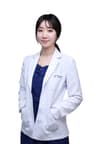
Dr. Kim Sun-young, Director
Cornea · Glaucoma · Cataract
Contents
I'm Dr. Kim Sun-young, medical director of Healing Eye Clinic in Sinnonhyeon, Gangnam, Seoul. I spent years as a clinical professor of cornea and cataract surgery at a Catholic university hospital, and today I see international patients every week, with an interpreter in the room from the first question to the last check.
The most common first message I get from abroad is short: "Dr. Kim, what exactly does a Korean eye clinic do — and can someone like me just walk in?"
If you typed korea eye clinic into a search bar, you're probably asking the same thing. That's a fair question. Korean clinics are often discussed only as "the place to get cheap LASIK," which leaves out most of what actually happens inside.
So let me be honest first: a good eye clinic is not a surgery shop. Most of what we do is measuring, explaining and sometimes saying "not yet." Here is the full picture, in the order I'd explain it to you in clinic.
What does a Korea eye clinic actually treat?
Korea has two kinds of places that look after eyes: university hospital eye departments and specialised eye clinics. The difference matters, and I've written about it separately in Korea hospital eye clinic vs a specialised clinic.
A specialised clinic like ours concentrates on four areas.
1. Vision correction
This is why most visitors come. It covers laser options — Clear LASIK, custom LASIK, LASEK and SMILE — and lens implants (ICL) for prescriptions or corneas that laser can't safely handle.
Think of it like tailoring: the cloth (your cornea) decides what can be cut, not the customer's wish. The exam chooses the procedure; the patient chooses whether to go ahead.
2. Cataract and presbyopia lenses
From the mid-forties, reading glasses and cloudy lenses start to show up. We replace the clouded natural lens with an artificial one; cataract surgery is my own clinical background.
Monofocal, multifocal and toric lenses each trade something. I spend more time on that conversation than on the operation itself.
3. Dry eye
Dry eye is the quiet reason many people feel their vision is "off." We run a dedicated dry-eye clinic, and I treat the surface before any surgery — a dry surface blurs the very measurements we rely on.
4. Myopia control and revisions
For children whose myopia is rising, dream lenses (ortho-k) are worn at night to slow it. We also see adults whose earlier LASIK or LASEK left a residual prescription and who want to know whether a revision is possible.
A Korea eye clinic is mainly about four things: vision correction, cataract and presbyopia lenses, dry eye, and myopia control or revision. Complex retina or glaucoma cases are usually better served at a university hospital.
Why the doctor who examines you should be the one who treats you
This is the rule I care about most. At our clinic, the doctor who reads your corneal data is the doctor who operates and the doctor who checks you afterwards. You are not passed from a consultant to a surgeon you meet on the table.
A few things you can check rather than take on trust. International patients pay exactly what Korean patients pay. We hold 4.8 stars from 154 Google reviews, and I'm a full member of the European Society of Cataract and Refractive Surgeons (ESCRS). The Korean head office explains what sets the clinic apart in more detail.
I'm not listing these to impress you. They're simply things you can verify.
So which part of the clinic do I actually need?
Use this as a first sort. Your exam gives the real answer.
| If this sounds like you | Where you'd usually start |
|---|---|
| Glasses or contacts, 20s–30s, stable prescription | Vision correction exam (LASIK, LASEK, SMILE or ICL) |
| Over 45, reading glasses, glare at night | Cataract / presbyopia lens assessment |
| Burning, gritty, tired eyes, contact-lens fatigue | Dry-eye clinic first |
| A child whose myopia keeps increasing | Myopia control (dream lens) consultation |
Price. Our list is public on the price page. The full pre-op exam is ₩150,000, Premium LASIK or LASEK is ₩1,990,000 for both eyes, Clear LASIK ₩2,700,000, and EVO ICL ₩5,500,000. A monofocal cataract lens is ₩1,250,000 per eye.
How to choose among clinics is in how to judge the best eye clinic in Seoul.
Who I turn away, and the side effects I explain
No eye procedure is free of risk, and you should hear that from the surgeon first.
- Dry eye after laser is common for a while. It usually settles, but it's real.
- Glare and halos at night can appear early, especially with large pupils.
- Regression — a small part of the prescription returning — is possible.
I don't operate on a cornea that shows signs of keratoconus, on a prescription still changing, or on an untreated dry surface. Results and recovery vary from person to person.
Getting to a Korea eye clinic from abroad
- Book directly. A private clinic needs no referral. Send your prescription, age and dates on WhatsApp.
- Stop contact lenses first: at least a week for soft lenses, longer for rigid ones.
- Stay long enough: LASIK or SMILE at least three nights, LASEK about a week, ICL one or two extra days.
- Location: one minute from Sinnonhyeon Station, about 70 minutes from Incheon Airport. Directions are in finding an eye clinic in Seoul, and why so many clinics sit here is in eye clinic Gangnam Korea.
- Afterwards: one-week, one-month and three-month checks can be done at home with the written record we give you.
Don't book a procedure yet — book the exam
If you take one thing from this page: don't choose the procedure first and look for a clinic to sell it to you.
It doesn't have to be our clinic. But choose one where the doctor who reads your data is the one who treats you, and who will say "not yet" when that's the truth.
Message us on WhatsApp with your prescription, age and travel window. If nothing we offer is right for your eyes, I'll tell you plainly.
I hope to see you in Seoul.
— Dr. Kim Sun-young, Medical Director, Healing Eye Clinic (Sinnonhyeon, Gangnam, Seoul)
Frequently asked questions
What does a Korea eye clinic treat?
Most specialised eye clinics in Korea focus on vision correction (LASIK, LASEK, SMILE, ICL), cataract and presbyopia lens surgery, dry eye care and myopia control for children such as ortho-k lenses. Complex retina or glaucoma cases are usually managed at university hospitals.
Can foreigners visit an eye clinic in Korea without a referral?
Yes. A private eye clinic in Korea does not need a referral; you book directly. At our clinic, international patients message us on WhatsApp, share their prescription and travel dates, and we set an exam day.
Do foreign patients pay more at a Korean eye clinic?
Not at our clinic. International patients pay exactly the same price as Korean patients, and the full pre-op exam is ₩150,000. Ask any clinic you consider whether a foreigner surcharge applies.
Is there an English-speaking doctor or interpreter?
Yes. We have English, Japanese and Traditional Chinese interpreters on staff, and the interpreter stays with you from the exam through the consent form and the follow-up visit.
How long should I stay in Korea for eye surgery?
For LASIK or SMILE, plan at least three nights and ideally four. LASEK needs about a week, and ICL may need one or two extra days if the lens has to be ordered.
Can I just get an eye exam without surgery?
Yes. Many visitors come only for the full exam and a clear answer about which option fits, and some leave with the advice not to operate. The exam itself is useful even if you decide later.
Message us on official LINE / WhatsApp for a special offer
Your exact candidacy and cost are confirmed in a free 1:1 consultation.