
Korea Eye Clinic First Visit: What Happens at Each Station
Your Korea eye clinic first visit, step by step: what to do before arrival, registration, each exam station, the interpreter, the surgeon and the quote.

Dr. Kim Sun-young, Director
Cornea · Glaucoma · Cataract
Contents
I'm Dr. Kim Sun-young, medical director of Healing Eye Clinic in Sinnonhyeon, Gangnam, Seoul. I was a clinical professor of cornea and cataract surgery at a university hospital, and I now see international patients every week, with an English interpreter beside them from the front desk to the consent form.
A message we often get the week before someone flies in: "Dr. Kim, what exactly happens on the first day? I don't want to look lost."
If you're searching Korea eye clinic first visit, you probably feel the same. I understand. A clinic in another country, a language you don't speak, machines you've never seen — it's a lot to walk into.
So let me be honest first: the first visit isn't where you buy a surgery. It's where your eyes are measured carefully enough that the right answer — including "not yet" — becomes obvious. Here's how the day runs, in the order you'll experience it.
Korea eye clinic first visit: the day, step by step
Most of the first visit is measurement. The conversation with the surgeon comes at the end, when there's something real to talk about.
1. Before you arrive
Stop contact lenses: at least a week for soft lenses, longer for rigid ones. Lenses change the shape of the cornea, and the measurements would be wrong.
Send your current prescription, age and any eye history ahead on WhatsApp. Bring your glasses, a medicine list and sunglasses.
2. Registration with your interpreter
You'll fill in a short history form: medicines, allergies, past eye surgery, general health. Your interpreter goes through it with you, so nothing gets lost in translation.
No referral is needed. Vision correction and cataract surgery are self-pay for visitors.
3. The exam stations
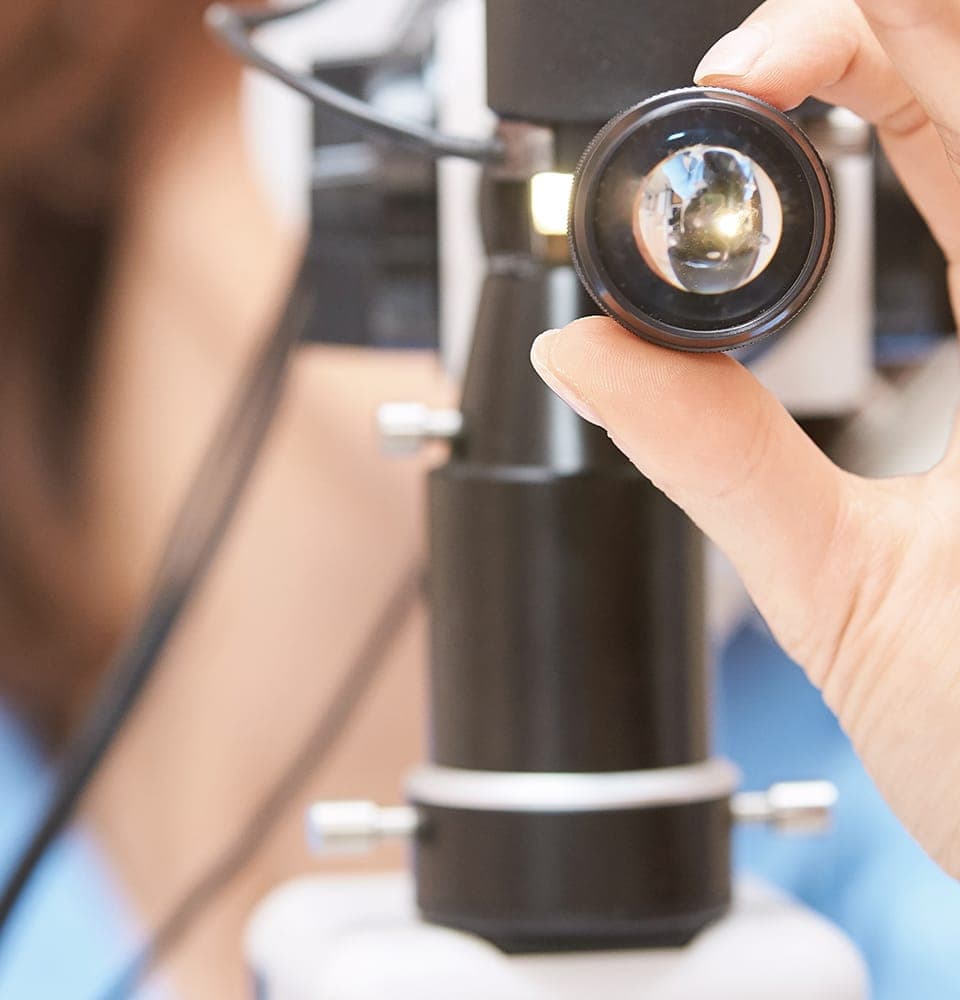
This is the bulk of the day. A technician guides you from machine to machine, and several readings are repeated to cross-check them.
Think of it like a pilot's pre-flight inspection. Each machine checks one thing, and no single reading is trusted alone. The table below shows what each station measures.
4. Dilating drops and the back of the eye
Partway through, drops widen your pupils so I can examine the retina and optic nerve and measure your prescription precisely.
Your near vision will be blurry and light will feel bright for several hours. That's why the sunglasses matter.
5. The consultation with the surgeon
At the end, I sit down with you and your interpreter and go through your own numbers. I explain which procedures your eyes support, which they don't, and why. Then you get the quote.
The first visit runs in this order: prepare at home, register with the interpreter, pass through the measurement stations, have dilating drops, then sit down with the surgeon to go through your numbers and the quote.
What the clinic as a whole treats, and how visitors use it, is in my overview of what a Korea eye clinic does.
Why the doctor who reads your measurements should be the one who treats you
Machines produce numbers. Someone has to decide what those numbers mean for your eye.
At our clinic, the doctor who goes through your measurements is the doctor who operates and the doctor who checks you afterwards. The person explaining your options is the one who will be responsible for the result.
Things you can verify: international patients pay exactly what Korean patients pay — no foreigner surcharge. We hold 4.8 stars from 154 reviews on Google. I'm a full member of the European Society of Cataract and Refractive Surgeons (ESCRS).
I'm not listing these to impress you. I'm listing them so you have something to check.
So what does each exam station actually measure?
| Station | What it measures | Why it matters |
|---|---|---|
| Prescription | Your current refraction, with and without drops | Sets the correction target |
| Corneal map | The shape of the front and back of the cornea | Screens for keratoconus and irregularity |
| Corneal thickness | How much cornea there is | Decides whether laser is safe |
| Tear film | How stable your tears are | Untreated dry eye changes the plan |
| Pupils and pressure | Pupil size in dim light, eye pressure | Night glare risk, eye health |
| Inside the eye | Chamber depth, lens clarity, retina | Decides ICL or cataract options |
What the measurements usually lead to:
- Moderate myopia with a healthy, thick cornea: often laser, such as Clear LASIK.
- Very high myopia or thin cornea: often ICL.
- Clouding of the natural lens, usually later in life: cataract surgery.
Cost of the first visit. The full pre-op exam is ₩150,000. Procedure prices are published on our price page, and the quote you get after the consultation is the same one a Korean patient would get.
What can go wrong on a first visit — and who I send home
Nothing about the exam is painful. A few things are mildly unpleasant:
- Dilating drops blur near vision and cause light sensitivity for several hours.
- Bright flashes from some machines, and a puff of air or a gentle touch for eye pressure.
- Temporary dry or tired eyes after a long session of looking into machines.
Some people leave without a surgery date. If your contact lenses weren't out long enough, the measurements aren't reliable and we may ask you to come back. If the corneal map shows early keratoconus, if dry eye needs treating first, or if your prescription is still changing, I'll say so plainly.
The Korean head office lists our diagnostic equipment on its equipment page, if you'd like to see the machines before you come.
Getting there and planning the day
- Book a morning slot so the dilated hours don't eat your evening.
- Don't drive after the drops; take the subway or a taxi.
- We're one minute from Sinnonhyeon Station, about 70 minutes from Incheon Airport. Directions are in finding an eye clinic in Seoul.
- Hours: Monday to Thursday 10:00–18:30, Friday until 21:00, Saturday 10:00–14:00, closed Sundays and public holidays.
- Comparing clinics? The questions worth asking are in how to choose an eye clinic in Korea, and how a university hospital eye department differs from a specialist clinic is in Korea hospital eye clinic or specialist.
Don't book the procedure yet — book the first visit
If you take one thing from this page: the first visit should end with an explanation, not a sales pitch.
It doesn't have to be our clinic. But choose one where the surgeon personally goes through your numbers with you, and will tell you "not yet" if that's the truth.
Send us your prescription, your age and your travel window on WhatsApp. We'll tell you what to stop, what to bring, and which day to come. If your eyes aren't ready for surgery, I'll tell you plainly.
I hope to see you in Seoul.
— Dr. Kim Sun-young, Medical Director, Healing Eye Clinic (Sinnonhyeon, Gangnam, Seoul)
Frequently asked questions
What should I do before my first visit to a Korean eye clinic?
Stop contact lenses — at least a week for soft lenses, longer for rigid ones — and send your current prescription, age and any eye history ahead. Bring your glasses, your medicine list and sunglasses for after the dilating drops.
How long does the first visit take?
Plan on roughly half a day. Most of it is measurements, some repeated to cross-check, plus waiting for dilating drops to work. Don't book anything important for the rest of that day.
Do I need a referral or Korean insurance?
No. A private eye clinic in Korea does not need a referral, and vision correction and cataract surgery for visitors are self-pay. The full pre-op exam is ₩150,000.
Will an interpreter be with me the whole time?
Yes. We have English, Japanese and Traditional Chinese interpreters on site, and the interpreter stays with you through the exam stations, the consultation with the surgeon and the consent form.
Will I get a price on the first visit?
Yes, after the exam and the consultation. The quote is based on the procedure your measurements support, and international patients pay exactly what Korean patients pay.
Can I have surgery on the same day as the first visit?
Sometimes, but I don't recommend planning a trip around it. The exam can find something that changes the plan, and dilating drops leave your vision blurry for hours. A later day is the safer shape.
Message us on official LINE / WhatsApp for a special offer
Your exact candidacy and cost are confirmed in a free 1:1 consultation.