Korea SMILE LASIK Reviews, Korea First Trip: What to Check
Most Korea SMILE LASIK reviews Korea travelers post describe one week. A Seoul eye surgeon lists what to check instead before your first trip.

MS, Catholic Univ. College of Medicine · Ophthalmology specialist, Catholic Medical Center · Clinical Professor (Cornea & Cataract), Uijeongbu St. Mary's Hospital · 108th Korean Ophthalmological Society Research Award · KDCA epidemiology citation
Medically reviewed byDr. Kim Sun-young, Director· Medical Director
Edited by: Dr. Kim Sun-young
Contents
Do the Korea SMILE LASIK reviews Korea travel forums are full of tell you anything you can check before your first trip to Seoul? Mostly they tell you how someone's first week felt. They can't show the thing that decides your surgery: how thick your cornea is and how evenly it's shaped. Only a full pre-op exam measures that.
Hello, I'm Dr. Kim Sun-young, Medical Director at Healing Eye Clinic in Gangnam. I trained as an ophthalmology specialist at Catholic Medical Center and served as Clinical Professor (Cornea & Cataract) at Uijeongbu St. Mary's Hospital, and the cornea is the tissue SMILE reshapes. With Clear SMILE LASIK, one dedicated surgeon stays with you through the exam, the surgery and the follow-ups. A medical interpreter for your language is provided at no extra charge, and you pay the same price a Korean patient pays.
Before you read another review, send a photo of your most recent eye exam or glasses prescription on WhatsApp, and ask whether your cornea suits SMILE or whether you should look at another method. Your existing records can also be the starting point for a first opinion on suitability by video or online consultation.
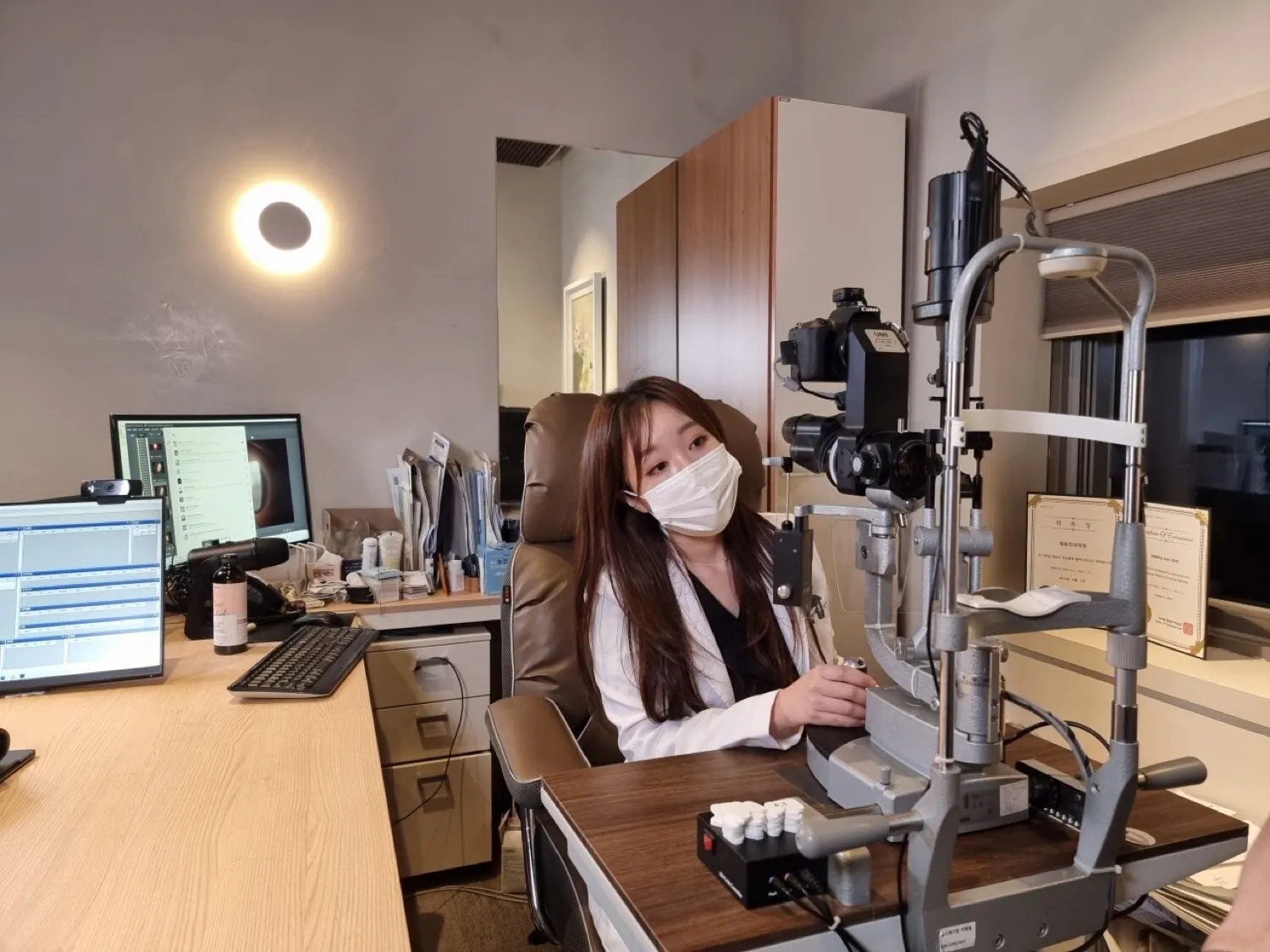
What can a review tell you, and what can't it?
A review covers one person's week: the ride from the airport, how clearly the results were explained, whether their eyes felt gritty that night. That part is useful, because it shows how a clinic treats people who don't speak Korean.
A review can't tell you whether that person's eyes are anything like yours. Two people with the same prescription can have corneas of different thickness. The topography map can show an irregular pattern that rules SMILE out for one of them and not the other. I read reviews the way I read a referral letter from another doctor: as background, never as the measurement. If you want a closer look at the threads themselves, my notes on LASIK reviews from Korea on Reddit go through them one by one.
Ask whether this applies to your eyes, which dates are open, and about the English interpreter.
Ask us on WhatsAppClaims you'll read again and again
Most Korea SMILE LASIK reviews, Korea-focused threads included, keep coming back to the same few claims. Here is how each one stands up medically.
“I was back at work the next day.” Partly true. Most people are back to daily life in one to two days, and the first check-up is the day after surgery. Vision is mostly stable by days two to three, and the cornea settles into a stable phase around the first month. A full day of screens on day one works for some people and wears out others.
“SMILE means no dry eye.” Not true as written. SMILE removes a thin, lens-shaped piece of tissue (a lenticule) through one small incision. That leaves more of the corneal nerves in place, so dry eye afterward is relatively less likely than after standard LASIK. Less likely still isn't never. If your eyes are already very dry, the dryness may need treating before any surgery. The trade-offs between the two are laid out in SMILE vs LASIK for people flying in.
“The clinic told me I wasn't a candidate.” People post this as a complaint. I read it as a clinic doing its job. A thin cornea, an irregular topography map or early signs of keratoconus point toward LASEK or an implantable lens (ICL), and very high myopia often suits ICL better. If SMILE isn't right for your eyes, I'll tell you plainly and explain what is.
“Every clinic calls it something different.” True. Reviews mix up SMILE, Clear SMILE and various laser names. What each SMILE name means sorts out the labels, and our Korean main site describes the same procedure on its Clear SMILE LASIK page.
How do I check a Korean clinic from home?
Reviews can give you a shortlist. Your final choice should come from the questions below, and they work for any clinic on your list, ours included. Our own answer is under each one.
- Who examines my eyes, and does the same doctor operate? Here, one dedicated surgeon handles your exam, your surgery and your follow-ups, so the person reading your scans is also the one doing your surgery.
- What does the pre-op exam measure, and who explains it? Our detailed exam runs to around 20 tests, and your surgeon goes through the results and the plan with you, with an interpreter. For SMILE, the readings that matter most are corneal thickness and shape, pupil size, the tear film and any warning signs of keratoconus.
- Will I understand the conversation where I agree to surgery? A medical interpreter for English, Japanese or Traditional Chinese is provided at no extra charge, and we review your results together in your own language.
- Do international patients pay a different price? No. International patients pay exactly what Korean patients pay.
- Is the clinic registered to treat international patients? Healing Eye is a medical institution registered with Korea's Ministry of Health and Welfare (MOHW) for international patients, and you can ask any clinic about this registration.
- What contact is there after I fly home? After you leave Korea, we keep following your progress by video call or messenger.
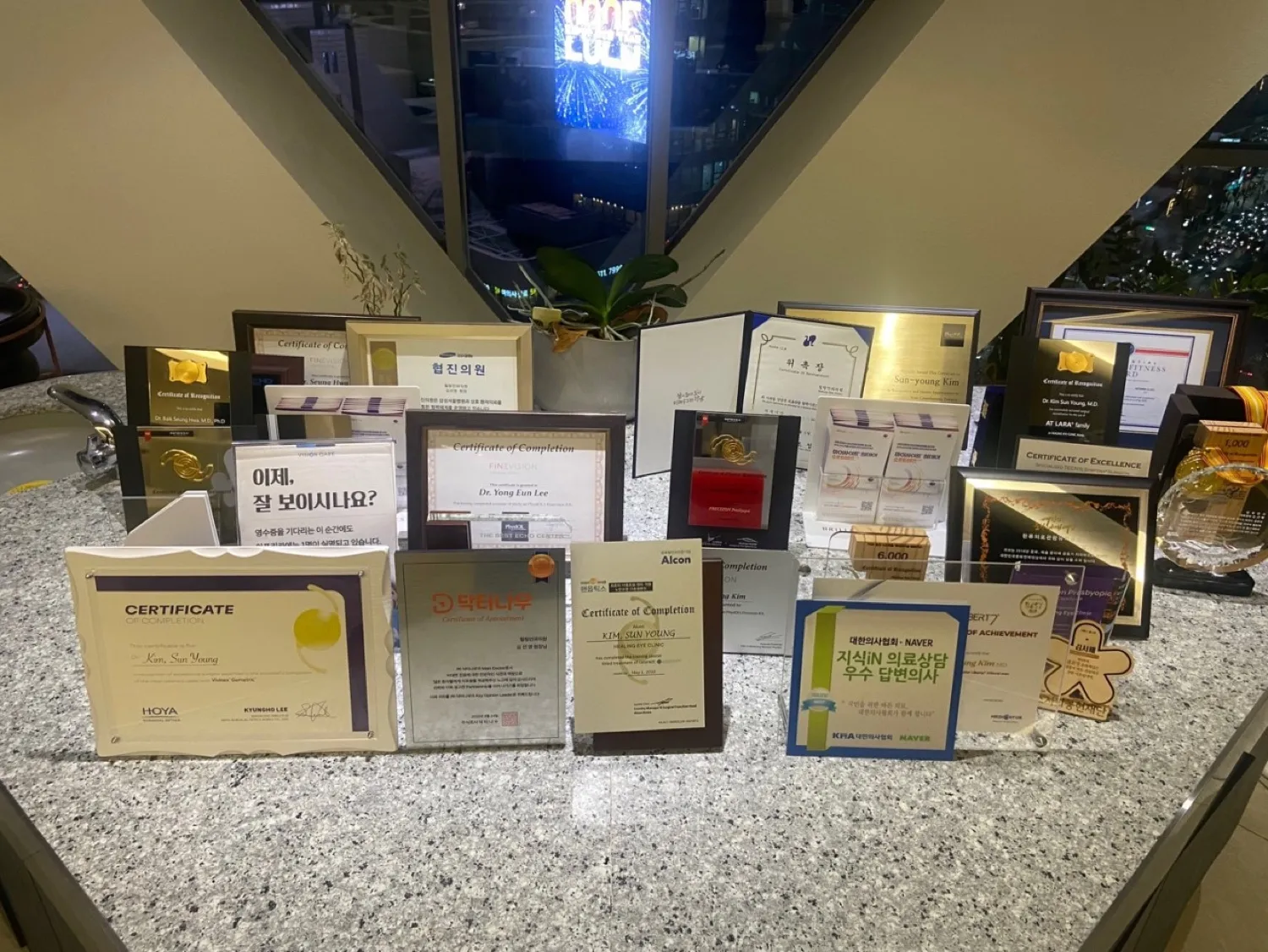
The treatments we offer and how the visit works are listed on Healing Eye Clinic's English homepage, so you can compare them with what other clinics publish.
Dry eye, night glare, a thin cornea: what can go wrong with SMILE?
On surgery day, a gritty feeling and sensitivity to light are normal and usually settle quickly. Over the first weeks, people mostly notice dryness, and some see halos or glare around lights at night. For most people these fade as the cornea heals. How fast that happens varies from person to person, which is why the next-day check-up comes before the flight.
Less often, the correction ends up slightly short of or past the target, which can mean glasses for some tasks or further treatment later. Infection or inflammation inside the cornea is rare, but it needs prompt treatment.
In general medicine, these are reasons to wait or choose a different method:
- Your prescription has changed within roughly the last year. The US FDA's patient guidance on laser vision correction also lists this as a reason to hold off.
- You are pregnant or breastfeeding.
- Your cornea is thin, the topography is irregular, or there are signs of keratoconus. LASEK or ICL may be safer. LASEK usually means a slower, more uncomfortable first few days, and ICL is surgery inside the eye, with its own risks such as raised eye pressure.
- Your myopia is very high, in which case an implantable lens may suit you better.
- You have severe dry eye, which may need treatment first.
If pain gets worse, redness spreads or your vision drops suddenly after you're home, see an ophthalmologist near you the same day. Then message us what you noticed and when it started.
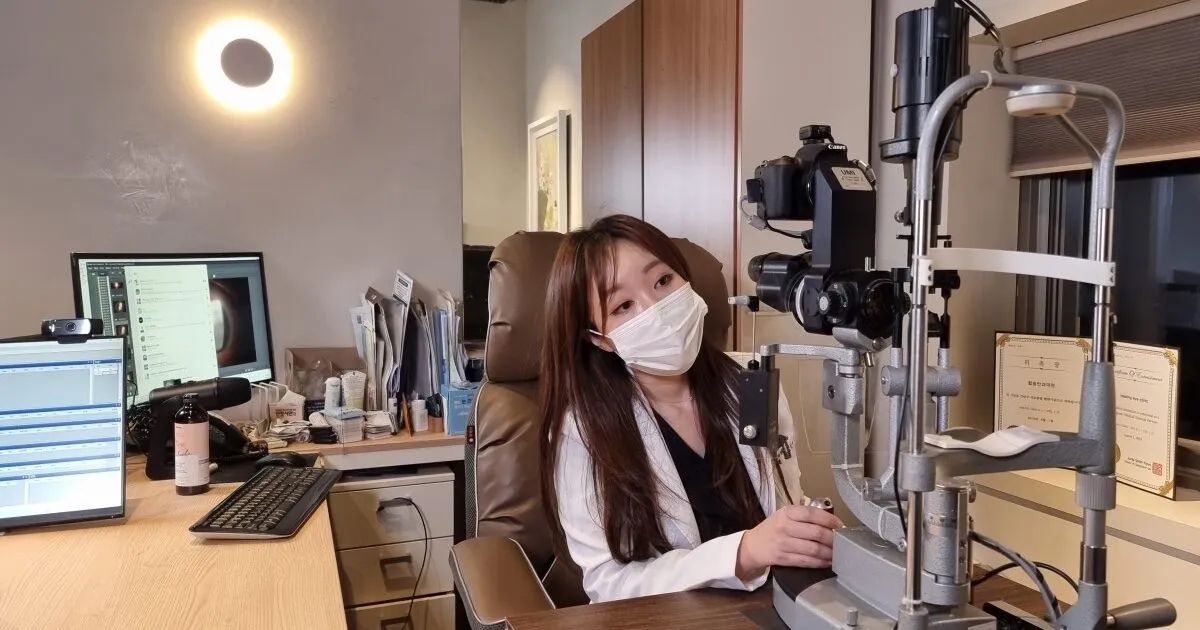
How does a first SMILE trip to Seoul run, day by day?
Arrival. Incheon Airport is about 70 minutes from the clinic, which is a one-minute walk from Sinnonhyeon Station. Our partner hotel is O'Cloud Hotel in Seocho-gu. Contact lenses temporarily change the corneal shape the exam measures. How many days before the exam you need to stop wearing them depends on the lens type, so confirm that at your consultation before you book flights.
Exam and surgery day. The exam happens in the morning, and your surgeon explains the results and the plan with an interpreter. If the results allow it, surgery is that afternoon, and the procedure itself takes about ten minutes for both eyes. Expect the evening to feel gritty and bright, and keep it quiet. If the exam changes the plan, your trip changes with it.
The next day. You have your check-up. Flying is allowed from the day after surgery, once that check-up is done. Cabin air is dry, so use artificial tears often on the flight.
The shortest plan is one night and two days. Two to three days give you more room. When you pick dates, look at the hours: Monday to Thursday 10:00–18:30, Friday until 21:00, Saturday 10:00–14:00, with lunch from 13:00 to 14:00, and closed on Sundays and holidays. Saturday surgery would put the next-day check-up on a closed Sunday, so plan your surgery for a weekday. For the procedure itself, step by step, see what happens during SMILE eye surgery in Korea.
What I'd send instead of a review
I don't recommend SMILE for its own sake. I choose it with you, from your exam data, when it fits your eyes and your life, and not pushing more treatment than you need is a principle here. No review can do that matching for you.
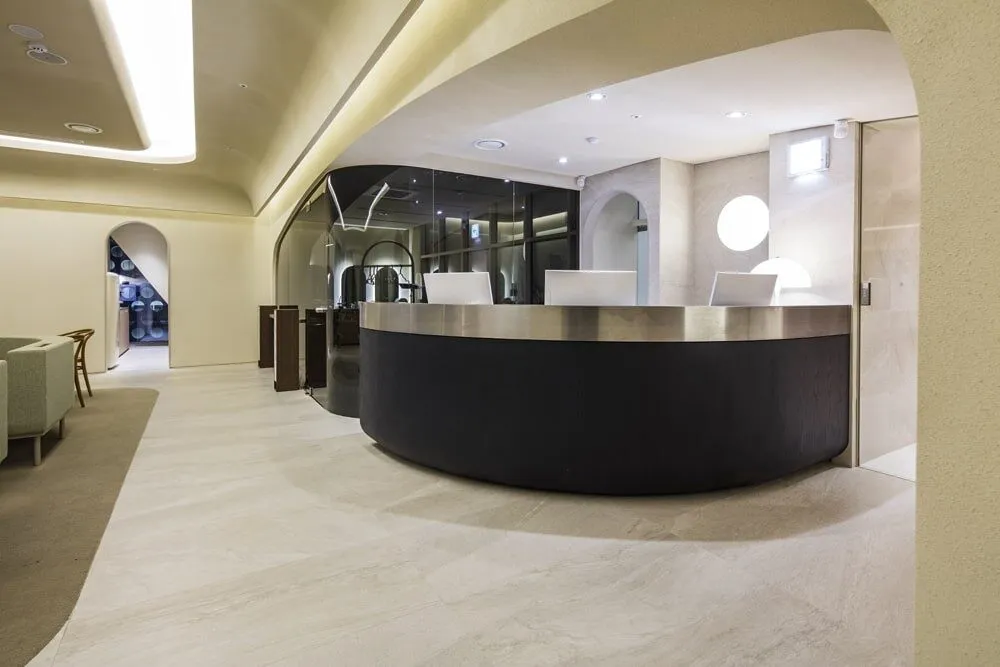
Healing Eye Clinic is at 470 Gangnam-daero, 10–11F, Gangnam-gu, Seoul. Send a photo of that latest eye exam or glasses prescription, and ask whether your cornea suits SMILE or another method.
— Dr. Kim Sun-young, Medical Director
Frequently asked questions
Are star ratings on map apps useful for choosing a SMILE clinic in Korea?
They mostly reflect the visit itself: waiting time, staff and how clearly things were explained. They don't show corneal thickness or whether the doctor who examined the reviewer also did the surgery. Use ratings to judge the service and the exam questions to judge the medicine.
Can I keep wearing contact lenses until the exam?
Contact lenses press the cornea into a slightly different shape, and it takes time for the cornea to recover. Wearing them too close to the exam can throw off the thickness and curvature readings. The number of days depends on whether your lenses are soft or rigid, so confirm it at your consultation before you book flights.
Can I fly home the day after SMILE?
Flying is allowed from the day after surgery, once your next-day check-up is done. Cabin air is dry, so use artificial tears often during the flight and keep your hands away from your eyes, even if they feel scratchy.
Does SMILE hurt?
Some people feel pressure for a moment. Afterward a mild gritty feeling or light sensitivity is common and usually settles quickly.
Is the consultation the same as the pre-op exam?
The detailed pre-op exam in Seoul is charged separately, and the exact cost for your case is confirmed in a 1:1 consultation after that exam.
Questions about your own case or available dates? English interpreter on site.
Ask us on WhatsAppMessage us on official LINE / WhatsApp for a special offer
Your exact candidacy and cost are confirmed in a free 1:1 consultation.