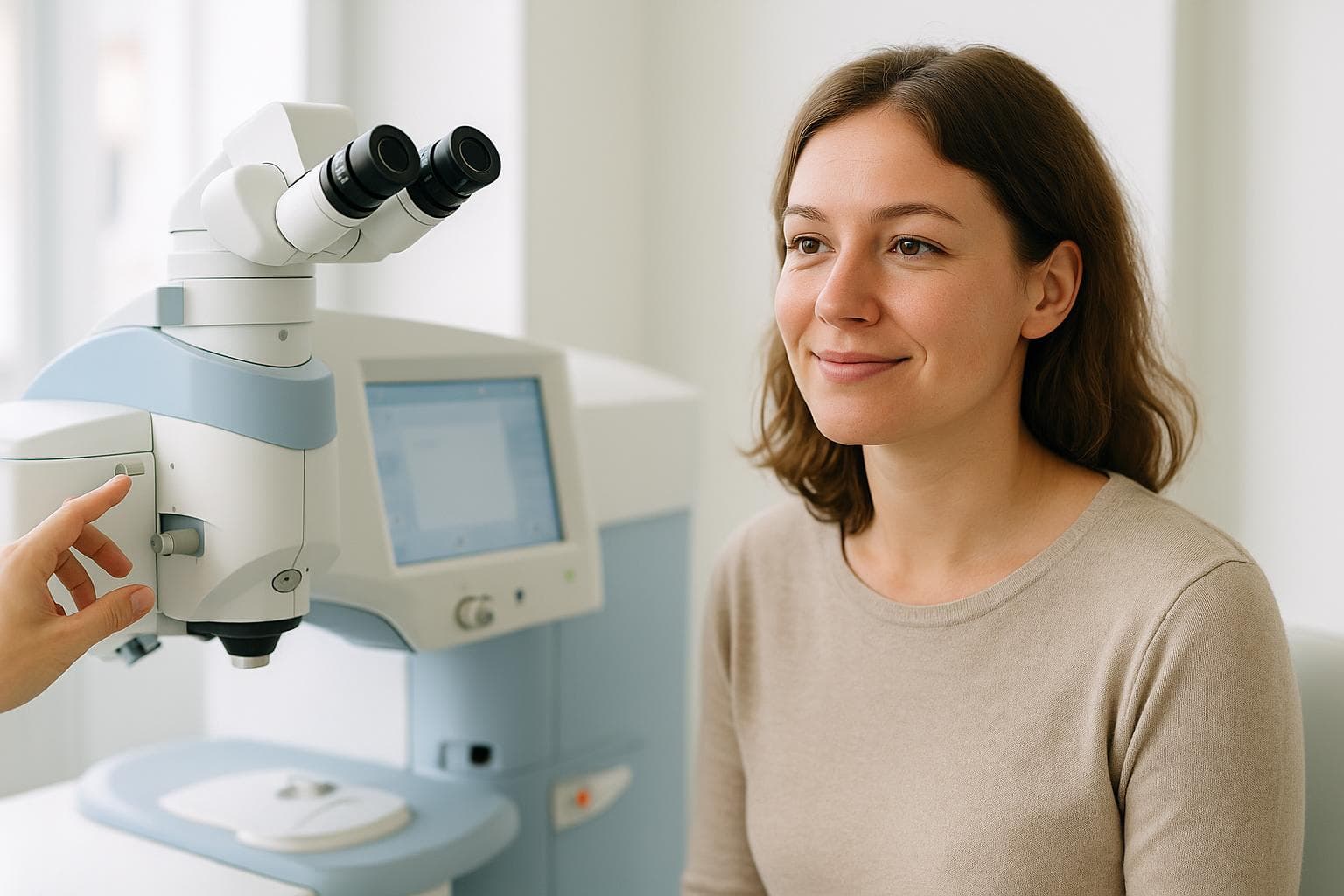
SMILE Eye Surgery in Korea: What Happens, Step by Step
SMILE eye surgery in Korea, walked through step by step by the surgeon: the drops, the laser, the 2–4mm opening, the next-day check and the flight home.

Dr. Kim Sun-young, Director
Cornea · Glaucoma · Cataract
Contents
I'm Dr. Kim Sun-young, medical director of Healing Eye Clinic in Sinnonhyeon, Gangnam, Seoul. I was a clinical professor of cornea and cataract surgery at a university hospital, and every week I operate on people who flew in from abroad, with an English interpreter beside them from the first test to the consent form.
The question I get most often from patients already booked is not about cost. It's this: "Dr. Kim, what actually happens in that room? I'd feel better if I knew."
If you're searching smile eye surgery korea, you may be at the same point — the decision is half made, and the unknown is the part that keeps you awake. That's a very reasonable fear.
So here's my honest promise: the surgery is the shortest part of your trip. The exam before it and the check after it matter more. Below is the day, in the order you'll live it.
What happens during SMILE eye surgery in Korea?
SMILE corrects short-sightedness without a flap. A femtosecond laser shapes a thin lens of tissue — a lenticule — inside your cornea, and I remove it through a 2–4mm opening.
That one sentence hides five steps. Here they are, as you'd experience them on the table.
1. Numbing drops, and a last look
Before you lie down, I check your eyes once more and confirm the plan from your exam data. Then come the numbing drops. There's no injection.
A small clip keeps your eyelids open so you don't have to worry about blinking. Patients usually tell me this is the part they dreaded, and the part that turned out to be nothing.
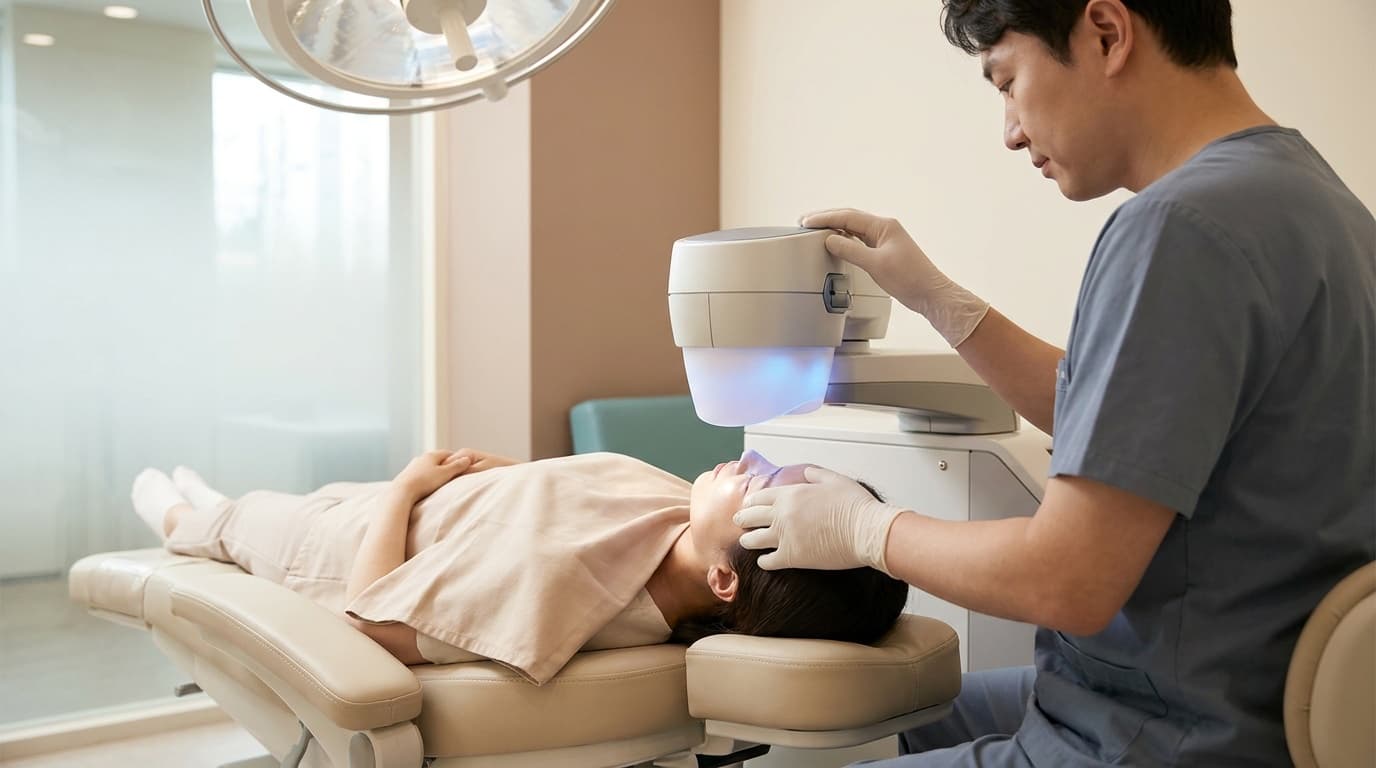
2. The laser: a soft light and some pressure
The laser lens settles gently on the eye. You'll feel pressure and your vision dims for a moment — that's expected.
You look at a small light. The laser shapes the lenticule inside the cornea in tens of seconds. You don't need to hold perfectly still by willpower; the system holds the eye steady, and I'm watching the whole time.
3. Removing the lenticule through the small opening
This is my part. Through the 2–4mm opening, I separate the shaped tissue and lift it out.
Think of taking a thin slice out of a sealed envelope through a slit, rather than opening the flap. Nothing is folded back, so there is no flap edge left in your eye for life.
4. The second eye
We repeat the same steps on the other eye. In the room, both eyes usually take about ten minutes.
You'll hear me say what's coming next before it happens. Many patients say the talking helped more than anything.
5. Same-day check, then rest
I look at both eyes before you leave. You go home with drops, a schedule and instructions written in English.
That evening, expect tearing, grittiness and slight blur for a few hours. Sleep is the best medicine. Most people wake up already feeling better.
On the table, SMILE is drops, a soft light, some pressure and about ten minutes for both eyes. The part that decides your result happened earlier — at the exam that said your cornea was right for it.
If you're still deciding whether SMILE is the right procedure at all, start with my SMILE LASIK Korea surgeon's guide, which covers who it suits.
Why I'm the one in the room from exam to next-day check
At our clinic, the doctor who examines you is the doctor who operates and the doctor who sees you the next morning.
That matters on surgery day. When I remove a lenticule, I already know your corneal thickness, your pupil size and your tear film, because I measured them with you.
Things you can verify, not take my word for: international patients pay the same price as Korean patients, we hold 4.8 stars from 154 Google reviews, and I'm a full member of the European Society of Cataract and Refractive Surgeons (ESCRS). I list them as evidence, not decoration.
So what does my trip look like, day by day?
Your days in Seoul follow the surgery's needs, not the other way round.
| Day | What happens |
|---|---|
| Day 1 | Full exam (₩150,000) and consultation |
| Day 2 | SMILE surgery, same-day check |
| Day 3 | Next-day check; usually fit to fly after |
| Day 4 | Buffer day I recommend |
Sometimes exam and surgery fall on the same day, but don't plan around that. If the exam shows SMILE isn't right, you need time to hear the alternative calmly.
If you're weighing SMILE vs LASIK in Korea, that comparison changes the trip too — the stay, the sports you return to and the dryness you can expect. Our published fees are on the price page. More about the procedure itself is on our SMILE treatment page.
Side effects, and who I don't operate on
SMILE is still surgery, and I want you to hear the downsides from me.
- Temporary dryness. Often milder than after flap-based LASIK, but real. Drops help while the corneal nerves recover.
- Night glare and halos. More likely with large pupils, and usually easing as the eye heals.
- Over- or under-correction. A small residual prescription is possible, and enhancement after SMILE works differently from a LASIK touch-up.
I don't proceed with very high prescriptions or thin corneas, where ICL is usually safer. Nor with any sign of keratoconus, untreated dry eye or a prescription that is still changing.
Practical notes before you fly
- Stop contact lenses first: at least one week for soft lenses, longer for rigid ones.
- No swimming, sauna or eye makeup for about a week after surgery.
- Bring sunglasses for the walk back; light feels bright that first day.
- We're one minute from Sinnonhyeon Station, about 70 minutes from Incheon Airport.
- After you fly home, your one-week, one-month and three-month checks can be done locally with the written record we give you.
Our Korean head office lists its before-and-after precautions on the pre- and post-surgery care page. If the brand names on clinic websites confuse you, I explain them in Clear SMILE LASIK in Korea.
Don't book the procedure yet — book the exam
Knowing the steps should make the day less frightening. It shouldn't make you book surgery before anyone has measured your cornea.
It doesn't have to be our clinic. Choose one where the surgeon who reads your corneal map is the one who operates.
Send your current prescription, age and travel dates on WhatsApp. If SMILE isn't right for your eyes, I'll say so plainly and explain what is.
I hope to see you in Seoul, and to count you through it.
— Dr. Kim Sun-young, Medical Director, Healing Eye Clinic (Sinnonhyeon, Gangnam, Seoul)
Frequently asked questions
How long does SMILE eye surgery take?
Both eyes usually take about ten minutes in the operating room. The laser itself runs for only tens of seconds per eye; most of the time goes to positioning, numbing and checking. Plan the whole surgery day as half a day, including preparation and the same-day check.
Am I awake during SMILE?
Yes, you stay awake, and numbing drops are all that's used — no injection. Most people feel mild pressure and see a soft light rather than pain. I talk you through each step so nothing comes as a surprise.
Can I see right after SMILE?
You can see, but not clearly at first. For a few hours there is usually tearing, grittiness and slight blur. Most people see well enough for daily life by the next day, and visual quality settles over one to four weeks. Results vary from person to person.
How many nights do I need in Seoul for SMILE?
At least three nights: the exam, the surgery and the next-day check. I recommend a fourth as a buffer, because the exam can change the plan. Book flights you can move.
Can I fly home the day after SMILE?
Usually yes, once I have checked your eyes at the next-day visit and confirmed healing is on track. You then continue drops at home and have one-week, one-month and three-month checks with a local eye doctor, using the written record we give you.
Is SMILE the same as LASIK?
No. LASIK lifts a corneal flap and reshapes the tissue underneath. SMILE has no flap: the laser shapes a thin lens of tissue inside the cornea, which I remove through a 2–4mm opening.
Message us on official LINE / WhatsApp for a special offer
Your exact candidacy and cost are confirmed in a free 1:1 consultation.