SMILE LASIK in Korea: What a Seoul Surgeon Checks First
Considering SMILE LASIK in Korea? A Gangnam eye surgeon explains who it suits, who it doesn't, how long to stay, recovery, and how the quote works.

Dr. Kim Sun-young, Director
Cornea · Glaucoma · Cataract
Contents
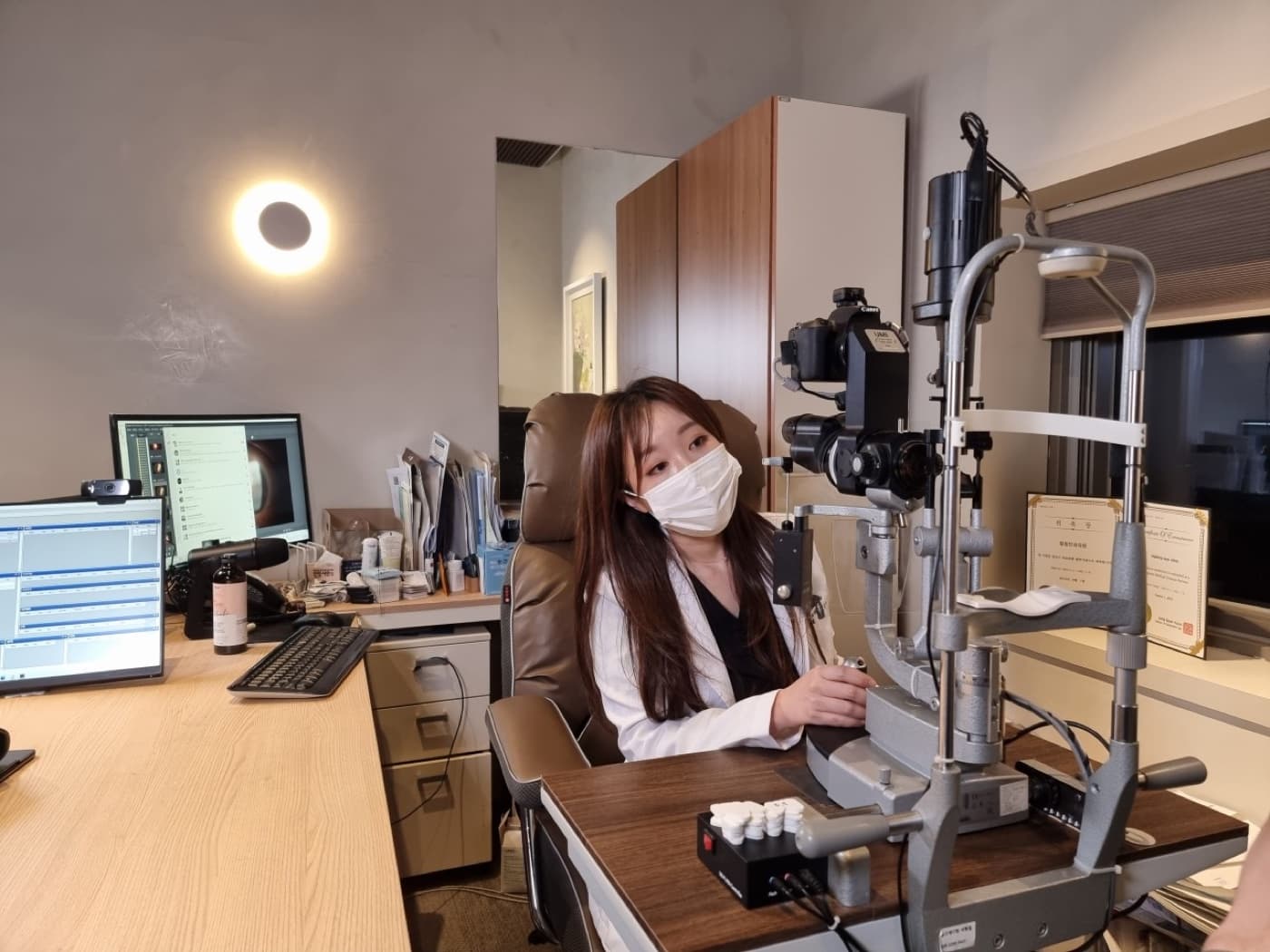
I'm Dr. Kim Sun-young, medical director of Healing Eye Clinic in Sinnonhyeon, Gangnam, Seoul. I was a clinical professor of cornea and cataract surgery at a university hospital, and today I see international patients every week, with an English interpreter in the room from the first conversation to the consent form.
The message I get most from abroad is some version of this: "Dr. Kim, I've read that SMILE is the newest option. Should I fly to Seoul for it?"
If you're searching smile lasik korea, you're probably asking the same thing. I understand — SMILE sounds like LASIK, only better.
So let me be honest with you first: SMILE is not "better LASIK." It's a different way to correct the same prescription, and it's excellent only for the right cornea. Here is how I decide, in the order I explain it in clinic.
SMILE LASIK in Korea: three things I check before saying yes
SMILE skips the flap. A femtosecond laser shapes a thin lens of tissue — a lenticule — inside the cornea, and I remove it through a 2–4mm opening.
That's a real advantage: no flap edge for life, more corneal nerves left intact, more of the cornea's strength preserved. But whether you get those benefits depends on three things.
1. Is there enough cornea?
SMILE still removes tissue. After the correction, a safe thickness has to remain.
Think of tailoring a jacket: you can only take it in if there's enough fabric. When there isn't, the right move is a different procedure, not a bolder cut. That's usually ICL, which adds a lens inside the eye and leaves the cornea untouched.
2. What kind of prescription do you have?
Moderate myopia, with or without astigmatism, is where SMILE shines.
Very high myopia usually points to ICL. Farsightedness or an early presbyopic element is usually better handled with LASIK or LASEK.
3. Is the surface ready?
Two findings stop me: any early sign of keratoconus on the corneal map, and a tear film that isn't stable.
Dry eye gets treated first, not after. Surgery on a dry surface heals badly and blurs the measurements we rely on.
SMILE suits moderate myopia on a healthy, thick-enough cornea. High prescriptions, thin corneas, farsightedness and untreated dry eye all point somewhere else — and the exam, not the brochure, decides which group you're in.
My full checklist is in am I a candidate for SMILE surgery.
Why the surgeon who examines you should be the one who operates
This is the principle I hold most firmly.
The person deciding how much tissue can come out has to be the person who actually studied your corneal data. So at our clinic, the doctor who examines you is the doctor who operates and the doctor who checks you afterwards. You are never handed between people.
Two things you can verify before you trust us. International patients pay exactly what Korean patients pay — no foreigner surcharge. And we hold 4.8 stars from 154 reviews on Google. I'm also a full member of the European Society of Cataract and Refractive Surgeons (ESCRS).
I'm not listing these to impress you. I'm listing them so you have something to check.
So is SMILE right for me, or something else?
Use this as a rough guide. Your exam gives the real answer.
| If this sounds like you | Usually consider |
|---|---|
| Moderate myopia, thick cornea, active lifestyle | SMILE |
| Very high myopia or thin cornea | ICL |
| Farsighted or early presbyopia | LASIK / LASEK |
| Contact sports, thin-ish cornea | LASEK or SMILE |
How SMILE compares head-to-head is in SMILE vs LASIK.
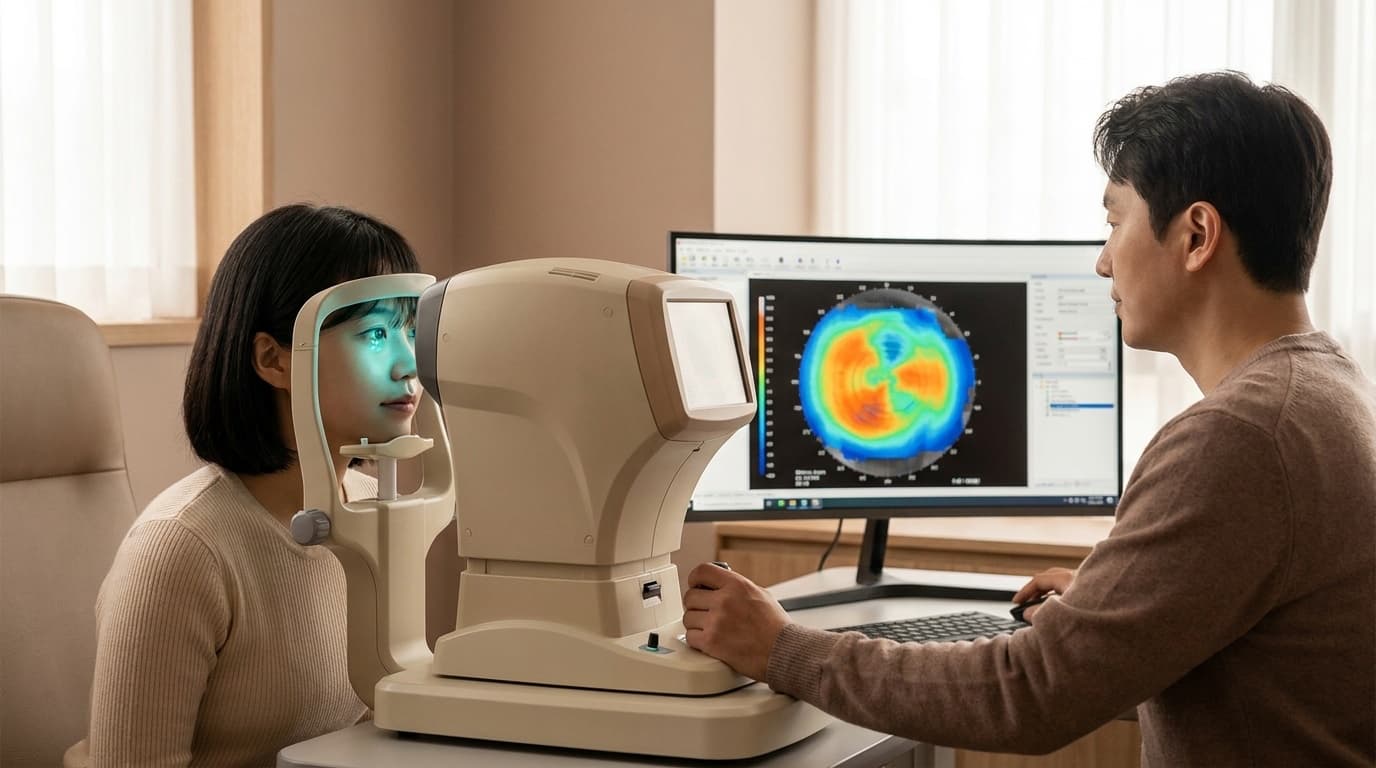
Price. We don't publish a single SMILE figure, because the honest number depends on your prescription, astigmatism and corneal measurements. As a range, it usually sits above standard LASIK and below ICL. The full pre-op exam is ₩150,000. What goes into the quote is in SMILE eye surgery cost in Korea, and our published list is on the price page.
Side effects I want you to hear from me
No eye surgery is without risk, and a clinic that says otherwise isn't being straight with you.
- Temporary dryness. Often milder than with flap-based LASIK, but it happens. Regular drops help while the nerves recover.
- Night glare and halos. More likely with large pupils; usually easing as the eye heals.
- Over- or under-correction. A small residual prescription is possible, and enhancements after SMILE work differently from LASIK touch-ups.
Results and recovery vary from person to person. The Korean head office lists our diagnostic and surgical equipment on its equipment page, if you'd like to see it before you come.
Planning the trip to Seoul
- At least three nights: exam, surgery, next-day check. I recommend a fourth as a buffer.
- Book flights you can move — the exam can change the plan.
- Stop contact lenses first: at least a week for soft lenses, longer for rigid ones.
- We're one minute from Sinnonhyeon Station, about 70 minutes from Incheon Airport.
- After you fly home, one-week, one-month and three-month checks can be done locally with the written record we give you.
Day-by-day recovery is in SMILE surgery recovery time.
Don't book the procedure yet — book the exam
If you take one thing from this page, let it be this: don't choose the procedure first and look for reasons later.
It doesn't have to be our clinic. But choose one where the surgeon who reads your corneal map is the one who operates, and who will tell you "not yet" if that's the truth.
Send us your current prescription, your age and your travel window on WhatsApp. If SMILE isn't right for your eyes, I'll tell you plainly — and explain what is.
I hope to see you in Seoul.
— Dr. Kim Sun-young, Medical Director, Healing Eye Clinic (Sinnonhyeon, Gangnam, Seoul)
Frequently asked questions
What is SMILE LASIK?
SMILE is laser vision correction without a corneal flap. A femtosecond laser shapes a thin lens of tissue inside the cornea, and the surgeon removes it through a 2–4mm opening. People call it 'SMILE LASIK', but it is a different procedure from LASIK, which lifts a flap and reshapes the tissue underneath.
Who is SMILE a good fit for?
Moderate myopia, with or without astigmatism, enough corneal thickness, and a stable prescription. It is often a strong choice for people in contact sports, the military or physical jobs, and for people worried about dry eye, because no flap is lifted and more corneal nerves stay intact.
Who should not have SMILE?
People with very high prescriptions or thin corneas, where ICL is usually safer; anyone with signs of keratoconus; people with untreated dry eye; and those whose prescription is still changing. Farsightedness or a presbyopic element is also usually better handled with LASIK or LASEK.
How long do I need to stay in Korea for SMILE?
Plan at least three nights: the exam, the surgery, and the next-day check. I recommend a fourth night as a buffer, because the exam can change the plan. Book flights you can move.
How much does SMILE cost in Korea?
We give the exact figure after the exam, because it depends on your prescription, astigmatism and corneal measurements. It usually sits above standard LASIK and below ICL. International patients pay the same price as Korean patients, and the full pre-op exam is ₩150,000.
What is the recovery like?
Tearing, grittiness and slight blur for a few hours on the day. Most people see well enough for daily life and light work the next day, and visual quality settles over one to four weeks. Avoid swimming, saunas and eye makeup for about a week.
Message us on official LINE / WhatsApp for a special offer
Your exact candidacy and cost are confirmed in a free 1:1 consultation.