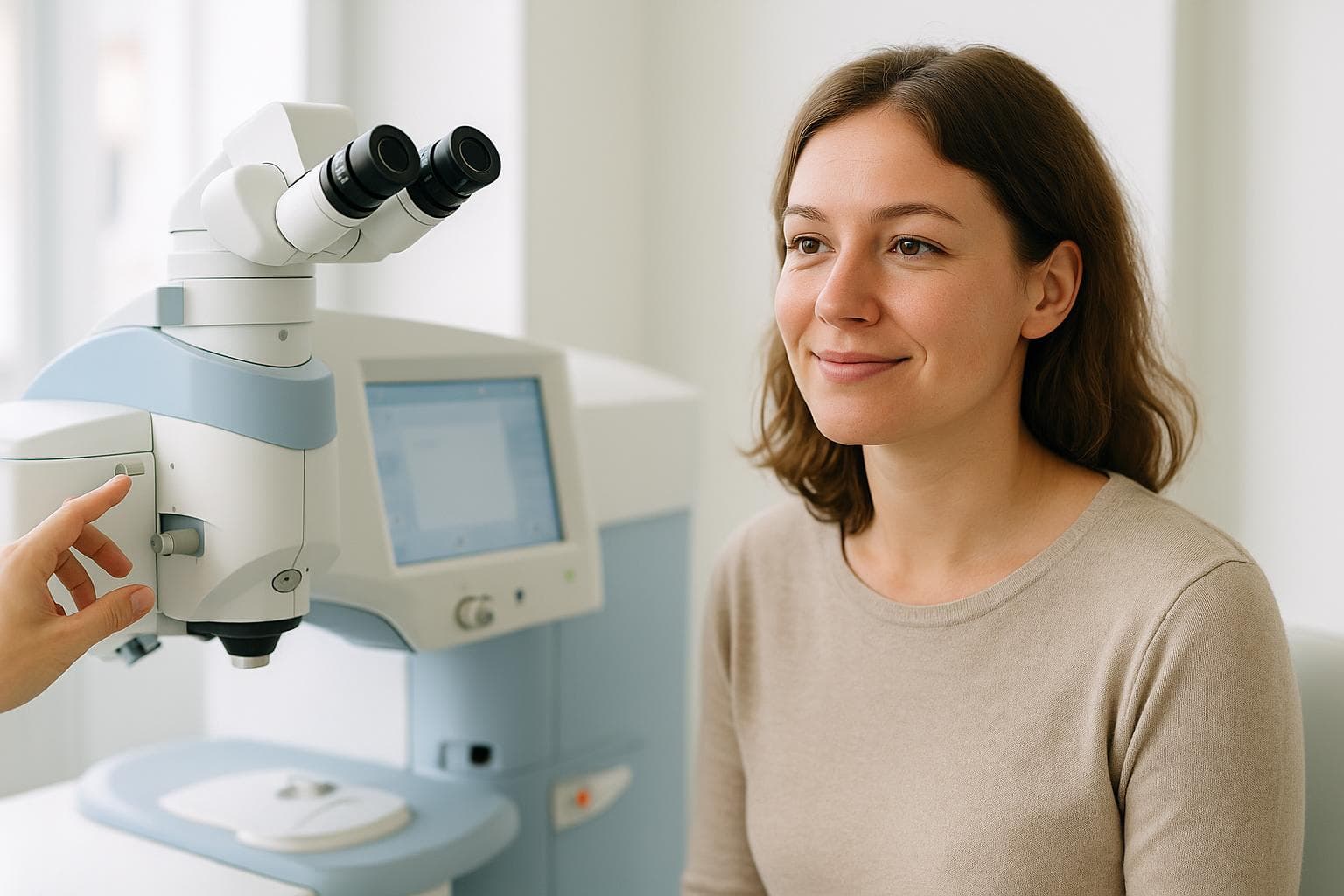
SMILE Surgery Recovery Time: What to Really Expect, Day by Day
Worried SMILE surgery recovery time will ruin your trip? I'm the surgeon — here's the honest day-by-day, the risks, and how we lower them.

Dr. Kim Sun-young, Director
Cornea · Glaucoma · Cataract
Contents
"If I do SMILE in Seoul, how many days do I actually need before I can sightsee — or at least look at my phone without panicking?"
That's the question underneath most messages I get about SMILE surgery recovery time, and it's a fair one. So let me answer it plainly first, then walk you through what really happens, because the number on its own can mislead you. For most patients, useful vision is back within a day or two, normal daily life resumes quickly, and the sharpness keeps improving over the following weeks. SMILE recovers fast because it's keyhole surgery — but "fast" still has texture, and I'd rather you knew the real shape of it than a marketing headline.
Why SMILE heals the way it does
SMILE stands for small-incision lenticule extraction. Instead of creating a flap, I use a laser to shape a thin disc of tissue — a lenticule — inside your cornea, then remove it through a tiny keyhole opening just a few millimeters wide. The surface of your eye is barely disturbed.
That small incision is the whole reason recovery feels the way it does. There's no flap settling back into place, and the nerves on the corneal surface are less disrupted, which is why many SMILE patients have less dryness than they feared. The eye simply has less to repair.
SMILE's quick recovery comes from one thing: a few-millimeter keyhole instead of a flap. Less surface disturbance means less to heal.
The honest day-by-day
People want the timeline, so here is what I actually tell patients to expect — with the caveat that every cornea heals on its own schedule.
The first few hours. Right after, your vision is hazy, like looking through fog or a steamy window. Your eyes will water, feel scratchy, and want to be closed. This is normal and it's the worst of it. Go back to your hotel, sleep, let your eyes rest.
Day one. Most people wake up seeing dramatically better than the night before — often clear enough to get around. This is also when you come in for your check-up so I can confirm everything is healing as it should. You'll still notice dryness and some light sensitivity.
Days two to seven. Vision is functional and you can return to most of normal life, but it may fluctuate — sharp in the morning, a little soft by evening, then back. Screens tire your eyes faster. This is when blinking on purpose and using your drops matters most.
Weeks two to six. The fine-tuning. Night driving glare and halos, if you had them, settle. Dryness eases. The crisp, stable vision most people are chasing usually arrives in this window rather than on day one.
I spell this out because the most common disappointment I see isn't a bad result — it's a good result arriving slower than someone expected. If you brace for "perfect tomorrow," day three feels like a setback. If you understand that your eyes are healing over weeks, the same recovery feels reassuring and right on schedule. The biology hasn't changed; only your expectations have, and that makes the whole experience easier.
The one worry I want to face directly
The fear I hear most isn't pain — it's "what if something goes wrong while I'm healing, and I'm far from my doctor?"
Let me be honest about the risks, because pretending they don't exist would insult your intelligence. In the recovery window, the common things are temporary: dryness, sensitivity to light, glare or halos at night, and vision that wobbles a bit before it settles. These almost always fade over the weeks. Less common are issues like a result that's slightly under- or over-corrected, or a cornea that heals more slowly than average. These are uncommon, but they're real, and they are exactly why follow-up exists rather than being optional.
How we lower those risks
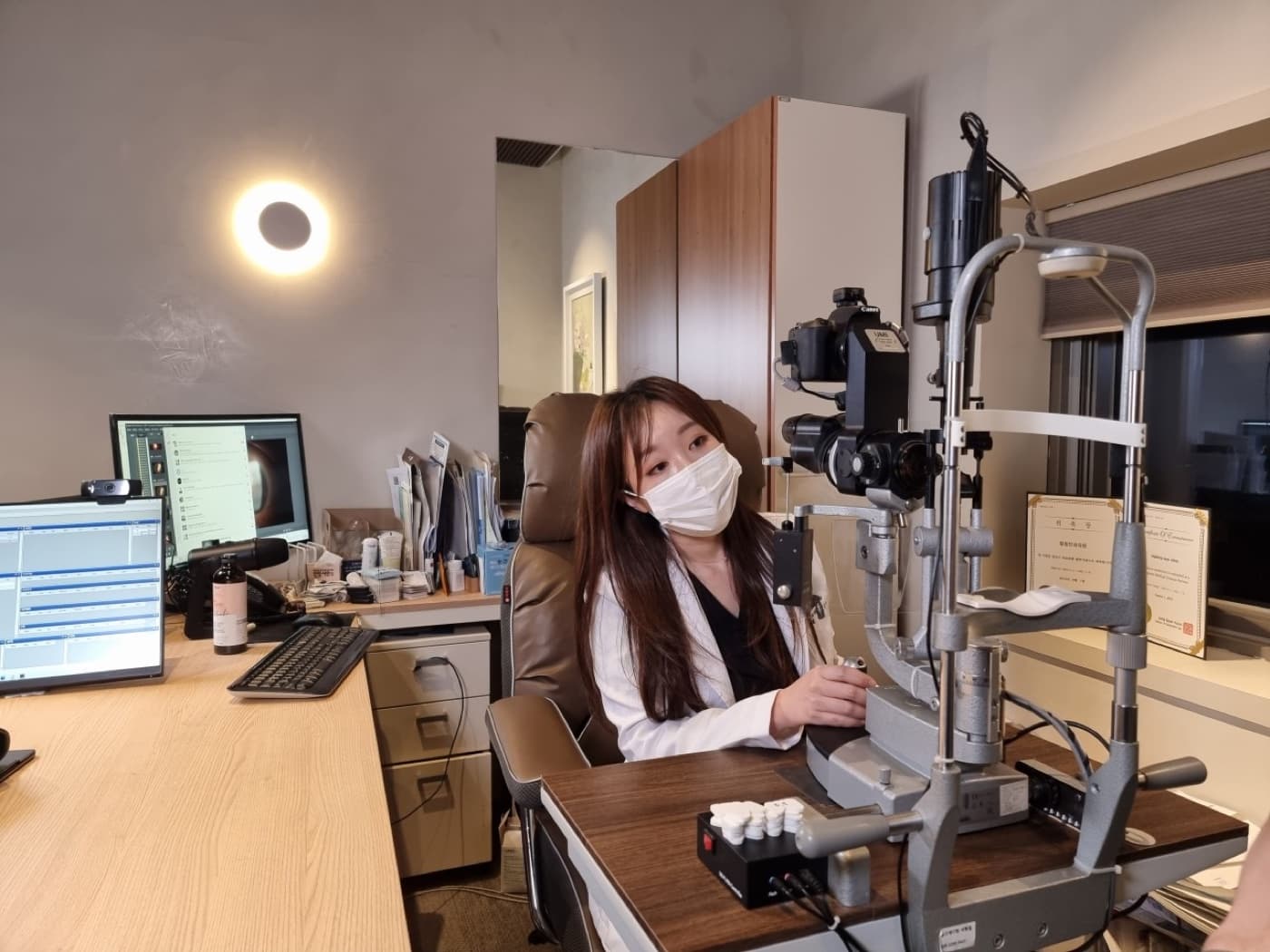
Most of the safety in SMILE happens before the laser ever switches on. A careful pre-op exam — corneal thickness, topography, prescription, tear film, pupil size — is how I screen out the eyes that shouldn't have SMILE in the first place. If your numbers point somewhere else, I'll say so.
After surgery, you have one dedicated surgeon — me, or your assigned doctor — who knows your case from start to finish, not a different face at every visit. You get prescribed drops, clear instructions, and our lifetime follow-up, so if something drifts, we catch it early. For international patients especially, I make sure you leave knowing exactly what's normal, what isn't, and how to reach us in your own language.
Planning a SMILE trip from abroad
A few practical things that make recovery smoother if you're flying in. Build in time for the next-day check-up — don't book your return flight for the same day. We're a one-minute walk from Sinnonhyeon Station in Gangnam, about 70 minutes from Incheon Airport, so getting to your follow-up is easy. Bring sunglasses for the light sensitivity. And stop your contact lenses well before the exam — soft and hard lenses need different lead times, so message us first to get yours right.
On candidacy and timing: SMILE is wonderful for the right eyes, but not every eye is a SMILE eye. Whether it suits you, and exactly how your recovery will look, depends on measurements I can't take over chat. There's always individual variation, and the exam decides.
If you want a realistic read on your own SMILE surgery recovery time, message us for free on our official WhatsApp or LINE — no appointment needed, no pressure. Tell me your prescription, your travel dates, and what you're nervous about, and I'll give you an honest first impression. If SMILE isn't your best option, or your eyes aren't ready for surgery yet, I'll tell you that just as honestly.
I'd be happy to look after your eyes here in Seoul.
— Dr. Kim Sun-young, Medical Director, Healing Eye Clinic
Frequently asked questions
How long is the recovery time after SMILE surgery?
Most people see well enough to function within a day or two, and return to normal daily life quickly because SMILE uses a tiny keyhole incision rather than a flap. Vision usually keeps sharpening over the first week or two and fully settles over a few weeks. There's real individual variation depending on your prescription and healing, so treat these as typical ranges, not promises — your exam and follow-up tell the true story.
When can I use screens and my phone after SMILE?
Usually within the first day or two for short periods, then building up — but your eyes will tire and feel dry faster at first, so I tell patients to blink consciously, take breaks, and use the lubricating drops we prescribe. If your work is screen-heavy, give yourself a few easier days rather than diving straight into ten-hour days.
Is SMILE recovery faster than LASIK?
The early comfort is often similar to or a touch gentler than LASIK because the incision is so small and the corneal surface is barely disturbed, which tends to mean less dry eye. Both are fast compared to LASEK. 'Faster' depends on the person, though — the honest comparison is one we make after measuring your cornea, not from a chart.
When can I fly home after SMILE surgery?
Plan to stay for the next-day check-up rather than flying out the same day — that follow-up matters. Short-haul flying soon after is generally fine once we've confirmed you're healing well, with eye drops on hand for cabin dryness. We'll map your exact timing to your prescription and travel plans during consultation.
What are the risks during SMILE recovery, and how do you reduce them?
The common, temporary ones are dryness, light sensitivity, glare or halos at night, and vision that fluctuates while healing — these usually ease over weeks. Rarer issues like under- or over-correction or slow healing are why follow-up exists. We reduce risk with careful pre-op screening, a 1:1 surgeon who knows your case, prescribed drops, and lifetime follow-up so anything off-track is caught early.
Message us on official LINE / WhatsApp for a special offer
Your exact candidacy and cost are confirmed in a free 1:1 consultation.