SMILE Eye Surgery Cost in Korea: What You're Really Paying For
I'm Dr. Kim. SMILE eye surgery cost in Korea isn't one flat number — here's what drives it, why it suits dry eyes, and why foreigners pay the same as Koreans.

Dr. Kim Sun-young, Director
Cornea · Glaucoma · Cataract
Contents
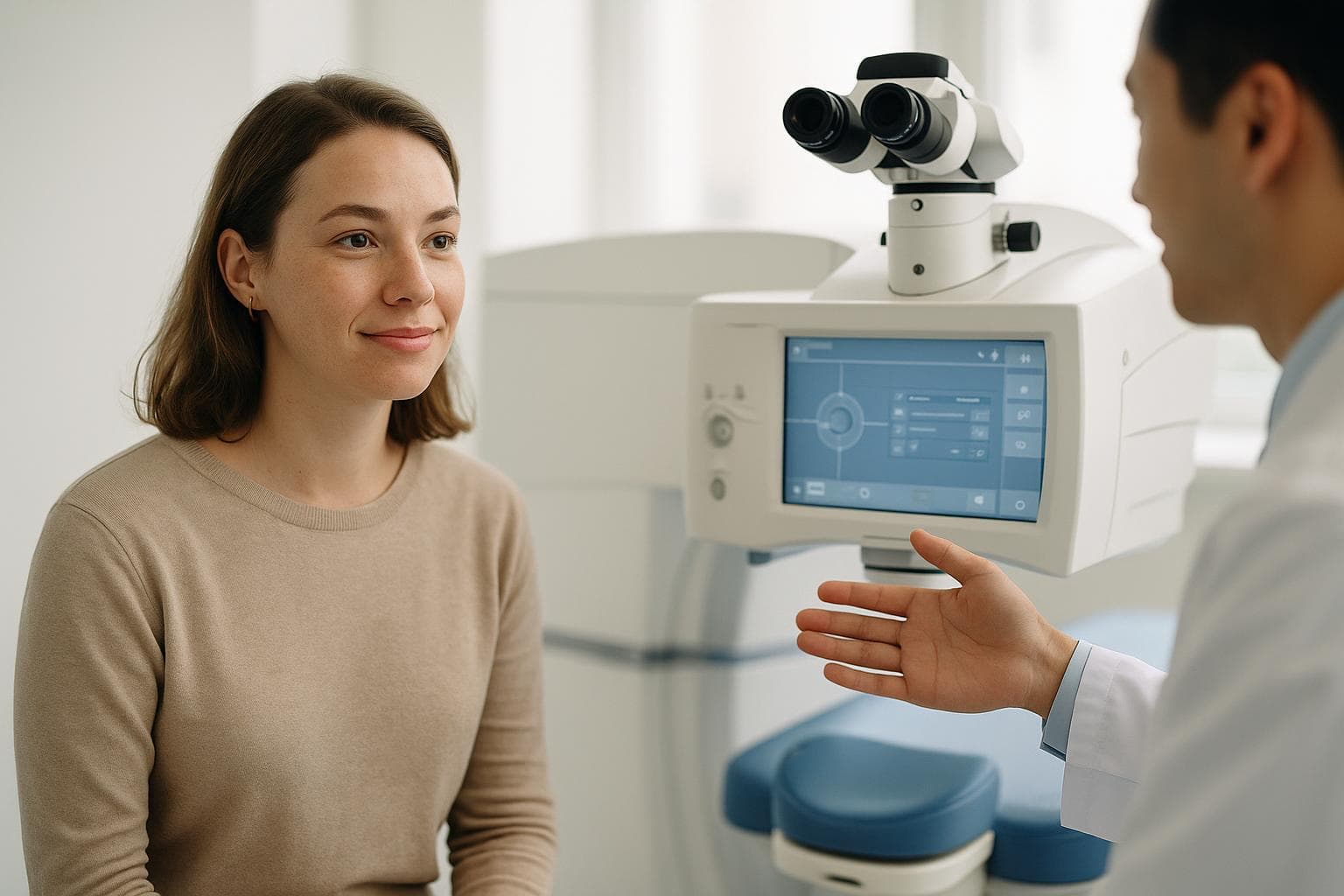
A patient messaged me last month with a question I really respect: "I keep reading that SMILE is gentler on dry eyes — but what does SMILE eye surgery cost in Korea, and is it worth the difference over regular LASIK?"
That's the right way to think about it, because it puts the two questions where they belong: cost and fit, together. So let me answer the way I would across the desk from you — honestly, and without inventing a number I'd have to walk back once I've actually seen your eyes.
The short answer on SMILE eye surgery cost in Korea
Here it is plainly: SMILE eye surgery cost in Korea is not a single flat price, and it usually sits above standard LASIK but below an ICL lens implant. That's the honest range in terms of where it lands, not a quote — because the real figure depends on your specific eyes.
I'd rather explain what moves that number than hand you a digit that turns out to be wrong for you.
What SMILE actually is
SMILE (small-incision lenticule extraction) reshapes your cornea through a tiny incision instead of lifting a flap. A femtosecond laser creates a thin lenticule inside the cornea, and we remove it through a small opening — typically a couple of millimeters. No flap is made.
That flapless design is the whole point, and it's also why it's a premium-tier procedure. The equipment and the technique cost more to deliver than a standard flap LASIK.
What drives your particular price
What shapes your SMILE quote
Your prescription (how much correction you need) · your corneal thickness · whether you also have astigmatism · the femtosecond device generation used · and the scope of follow-up care and guarantee included. We confirm these in the exam before quoting a price that's actually yours.
Notice astigmatism on that list. SMILE handles a range of astigmatism well, but the degree and the axis affect both your candidacy and your plan — another reason the price isn't one-size-fits-all.
Why I often reach for SMILE — and the honest caveat
In clinic, the patient I most often think of for SMILE is the one who lives on screens and complains about dry, tired eyes by evening. Because SMILE is flapless, it disturbs fewer of the corneal nerves involved in tear signaling, and many of those patients tell me their eyes feel more comfortable afterward than they expected.
But here's my honest caveat, the one I won't skip: flapless is not the same as dry-eye-proof. If you already have meaningful dry eye, I want to look at your tear film and meibomian glands first, and sometimes treat the dryness before we even talk about surgery. Promising you "no dry eye, guaranteed" would be dishonest, and I won't do it.
Foreigners pay exactly what Koreans pay
This is the part I want no ambiguity about. At Healing Eye Clinic, international patients are charged 100% the same fee as Korean local patients. No tourist mark-up, no "foreigner price." Whatever figure you hear in your consultation is the figure a Korean patient hears.
It's also fair for you to want some reassurance before trusting your eyes to anyone abroad. We sit at 4.8 stars on Google with 154+ reviews, many from international patients. My background is cornea, glaucoma, and cataract — specialist training at the Catholic Medical Center, a former Clinical Professorship in Cornea and Cataract at Uijeongbu St. Mary's, and ESCRS membership. I mention it only so you know the trust you're placing has real clinical weight behind it.
Is SMILE even the right call for you?
Cost aside, this is the question that actually matters. A few honest scenarios:
- If your cornea is healthy and thick enough and your prescription is in range, SMILE is often a very comfortable choice.
- If you're very highly myopic, your prescription may simply need more tissue than SMILE can safely remove — and then ICL becomes the safer answer.
- If your cornea is thin, the same logic applies; I'd rather move you to a lens-based option than push a laser your cornea can't spare tissue for.
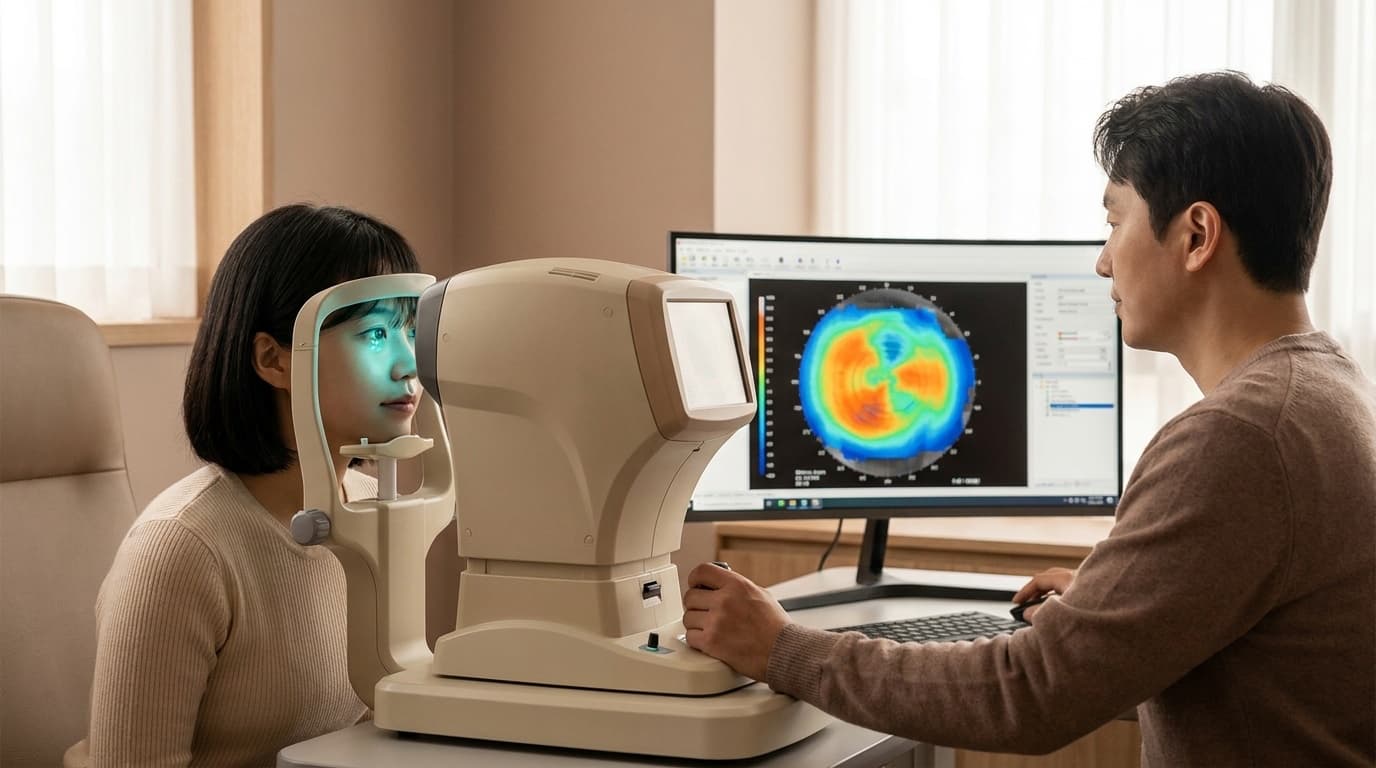
And the limitation I always state out loud: none of this can be decided over the internet. I need your measured corneal thickness, topography, and tear-film data in front of me. If a clinic guarantees you're a SMILE candidate before any exam, please be careful.
Planning your trip from abroad
- Allow at least 3 days, 2 nights — the next-day check-up is genuinely important.
- We're a one-minute walk from Sinnonhyeon Station in Gangnam, about 70 minutes from Incheon Airport.
- Stop wearing contact lenses for some days before the exam (soft and hard differ) — ask us the exact number so you don't fly over for nothing.
- Right after surgery your eyes want rest, so keep that day light.
Before you book anything, just ask us first
If this article leaves you with one thing, let it be this: compare value, not just the SMILE price tag. A thorough exam, one surgeon from start to finish, and real long-term aftercare are worth more than a slightly cheaper quote somewhere else.
Message us, for free, in English on our official WhatsApp or LINE — no appointment needed. Tell us your prescription, your age, any dry-eye history, and the dates you're weighing up. We'll give you an honest first read, and if SMILE isn't your best fit — or your eyes need treatment before surgery — we'll say so plainly. No pressure, no sales script.
I'll be glad to look at your eyes properly here in Seoul.
— Dr. Kim Sun-young, Medical Director, Healing Eye Clinic
Frequently asked questions
How much does SMILE eye surgery cost in Korea?
I don't publish a single figure, because the honest cost depends on your prescription, your corneal thickness, whether you have astigmatism, and the device generation used. SMILE is a premium flapless procedure, so it usually sits above standard LASIK but below ICL. We give you an exact, personalized quote at your free consultation — and it's the same quote a Korean patient would get.
Is SMILE more expensive than LASIK in Korea?
Generally yes, because it's a minimally invasive, flapless technique using a femtosecond laser. But "more expensive" only matters if SMILE is actually the right procedure for your eyes. For some patients standard LASIK or even ICL is the better and more honest choice, and we'll tell you which.
Why is SMILE often recommended for dry eyes?
Because it's flapless, SMILE disturbs fewer corneal nerves than flap-based LASIK, so many patients report less dryness afterward. It's not a guarantee — if you already have significant dry eye we examine your tear film carefully first — but it's one reason I often consider SMILE for screen-heavy patients.
How long should I stay in Korea for SMILE surgery?
Plan for at least 3 days and 2 nights. The exam and surgery can often be done close together, but the next-day check-up is important, so avoid flying out the same day you have surgery. We'll finalize the schedule with you in consultation.
Can I get SMILE if I have a high prescription or thin cornea?
Sometimes, but not always — it depends on how much corneal tissue your prescription requires and how thick your cornea is. If you're very highly myopic or your cornea is thin, ICL may be safer. This genuinely can't be judged online; it needs measured data from a proper exam.
Message us on official LINE / WhatsApp for a special offer
Your exact candidacy and cost are confirmed in a free 1:1 consultation.