Am I a Candidate for SMILE Surgery? An Honest Checklist
I'm Dr. Kim. Wondering if you qualify for SMILE? Here are the real factors that decide SMILE surgery candidacy — and when I'd send you elsewhere.

Dr. Kim Sun-young, Director
Cornea · Glaucoma · Cataract
Contents
A message I got recently summed up what a lot of people feel: "I've watched every SMILE video online and I'm sold — but how do I actually know if I qualify? I don't want to fly to Seoul only to be turned away."
That's a smart worry, and I respect it. So rather than a marketing checklist that says "you're probably perfect," let me give you the honest version of how I assess SMILE surgery candidacy — including the parts that might be a no.
First, what SMILE asks of your eye
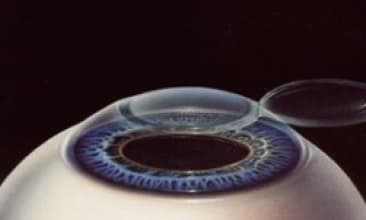
SMILE (small-incision lenticule extraction) reshapes your cornea by removing a thin disc of tissue — a lenticule — through a tiny incision, with no flap. Because it works inside the cornea and leaves the surface largely intact, candidacy is really a question about your cornea's structure and your prescription, more than your age or lifestyle alone.
So when I assess whether you're a candidate for SMILE surgery, I'm essentially asking: does your cornea have the right shape, thickness, and health to spare that lenticule safely and end up with a stable, clear result?
SMILE candidacy is decided by your measured corneal data — thickness, shape, prescription — not by how much you want the procedure.
The factors that actually decide it
Here's what I'm genuinely looking at in the exam.
Your prescription, and whether it's stable
SMILE is well established for short-sightedness across a broad range, and modern platforms treat astigmatism too. But two things matter: the amount of correction (very high prescriptions may need more tissue than is safe), and whether your prescription has held steady for roughly a year. If your numbers are still drifting, operating now just means chasing a moving target.
Your corneal thickness
Every laser correction removes tissue. The more correction you need, the more it removes. I measure your thickness precisely and keep a safe reserve — non-negotiable. A thinner cornea with a high prescription is the classic case where I steer toward a lens-based option instead.
Your corneal shape on topography
I map the curvature of your cornea looking for irregularity or any early sign of weakness. An irregular or suspicious topography is one of the clearest reasons to not do any laser procedure, SMILE included — because operating on an unstable shape can make things worse, not better.
Your tear film
SMILE is often gentle on dry-prone eyes because it's flapless and spares more corneal nerves. But if you already have significant dry eye, I examine your tear film and oil glands first, and sometimes treat the dryness before we even discuss surgery.
A rough self-check before you contact us
You can't diagnose yourself, but you can get a sense of where you stand. SMILE tends to be a reasonable conversation if you:
- Are an adult with a prescription that's been stable for about a year.
- Are mainly short-sighted, with or without astigmatism in a treatable range.
- Have no active eye disease, infection, or significant untreated dry eye.
- Aren't pregnant or breastfeeding (hormones can shift your prescription temporarily).
If that sounds like you, you're worth examining. If a couple of those are shaky, it doesn't mean no — it means we look carefully.
When I'd genuinely say no — or "not SMILE"
This is the part honest clinics skip, so I'll be direct. I would not recommend SMILE if your cornea is too thin for your prescription, if your topography looks irregular or suspicious, if your prescription is still changing, or if you have active eye disease. In several of those cases the answer isn't "no surgery" — it's "a different procedure." A very high prescription or a thin cornea often points to ICL, which corrects without removing corneal tissue.
What goes into your candidacy assessment
The full work-up — corneal topography, precise thickness measurement, tear-film evaluation, refraction, and a real conversation about your eyes — is what determines candidacy and, only then, an accurate cost. International patients pay exactly the same fee as Korean patients here, and we quote it only after we've seen your data.
The honest limitation
Here's the truth I want you to leave with: no one can confirm your SMILE candidacy online, and any clinic that does should make you nervous. I can give you a thoughtful first read from your prescription and history, but the real decision needs measured thickness and topography in front of me. If a place guarantees you're a perfect candidate before any scan, please be careful.
What I can promise is honesty in both directions — if SMILE fits, I'll tell you; if it doesn't, I'll tell you that too and point you to what does, even if that's "wait" or "treat the dry eye first."
If you'd like a genuine assessment, message us for free in English on WhatsApp or LINE — an English-speaking interpreter works with us. Send your prescription, age, any dry-eye history, and roughly how long your numbers have been stable. We'll give you an honest first read, and finalize candidacy properly when we examine your eyes here in Seoul.
— Dr. Kim Sun-young, Medical Director, Healing Eye Clinic
Frequently asked questions
How do I know if I'm a candidate for SMILE surgery?
SMILE surgery candidacy comes down to measured data: your prescription range, your corneal thickness, your corneal shape on topography, your tear film, and a stable prescription for about a year. SMILE handles a good range of myopia and astigmatism, but if your cornea is too thin or your correction too high, a lens-based option like ICL may be safer. It genuinely can't be decided from a message — it needs an exam.
What prescription range is SMILE good for?
SMILE is well established for short-sightedness across a broad range, and modern platforms also treat astigmatism. Very high prescriptions can need more corneal tissue than is safe to remove, which is where ICL often becomes the better answer. The exact line depends on your numbers, not a generic chart.
Can I get SMILE with thin corneas?
Maybe — but thickness is one of the first things I check. Every laser correction removes some tissue, and I won't take more than your cornea can safely spare. If you're borderline thin, I'd rather move you to ICL than push a laser your cornea can't afford. That's exactly the kind of call we make on measured data.
Does dry eye disqualify me from SMILE?
Not automatically. Because SMILE is flapless it disturbs fewer corneal nerves, so it's often kinder to dry-prone eyes than flap LASIK. But meaningful existing dry eye gets examined and sometimes treated first. Flapless is gentler, not dry-eye-proof — I won't pretend otherwise.
What would make you say no to SMILE for me?
A cornea too thin for your prescription, an irregular or suspicious topography, an unstable prescription, active eye disease, or being pregnant or breastfeeding while your prescription may shift. If you're not a good candidate, I'll tell you plainly and point you to the option that fits — including saying 'not now.'
Message us on official LINE / WhatsApp for a special offer
Your exact candidacy and cost are confirmed in a free 1:1 consultation.