Korean Vision Correction Surgery: Every Option in One Table
Korean vision correction surgery explained by a Seoul eye surgeon: LASIK, LASEK, SMILE, ICL and lens options side by side, with who each one suits.

Dr. Kim Sun-young, Director
Cornea · Glaucoma · Cataract
Contents
I'm Dr. Kim Sun-young, medical director of Healing Eye Clinic in Sinnonhyeon, Gangnam, Seoul. I was a clinical professor of cornea and cataract surgery at a university hospital, and I now examine international patients every week, with an interpreter in the room from the first measurement to the consent form.
The question I hear most from abroad: "Dr. Kim, there are so many names — LASIK, LASEK, SMILE, ICL. Which one do Korean surgeons actually recommend?"
If you searched korean vision correction surgery, you've probably met the same alphabet soup. It's genuinely confusing, and every clinic seems to have its own brand name for each one.
So let me be honest: there is no single "Korean" procedure that's better than the rest — there are five routes, and your cornea closes some of them before you ever choose. Here they are, in the order I explain them at the exam.
What kinds of Korean vision correction surgery are there?
Every option works in one of two ways: reshape the cornea with a laser, or add a lens inside the eye. Within those, there are five routes.
1. LASIK — fast recovery, flap-based
A thin corneal flap is lifted, the tissue underneath is reshaped, and the flap is laid back. We offer Clear LASIK and a custom LASIK designed around higher-order aberrations.
Most people see well enough for daily life the next day. It needs enough corneal thickness.
2. LASEK — no flap, slower first week
The surface layer is moved aside and the laser works directly on the cornea. It suits thinner corneas and contact sports.
The first three to five days are the least comfortable, and vision sharpens over one to four weeks. You can't fly home until the protective lens comes out.
3. SMILE — no flap, small opening
A laser shapes a thin lens of tissue inside the cornea, which I remove through a 2–4mm opening. There's no flap, and more corneal nerves stay intact.
It suits moderate myopia with or without astigmatism. It doesn't treat farsightedness.
4. ICL — a lens instead of a laser
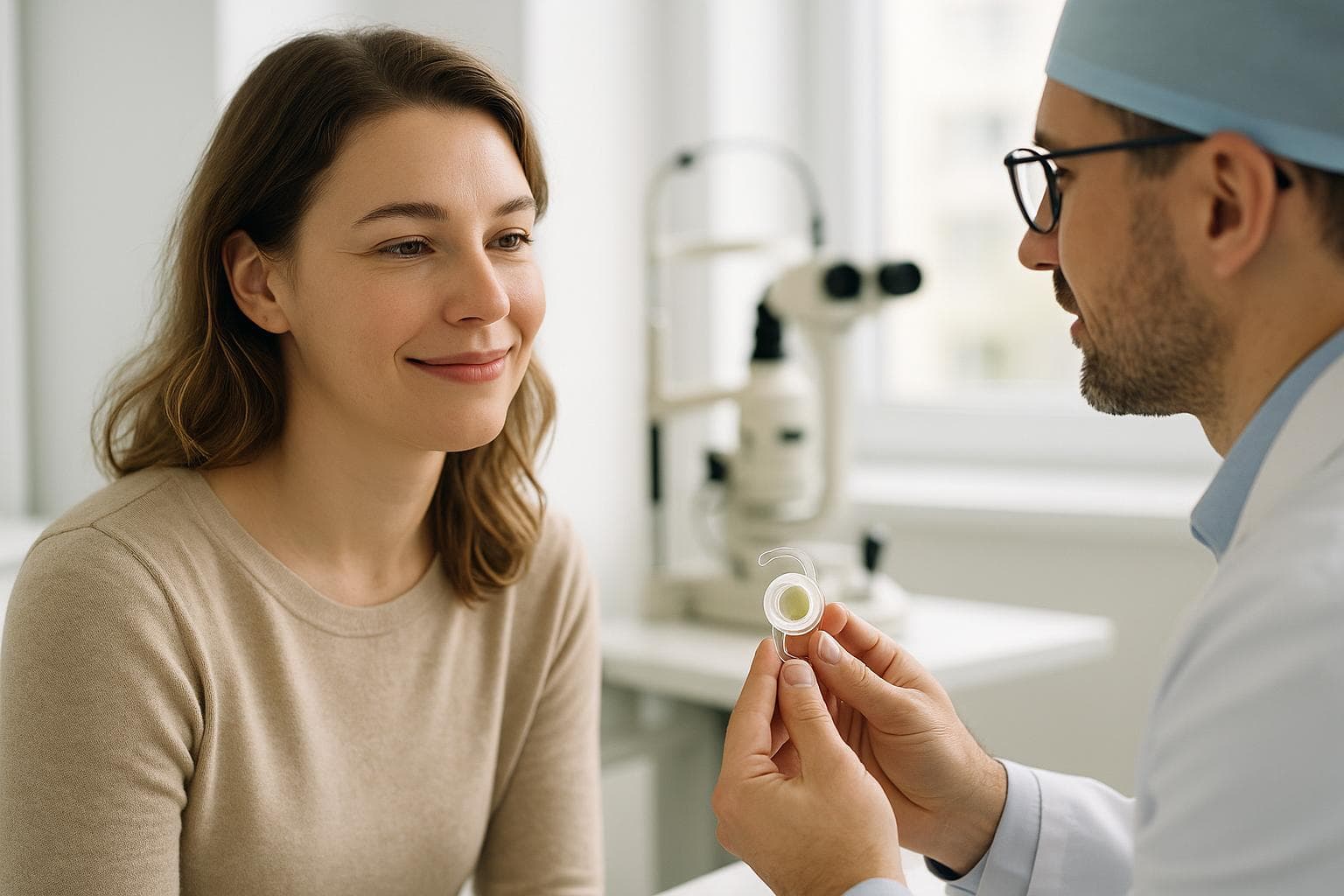
A thin lens is placed behind the iris, in front of your natural lens. Nothing is removed from the cornea, and the lens can be taken out if ever needed.
It's usually the answer for very high myopia or a cornea too thin for laser.
5. Options after the mid-forties
Reading vision changes everything. Presbyopic LASIK or LASEK, or replacing the natural lens, may make more sense than standard laser at this age.
Laser (LASIK, LASEK, SMILE) reshapes the cornea and needs enough of it. ICL adds a lens and leaves the cornea untouched. After the mid-forties, presbyopia changes the plan. The exam decides which doors are open.
Why one doctor should make the whole decision
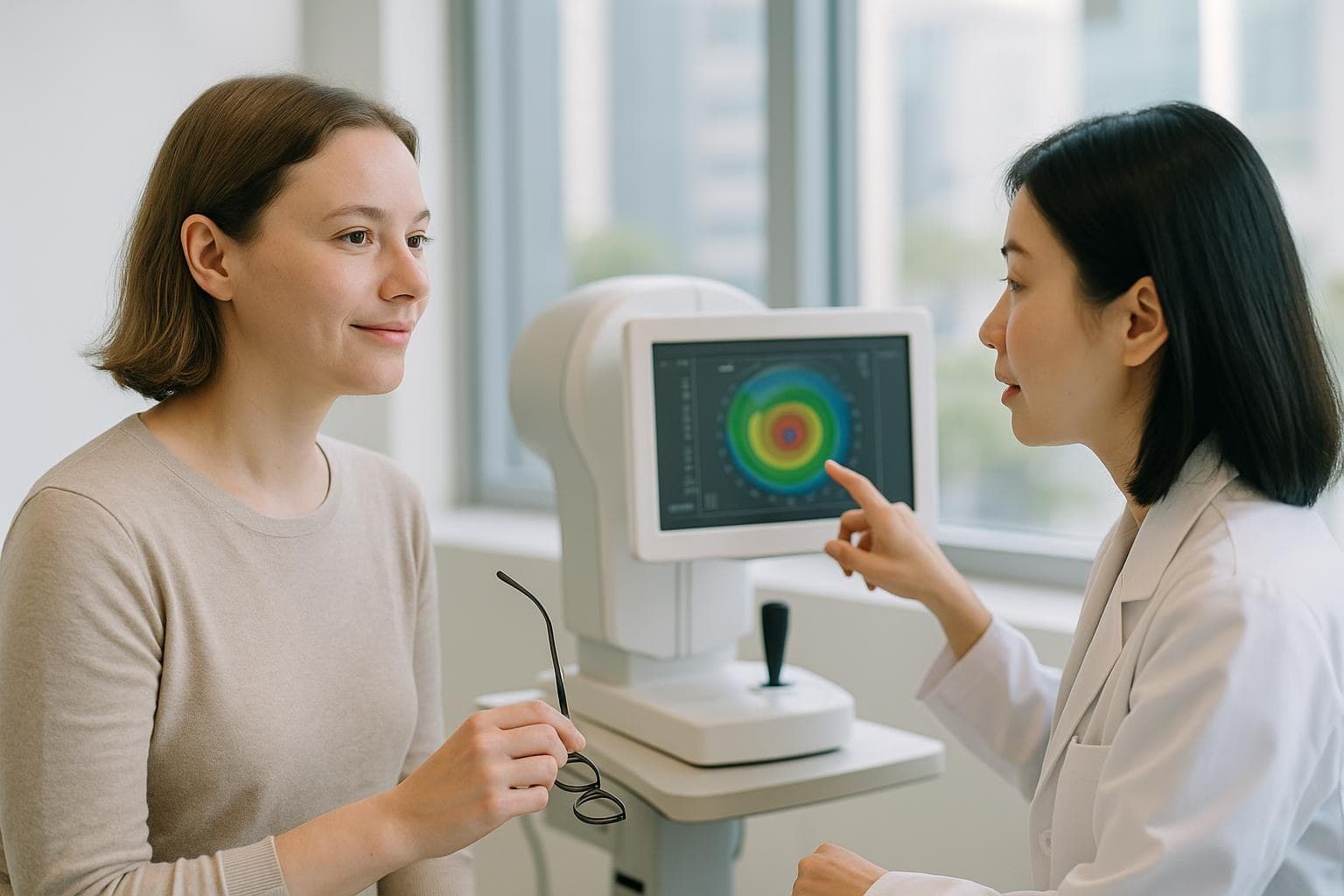
Choosing between five routes is a medical judgement, not a menu choice. At our clinic, the doctor who reads your corneal maps is the doctor who operates and the doctor who checks you the next day.
Things you can verify: international patients pay the same price as Korean patients, we hold 4.8 stars from 154 Google reviews, and I'm a full member of ESCRS. The Korean head office explains its flagship laser on the Clear LASIK page.
I'm not listing these to persuade you. They're there so you can check us.
So which one would suit me?
This is the decision table I sketch on paper for patients. The exam gives the real answer.
| If this sounds like you | Usually consider |
|---|---|
| Moderate myopia, thick cornea, want a quick return to work | LASIK or SMILE |
| Thinner cornea, contact sports, can stay about a week | LASEK |
| Very high myopia, or cornea too thin for laser | ICL |
| Over 45 with reading difficulty | Presbyopic laser or lens replacement |
| Dry eye or keratoconus signs | Treat or assess first; surgery may not be advised |
How the two laser families compare in depth is in laser eye surgery in Korea, and the lens route is in ICL surgery in Korea.
| Procedure (both eyes) | Price |
|---|---|
| Full pre-op exam | ₩150,000 |
| Premium LASIK or LASEK | ₩1,990,000 |
| Presbyopic LASIK or LASEK | ₩2,290,000 |
| Clear LASIK | ₩2,700,000 |
| EVO ICL / EVO ICL Toric | ₩5,500,000 / ₩6,000,000 |
Why SMILE isn't on this table
We quote SMILE after the exam, because it depends on your prescription, astigmatism and corneal measurements. As a rough position, it sits above standard LASIK and below ICL. The full list is on the price page.
Side effects, and who I turn away
Every route has trade-offs, and you should hear them before you book.
- Dryness is common after laser for weeks to months; usually milder after SMILE.
- Night glare and halos can appear, particularly with large pupils.
- Regression of part of the prescription is possible.
- ICL needs regular checks of eye pressure and the inner corneal cells.
I don't operate on early keratoconus, a prescription that's still changing, or untreated dry eye. Results and recovery vary from person to person.
Planning the trip
- LASIK or SMILE: at least three nights, ideally four.
- LASEK: about a week.
- ICL: one or two extra days if the lens must be ordered.
- Contacts: stop soft lenses at least a week before the exam, rigid ones longer.
When to book and what to bring is in vision correction surgery Korea: planning the trip.
Don't choose the name — choose the exam
Five procedures, one cornea. Let the cornea vote first.
It doesn't have to be our clinic. But choose one that will show you why a route is closed, not just sell you the one that's open.
Send us your prescription, age and travel window on WhatsApp. If none of these routes suits your eyes, I'll tell you plainly.
I hope to see you in Seoul.
— Dr. Kim Sun-young, Medical Director, Healing Eye Clinic (Sinnonhyeon, Gangnam, Seoul)
Frequently asked questions
What types of vision correction surgery are available in Korea?
The main routes are laser on the cornea (LASIK, LASEK and SMILE) and a lens implanted inside the eye (ICL). From the mid-forties, presbyopic laser or lens replacement may also be options. Your exam decides which ones are open to you.
Which Korean vision correction surgery is the safest?
There isn't a single safest procedure; there is a safest procedure for your cornea. Thickness, prescription, corneal shape, tear film and lifestyle decide it, which is why the exam comes first.
What is the difference between LASIK and SMILE?
LASIK lifts a thin corneal flap and reshapes the tissue underneath; SMILE has no flap and removes a small lens of tissue through a 2–4mm opening. Both suit moderate myopia on a healthy cornea.
When is ICL better than laser?
ICL is usually better for very high myopia or a cornea too thin for laser. The lens sits behind the iris and in front of your natural lens, and it doesn't remove corneal tissue.
How much does vision correction cost in Korea?
At our clinic, Premium LASIK or LASEK is ₩1,990,000 for both eyes, Clear LASIK ₩2,700,000 and EVO ICL ₩5,500,000. SMILE is quoted after the exam. The full pre-op exam is ₩150,000, and foreigners pay the same as Koreans.
Can I have vision correction if I'm over 45?
Often yes, but the plan changes. Presbyopic LASIK or LASEK, or replacing the natural lens, may suit better than standard laser. The exam shows which.
Message us on official LINE / WhatsApp for a special offer
Your exact candidacy and cost are confirmed in a free 1:1 consultation.