LASEK vs LASIK: The Difference, Explained by the Surgeon
The real LASEK vs LASIK difference isn't which is better — it's which fits your cornea. I walk you through how I actually decide in the exam room.

Dr. Kim Sun-young, Director
Cornea · Glaucoma · Cataract
Contents
"Doctor, everyone keeps telling me LASEK is safer than LASIK — but my friend got LASIK and she sees perfectly. So which one is actually better?"
I hear some version of this almost every week, and I understand the confusion. The honest answer to the LASEK vs LASIK difference is that there is no single winner. They are two good tools that solve the same problem in different ways, and the right one depends on your eyes, not on what worked for your friend. Let me explain the difference the way I do in the exam room, so you can see why I keep coming back to one sentence: the cornea decides.
What actually happens in each procedure
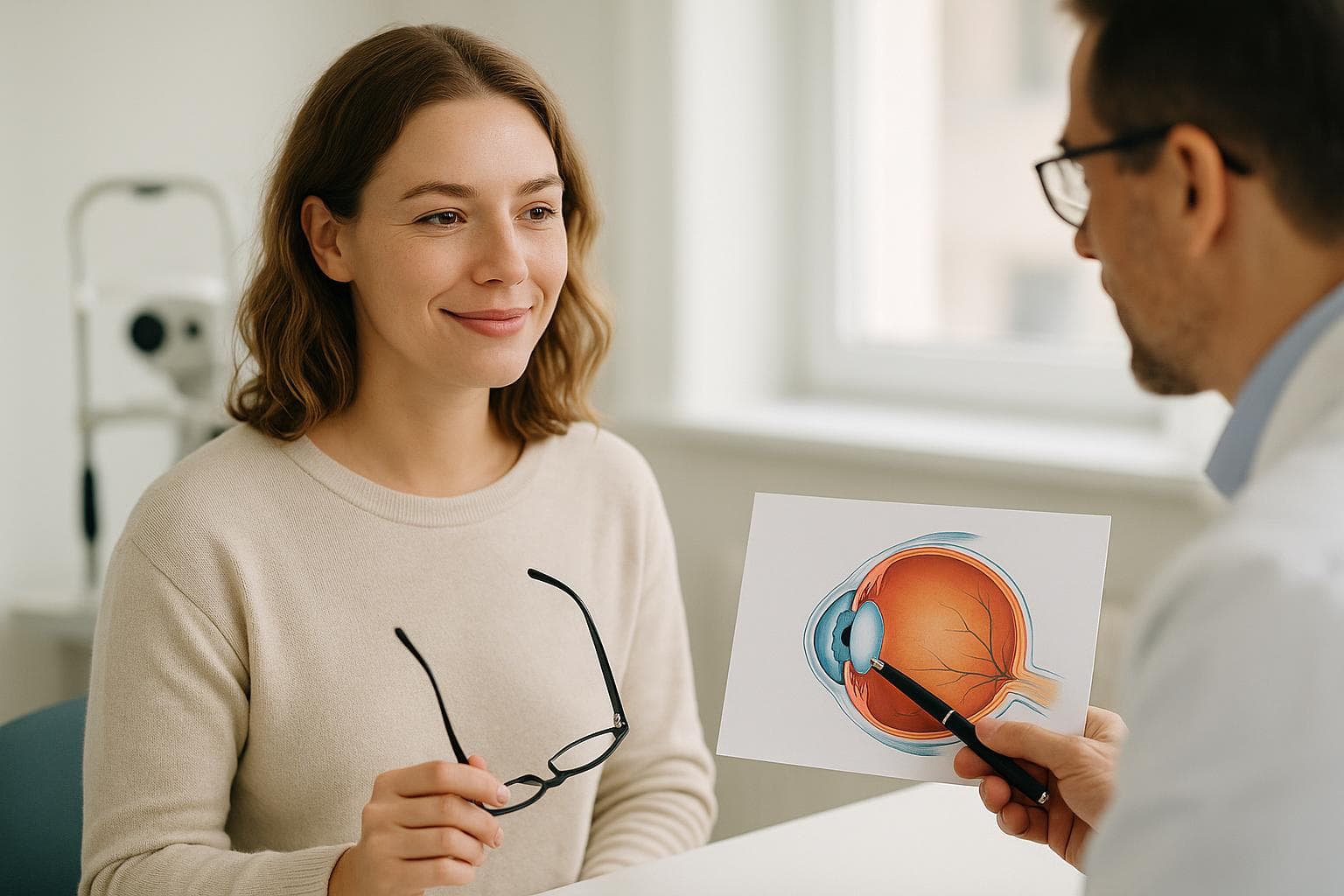
Both LASIK and LASEK use the same excimer laser to reshape the cornea so light focuses correctly on your retina. The difference is how we get to the layer that needs reshaping.
In LASIK, I create a very thin flap on the surface of the cornea, gently lift it like turning a page, apply the laser to the layer underneath, then lay the flap back down. It seals on its own — no stitches. Because that deeper layer is exposed directly, your vision clears up fast, often by the next morning.
In LASEK, there is no flap at all. Instead I loosen and move aside only the very top surface layer of the cornea — the epithelium — apply the laser, and then let that thin surface heal back over the following days. We protect it with a bandage contact lens while it regrows.
LASIK reshapes under a flap for fast recovery. LASEK works on the surface with no flap, preserving more corneal tissue. Same laser, different doorway in.
That one structural difference — flap or no flap — is where almost every real-world trade-off comes from.
Why "no flap" matters for some people
When I see a patient with a thinner-than-average cornea, the flap becomes a problem of arithmetic. A LASIK flap uses up some of your corneal thickness, and I need to leave enough underneath to keep the cornea stable for life. If the numbers are tight, LASEK lets me preserve more tissue because there is no flap to account for.
The other group I think about is people who live hard with their eyes — boxers, martial artists, soldiers, anyone who might take a knock to the face. A LASIK flap, even years later, is technically a place the cornea was once separated. For these patients, the flap-free surface of LASEK is reassuring.
Where LASIK quietly wins
I don't want to romanticize LASEK, because it has a real cost: the early recovery is harder. For the first few days, the healing surface can feel gritty and light-sensitive, with some tearing. Most people get through it well with our recovery-care program, but it asks for patience.
LASIK gives that comfort back. If your cornea has normal thickness, your prescription is in range, and you need to be functional quickly — back at work, back to your phone, back on a flight home — LASIK is a genuinely excellent choice. Sharp vision the next day is not a small thing.
So when someone asks me which is "better," I ask back: better for what? Better for preserving cornea, or better for getting you seeing clearly tomorrow? Those can point to different answers.
How I actually decide — person by person
Here is roughly how the conversation goes once I have your measurements in front of me.
If your cornea is a comfortable thickness and your prescription is moderate, you usually have the luxury of choice, and we weigh recovery speed against your lifestyle. If your cornea is on the thinner side, I lean toward LASEK to preserve tissue — and if it's too thin for either, I'll raise ICL instead of pushing a laser that doesn't fit. If you're very dry-eyed, that nudges the plan too, since the surgeries affect the tear film differently. And if your work or sport means impact to the face, the flap-free option moves up my list.
Notice that none of this is decidable from a blog post. I need your corneal topography, your thickness map, your pupil size in the dark, your tear film, your retina. That's the whole reason I won't promise you a procedure over chat before I've seen those numbers.
A word on getting this done in Korea
A lot of the people who message me are weighing a trip to Seoul for this. A few honest practical notes: whichever procedure we choose, plan for the day-after check-up — it matters, so don't fly out the same day. We're a one-minute walk from Sinnonhyeon Station in Gangnam, about 70 minutes from Incheon Airport, with an English-speaking interpreter through every step. And one thing people forget: you'll need to stop wearing contact lenses for a while before the exam, with soft and hard lenses needing different lead times — ask us first so you don't waste the trip.
On cost, I'll be straightforward: I'm not going to type a number here, because the right price depends on which procedure your eyes actually need. What I can promise is that international patients pay exactly the same as Korean patients — no tourist markup — and you'll hear the real figure during your free consultation.
So, LASEK or LASIK?
If you take one thing from this, let it be this: the LASEK vs LASIK difference isn't a ranking, it's a fit. LASEK preserves more cornea and skips the flap, at the cost of a slower early recovery. LASIK trades a little corneal tissue for fast, comfortable healing. Both, in the right eyes, give beautiful results.
You don't have to solve this alone, and you definitely shouldn't solve it from a forum thread. Message us for free on our official WhatsApp or LINE — no appointment needed — and tell me your prescription, your age, your job or sport, and what worries you. I'll give you an honest first read on which direction likely suits you, and if your eyes turn out to need something else entirely, or aren't ready for surgery yet, I'll tell you that just as plainly.
I'd be glad to look at your eyes properly here in Seoul.
— Dr. Kim Sun-young, Medical Director, Healing Eye Clinic
Frequently asked questions
What is the main difference between LASEK and LASIK?
LASIK creates a thin corneal flap, lifts it, reshapes the layer underneath with the laser, then lays the flap back. LASEK doesn't make a flap — we gently move the very top surface layer (the epithelium), reshape the cornea, and let that surface heal back over a few days. LASIK gives you sharp vision faster; LASEK leaves more corneal tissue untouched and avoids any flap, which matters for thinner corneas and high-impact lifestyles.
Is LASEK safer than LASIK?
Neither is universally 'safer' — they're safer for different people. Because LASEK has no flap, there's no flap-related risk and more residual cornea, so for thin corneas or contact-sport athletes I often lean LASEK. But LASEK has a longer, more uncomfortable early recovery. For a normal-thickness cornea and someone who needs to function quickly, LASIK is excellent. The exam decides which risk profile fits you.
Does LASEK hurt more than LASIK?
Honestly, the first few days usually do feel more sensitive with LASEK — some tearing, light sensitivity, a gritty feeling while the surface layer heals. With LASIK most people are comfortable by the next day. We manage LASEK discomfort with a bandage contact lens, drops and a recovery-care program, but I won't pretend the early days are identical.
How long is recovery for LASEK vs LASIK?
With LASIK, many people see clearly the next day and return to normal life within 1–2 days. With LASEK, useful vision comes back over several days and the final sharpness keeps settling for a few weeks. If you're flying in from abroad, that recovery difference is worth planning around, and we'll map your trip to whichever procedure suits you.
Can I choose LASEK or LASIK myself, or does the doctor decide?
You absolutely have a say — your lifestyle and how fast you need to recover matter. But whether a procedure is even safe for you depends on measurements I can't guess online: corneal thickness, topography, pupil size, prescription and tear film. So it's a shared decision, grounded in your exam. If your cornea rules one out, I'll tell you plainly.
Message us on official LINE / WhatsApp for a special offer
Your exact candidacy and cost are confirmed in a free 1:1 consultation.