LASIK Eye Surgery Presbyopia Options When You're Past 45
LASIK eye surgery presbyopia options after 45: monovision, a softer blend or a lens instead. What decides it, the risks, and what to send first.

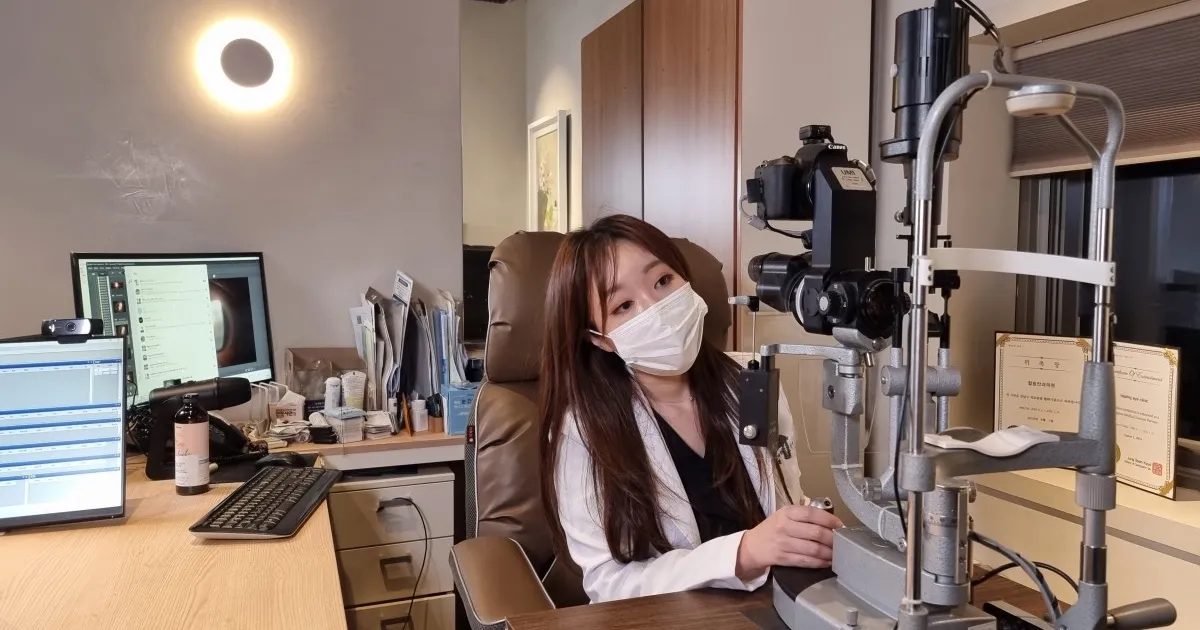
Dr. Kim Sun-young, Director
Cornea · Glaucoma · Cataract
Medically reviewed byDr. Kim Sun-young, Director· Medical Director
Edited by: Dr. Kim Sun-young
Contents
I'm Dr. Kim Sun-young, Medical Director at Healing Eye Clinic in Seoul, and my specialty is cornea, glaucoma and cataract. Searches for lasik eye surgery presbyopia usually come from people in their mid-40s who still see the road well but now hold their phone at arm's length, or who have started taking their glasses off to read a menu.
Presbyopia is a change in the lens inside your eye. That lens slowly stiffens and stops shifting focus for near work. LASIK reshapes the cornea at the front of the eye, so it cannot give that flexibility back; the American Academy of Ophthalmology puts it in one line, that LASIK cannot correct presbyopia.
What a laser can do is set your two eyes to slightly different distances, so that together they cover more of your day with fewer glasses. Whether that suits you depends on your tear film, your cornea, the clarity of your lens and how you spend your hours. The exam decides it.
Can LASIK fix presbyopia, or only work around it?
Only work around it. The laser changes corneal shape; presbyopia sits in the natural lens behind the cornea, which keeps stiffening through your 40s and 50s. A presbyopic laser plan shares focus between your eyes rather than restoring the range you had at 30.
That difference explains a surprise many people over 40 run into. The AAO notes that almost everyone with excellent distance vision needs reading glasses after around age 40, with or without refractive surgery. If you are nearsighted today, you probably read by pushing your glasses up onto your forehead. A standard LASIK aimed at sharp distance in both eyes removes that trick, and the distance glasses are often replaced by readers.
Healing Eye lists presbyopic LASIK and LASEK for patients in their 40s and 50s, and Presbyopic Clear LASIK appears on its procedure list, alongside lens-based options described on the presbyopia and cataract treatment page. The point of this article is to help you see which of those routes your own day points toward.
How the laser shares the work between your two eyes
Usually by giving each eye a different job. In classic monovision, one eye is set for distance and the other is left slightly nearsighted for close work. The AAO describes exactly this arrangement and adds that monovision is not for everyone.
Your brain does the blending. Most of the time it pays attention to whichever eye has the clearer image for the task, and many people stop noticing the difference after an adjustment period. Some never settle. They notice that depth feels flatter, that one eye seems to be working harder, or that reading in dim light is still a strain because the near eye has less light to work with.
A smaller gap between the two eyes is gentler on depth and night vision but gives less reading range. A bigger gap reads more but asks more of the brain. Where that gap should sit for you is decided after the exam, and the AAO suggests trying monovision with contact lenses first, which is something you can arrange with your optometrist at home before you travel.
Night driving deserves its own mention at this age. Personal Custom LASIK analyzes higher-order aberrations and is designed with night vision and contrast sensitivity in mind, which matters when the eye set for distance is the one doing most of the work on a dark road.
Your day decides more than your age
Two 47-year-olds with the same prescription can need opposite plans. The deciding facts are the distances your eyes work at for most of the day: a dashboard at night, a laptop at arm's length, a phone close to your face, a tennis ball coming at you.
| Your day | What matters most | Which way the plan often leans |
|---|---|---|
| Long drives, often after dark | Distance clarity in low light, pupil size, glare | A smaller near/distance gap; glasses for night driving may stay in the glove box |
| Eight or more hours on screens | Intermediate focus and a stable tear film | Dry-eye assessment first; intermediate range matters more than tiny print |
| Paper, sewing, fine handwork | Close near clarity | A stronger near eye, at the cost of distance sharpness in that eye |
| Tennis, golf, cycling | Two-eyed depth judgement | Monovision may feel off; a contact-lens trial matters, readers may be simpler |
| Jobs with strict vision rules (pilots, professional drivers) | Licensing standards for binocular vision | Check the rules before any plan that gives the eyes different jobs |
The other split is your history. If you have been nearsighted for decades, you are used to correction and the laser removes glasses you already wear. If you never needed glasses until readers appeared, a presbyopic laser plan means operating on an eye that already sees the distance well, so the trade-off is larger and the bar for saying yes should be higher.
What if early cataract is already starting?
Then the lens is the problem twice over, and a corneal laser leaves it in place. When the natural lens is starting to cloud, replacing it with an intraocular lens can address cataract and presbyopia in one operation, so lens clarity has to be checked before any presbyopic laser plan.
At Healing Eye, cataract surgery with a premium lens can also correct presbyopia and astigmatism in one step, and the operation itself takes about 15 to 20 minutes per eye. Dr. Choi Geun-hye, whose specialty is cataract, presbyopia and oculoplasty, also treats this group of patients. If you want the lens route in more depth, I wrote about combining presbyopia and cataract surgery separately.
One trade-off is easy to miss. A cornea that has been reshaped by laser can make the lens-power calculation for a future cataract operation less straightforward. That doesn't rule laser out, but if early lens changes are already visible, it is a reason to think about the order of the two operations now rather than in ten years.
What I measure before I say yes, or not yet
Five things carry the decision: tear film, lens clarity, corneal thickness, corneal topography and pupil size, plus whether your prescription has held still. The detailed exam covers corneal thickness, topography, pupil and tear film, and an interpreter explains the results in Japanese, Traditional Chinese or English.
Here is how each one moves the plan.
- Tear film. Tear production often drops after 40, and the FDA notes that LASIK tends to aggravate dry eye. A thin or unstable tear film means treating the surface first, and sometimes choosing a different approach; there is more on that in LASIK with dry eyes.
- Lens clarity. Early clouding can push the answer from laser toward a lens operation, as described above.
- Corneal thickness. There has to be enough tissue for the treatment and a safe margin underneath. A thin cornea points toward LASEK or an implantable lens; the reasoning is laid out in ICL or LASIK.
- Topography. An irregular map or signs suggesting keratoconus rule out flap-based LASIK.
- Pupil size. The FDA lists large pupils in dim light as a cause of glare, halos and starbursts, which matters more if you drive at night.
- Stability. A prescription that changed in the past year is what the FDA calls refractive instability, and it usually means waiting.
On a topography map, symmetry is the detail that deserves attention. A cornea whose lower half steepens noticeably more than the upper half calls for caution even when the thickness number looks fine, because the shape says more about how the cornea will behave than any single number.
I had LASIK in my twenties. Can laser help with reading now?
Sometimes, and the remaining corneal thickness answers most of it. A second laser treatment removes more tissue from a cornea already reshaped once, so the depth of the old surgery matters as much as today's prescription. When the margin is too thin, a lens option or reading glasses are the realistic alternatives.
Healing Eye runs a dedicated revision center for people whose vision declined or became uncomfortable after surgery elsewhere, and the plan there is decided after a detailed exam. If you can find the records from your first operation, bring them. The original prescription and treatment depth save guesswork, and without them the measurements have to carry the whole decision.
Which risks weigh more after 40?
Dry eye leads the list. The AAO notes that almost everyone has dry eyes and changing vision during the day after LASIK, usually fading within a month but lasting longer, or remaining, for some people. After 40 the tear film often starts thinner, so that phase can feel longer.
The other risks to weigh before deciding:
- Monovision that never feels right. Some people do not adapt. A trial with contact lenses beforehand is the most practical way to find out.
- Glare, halos and light sensitivity, listed by the AAO among LASIK side effects, are more noticeable with larger pupils and at night.
- Reading glasses do not disappear completely. Small print in dim light can still need them, especially later in the day.
- Presbyopia keeps progressing. A near eye that feels right at 46 can feel weaker in your mid-50s, and some people later need readers or an enhancement.
- Cataract still comes eventually. A laser now does not prevent it, and the earlier treatment has to be accounted for when lens surgery is planned.
People who generally should not go ahead with presbyopic laser right now include those with an unstable prescription, untreated significant dry eye, a thin cornea or irregular topography, early cataract, pregnancy or breastfeeding, and anyone who disliked the monovision trial. Every eye is different, and the in-person exam is what decides suitability.
Planning the trip around two visits
Plan for at least the detailed exam and the next-day check, both with the same surgeon. Healing Eye uses a 1:1 dedicated surgeon from exam to aftercare, so the doctor who measures your eyes is the one who checks them the next morning.
The clinic is at 470 Gangnam-daero, one minute's walk from Sinnonhyeon Station and about 70 minutes from Incheon Airport. It is open until 21:00 on Fridays and from 10:00 to 14:00 on Saturdays, which can help if you land late in the week. The partner hotel is O'Cloud Hotel in Seocho-gu. Healing Eye is registered with Korea's Ministry of Health and Welfare as an institution for international patients.
How many days you should stay and how long to stop wearing contact lenses beforehand are confirmed at the consultation, because both depend on your eyes and the approach. The Korean-language presbyopia LASIK page on our main site covers the same procedure family for anyone who reads Korean or is arranging the trip with family in Korea, and the Healing Eye English site lists every procedure mentioned here.
If you have your latest glasses prescription or eye exam report, send a photo on WhatsApp, together with your age and the distance you use most in a day: phone, laptop or dashboard. The doctor reviews it with those three details in mind, and the in-person exam in Seoul has the final word.
Frequently asked questions
Will I still need reading glasses after presbyopic LASIK?
Possibly for some tasks. A presbyopic laser plan aims to reduce how often you reach for glasses, but small print in dim light, long reading sessions late in the day and the natural progression of presbyopia can still call for readers. The AAO notes that almost everyone with excellent distance vision needs reading glasses after around 40.
How can I find out if I'd tolerate monovision before surgery?
The American Academy of Ophthalmology suggests trying monovision with contact lenses first. Wearing one lens set for distance and one for near for a couple of weeks at home shows whether your brain blends the two images comfortably for driving, screens and sport.
Is presbyopic LASEK an option if my cornea is thin?
Healing Eye lists presbyopic LASIK and LASEK for patients in their 40s and 50s. A thin cornea can point away from flap-based LASIK toward LASEK or a lens-based option, but the choice depends on the measured thickness, topography and tear film, so it is settled at the exam.
Does laser presbyopia correction keep working as I get older?
The corneal change is stable, but the lens inside your eye keeps aging. Near vision usually becomes harder again through your 50s, and cataract develops eventually, so think of a laser plan at 46 as covering a stretch of years rather than the rest of your life.
Can I go through the exam with an interpreter?
Yes. Healing Eye has on-site Japanese, Traditional Chinese and English interpreters, so the exam results and the surgical plan can be explained in your own language before you decide anything.
Message us on official LINE / WhatsApp for a special offer
Your exact candidacy and cost are confirmed in a free 1:1 consultation.