Should I Do My LASIK in Thailand or Korea? Follow-Up First
Should I do my LASIK in Thailand or Korea? A Seoul eye surgeon on what to compare: follow-up at home, nights away, exam language and risk.

Dr. Kim Sun-young, Director
Cornea · Glaucoma · Cataract
Medically reviewed byDr. Kim Sun-young, Director· Medical Director
Edited by: Dr. Kim Sun-young
Contents
I'm Dr. Kim Sun-young, Medical Director of Healing Eye Clinic in Seoul, and "should i do my lasik in thailand or korea" is a question I can only half answer from my side of the map. The surgery works the same way in both countries. What differs is where you live, how many nights you can spare, and who looks at your eyes on day two and in month three.
Picture the Korea version as a calendar. You land at Incheon on a Thursday night; the clinic is about 70 minutes from the airport and a one-minute walk from Sinnonhyeon Station. Friday hours run until 21:00, Saturday 10:00 to 14:00, and Sundays are closed. The exam decides whether surgery happens at all, and a next-day check has to fit before your flight. If a clinic nearer your home makes that calendar easier, that is a legitimate answer too.
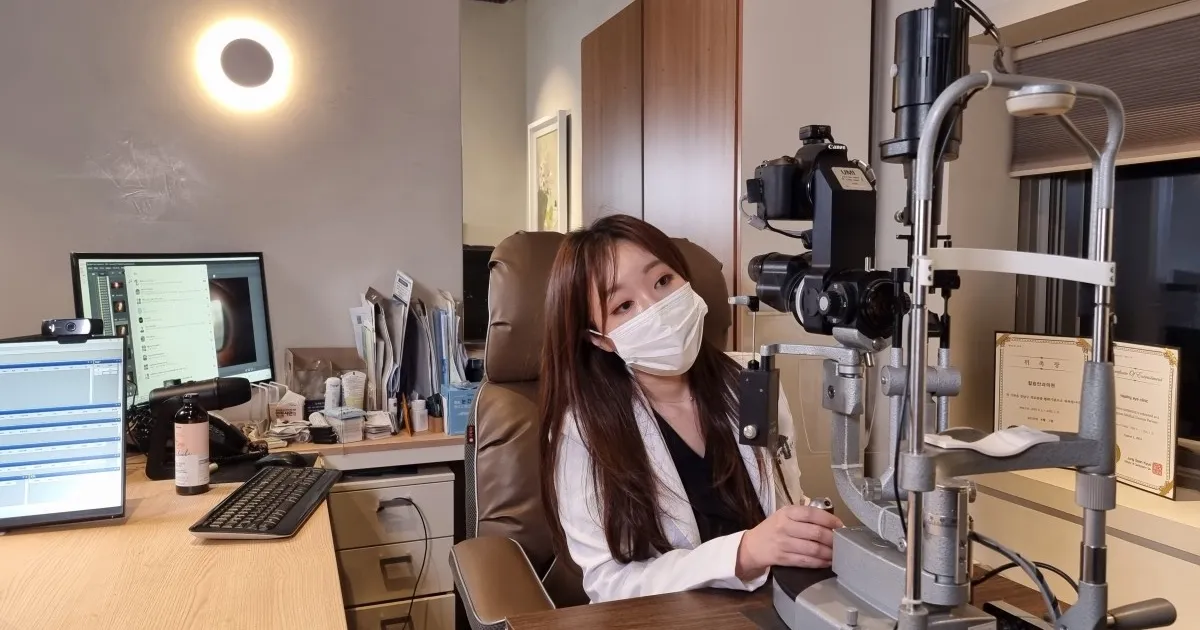
What actually differs between a Thai and a Korean LASIK clinic?
Five things matter more than the country: distance from your home, the nights you can stay, the language your exam is explained in, who sees you at each follow-up, and where a second procedure would happen years later. The same questions work in Bangkok and in Seoul.
| What to compare | Why it changes the decision | What to ask either clinic |
|---|---|---|
| Distance to your home | Checks continue for months after surgery | Who examines my eyes after I fly home? |
| Nights you can stay | The next-day check must happen before the flight | How many nights do you need, based on my exam? |
| Exam language | You agree to surgery based on numbers you must understand | Who explains my corneal map, and in what language? |
| Who follows you | One doctor knows your eyes from start to finish | Will the surgeon who operates also see me the next day? |
| Enhancement or revision | Some eyes need further treatment later | If I need more treatment, where would it happen? |
Here is how our side of the table reads. Healing Eye is registered with Korea's Ministry of Health and Welfare to treat international patients. A single dedicated doctor follows you from the exam through surgery and aftercare, and the clinic runs a dedicated LASIK/LASEK revision center. Put the same five questions to the clinic you're weighing in Thailand, and judge both replies by how specific they are.
The laser physics are the same in Bangkok and Seoul
An excimer laser reshapes corneal tissue the same way in any country, and candidacy comes from the eye, not the passport. The U.S. Food and Drug Administration lists reasons LASIK may not suit someone: a prescription that is still changing, thin corneas, large pupils, dry eyes, certain diseases or medications, and contact sports.
A thin cornea in Seoul is a thin cornea in Bangkok. Our excimer laser is the AMARIS Red, and before any yes we measure corneal thickness, corneal topography, pupil size and the tear film. On the topography map I am looking for an even shape. If the map shows irregularity or signs that suggest keratoconus, flap-based LASIK is set aside and the conversation moves to LASEK or an implantable lens (ICL). If the prescription has shifted over the past year or so, waiting is usually the better plan.
So the fair test for any clinic, in either country, is whether these measurements come before the recommendation. If you want to see how the flap and laser profile are designed here, the Clear LASIK treatment page walks through it step by step.
Where will your follow-up visits happen?
Mostly in the country where you live. The FDA advises a first check within a day or two of surgery and regular visits for at least the first six months. For a traveler, the first check happens before the flight; every later one happens wherever you are.
On our side, the next-day check is done by the same surgeon who operated. After that, the work moves to you: prescribed drops on schedule, no eye-rubbing, and no saunas, swimming or eye makeup for the advised period. Temporary dryness is common in the early weeks and is managed with artificial tears. For patients who live far away, we design a care plan that fits the distance, but a plan is not the same as a doctor in your city.
This is where your home address decides more than anything I can write. If you live in Bangkok or Chiang Mai, a clinic near home turns every later check into a short trip, and that counts for a lot. If you live in the US, Europe or Australia, both countries are a long flight away, and the question becomes the same for both: which ophthalmologist near home will see you after surgery done abroad?
Find that person before you book anything, and ask the operating clinic for your pre-op measurements and surgery record to carry home.
The LASIK recovery time guide lays out what each of the first days usually looks like.
How many nights does each option really need?
Your exam and the next-day check set the number of nights, so it is confirmed at consultation rather than fixed in advance. Clear LASIK itself takes about ten minutes for both eyes, and most people return to daily life within one to two days.
The calendar has the same pieces in either country: the detailed exam, the surgery if the exam says yes, the next-day check, then the flight. One piece often gets missed. The FDA asks people to stop wearing contact lenses for a period before the baseline exam, because lenses change the shape of the cornea and can skew the measurements. How many days that means for your lenses is confirmed at consultation, and it has to happen at home, before you travel.
If you need a place to stay, our partner hotel is the O'Cloud Hotel in Seocho-gu. For how to fit all of this around limited leave, see nights in Seoul versus days off work.
Can you understand your own exam results in Seoul?
Yes, in Japanese, Traditional Chinese or English. Healing Eye has on-site interpreters for those three languages, so your corneal thickness, topography and tear-film results, and the surgical plan, are explained before you decide anything.
There is one limit worth stating plainly. Thai interpretation is not on our list. If Thai is the language you think in, a clinic in Thailand can explain every number in it, and that matters when you are agreeing to surgery on your eyes.
Whatever the language, four questions are worth asking in the exam room. What is my thinnest corneal reading? Does my topography look even? How large are my pupils in dim light? Is my tear film good enough for surgery now? If you want to know what the rooms and machines look like before you arrive, here is a walk through the clinic, room by room.
Risks that travel with you either way
LASIK carries the same risks in Thailand and Korea. The American Academy of Ophthalmology lists dry eye, glare and halos, and under- or overcorrection among the possible problems, and some people need a second treatment. Rare, more serious problems also exist. None of these risks is zero anywhere.
What changes with distance is how far you are from your surgeon when a symptom appears. Night glare relates partly to pupil size and to higher-order aberrations, the small focusing errors a standard prescription test misses. Personal Custom LASIK is designed with night vision and contrast in mind, yet no surgeon can promise that every halo disappears.
Regression is the long-term question. If vision drifts years later, someone has to decide whether an enhancement suits your cornea, and where it happens. Our LASIK/LASEK revision service also sees patients whose first surgery was done elsewhere, and the clinic's Korean-language revision page describes that center. Ask the Thai clinic the same question about its own patients. Individual results vary, and only the in-person exam decides whether surgery is suitable for you.
When is staying closer to home the better call?
Stay closer to home when follow-up access outweighs everything else: you live in Thailand, your eyes already need regular monitoring, or you cannot take enough nights off for the exam and the next-day check. Those are good reasons, and Thai ophthalmologists perform this surgery every day.
Seoul fits better in other situations. You may want the exam explained in English, Japanese or Traditional Chinese by an interpreter in the room. You may want one doctor from exam to aftercare, or you may already be planning a trip to Korea with a few spare days. For context on my own background: I am a Clinical Professor (Cornea & Cataract) at Uijeongbu St. Mary's Hospital and a member of KOS, KEEDS, KCLSS & ESCRS. Those facts tell you who reads your corneal map; they don't make your eyes a candidate.
What to send before you decide
Send two things on WhatsApp: the city you'll fly home to, and the dates you're considering.
If you have a recent prescription or eye exam report, add a photo. I review whether the exam, a possible surgery and the next-day check fit those dates, and if your situation points to a clinic closer to home, that is a reasonable outcome of the message. The WhatsApp link is also on the Healing Eye Clinic English homepage.
Frequently asked questions
Can someone who lives in Bangkok still have LASIK in Seoul?
Yes, as long as the exam shows your eyes are suitable and you can stay for the exam, surgery and next-day check. Later check-ups will happen near home, so arrange an ophthalmologist in Thailand before you travel. If that is hard to arrange, a clinic near home may suit you better.
Do I need to stop wearing contacts before a LASIK exam abroad?
Yes. The FDA asks patients to stop wearing contact lenses for a period before the baseline exam, because lenses change the shape of the cornea. The exact number of days for your lens type is confirmed at consultation, and the break has to start at home, before your flight.
What if my vision drifts back after I return home?
Some eyes regress and may need an enhancement. Whether that is safe depends on corneal thickness and topography, measured again at the time. Ask any clinic you consider where further treatment would happen; Healing Eye runs a dedicated LASIK/LASEK revision center that also sees patients first treated elsewhere.
Does the laser brand matter when comparing clinics in two countries?
It is a fair question to ask, and a clinic should be able to name its laser. Healing Eye uses the AMARIS Red excimer laser. The measurements taken before surgery, and who interprets them, usually tell you more than the brand name alone.
Is there a Thai interpreter at Healing Eye Clinic?
No. On-site interpreters cover Japanese, Traditional Chinese and English. If you would rather hear your results in Thai, that is a real reason to consider a clinic in Thailand.
Message us on official LINE / WhatsApp for a special offer
Your exact candidacy and cost are confirmed in a free 1:1 consultation.