Which LASIK Laser Is Best? What the Machine Can't Decide
Which LASIK laser is best? A Seoul cornea surgeon on what laser specs mean, what decides your result before the laser fires, and what to ask any clinic.

Medically reviewed byDr. Kim Sun-young, Director· Medical Director
Edited by: Dr. Kim Sun-young
Contents
I'm Dr. Kim Sun-young, Medical Director of Healing Eye Clinic in Gangnam, Seoul, a minute's walk from Sinnonhyeon Station. I was previously a clinical professor of cornea and cataract at Uijeongbu St. Mary's Hospital, so I tend to start with the cornea when we talk about laser surgery. Interpreters for English, Japanese and Chinese are on site.
A question that often comes up when people research LASIK abroad is about the machine: "Which laser do you use? I read that some lasers are better than others." If you searched which LASIK laser is best, you have probably read spec sheets, forum threads and clinic pages that all claim to have the newest one. That is a reasonable thing to check. It is your cornea, and the laser is the part you can see.
So let me answer honestly. The laser matters, but it is the last step in a chain: the measurements, the plan the surgeon writes and whether your cornea suits the method decide more than the name on the machine. Here is how I explain it when a patient asks me across the desk.
Which LASIK laser is best? Why the machine is only part of the answer
Asking which laser is best is a little like asking which camera takes the best photos. A better camera helps, but the person who frames the shot and the light in the room decide most of what you see. In laser eye surgery, the "framing" happens on exam day.
1. A laser follows a plan; it doesn't write one
An excimer laser removes corneal tissue in the exact pattern it is given. It does not decide how much to remove, where the treatment should be centered or how much cornea must stay behind for safety. The surgeon decides that from your measurements.
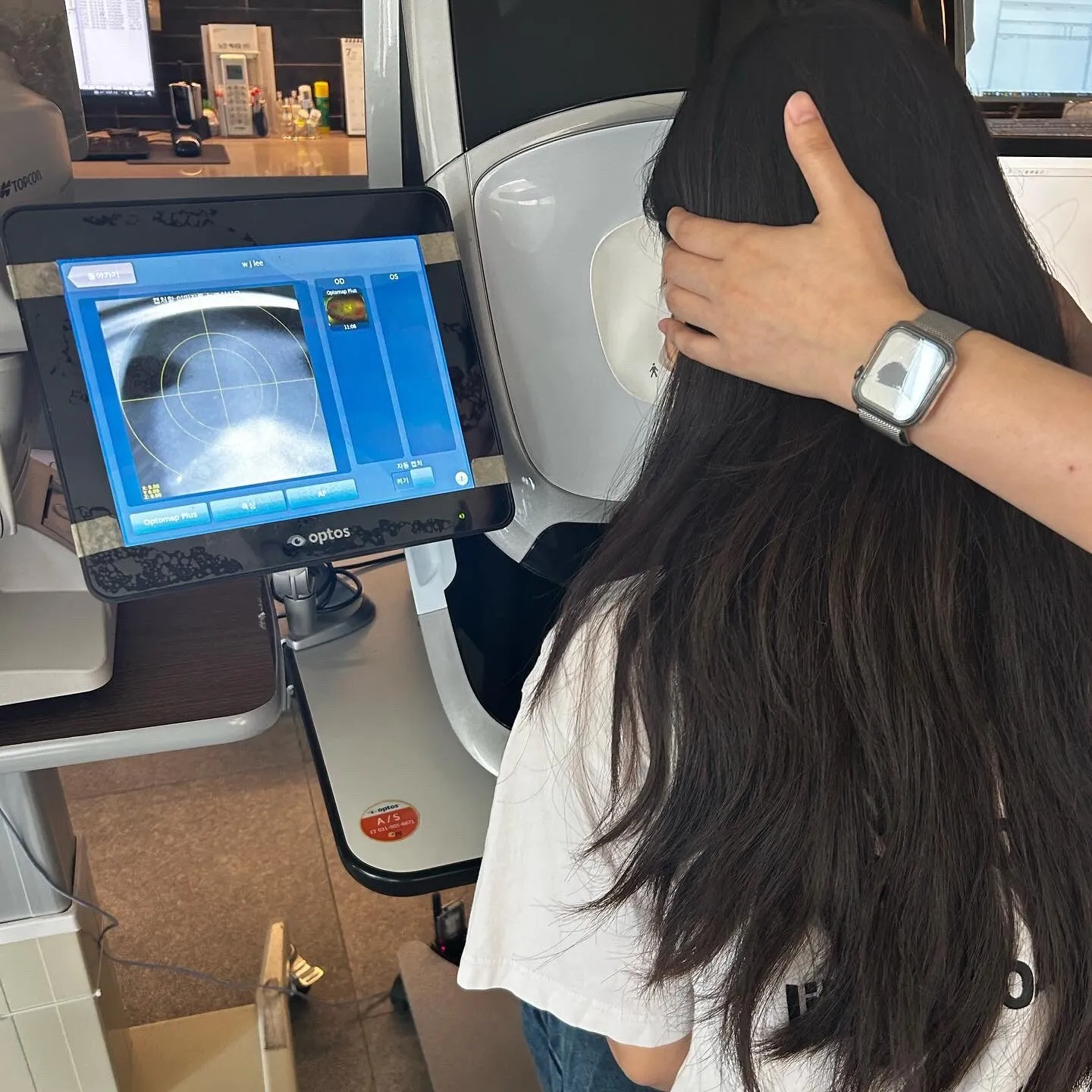
That is why two clinics with the same machine can give different results. If the corneal map was misread, or the prescription measured while a contact lens was still changing the cornea's shape, the laser will carry out the wrong plan with great accuracy. The measurements a LASIK surgeon should take first are the ones I'd want to see on paper before talking about any machine.
2. Specs are measured by the maker, not in your eye
Laser specifications are real, but they describe the machine under the manufacturer's test conditions. Pulse rate, treatment speed and eye-tracking features tell you how the device was engineered. They don't tell you how your eye will heal.
A faster treatment does have a practical side: you spend less time holding your gaze on the fixation light. But speed cannot add corneal thickness, and it cannot correct a plan built on poor measurements. I'd rather you ask a clinic what its numbers mean than be impressed by them.
3. Your cornea chooses the method before the laser does
The first decision is not which laser, but which procedure your cornea can safely take. In 1day LASIK, a thin corneal flap is lifted, the laser corrects the layer underneath, and the flap is laid back without stitches. In Premium LASEK, there is no flap; only the thin surface layer is moved aside and the laser reshapes the surface directly.
Clear SMILE LASIK uses a different kind of laser altogether and has no flap. If your cornea is too thin for any of these, an implantable lens (ICL) leaves the cornea untouched. The difference between LASEK and LASIK explains why the flap question comes before the machine question.
4. What no laser can fix
Some limits belong to the eye, not the equipment. A laser cannot make a thin or irregular cornea safe, and topography that shows early signs of keratoconus is a reason to stop, whatever machine is in the room. A prescription that is still changing will keep changing after surgery.
A laser also cannot stop presbyopia, the gradual loss of near focus that usually begins in the early to mid-forties. And very high myopia can require removing more tissue than I am comfortable with, which is when an implantable lens comes into the conversation instead.
Ask about the laser, but judge the clinic by its measurements and by whether it will tell you no.
What we use, and why I think every clinic should name its laser
I'm happy to tell you our equipment. I think every clinic should be able to name its laser. For 1day LASIK and Premium LASEK we use the SCHWIND AMARIS Red 1050. The manufacturer lists a 1,050 Hz pulse rate, about 1.3 seconds per diopter under its own test conditions, and what it calls 7D eye tracking. Those are the maker's figures, and I quote them as such.
For Clear SMILE LASIK we use the Ziemer FEMTO LDV Z8, which shapes a thin lenticule inside the cornea and removes it through one small incision. Our Korean-language equipment page shows the devices we use for measurement and surgery, and a translation app reads it well.
A laser's name is one thing you can verify before you fly, and there are a few more. Google reviewers give the clinic 4.8 across 154 reviews. ESCRS, the European Society of Cataract and Refractive Surgeons, counts me as a full member. Korea's Ministry of Health and Welfare has registered us to see international patients, a LASIK and LASEK revision center is part of the clinic, and you pay the Korean patients' price.
Questions worth asking any clinic about its laser
These are the questions I would ask if I were the one flying in. A good clinic should answer each in writing before you book a flight.
| Question | Why it matters | Our answer |
|---|---|---|
| What is the laser's exact name? | A vague answer is a warning sign | AMARIS Red 1050 (LASIK, LASEK); Z8 (Clear SMILE) |
| Which procedure fits my cornea, and why? | The method is chosen before the machine | Decided after the full exam, explained with an interpreter |
| How much cornea will remain after treatment? | The safety margin lasts for life | Measured and written in your surgery record |
| Who measures me, and who operates? | The plan and the hands should match | One dedicated doctor, exam to aftercare |
| What do I take home? | Your eye doctor at home needs the details | Procedure, prescription, tissue removed, corneal thickness, eye drops |
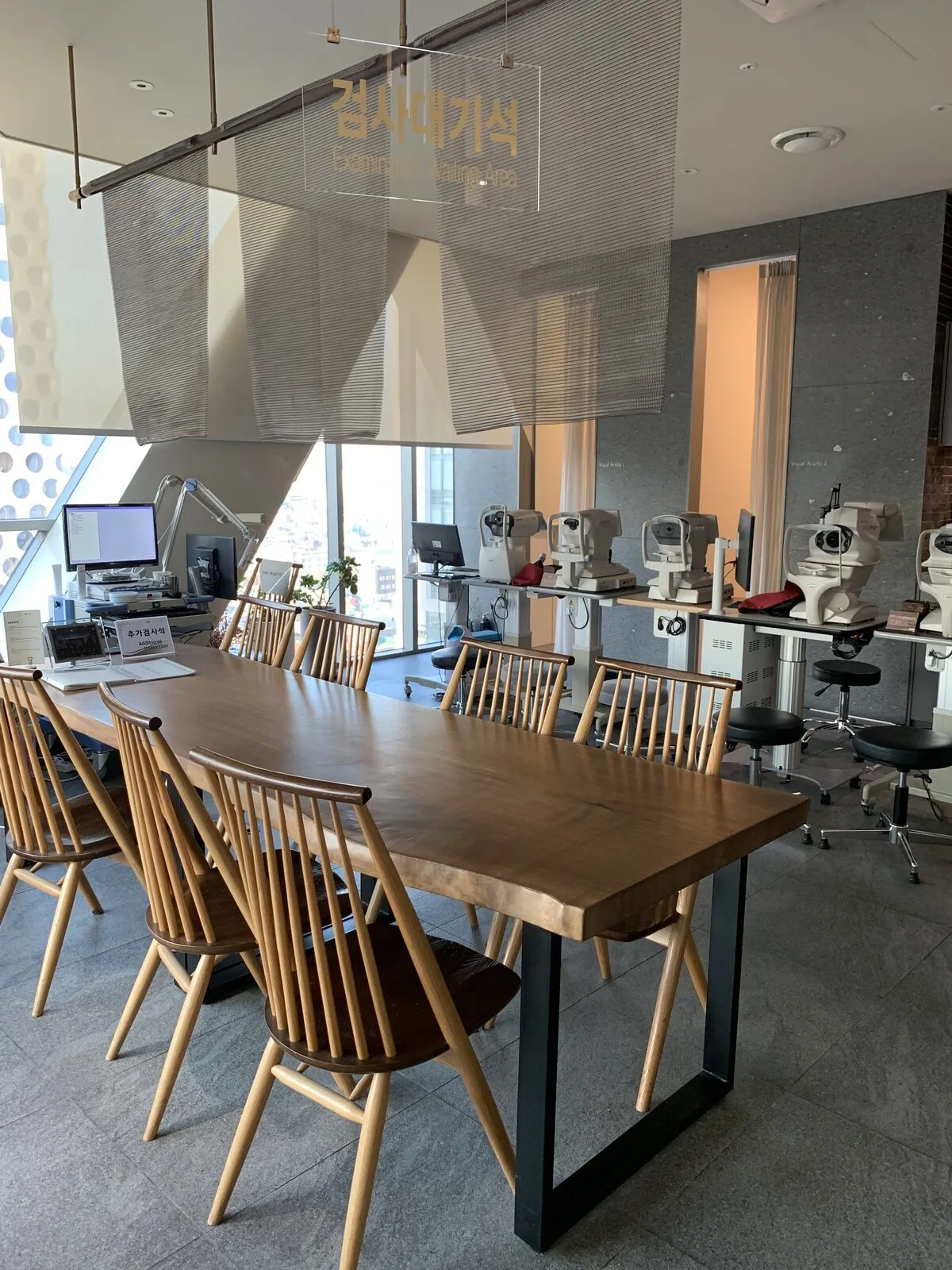
The full exam runs before any decision about surgery. If you'd like to know what those numbers say about higher-order aberrations and night vision, personal custom LASIK in Korea goes through them one by one.
So which procedure is right for me?
Here is roughly how the choice sorts once I have your exam results. The laser is part of each answer, but never the whole of it.
| Procedure | How it corrects | Often discussed when |
|---|---|---|
| 1day LASIK | Flap lifted, AMARIS Red 1050 corrects underneath | Cornea thick and regular, you want vision back quickly |
| Premium LASEK | No flap, AMARIS Red 1050 reshapes the surface | Thinner cornea, contact sports, more cornea preserved |
| Clear SMILE LASIK | Z8 shapes a lenticule removed through a small incision | Cornea suits a flapless method |
| Implantable lens (ICL) | Lens placed inside the eye, cornea untouched | Very high myopia or a cornea too thin for laser |
These are our published prices for both eyes. 1day LASIK and Premium LASEK share the same line on our price page.
| Item | Price |
|---|---|
| Premium LASIK & LASEK (both eyes) | ₩1,990,000 (regular ₩2,190,000) |
| Clear SMILE LASIK (both eyes) | ₩2,700,000 (regular ₩2,900,000) |
| Full exam | ₩150,000 (regular ₩400,000) |
Side effects no laser can rule out, and when I'd say not yet
Any laser, however advanced, is still surgery on the cornea. These are the points I go through with every patient.
- Dryness is common in the first weeks, especially on long screen days and in airplane cabins.
- Glare or halos around lights at night can appear while the cornea settles.
- Regression, a slow drift back of the prescription, can happen, more often after larger corrections.
- Under- or over-correction and inflammation are less common; some need drops or further treatment.
- With LASEK, the first three to five days are the most uncomfortable while the surface heals.
How quickly vision settles differs from person to person. A newer machine doesn't change who should hold off: a prescription that moved within the last year, pregnancy or breastfeeding, and severe dry eye that needs treatment first all come before any laser. A thin or irregular cornea usually means a different method, not a riskier laser treatment.
Planning the trip around the exam
- Contact lenses: stop soft lenses one week and hard lenses three weeks before the exam, so the cornea is measured in its natural shape.
- 1day LASIK: two days at the shortest, with exam and surgery on day one and a check-up the next morning. Flying is allowed from the day after surgery; two to three days is more relaxed.
- Premium LASEK: three nights and four days, with a visit three days after surgery to decide whether the bandage lens can come out before you fly.
- Getting here: about 70 minutes from Incheon Airport; we're on the 10th and 11th floors at 470 Gangnam-daero.
If 1day LASIK is where you're leaning, what the one day of 1day LASIK in Korea really covers walks through the schedule hour by hour.
Judge the exam first, then the machine
Please don't pick a clinic because its machine sounds the newest. Pick the one that names its laser without hesitation, explains your measurements in plain words and is willing to say "not this method" or "not yet".
Send your current prescription on WhatsApp with any question; the consultation is free. Whether laser surgery suits your cornea is decided at the full exam, and if it doesn't, we'll tell you directly.
When you come in, we'll go through your corneal map together before the laser is even mentioned.
— Dr. Kim Sun-young, Medical Director, Healing Eye Clinic (Sinnonhyeon, Gangnam, Seoul)
Frequently asked questions
Which LASIK laser is best?
No single laser is best for every eye. The machine matters, but the measurements, the treatment plan the surgeon writes and whether your cornea suits the method decide more of your result than the brand of the laser.
Which laser does Healing Eye Clinic use for LASIK and LASEK?
We use the SCHWIND AMARIS Red 1050 for 1day LASIK and Premium LASEK. The manufacturer lists a 1,050 Hz pulse rate, about 1.3 seconds per diopter under its own test conditions, and 7D eye tracking.
Does a faster laser give a better result?
Not on its own. A shorter treatment means less time holding your gaze on the light, but speed cannot add corneal thickness, correct a plan built on poor measurements, or make an unsuitable cornea safe.
Which laser is used for Clear SMILE LASIK?
Clear SMILE LASIK uses a different laser, the Ziemer FEMTO LDV Z8. It is a flapless procedure: a thin lenticule is shaped inside the cornea and removed through one small incision.
Can the laser fix every prescription?
No. A laser cannot help a cornea that is too thin or irregular, a prescription that is still changing, or presbyopia that comes with age, and very high myopia may be safer with an implantable lens.
How long do I need to stay in Seoul for 1day LASIK?
Two days at the shortest: exam in the morning, surgery in the afternoon if the results allow it, and a check-up the next day. Two to three days gives you more room.
Message us on official LINE / WhatsApp for a special offer
Your exact candidacy and cost are confirmed in a free 1:1 consultation.