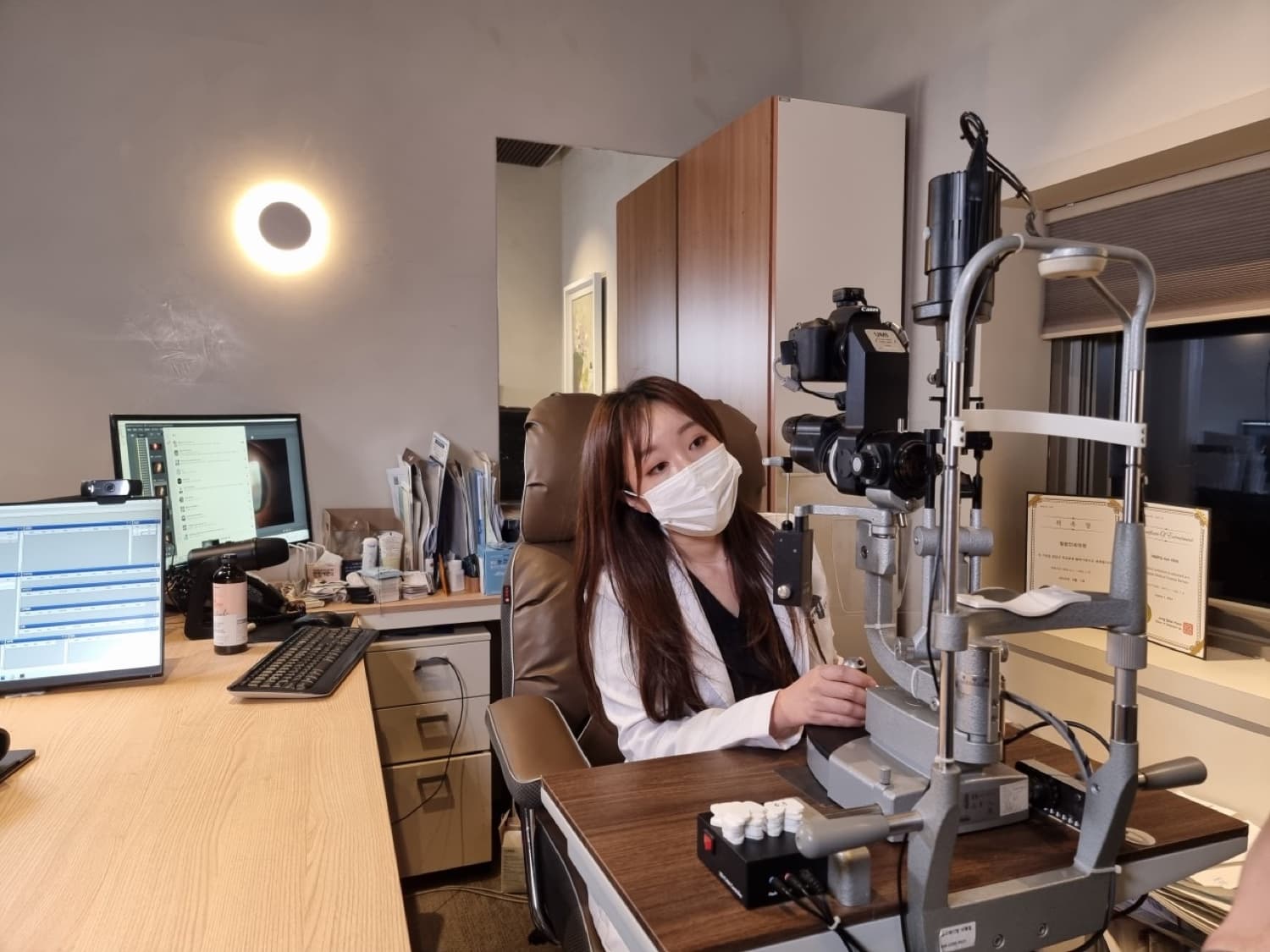
Cataract Surgery Cost in Korea: What Changes the Price, From the Surgeon
I'm Dr. Kim. Cataract surgery cost in Korea hinges on the lens you choose — here's how premium IOLs, astigmatism and aftercare shape it, with no foreigner mark-up.

Dr. Kim Sun-young, Director
Cornea · Glaucoma · Cataract
Contents
"Dr. Kim, my mother needs cataract surgery and we're considering Korea — but what does cataract surgery cost in Korea, and is the expensive lens really worth it?"
This message came from a daughter abroad researching on her parent's behalf, and I thought it was a wonderful question — because it gets straight to the thing that actually decides the price. So let me answer the way I would in the consulting room, honestly, and without inventing a figure before I've seen the eyes in question.
The real driver of cataract surgery cost in Korea: the lens
Let me be clear up front: the cost of cataract surgery in Korea is decided mostly by which intraocular lens (IOL) you choose, not by the operation itself. That's why there's no single price.
In cataract surgery, we remove the clouded natural lens and replace it with an artificial one. The surgical step is broadly similar from patient to patient — but the lens we put in can do very different jobs, and that's where the figure moves.
From monofocal to premium
- Monofocal IOL — gives you crisp vision at one distance (usually far). You'll likely still need reading glasses. This sits at the lower end of the range.
- Premium multifocal / trifocal IOL — aims to give clear near and far vision, reducing or removing your need for glasses. These (lenses in the AcrySof IQ and ReSTOR families, for example) sit higher.
- Toric versions — if you also have astigmatism, a toric lens corrects it at the same time, and adds to the cost again.
What shapes your cataract surgery quote
The IOL type — monofocal vs premium multifocal / trifocal · whether you need a toric lens for astigmatism · whether you're treating one eye or both · the pre-op measurements and biometry · and the follow-up care and guarantee included. We quote per eye, after the exam, with a figure that's actually yours.
So when a price is quoted to you, the question that unlocks it is always: which lens, and for one eye or both?
Can it fix presbyopia too? Often, yes — with an honest caveat
A lot of patients in their 50s and 60s are quietly hoping for two things at once: clear the cataract, and stop reaching for reading glasses. A premium multifocal or trifocal IOL can often do both in a single operation — correcting the cataract while reducing your dependence on readers. When it works well, patients are genuinely delighted.
Here's the caveat I never skip: premium isn't automatically better for every person. Multifocal lenses split light to give you multiple focal points, and a minority of patients notice halos or glare around lights at night, particularly in the early months. For someone who drives a lot at night, or whose eyes have certain other conditions, a monofocal lens can actually be the wiser, more comfortable choice. I'd rather talk you out of an expensive lens than sell you one that doesn't suit your eyes.

Foreigners pay exactly what Koreans pay
I'll state this without any hedge. At Healing Eye Clinic, international patients pay 100% the same fee as Korean local patients — no foreigner mark-up, no tourist surcharge. Whatever number you're quoted in consultation is the number a Korean patient is quoted.
So you can feel settled trusting a parent's eyes — or your own — to a clinic abroad: we hold 4.8 stars on Google with 154+ reviews. My specialty is cornea, glaucoma, and cataract, with specialist training at the Catholic Medical Center, a former Clinical Professorship in Cornea and Cataract at Uijeongbu St. Mary's, and ESCRS membership. Our colleague Dr. Choi, who works alongside me on presbyopia and cataract cases, holds premium-IOL certifications (AcrySof IQ, ReSTOR). I mention this only so the trust you're placing has real experience behind it.
A word on the honest risks
Cataract surgery is one of the most established, well-studied operations in all of medicine, and most patients do very well. But I won't pretend it's risk-free — it's real surgery, with its own considerations we screen for, and as I said, premium lenses can bring night-time glare for some. The point isn't to alarm you; it's that you deserve the full picture before you choose, and that picture comes from a proper exam, not the internet.
Planning the trip from abroad
- Allow several days, and plan for longer if you're treating both eyes, since we usually space the two eyes apart rather than doing them on the same day.
- The day-after check-up is important — don't book a flight for the day immediately after surgery.
- We're a one-minute walk from Sinnonhyeon Station in Gangnam, about 70 minutes from Incheon Airport.
- Bring any recent eye records, especially if there's a history of glaucoma, retinal issues, or previous eye surgery — it helps us plan the right lens.
Before you decide — just ask us first
If you take one line from this: the lens decision is the cost decision, so make it with a surgeon who'll tell you when the cheaper lens is actually the better one. Compare the thoroughness of the measurements, whether one surgeon owns the case from exam to aftercare, and the long-term guarantee — not just the headline price.
You can message us first, for free, in English on our official WhatsApp or LINE — no appointment needed. Tell us the patient's age, any eye history, whether it's one eye or both, and the dates you're considering. We'll give you an honest first read and an idea of which lens fits, and if a premium lens isn't the right call, we'll say so plainly. No pressure, no sales script.
I'll look forward to caring for these eyes properly here in Seoul.
— Dr. Kim Sun-young, Medical Director, Healing Eye Clinic
Frequently asked questions
How much does cataract surgery cost in Korea?
The single biggest factor is the lens (IOL) you choose, so there's no one price. A monofocal lens that corrects one distance sits at the lower end; premium multifocal or trifocal lenses that also correct presbyopia sit higher, and a toric version for astigmatism adds to that. We quote per eye after the exam, and the figure is the same one a Korean patient pays.
Why does the lens choice change the cataract surgery price so much?
Because the surgery removes your clouded natural lens and replaces it with an artificial one — and that artificial lens does very different jobs depending on type. A basic monofocal gives clear vision at one distance; a premium multifocal or trifocal aims to free you from glasses at near and far at once. The more the lens does, the more it costs.
Can cataract surgery in Korea fix my presbyopia too?
Often, yes. With a premium multifocal or trifocal IOL we can correct the cataract and reduce your dependence on reading glasses in one operation. Whether a premium lens suits you depends on your eyes, your lifestyle, and how your eyes handle multifocal optics — which we assess carefully, because premium isn't automatically right for everyone.
How long should I stay in Korea for cataract surgery?
Plan for several days, and longer if you're treating both eyes, since we usually space the two eyes apart. The day-after check-up is important. We'll map the exact schedule with you in consultation based on whether it's one eye or both and which lens you choose.
Is cataract surgery safe, and what are the honest risks?
Cataract surgery is one of the most established procedures in ophthalmology and most patients do very well. That said, it's real surgery and carries its own considerations — and with premium multifocal lenses some patients notice halos or glare at night, especially early on. I always discuss that openly before you choose a lens, because the right lens depends on your eyes and your tolerance.
Message us on official LINE / WhatsApp for a special offer
Your exact candidacy and cost are confirmed in a free 1:1 consultation.