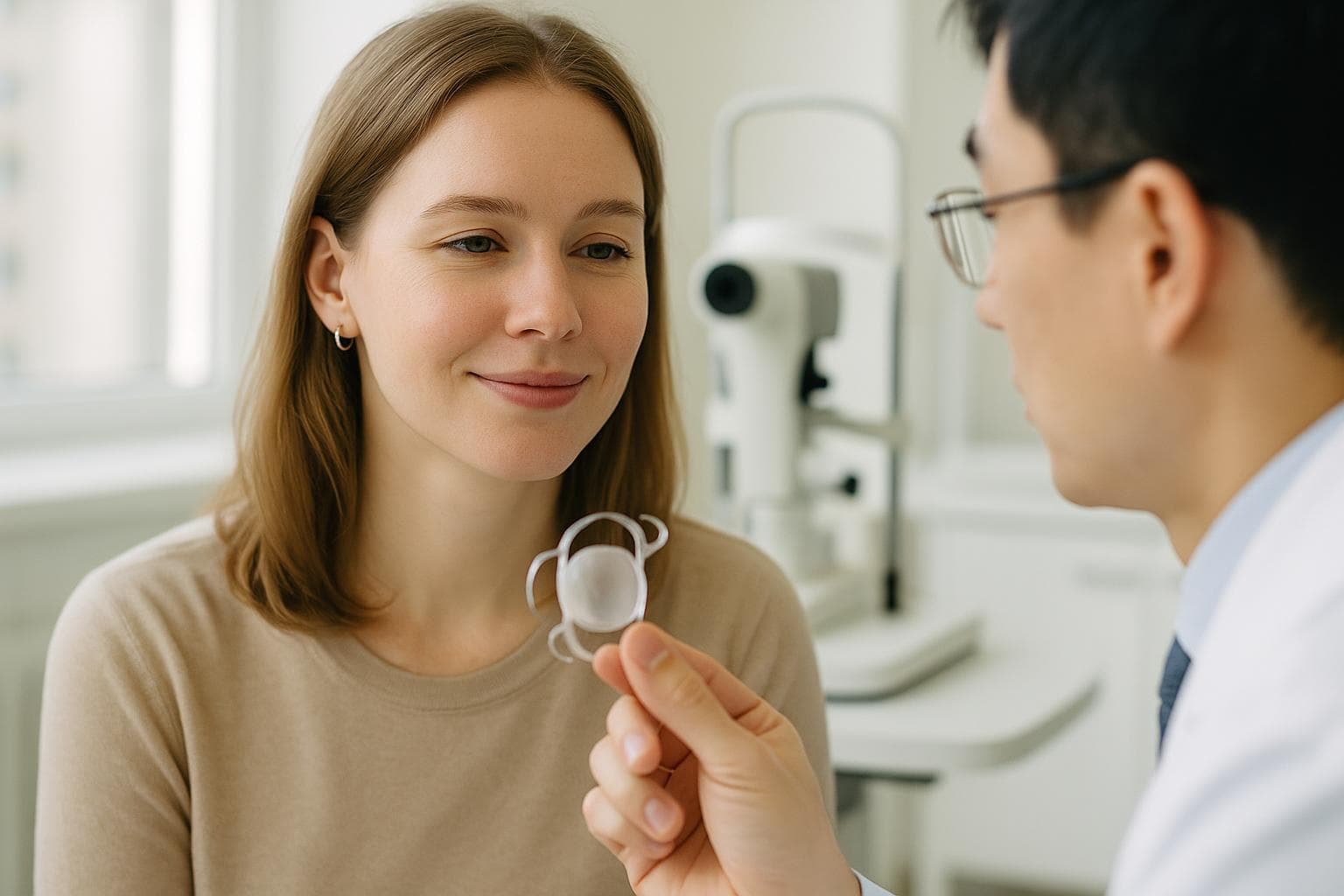
ICL Surgery Cost in Korea: A Surgeon's Honest Guide for International Patients
I'm Dr. Kim. ICL surgery cost in Korea depends on your lens and your eyes — here's what's behind the price, who it suits, and why foreigners pay the same as locals.

Dr. Kim Sun-young, Director
Cornea · Glaucoma · Cataract
Contents
"Dr. Kim, I'm -9.00 and three clinics told me I'm not a good LASIK candidate. Someone mentioned ICL — but what does ICL surgery cost in Korea, and is it worth it?"
I hear this a lot, almost always from highly myopic patients who've been turned away from laser and feel a little discouraged. So let me start with the reassuring part: being told "no" to LASIK is often exactly why ICL exists. And then let me be honest about the cost, the way I am in the exam room — without making up a number before I've measured your eyes.
The honest answer on ICL surgery cost in Korea
I'll say it directly: ICL surgery cost in Korea is usually the highest of all the vision-correction options. That's not a clinic charging more for the sake of it — it's the nature of the procedure.
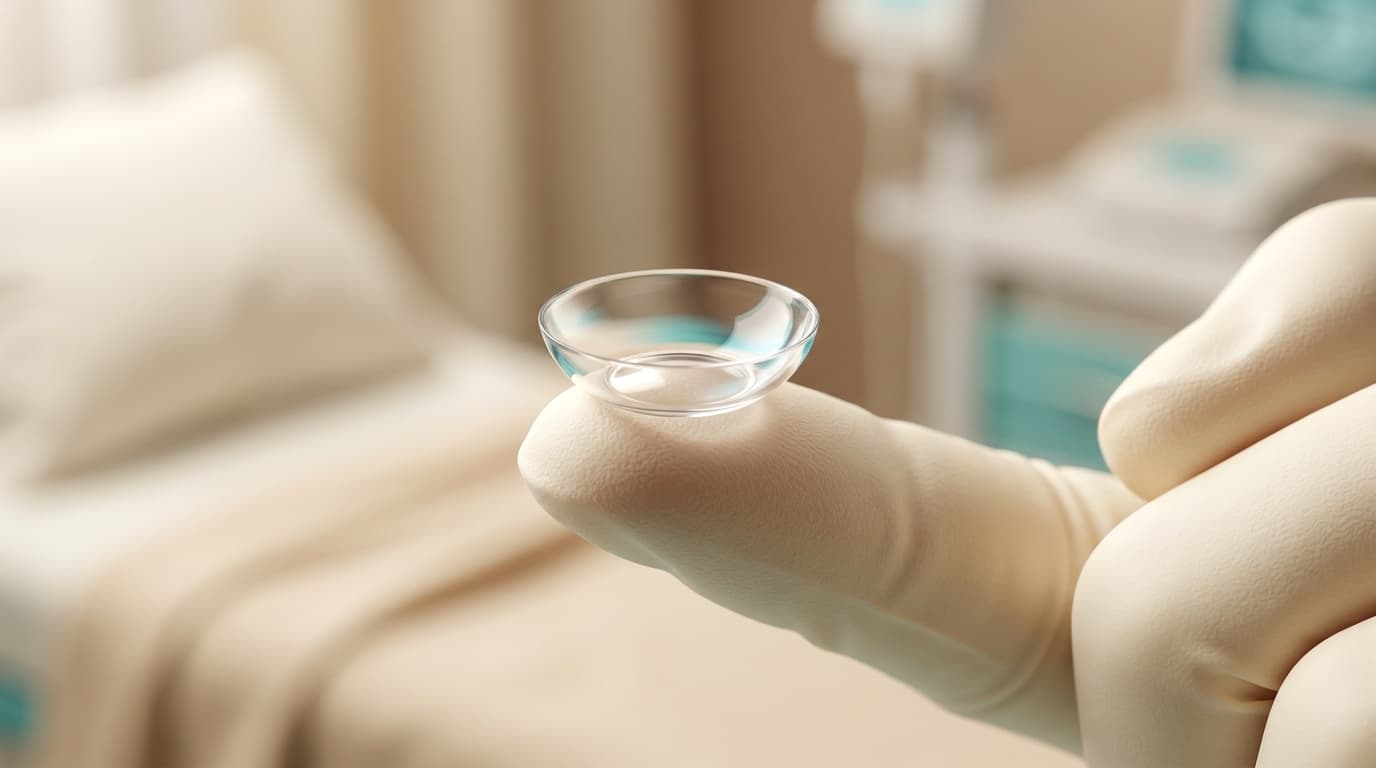
With LASIK or SMILE, you're mainly paying for laser time on your own cornea. With ICL, you're paying for an actual precision lens — a small, biocompatible implant placed permanently inside your eye — plus the implantation. The lens is a manufactured medical device, and that material cost is what lifts ICL above laser procedures.
The lens you need changes the figure
What drives your ICL price
Which lens you need — a standard implantable lens versus a toric lens to correct astigmatism · your prescription and the lens power required · your internal eye measurements (anterior chamber depth, white-to-white) · and the follow-up care and guarantee included. A toric lens for astigmatism sits higher than a standard one.
So when someone quotes you "ICL costs X in Korea," the fair question is: which lens, and does your eye actually need the toric version? Astigmatism is common, and correcting it properly with a toric lens is part of what you'd be paying for.
Why ICL might be your best — sometimes only — good option
Here's where I get genuinely enthusiastic, because ICL solves problems laser can't.
We don't reshape or remove any corneal tissue. Instead, we place the lens inside the eye, in front of your natural lens. That means:
- Your cornea is preserved. Nothing is cut away, which is why it's the answer for thin corneas.
- Very high myopia is on the table. Prescriptions that would need more corneal tissue than a laser can safely remove are correctable with a lens.
- It's reversible. The lens can be removed or exchanged if your eyes change down the line. That's a real, structural advantage over laser, which is permanent.
ICL isn't "LASIK but pricier." It's a different solution — for thin corneas and very high prescriptions, it's often the safer and more stable choice, not just an upgrade.
The honest caveat
ICL isn't automatically right for everyone, and I won't pretend otherwise. The procedure goes inside the eye, so I have to confirm there's enough space in the anterior chamber, check your eye pressure, and assess the health of the internal structures. If those numbers aren't right, I'll say so — and that, too, is something no one can judge from an online prescription.
Foreigners pay exactly what Koreans pay
I want this stated without any hedging. At Healing Eye Clinic, international patients pay 100% the same fee as Korean local patients for ICL — no foreigner mark-up, no tourist surcharge. Given that ICL is the higher-cost option, this matters even more: the number you hear is the number a Korean hears in the same chair.
And so you can feel settled before trusting your eyes to a clinic abroad: we hold 4.8 stars on Google with 154+ reviews, many from international patients. My focus is cornea, glaucoma, and cataract — specialist training at the Catholic Medical Center, a former Clinical Professorship in Cornea and Cataract at Uijeongbu St. Mary's, and ESCRS membership. I mention it only so the trust you're extending has real experience standing behind it.
Planning the trip from abroad
ICL is an intraocular procedure, so the follow-up matters a little more — a few practical notes:
- Allow at least 3 days, 2 nights; the next-day check-up after implantation is important, so don't fly out the same day.
- We're a one-minute walk from Sinnonhyeon Station in Gangnam, roughly 70 minutes from Incheon Airport.
- Stop wearing contact lenses for some days before the exam — the exact number differs for soft and hard lenses, so ask us first.
- Bring or send your most recent prescription and any past eye history; for high myopes especially, that helps us plan.
Before you commit — message us free first
If you remember one thing: with ICL, you're investing in a lens that lives inside your eye, so the exam and the surgeon matter even more than the price. Compare the thoroughness of the measurements, whether one surgeon stays with you from exam through aftercare, and the long-term guarantee — not just the quote.
You can reach us first, for free, in English on our official WhatsApp or LINE — no appointment needed. Send your prescription, your age, the dates you're considering, and any worry you have about going inside the eye. We'll give you an honest initial read, tell you whether ICL or a laser procedure suits you better, and if your eyes aren't suited to ICL at all, we'll say so directly. No pressure, no sales pitch.
I'll look forward to measuring your eyes properly here in Seoul.
— Dr. Kim Sun-young, Medical Director, Healing Eye Clinic
Frequently asked questions
How much does ICL surgery cost in Korea?
ICL is typically the most expensive vision-correction option, because you're paying for a precision lens implanted inside the eye, not just laser time. The exact figure depends on which lens you need — a standard implantable lens versus a toric lens for astigmatism — plus your prescription and eye measurements. We give you a precise quote at the free consultation, and it's identical to what a Korean patient pays.
Why is ICL more expensive than LASIK or SMILE?
Because the lens itself is a manufactured medical device placed permanently inside your eye, and a toric version for astigmatism costs more again. With laser surgery you're mainly paying for the procedure; with ICL you're paying for the lens plus the implantation. That material cost is the main reason ICL sits at the top of the range.
Who is ICL actually for?
ICL shines for people who are very highly myopic, or whose cornea is too thin for LASIK, LASEK, or SMILE. Because we don't remove corneal tissue, it preserves the cornea and is reversible — the lens can be removed if ever needed. But it requires enough space inside the eye and a healthy anterior chamber, which we confirm by measurement.
How long should I stay in Korea for ICL surgery?
Plan for at least 3 days and 2 nights. The next-day check-up after implantation is important, so don't fly home the same day. We'll set the exact timeline with you in your consultation once we know which lens you need.
Is ICL safe and reversible?
ICL has a long track record and the lens can be removed or exchanged if your eyes change, which is why we call it reversible — that's a genuine advantage over laser. Like any intraocular procedure it carries its own considerations, such as adequate space inside the eye and eye pressure, which is exactly what we screen for before recommending it.
Message us on official LINE / WhatsApp for a special offer
Your exact candidacy and cost are confirmed in a free 1:1 consultation.