Clear LASIK vs SMILE Pro: What Differs and When Neither Fits
Clear LASIK vs SMILE Pro: both remove a lenticule through one small incision, on different lasers. Who suits each, and when neither fits.

Medically reviewed byDr. Kim Sun-young, Director· Medical Director
Edited by: Dr. Kim Sun-young
Contents
Clear LASIK vs SMILE Pro: if a surgeon at home called your corneas borderline for your prescription, which of the two could still get you a yes in Seoul? If your leave request isn't in yet, the section on who each method suits matters most. It covers what really differs between the two, who suits each, how the first days and the flight home compare, and the risks, so you can tell whether either one fits a strong prescription like yours.
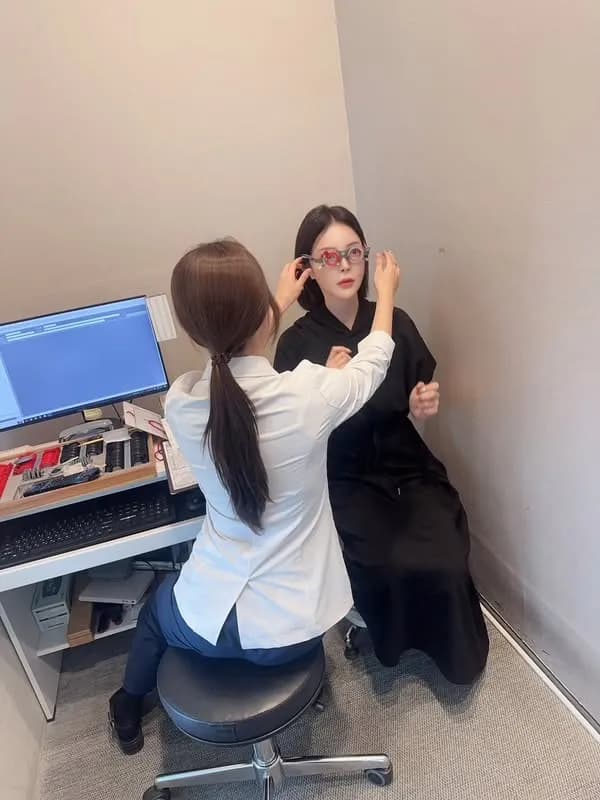
Hello, I'm Dr. Kim Sun-young, Medical Director of Healing Eye Clinic in Gangnam, with a specialty in cornea, glaucoma and cataract and a former post as Clinical Professor (Cornea & Cataract) at Uijeongbu St. Mary's Hospital. Here one dedicated surgeon handles your exam, your surgery and your aftercare, our Clear SMILE LASIK is performed on the Ziemer FEMTO LDV Z8, and a medical interpreter for your language comes at no extra charge.
We are registered with Korea's Ministry of Health and Welfare to treat international patients, we run a lifetime surgical-responsibility policy, and international patients pay exactly what Korean patients pay.
Online threads tend to treat SMILE Pro as a newer, different surgery, when underneath it is the same kind of lenticule surgery on a faster laser, and it needs the same cornea.
At this clinic, "Clear LASIK" refers to Clear SMILE: a thin lens-shaped piece of tissue is removed through one small incision, the same principle SMILE Pro uses. The laser platform is what separates them; whether either suits you comes down to corneal thickness, topography and the strength of your prescription, and for some high prescriptions the answer is an implantable lens instead.
If you have a recent prescription and a corneal thickness reading from home, send a photo of both on WhatsApp with one question: is my cornea thick enough for lenticule surgery at this prescription? The consultation on WhatsApp is free, and prices, the interpreter and dates are fair game in the same message.
What's actually different between Clear LASIK and SMILE Pro?
The names cause most of the confusion. On our menu, Clear LASIK is Clear SMILE LASIK. The femtosecond laser shapes a thin, lens-shaped piece of tissue called a lenticule inside the cornea, sized to your prescription, and makes a small opening at the edge. The lenticule is taken out through that opening, which changes the corneal curvature and corrects myopia and myopic astigmatism.
On the Ziemer FEMTO LDV Z8, small overlapping laser spots shape the lenticule with low energy, and the same laser makes both the lenticule and the incision. Every setting comes from your own pre-op exam data.
SMILE Pro is the name Zeiss uses for lenticule surgery on its VisuMax 800 laser. Its main talking point is speed: the laser phase is shorter, so you hold your gaze on the fixation light for less time. SMILE Pro is not on my menu, so I can only speak about it in general terms.
| Point | Clear SMILE (Healing Eye) | SMILE Pro |
|---|---|---|
| How vision is corrected | Lenticule removed through one small incision | Lenticule removed through a small incision |
| Laser | Ziemer FEMTO LDV Z8 | Zeiss VisuMax 800 |
| Main talking point | Low-energy overlapping spots; one laser makes lenticule and incision | Shorter laser time |
| What decides whether you qualify | Corneal thickness, topography, stable prescription | The same exam findings |
If you want the operation itself in sequence, the step-by-step account of SMILE eye surgery in Korea walks through it, and the piece on what each Clear SMILE name means untangles the labels you'll see on Korean clinic sites.
The laser changes; the cornea you need stays the same
In short, this is the part most Clear LASIK vs SMILE Pro debates leave out. Correction comes from removing tissue, so a lenticule for -8.00 is thicker than one for -3.00, whichever laser cuts it. If your surgeon at home said your cornea is too thin for your prescription, a faster laser does not change that arithmetic.
A shorter laser phase can matter if holding still frightens you, and I take that fear seriously. It does not add a single micron of cornea.
What lenticule surgery offers a cornea on the thinner side is that the front layers stay largely intact, which is why it comes up when people worry about corneal strength. Reinstein and colleagues lay out that reasoning in their review of how SMILE was developed and how it performs. It is still tissue removal, and the thickness left behind still has to be enough. The article on why SMILE Pro's faster laser runs the same surgery underneath goes further into the speed question.
Who suits Clear SMILE, who suits Custom LASIK, and when is it ICL?
I don't recommend a surgery for its own sake. I choose with you, from your exam data and the life you lead, the method that fits your eyes. Here is how the options I offer line up.
Clear SMILE tends to fit you if you have myopia or myopic astigmatism that has been stable for about a year, you want to get back to work or study quickly, or you play contact sports or have a physical job. It also suits people who already have some dryness, because more of the corneal structure and nerves are kept, so dry eye after surgery is relatively less likely than with standard LASIK.
Custom LASIK is a LASIK in which a thin hinged layer of the cornea is lifted, the tissue beneath is reshaped, and the layer is laid back without stitches. Its design adds your eye's higher-order aberrations on top of the prescription, using a wavefront analyzer and corneal topography. It is worth discussing if you drive at night often, notice glare and halos in the dark, or do fine visual work, and your cornea is stable, well-shaped and thick enough.
If your eyes show little higher-order aberration, standard LASIK or LASEK may do the job and I won't push a custom design you don't need.
LASEK reshapes the surface without lifting any layer, so it leaves more cornea behind, and it is the option I raise when the cornea is thin or topography shows irregularity. ICL places a lens inside the eye in front of your natural lens and leaves the cornea untouched, which is why it comes into the conversation for very high myopia. It carries its own risks.
The U.S. Food and Drug Administration lists cataract, raised eye pressure and loss of the cells lining the back of the cornea among the possible problems with these lenses, so it needs its own measurements.
For a wider look at how lenticule surgery and LASIK compare when you only have a few days in Seoul, see SMILE vs LASIK in Korea for people flying in.
When I'd tell you neither
Some eyes should not have lenticule surgery on any laser. A cornea that steepens unevenly on the topography map can be an early sign of keratoconus, and removing tissue can make that condition worse. A prescription still changing, pregnancy or breastfeeding, and severe dry eye are also reasons to stop, and the dry eye usually needs treating first. The FDA's guidance on who should not have LASIK lists similar warning signs, including an unstable prescription and hormonal changes from pregnancy or nursing.
Say you're 33, about -8.50 in one eye and -7.75 in the other with -1.00 of astigmatism, your corneas measured on the thin side at home, and you want to be back at your desk within a few days. My first question is whether the topography is regular. If it isn't, laser surgery is off the table and we talk about other routes.
If the map is regular, the next question is how much cornea a lenticule for that prescription would leave. With a comfortable margin, Clear SMILE could fit your timeline well. With a slim margin, I would not offer lenticule surgery on Clear SMILE or on SMILE Pro, and the conversation moves to LASEK or an implantable lens, depending on what the rest of the measurements show.
A glasses prescription alone is enough to start. Send it on WhatsApp together with the date of your last corneal scan, if you've had one, and ask whether your numbers point toward lenticule surgery, LASEK or a lens.
How do the first days and the flight home compare?
For Clear SMILE, the shortest plan on our schedule is exam in the morning, surgery in the afternoon and a check-up the next day. A more relaxed trip is 2 to 3 days, and your exact days are confirmed in consultation against your flights. The pre-op exam is around 20 tests, and your surgeon goes through the results and the plan with you and an interpreter.
Vision starts recovering on surgery day, and some foreign-body feeling or light sensitivity is normal. Day 1 brings the first check-up, and normal indoor activity is fine. By days 2 to 3 vision is mostly stable and light outings are fine. By the end of week 1 most routines are back, following your surgeon's advice, and around month 1 vision and cornea enter a stable phase. Custom LASIK also lists a return to daily life in 1 to 2 days.
A faster laser on SMILE Pro shortens the time under the laser, not the healing that follows.
The clinic hours shape the calendar. We're open Monday to Thursday 10:00 to 18:30, Friday until 21:00 and Saturday 10:00 to 14:00, closed Sundays and holidays. A Saturday surgery would put the next-day check on a Sunday, so plan around that. The clinic is a minute's walk from Sinnonhyeon Station, and our partner hotel is the O'Cloud Hotel in Seocho-gu.
Directions and contact details are on Healing Eye Clinic's English homepage, and the Korean page for Clear SMILE at our Seoul clinic describes the same procedure for local patients.
What can go wrong, and who helps once you're home?
Risks and side effects to know
In the first days, a gritty feeling, light sensitivity, watering and some fluctuation in sharpness are common. The FDA's guidance on what to expect after laser surgery describes dryness, glare and halos at night that usually ease over the following weeks to months, and that applies to lenticule surgery as well. Less often, the correction falls short or drifts, and a further procedure may be discussed once the eye has settled.
How quickly each eye settles differs from person to person, which is why the month-1 stable phase is a guide, not a promise.
People who should wait or choose another route include anyone whose prescription is still changing, anyone pregnant or breastfeeding, anyone with signs of keratoconus or an irregular cornea, and anyone with severe dry eye or a condition that slows healing. These are general medical cautions, and the exam is where they are confirmed or ruled out.
Once you're home, you can check in with us by email or video call, and if you need local care we provide a referral letter for your eye doctor. Sudden pain, increasing redness or a drop in vision means seeing an ophthalmologist near you the same day, then letting us know. If vision changes years later, the clinic runs a dedicated LASIK/LASEK revision center that starts from finding the cause.
The consultation on WhatsApp is free. Send a photo of your current prescription, your corneal thickness reading if you have it, and the dates you could travel, and ask: "With these numbers, which of your methods would you look at first for me?" On exam day, the first thing I look at is your corneal map next to how much thickness your prescription would use up, and we go through it together in your language, with an interpreter.
Frequently asked questions
Is SMILE Pro worth waiting for if a clinic doesn't offer it?
The shorter laser phase is the main difference. Candidacy rests on the same corneal thickness, topography and prescription stability, and healing after the laser follows the same course. Long-term published data on lenticule surgery mostly comes from earlier laser platforms, so time under the laser is the clearest point of comparison.
Can Clear SMILE correct astigmatism?
Yes, Clear SMILE corrects myopia and myopic astigmatism. It is not used for farsightedness. If your astigmatism is high or irregular, topography decides whether laser surgery is suitable or whether a lens-based option should be considered.
How long should I stop wearing contacts before the exam?
Contact lenses temporarily change the shape of the cornea, which can distort the measurements. The exact number of days is confirmed during consultation, so mention whether you wear soft, toric or rigid lenses when you message.
I had LASIK years ago and my vision has drifted. Is lenticule surgery an option?
A second procedure after earlier surgery is a different decision. It depends on why vision changed and how much cornea is left. The clinic runs a dedicated LASIK/LASEK revision center, so bring or send any records from your first surgery.
Do international patients pay more, and how is payment arranged?
International patients pay exactly what Korean patients pay, and the detailed pre-op exam is charged separately. The method chosen after the exam moves the cost. Deposit and payment method are settled after the consultation, so you can ask about both in the same WhatsApp message as your prescription.
Message us on official LINE / WhatsApp for a special offer
Your exact candidacy and cost are confirmed in a free 1:1 consultation.