SMILE Pro in Korea: Faster Laser, Same Surgery Underneath
SMILE Pro in Korea is SMILE done on a newer, faster laser. What the speed changes, what it doesn't, and the exam numbers that decide if it suits you.

Dr. Kim Sun-young, Director
Cornea · Glaucoma · Cataract
Contents
People researching SMILE Pro in Korea sometimes arrive at their consultation with me, Dr. Kim Sun-young, holding a printed clinic page with "VisuMax 800" circled in pen, and ask whether that is the operation they should be booking.
My answer is that SMILE Pro is the same SMILE correction (a thin, lens-shaped piece of tissue shaped inside the cornea and taken out through a small side incision), made on ZEISS's newer VisuMax 800 laser. Our procedure list names SMILE rather than SMILE Pro and does not name the laser model, so ask us on WhatsApp which platform your surgery would be done on.
For most people, the Pro version makes the laser step faster and leaves the things you actually need to decide about where they were: who qualifies, how much tissue is removed, how healing goes, and what can go wrong.
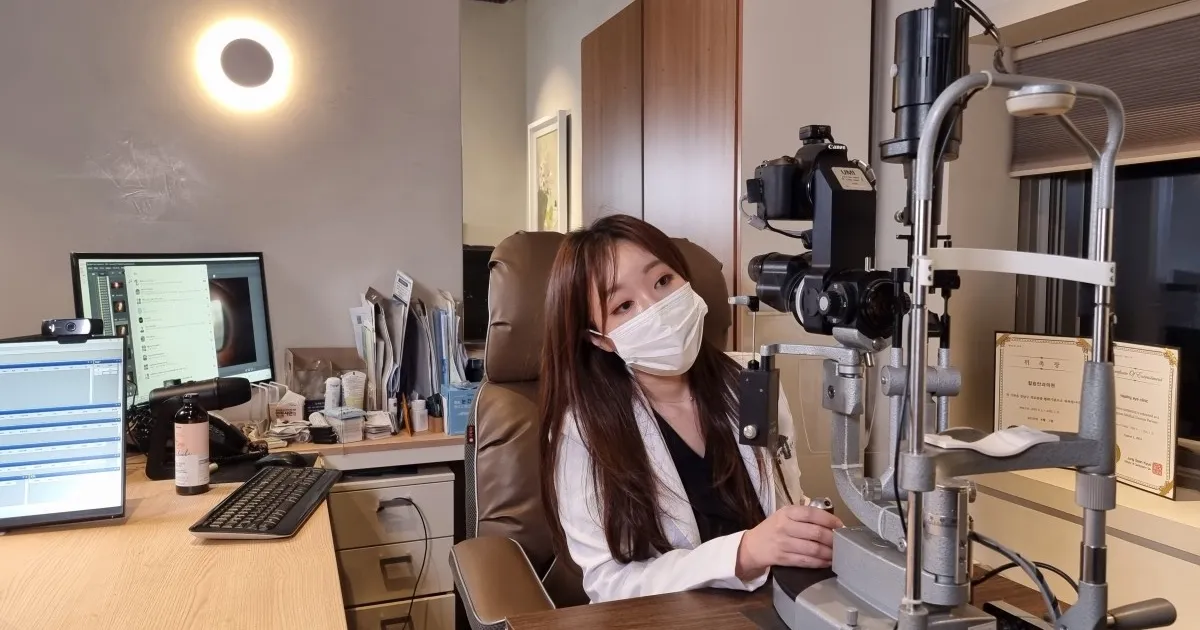
One quick note if you arrived here from a search like "smile surgery Korea" and were thinking about lips or a smile lift: this page is about the eye laser called SMILE. We are an eye clinic, and that is the only kind of smile we work on.
Is SMILE Pro a different operation from SMILE?
No. Both remove a small lenticule of corneal tissue through a small side opening, reshaping the cornea from the inside. The change is in the machine: the VisuMax 800 fires at 2 MHz, four times the pulse rate of the older VisuMax 500, and it adds tools to help the surgeon align the treatment.
Centering does matter, and it matters more when you have astigmatism, because an astigmatic correction placed a few degrees off is a weaker correction. Better alignment tools are a real refinement. It is still the same operation, with the same anatomy and the same rules about who it suits.
How long the laser step actually takes
The speed difference is measured in seconds. A 2024 study of 152 eyes in International Ophthalmology reported that the VisuMax 800 needs about 10 seconds to create the lenticule, against roughly 30 seconds on the previous generation. Your cornea, meanwhile, heals over days and weeks.
How you feel on day one and in week one depends on the size of your correction, how your tear film behaved before surgery, how cleanly the lenticule separated, and how strictly you use the drops. A shorter laser time means fewer seconds of holding still under suction. For someone nervous about keeping their eye steady, that is a genuine comfort. Recovery time stays the same.
If you're planning flights around healing, our day-by-day SMILE recovery timeline is the more useful read.
Speed doesn't widen who qualifies
The limits come from your cornea. Every SMILE correction removes tissue, and the stronger the prescription, the thicker the lenticule. A faster laser removes exactly the same amount.
The number I keep in my head is how much of the cornea a treatment changes, relative to how thick it was to begin with. A 2018 review of SMILE patient selection in Clinical Ophthalmology calls this percentage tissue altered (lenticule plus cap thickness, divided by central corneal thickness) and notes that values above 40% suggest a higher risk of ectasia, a slow weakening and bulging of the cornea.
That threshold is borrowed from LASIK ectasia research and is applied to SMILE with caution. That ceiling doesn't move when the laser gets faster.
So if a clinic at home told you your corneas are too thin for laser correction, booking "SMILE Pro" leaves that answer unchanged. When there is an alternative, it is usually a lens-based option such as ICL, or a surface laser in specific cases.
How do you find out which laser a clinic uses?
Ask for the device name. "SMILE Pro" is the manufacturer's name for SMILE on the VisuMax 800, so any clinic offering it can tell you the device name.
Names like Clear SMILE or SMILE LASIK describe the same family of surgery rather than a specific machine; we sort those out in our piece on what each SMILE name really means.
The device name is one line on a quote. The lines that change your result more are your corneal thickness, your topography and your tear film.
Risks belong to the surgery, not the laser generation
The list is the same with either machine. Most people have some dryness, light sensitivity and fluctuating vision in the first weeks. Less often, but worth knowing (as described in the 2018 Clinical Ophthalmology review cited above):
- Suction loss during the laser step. The eye is held with gentle, low-pressure suction; if contact breaks, the surgeon may stop and reschedule or switch approach. It is more common in deep-set eyes or narrow eyelid openings. A shorter laser time reduces the window, but doesn't remove the risk.
- Difficult lenticule removal. This is the most common problem during a surgeon's learning curve, with an incidence of up to 16% in that early phase in one study cited in that review. That figure comes from surgeons' first cases with the technique, not from experienced practice. When it does happen, fragments can be left behind and cause irregular healing.
- Under- or over-correction. If vision drifts, the retreatment options for SMILE differ from LASIK; surface laser treatment is one of them. Our clinic runs a dedicated LASIK and LASEK revision center, which is relevant if a top-up ever becomes necessary.
- Dry eye. Dry-eye symptoms after SMILE are, on average, milder and faster to recover than after LASIK. That is an average across many eyes; if your tear film is already unstable, SMILE won't fix it.
- Haze and ectasia. Rare, and the reason the screening numbers above matter so much.
Some people shouldn't have SMILE at all: unstable prescriptions, corneas that are thin or irregular on the map, certain eye-surface diseases, and very low prescriptions where the lenticule would be too thin to handle well. For them, I'd rather say so in the first conversation.
What decides SMILE, LASEK or ICL for your eyes in our exam?
Three measurements decide most of it: corneal thickness, the shape of the cornea on topography, and how stable your tear film is. Your prescription and how long it has been stable come next.
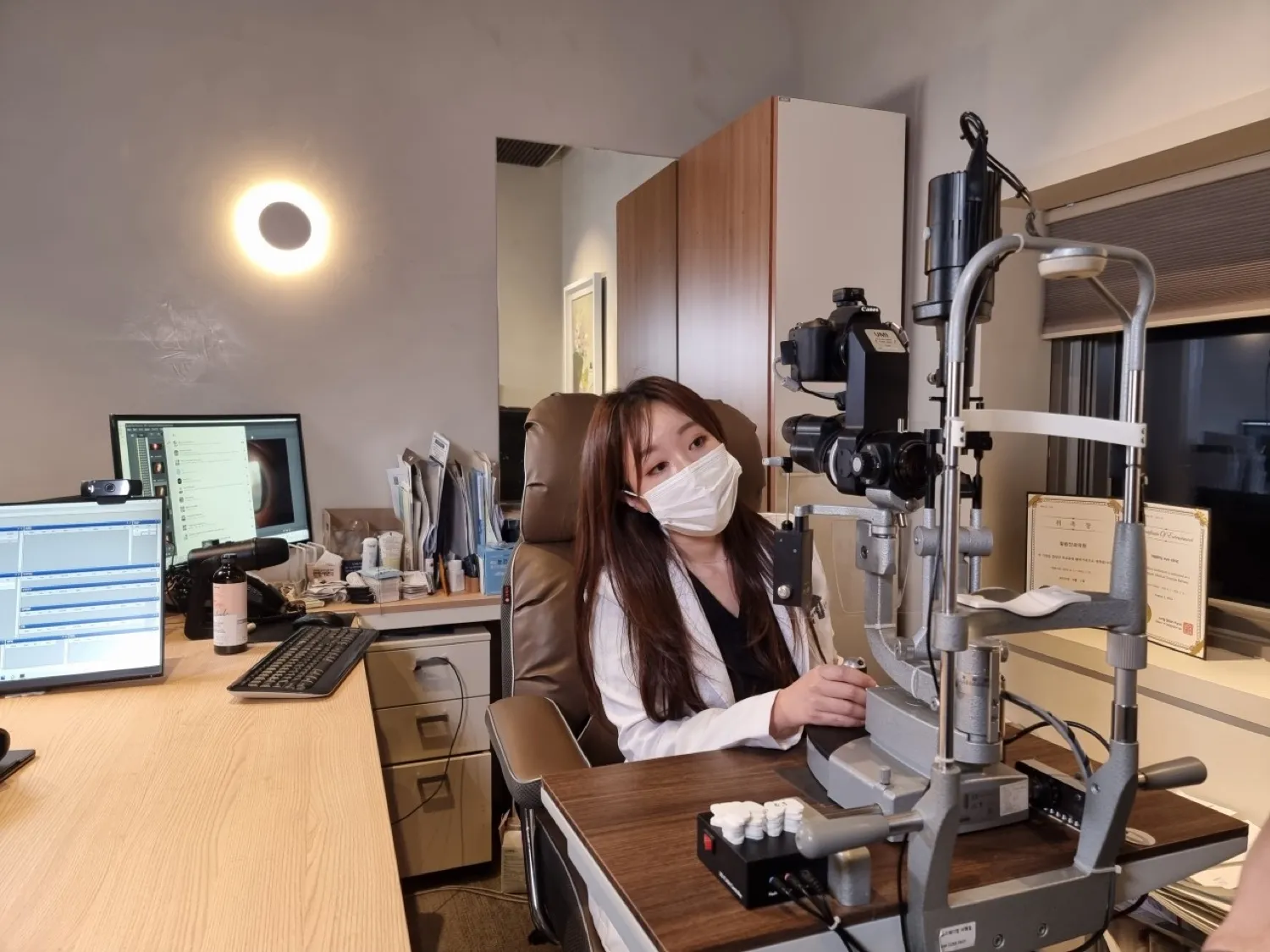
On topography, I'm looking for asymmetry between the upper and lower cornea, because early irregular shapes can be a reason to avoid removing tissue. Under the slit lamp, I watch how quickly the tear film breaks up after a blink.
A fast break-up doesn't always rule surgery out, but it changes my order of priorities: sometimes the dry eye gets treated first, and we run a Dry-Eye Clinic in-house. I also look at the eye socket and eyelid opening, which most people don't expect, because it affects how securely the laser can hold the eye.
Then I ask about your life. Contact sports, long night drives or a day spent in front of screens can shift my recommendation even when two people's measurements look alike. When it isn't clear-cut, I compare options side by side, the way we do in SMILE vs LASIK for people flying in.
Planning a SMILE trip to our Gangnam clinic
The trip usually has three parts: an in-person exam to decide, the surgery itself, and usually a follow-up check before you fly; we confirm the days with you. How long to stop contact lenses beforehand depends on your lens type and your exam, so we confirm that at consultation too.
A few practical facts:
- We're at 470 Gangnam-daero, 10–11F, a minute's walk from Sinnonhyeon Station.
- Hours are Mon–Thu 10:00–18:30, Fridays until 21:00, and Saturdays 10:00–14:00, with a lunch break 13:00–14:00; we're closed Sundays and public holidays. The late Friday helps if you land in the afternoon.
- Consultations run with English, Japanese and Traditional Chinese interpretation.
- Foreign and Korean patients pay the same price; we're registered with Korea's Ministry of Health and Welfare to treat international patients.
On price: SMILE is quoted after your exam, because our published price list doesn't include it yet. When we send a quote, ask us to list what it covers line by line: the pre-op measurements, surgery on both eyes, any follow-up visits and the post-op eye drops. That way you can set it beside any other quote without guessing.
Our guide to what a SMILE quote should include walks through those lines. You can also see our English-language clinic page or our main Korean website.
Who examines you at Healing Eye Clinic?
Healing Eye Clinic works on a 1:1 attending-doctor basis: one doctor follows each patient from the first measurement through surgery and aftercare.
My background: ophthalmology specialist, Catholic Medical Center, and Clinical Professor (Cornea & Cataract), Uijeongbu St. Mary's Hospital. Because cornea is my field, I pay more attention to the shape of yours than to the model year of a laser.
If you're still deciding, message us a prescription rather than a procedure name, with how long the number has been stable and what bothers you most about your glasses or contacts.
On WhatsApp, you can send a photo of your latest prescription or an old corneal map, plus the dates you're considering. Whether SMILE suits your eyes is settled at the in-person exam.
Frequently asked questions
Is SMILE Pro safer than regular SMILE?
There's no basis for calling one safer in general. The newer platform shortens laser time and adds alignment tools, but the tissue removed, the screening rules and the list of possible complications are the same. Your own corneal measurements matter far more than the laser generation.
How long does the SMILE Pro laser take?
A 2024 study in International Ophthalmology reported about 10 seconds of lenticule creation on the VisuMax 800, compared with roughly 30 seconds on the older VisuMax 500. The whole visit takes much longer, because preparation, the lenticule removal by the surgeon and post-op checks all happen around those seconds.
Which laser does Healing Eye Clinic use for SMILE?
Our procedure list names SMILE rather than SMILE Pro and does not name the laser model. Ask us on WhatsApp which platform your surgery would be done on.
Can SMILE correct astigmatism?
SMILE can correct myopia with astigmatism within certain limits, and accurate alignment matters more when astigmatism is present. Whether your astigmatism falls in a range we'd treat with SMILE, or whether another method fits better, is decided from your topography in the exam.
Is SMILE eye surgery in Korea priced differently for foreigners?
At Healing Eye Clinic, foreign and Korean patients pay the same price. Our published price list doesn't include SMILE yet, so the final amount follows your exam, and you can ask us to itemize what the quote covers.
What if my eyes turn out not to be suitable for SMILE?
Then we tell you during the consultation and explain why, using your numbers. Depending on the reason, LASEK, LASIK or an implantable lens (ICL) may be discussed, or the advice may be to wait until your prescription is stable.
Message us on official LINE / WhatsApp for a special offer
Your exact candidacy and cost are confirmed in a free 1:1 consultation.