
How Many Days in Korea for Eye Surgery? A Realistic Schedule
Planning a trip to Seoul for LASIK or ICL? Here's the honest day-by-day timeline I give my international patients before they book flights.

Dr. Kim Sun-young, Director
Cornea · Glaucoma · Cataract
Contents
The question I get most often before a patient ever books a flight isn't about pain or price. It's logistics: how many days in Korea for eye surgery do I actually need? It's a fair question, because you're arranging time off work, flights, and a hotel in a city you may not know — all around a procedure you haven't had yet.
So let me give you the same honest answer I give in our consultations, laid out as a real schedule rather than a marketing promise. The short version: for most people, three days and two nights is a sensible minimum, with ICL sometimes needing one more. Here's why each day matters.
Day 1: the detailed exam that decides everything
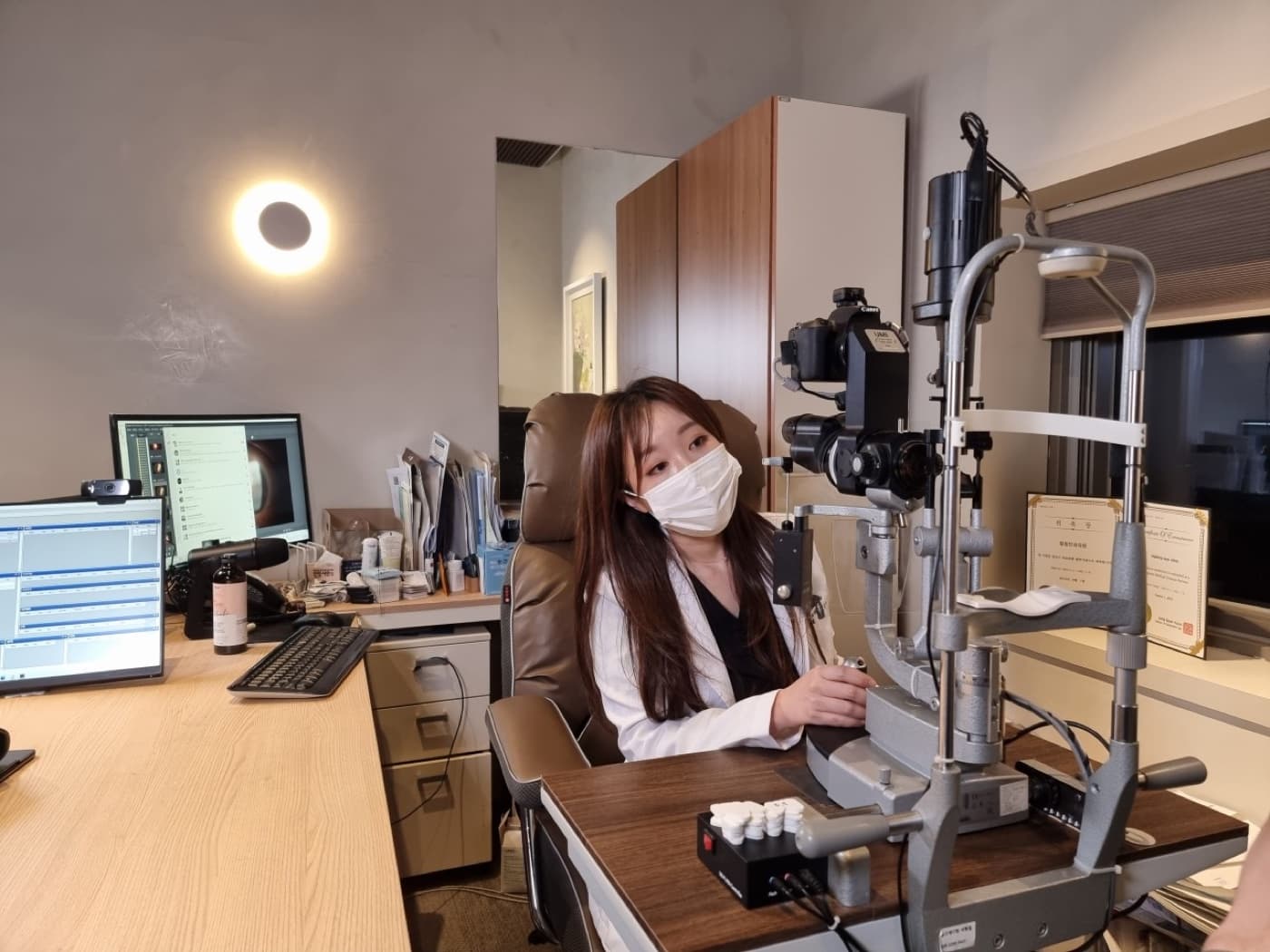
Nothing is booked until your eyes are measured properly. On your first day we run a full work-up — corneal thickness and topography (the shape map of your cornea), your refraction, pupil size in dim light, tear-film quality, and the health of the back of the eye. For ICL candidates we also measure the internal dimensions of the eye to size the lens.
This exam isn't a formality. It's the step that tells us which procedure suits you, or whether surgery is wise at all. If your corneas are on the thinner side, LASIK may not be the right call and LASEK or ICL may suit you better. The exam is also where I sometimes say not yet — for instance, if your tear film is poor, I'd rather treat the dryness first than operate on a dry surface.
Can the surgery happen the same day?
For laser procedures — clear LASIK, SMILE, LASEK — the answer is often yes, if your exam that morning confirms you're a clear candidate. Many patients complete the exam and the surgery on the first day.
But I won't put that in writing before I've seen your eyes. If something looks borderline, repeating a scan or waiting a day is the right thing to do, not a delay to apologise for. So plan your trip as if exam and surgery might fall on separate days, and treat same-day as a bonus.
Plan for three days minimum: exam, surgery, and the next-morning check. Same-day exam-and-surgery is common for laser cases but never guaranteed in advance.
Day 2: surgery, then rest
The procedure itself is short — the time you spend in the laser room is measured in minutes per eye, though you'll be at the clinic longer for preparation and a rest afterward. What surprises many patients is how much of this day is simply resting. Your eyes will water, feel gritty, and dislike bright light for the first several hours. That's normal early healing, not a complication.
This is why I tell people: do not plan anything for the afternoon of surgery except lying in a dark, quiet hotel room with your eyes closed. No museums, no shopping, no long dinners. Your hotel being close to the clinic genuinely helps here.
Day 3: the morning-after check — the day you can't skip
Here's the one I'm strict about. The morning after surgery, you come back so I can check that the corneal flap or surface is sitting correctly and your eye pressure is normal. This single appointment is the reason I ask patients not to fly out the same day as surgery.
It takes very little time, but it's where I confirm your eyes are healing the way they should be — and where I'd catch anything that needed attention early rather than after you've landed in another country. Once that check is clear, most patients are fine to travel home.
ICL and SMILE Pro: when to add a day
Not every procedure runs on the same clock.
For ICL, the lens itself sometimes has to be ordered to your exact measurements, and depending on timing that can add a day or two between exam and surgery. For laser procedures like SMILE or SMILE Pro, the schedule is usually tighter. Because the difference is real, I'd rather you hear it now than discover it after booking a flight that's too tight.
If you want to compare procedures before you travel, our page on medical tourism for eye surgery in Korea walks through the options, and you can always ask us directly first.
An honest limitation
I can give you this general schedule, but I can't give you your schedule from a blog post. The number of days you'll need genuinely depends on which procedure suits your eyes, and that's decided by your exam — not by a web page, and not before I've seen your measurements. Anyone who guarantees you an exact day count and a same-day surgery before examining you is selling certainty they don't have.
Planning it together, before you book flights
The good news is you don't have to guess. Message us for free on WhatsApp or LINE with your prescription, your rough travel window, and the procedure you're curious about. We'll give you a realistic day count for your situation, flag whether ICL might need that extra day, and help you book flights with enough room — and we'll do it in English, with an interpreter ready for when you arrive.
Getting the schedule right before you fly is half of a calm trip. Let's plan yours properly rather than hopefully.
— Dr. Kim Sun-young, Medical Director, Healing Eye Clinic
Frequently asked questions
What is the minimum number of days I should stay in Korea for eye surgery?
For most laser procedures I'd plan at least three days and two nights. That gives room for a thorough exam, the surgery, and the important next-day check before you fly. ICL sometimes needs an extra day depending on the lens. The exact length depends on your eyes, so we confirm it together at your consultation.
Can I have the exam and surgery on the same day?
Often yes, for laser surgery, if your detailed exam confirms you're a good candidate that morning. But I never promise it in advance. If a measurement looks borderline, I'd rather repeat it than rush. Same-day exam-and-surgery is a convenience, not a guarantee.
Why can't I fly home the day of surgery?
The morning-after check is where I confirm the flap or surface is healing as expected and your pressure is normal. Flying before that check means leaving without anyone confirming your eyes are settling well. It's a small wait that protects the whole result.
Do I need to come back to Korea for follow-up?
Usually no. After the first follow-ups here, the rest can be done with an eye doctor in your home country, and you can message us on WhatsApp or LINE any time. Our lifetime guarantee still applies if you do return to Seoul later.
Should I add extra days for sightseeing?
If you'd like to, plan it for before surgery, not after. In the first days your vision is settling and bright light feels harsh, so walking around Seoul isn't comfortable yet. Many patients do their exam, then surgery, then rest, and save the city for a future trip.
Message us on official LINE / WhatsApp for a special offer
Your exact candidacy and cost are confirmed in a free 1:1 consultation.