Choosing a Seoul Eye Clinic for Foreigners: What I'd Look For
Coming to Seoul for eye surgery and not sure who to trust? As a Gangnam eye surgeon who treats international patients, here's what actually matters — honestly.

Dr. Kim Sun-young, Director
Cornea · Glaucoma · Cataract
Contents
A patient from overseas once told me, halfway through her exam, "Honestly, the scariest part wasn't the surgery. It was not knowing whether I could trust the clinic I picked from another country." I've never forgotten that, because she said out loud what almost every international patient is quietly feeling.
So if you're searching for a Seoul eye clinic for foreigners, let me set aside the marketing and tell you what I'd actually look for if it were my own eyes — and my own family flying to a city where they don't speak the language. The short version: look for honest pricing, real interpretation, one surgeon who owns your whole journey, and a clinic willing to tell you "no" when surgery isn't right. Everything else is decoration.
First: are you paying the same price a local pays?
This is the one I'd check before anything else, because it quietly reveals how a clinic sees you.
In some places, foreign and "medical tourist" patients are quoted higher numbers than locals for the exact same procedure. It happens, and it's hard to detect from abroad. So I'll be blunt about how we do it: at our clinic, international patients pay 100% the same price as Korean patients. No foreigner surcharge, no tourist markup. The number you hear in your consultation is the number a Seoul local hears.
When you compare clinics, just ask the question directly — "Do foreigners pay the same as Korean patients?" An honest clinic will answer it without flinching.
The fastest way to judge a Seoul eye clinic for foreigners: ask if you pay the same price as locals. We do. Many won't say.
Second: will someone actually translate — during the surgery, not just the brochure?
A clinic can have a polished English website and still leave you nodding along to a consent form you don't fully understand. That's not real care.
You should not agree to eye surgery in a language you only half-follow. So we keep an English interpreter with you on-site through the entire visit — the exam, the explanation of which procedure suits you, the risks, the aftercare instructions. And before you even buy a plane ticket, you can message us in English and get your questions answered by a real person.
The point of interpretation isn't politeness. It's so you can give genuine, informed consent and ask the awkward questions that actually matter for your eyes.
Third: is it one surgeon, start to finish?
In some larger operations, one doctor examines you, a different one operates, and you never quite know who's responsible for your result. For something as personal as your vision, I think that's a problem.
At our clinic, the surgeon who examines you is the surgeon who operates and the surgeon who follows you afterward — a 1:1 dedicated-surgeon system, backed by a lifetime surgery guarantee. If something needs attention in a year or five, you're not a stranger starting over. You're my patient, and I know your eyes.
Fourth: will they tell you "no"?
This is the test most patients don't think to apply, and it's the most revealing.
A clinic that says yes to everyone is a clinic that isn't really examining you. Not every eye is suited to LASIK. Some corneas are too thin; some prescriptions are better served by ICL; some dry eyes need treating before any surgery is wise. A trustworthy Seoul eye clinic for foreigners will sometimes look at your scans and say, not this procedure, or not yet, or even not at all. I've said all three to patients who flew in hoping otherwise — because protecting your eyes is the job, not booking a surgery.
What we put behind the words
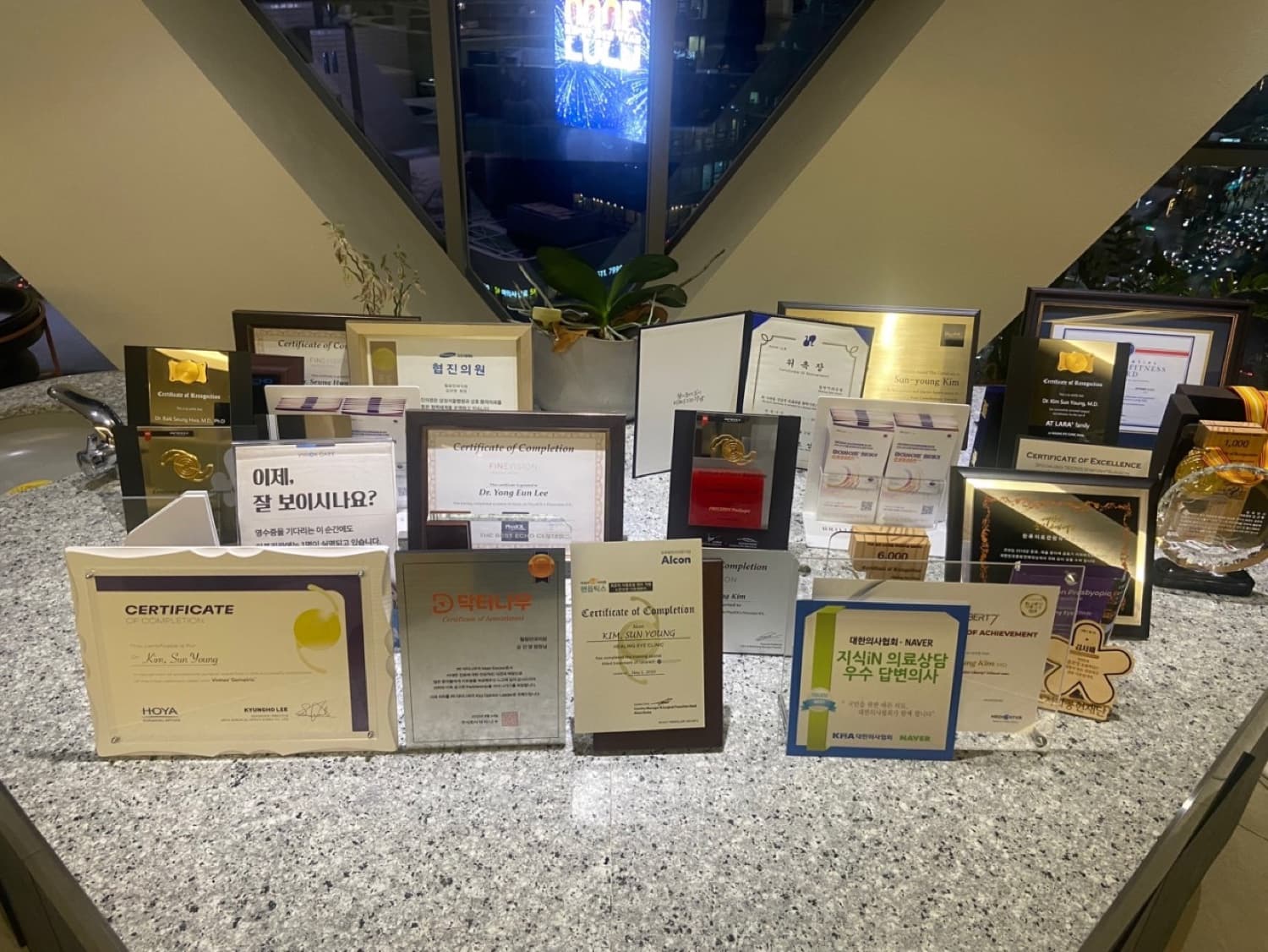
I can write "trustworthy" all day; you'd be right to want evidence. So, plainly: we hold a 4.8-star rating on Google across more than 154 reviews, many left by patients from Japan, Taiwan and the United States. My own focus is cornea and cataract — I trained at the Catholic Medical Center, served as a clinical professor in cornea and cataract surgery, and I'm a member of the European Society of Cataract and Refractive Surgeons. I mention this not to impress you, but because trust shouldn't rest on a nice website — it should rest on real people who've sat where you're sitting and a surgeon with a real record.
Getting here is genuinely easy
One practical reassurance: you won't be wrestling with Seoul's transit map. We're directly in front of Sinnonhyeon Station in Gangnam — about a one-minute walk — and roughly 70 minutes from Incheon Airport. We guide international patients from arrival, so the logistics are the least of your worries.
Start with a message, not a deposit
You shouldn't have to commit to anything to find out whether a clinic is right for you. That's backwards.
Message us for free on our official WhatsApp or LINE — no appointment needed, no pressure. Tell me your prescription, your travel dates if you have them, and anything you're nervous about. We'll answer in English, give you an honest first sense of your options, help you plan a realistic schedule, and — if your eyes aren't suited to surgery — we'll say so directly.
Choosing a clinic from across the world is hard. Let's make your first step a low-stakes conversation, not a leap of faith.
— Dr. Kim Sun-young, Medical Director, Healing Eye Clinic
Frequently asked questions
Do Seoul eye clinics charge foreigners more?
Some places do quietly add a "foreigner" or tourist markup. We don't. At our clinic international patients pay 100% the same price as Korean patients — the number you hear in your consultation is the same number a local pays. When you compare clinics, ask this directly; an honest clinic will answer it plainly.
Is there an English interpreter during the exam and surgery?
At our clinic, yes — an English interpreter is with you on-site through the whole visit, from your exam and the surgery explanation to post-op instructions. You shouldn't have to consent to eye surgery in a language you only half understand. You can also message us in English on WhatsApp or LINE before you ever travel.
How many days should I plan to stay in Seoul for eye surgery?
For most laser procedures, plan at least a few days. Many patients complete the detailed exam and surgery on the first or second day, but the next-day follow-up check is important, so don't fly out the same day you have surgery. We'll map out the exact schedule for your chosen procedure during your consultation.
How do I get from Incheon Airport to the clinic?
We're directly in front of Sinnonhyeon Station in Gangnam — about a one-minute walk — and roughly 70 minutes from Incheon Airport. It's a simple trip, and we guide international patients from arrival so you're not navigating it alone.
What if I'm not a good candidate for surgery?
Then we'll tell you honestly, before you've committed to anything. It's not in your interest — or ours — to operate on eyes that aren't suited to it. Message us free on WhatsApp or LINE first with your prescription and concerns, and we'll give you a straight answer rather than a sales pitch.
Message us on official LINE / WhatsApp for a special offer
Your exact candidacy and cost are confirmed in a free 1:1 consultation.