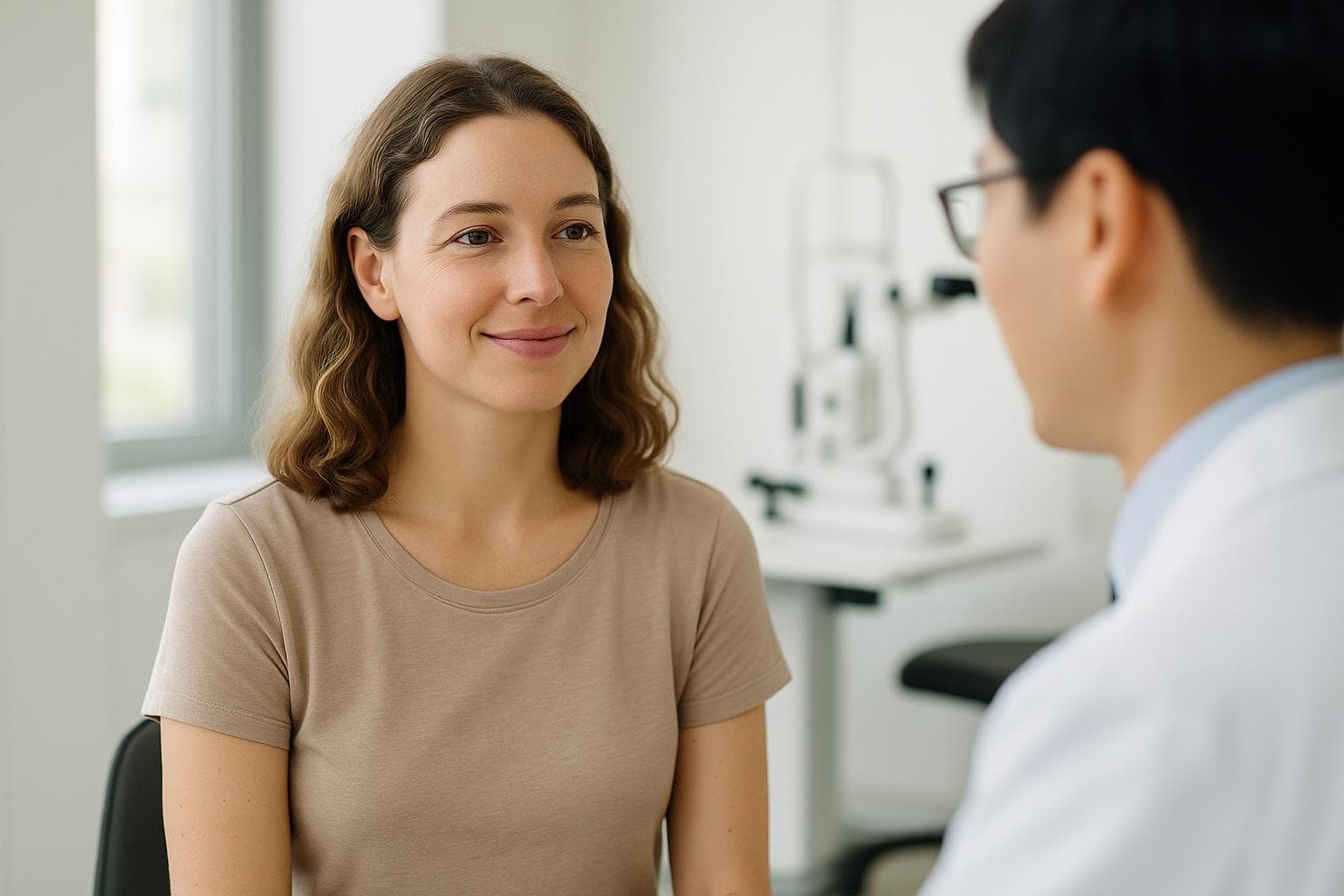
Looking for an English-Speaking Eye Doctor in Seoul? Read This First
Need an English-speaking eye doctor in Seoul you can actually trust with your vision? Here's how we make sure language never gets between you and a safe decision.

Dr. Kim Sun-young, Director
Cornea · Glaucoma · Cataract
Contents
There's a particular kind of anxiety I see in international patients, and it has nothing to do with the laser. It's the fear of lying back for eye surgery in a country where you can't be sure you understood what you just agreed to. If you're searching for an English-speaking eye doctor in Seoul, I suspect that's the real worry underneath the search.
So let me answer it directly: the thing that protects you isn't a doctor who knows a few English phrases — it's making sure not a single important word about your eyes gets lost. That's a higher bar, and it's the one we hold ourselves to. Here's what that looks like in practice, and why it matters more than you might think.
Why language is a safety issue, not a convenience
People often treat "do they speak English?" as a comfort question, like asking about parking. For eye surgery, it's a safety question.
Before any procedure, you need to truly understand a few things: which surgery suits your eyes and why, what the realistic risks are, what recovery will actually feel like, and exactly how to care for your eyes afterward. If any of that arrives in a language you only half-follow, you can't give real consent — and you might mishandle your recovery without knowing it.
That's why, at our clinic, an English interpreter stays with you on-site for the entire visit: the exam, the explanation, the risk discussion, the aftercare instructions. You're never nodding along to something you didn't catch.
You should never consent to eye surgery in a language you only half understand. Real interpretation isn't a nicety — it's how you make a safe, informed choice about your own eyes.
"English-speaking" should mean you can ask the hard questions
Here's the difference I care about. A doctor reciting a rehearsed English sentence is not the same as you being able to lean in and ask, "But what about the dryness afterward? What if my night vision isn't perfect? What happens if my prescription drifts in ten years?"
Those are the questions that actually decide whether surgery is right for you. With a dedicated interpreter in the room, you can ask every one of them and understand every answer — including the answers you might not want to hear. I'd much rather a patient interrogate me thoroughly than stay quiet because the words were hard.
You can talk to us before you even pack
You don't have to fly to Seoul to find out whether we're the right fit. The conversation can start now, in English, from wherever you are.
Message us on WhatsApp or LINE, tell us your prescription and your concerns, and you'll get real answers from a real person — not a generic auto-reply. Often I can give you a useful first sense of your options before you've booked a single thing. For someone weighing a trip across the world for surgery, being able to ask questions in your own language first takes a lot of the fear out of it.
Who you'd actually be seeing
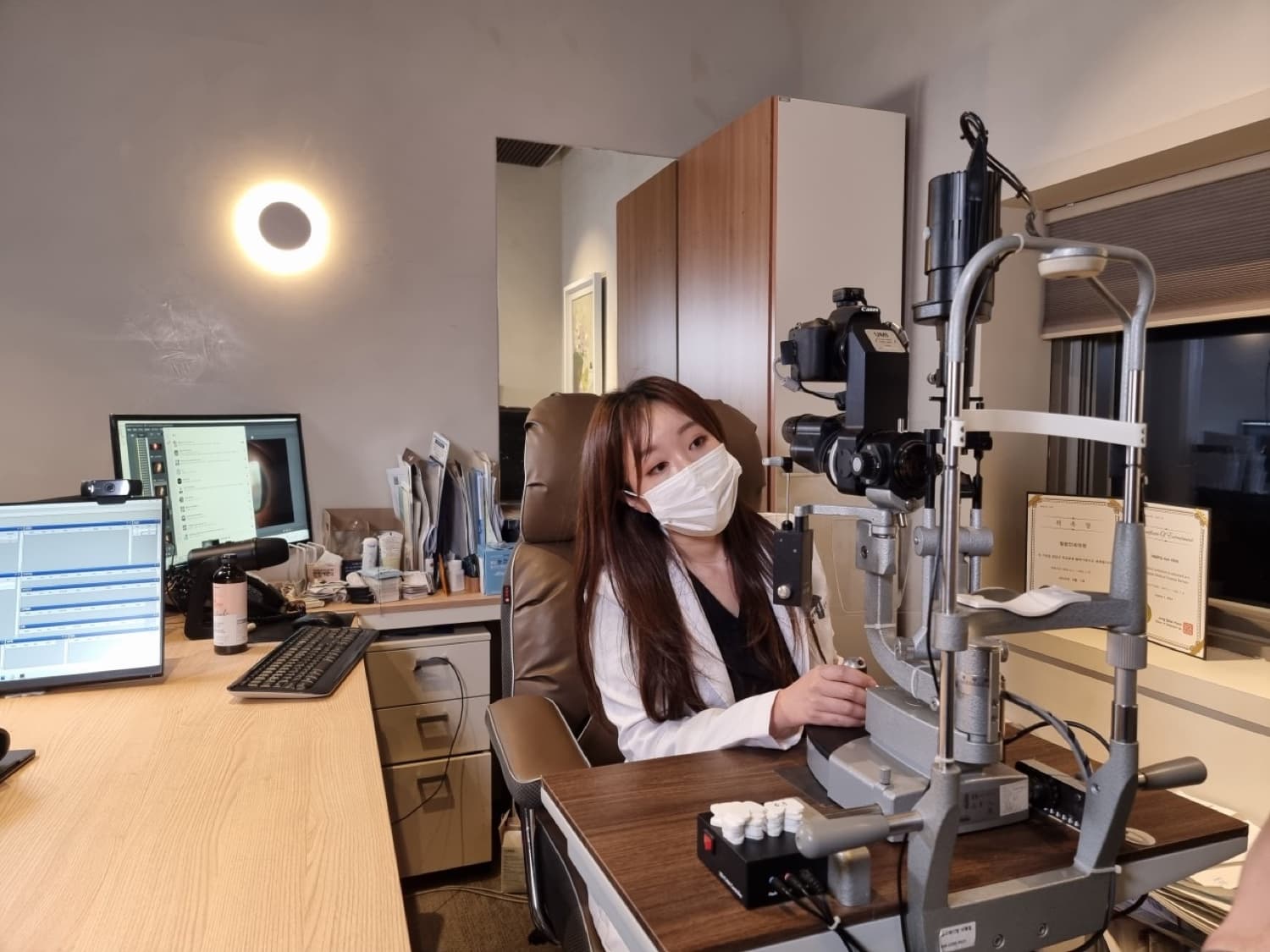
Behind the interpreter is a surgeon, and you deserve to know who that is. My focus is cornea, glaucoma and cataract. I completed my training at the Catholic Medical Center, served as a clinical professor in cornea and cataract surgery at Uijeongbu St. Mary's, and I'm a member of the European Society of Cataract and Refractive Surgeons. Our clinic holds a 4.8-star rating across 154+ Google reviews, many from patients who came from Japan, Taiwan and the United States — people who, like you, once searched for an English-speaking eye doctor in Seoul and weren't sure who to trust.
And it's the same surgeon — me — from your exam through your surgery and your follow-ups. A 1:1 dedicated-surgeon system with a lifetime guarantee, so language and continuity are both on your side.
The honest part communication also makes possible
There's a flip side to all this that I value just as much. Clear communication doesn't only let me explain yes. It lets me explain no — kindly and plainly.
Not every eye is suited to vision-correction surgery. Some need a different procedure; some need a dry-eye issue treated first; some shouldn't have surgery at all right now. Being able to say that clearly, in English, and have you genuinely understand my reasoning, is one of the most important things interpretation gives us. I'd never want a patient to undergo the wrong surgery simply because the honest conversation was too hard to have across a language gap.
Getting to us is the easy part
Practically, you won't struggle to find us. We're directly in front of Sinnonhyeon Station in Gangnam — a one-minute walk — and about 70 minutes from Incheon Airport, and we guide international patients from the moment they arrive.
Send your questions in English — for free
If language has been the thing making you hesitate, let's remove that barrier right now, before any commitment.
Message us for free on our official WhatsApp or LINE — no appointment needed, no pressure. Ask anything: your prescription, the procedure you're curious about, the risks, the recovery, the cost factors. We'll answer clearly in English, give you an honest first read on your options, and — if your eyes aren't suited to surgery — we'll tell you so directly rather than push you toward it.
You shouldn't have to choose between your vision and your own language. With us, you don't.
— Dr. Kim Sun-young, Medical Director, Healing Eye Clinic
Frequently asked questions
Will I be understood in English at your clinic?
Yes. We keep an English interpreter with you on-site throughout your visit — the exam, the explanation of which procedure fits you, the risks, and the aftercare. You can also message us in English on WhatsApp or LINE before you travel and get real answers from a person, not a chatbot.
Does the eye doctor themselves speak English?
What matters most is that nothing is lost between you and the surgeon. With a dedicated interpreter present for the whole consultation, you can ask the surgeon anything and understand every answer — including the honest caveats. The goal is genuine, informed consent, not a few polite phrases.
Can I ask questions in English before I fly to Seoul?
Absolutely, and I'd encourage it. Message us in English on WhatsApp or LINE with your prescription, your concerns and your possible dates. We'll give you an honest first read on your options before you commit to anything or book a flight.
Will I understand the risks and aftercare instructions?
That's exactly why interpretation matters. Eye surgery has real risks and specific aftercare, and you should understand all of it in your own language. We make sure the risks, the recovery, and the instructions are explained clearly in English so you're never guessing.
What if, after the consultation, surgery isn't right for me?
We'll tell you honestly. Being able to communicate clearly cuts both ways — it also lets us explain plainly when a procedure isn't suited to your eyes, or when you should treat something first. Message us free on WhatsApp or LINE and we'll give you a straight answer, not a sales pitch.
Message us on official LINE / WhatsApp for a special offer
Your exact candidacy and cost are confirmed in a free 1:1 consultation.