Glare After LASIK: Usually Temporary, Not for Every Eye
Glare after LASIK usually eases over 3–6 months as the eye heals. A Seoul cornea specialist explains who is at risk and what to send before you decide.

MS, Catholic Univ. College of Medicine · Ophthalmology specialist, Catholic Medical Center · Clinical Professor (Cornea & Cataract), Uijeongbu St. Mary's Hospital · 108th Korean Ophthalmological Society Research Award · KDCA epidemiology citation
Medically reviewed byDr. Kim Sun-young, Director· Medical Director
Edited by: Dr. Kim Sun-young
Contents
Seeing starbursts around headlights since surgery, or afraid you will, and wondering whether glare after LASIK fades or stays with you? For most eyes it eases steadily over the first three to six months as the cornea heals and the tear film settles. When it lingers, there's usually a measurable cause, such as a pupil that opens wider than the treated zone, a small leftover prescription or dry eye, and each of those can be checked.
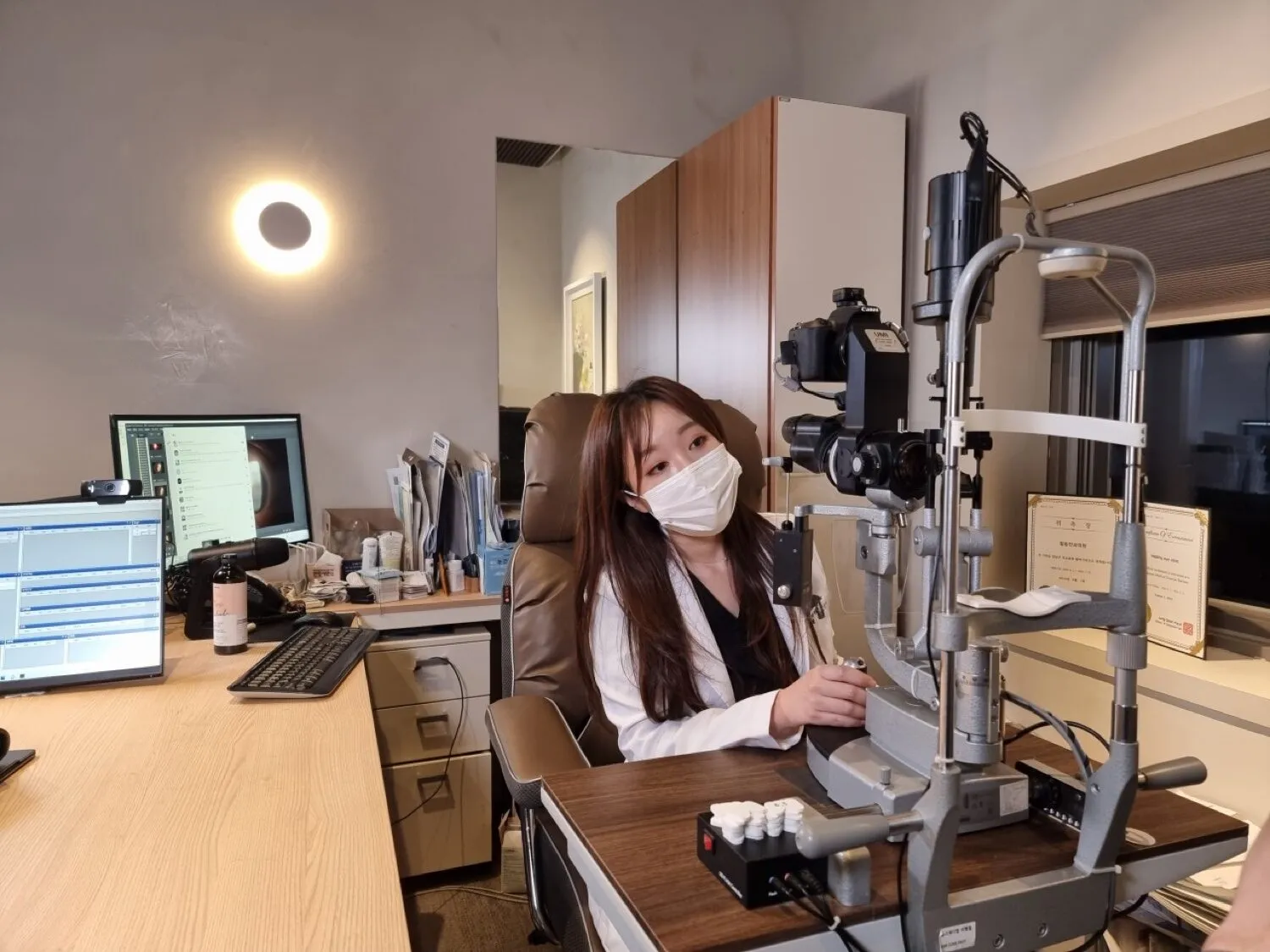
Hello, I'm Dr. Kim Sun-young, Medical Director of Healing Eye Clinic in Seoul. My field is the cornea: I served as Clinical Professor (Cornea & Cataract) at Uijeongbu St. Mary's Hospital, and night glare is mostly a question of the cornea and the tear film over it. Whether you're weighing Clear SMILE LASIK or another method, one dedicated surgeon handles your exam, surgery and follow-ups, so the doctor who reads your pupil and corneal measurements is the one who plans the treatment.
You go through every one of those numbers in English with a medical interpreter, at no extra charge. Send a photo of your most recent eye record on WhatsApp: the exam printout if you're planning surgery, or your surgery report if you've already had it. Add one question: is the glare I'm worried about likely to settle with these numbers? The WhatsApp consultation is free.
How long does glare after LASIK usually last?
On the first evening, nearly every eye sees rings or spikes around lamps and headlights. The corneal surface is still slightly swollen and the tear film is uneven, so light scatters as it enters. Our Clear SMILE LASIK recovery timeline puts the first check-up on day one, mostly stable vision by days two to three, and a stable phase for vision and cornea at about one month.
Night glare runs behind daytime sharpness. You may read a menu across the room within days and still notice halos on a dark road for weeks, because a dim street opens the pupil and uses more of the cornea's outer area. For most people the remaining glare keeps fading for three to six months. Past that point, glare strong enough to change how you drive deserves a search for its cause.
| When | What's common | Get it checked if |
|---|---|---|
| Night 1 to day 3 | Strong halos, starbursts, light sensitivity | Pain grows or vision gets worse, not clearer |
| Weeks 1 to 4 | Halos at night that come and go with dryness | A gritty, burning eye that drops don't ease |
| Months 1 to 6 | Slow fading as the surface smooths | Glare stays the same or gets stronger |
| After month 6 | Most people no longer notice it day to day | Glare still limits night driving |
Ask whether this applies to your eyes, which dates are open, and about the English interpreter.
Ask us on WhatsAppWhy lights flare at night: pupil, tear film and leftover prescription
The laser reshapes a central zone of the cornea. In daylight your pupil is small and looks through the middle of that zone. On a dark street it can open wider than the zone, so part of the light passes through the edge where the new curve blends into the old one, and it spreads into rings. That's how one eye can be crisp at noon and starry at ten at night.
The larger the correction, the more the cornea's curve changes between center and edge, and the more of the small optical flaws called higher-order aberrations can appear. Custom LASIK measures those aberrations and is designed with night vision and contrast in mind, and large pupils are taken into account at the design stage because they're tied directly to night glare. If your eyes have little aberration to begin with, standard treatment may be enough, and I won't add a custom design you don't need.
The tear film is the first surface light meets. Dry patches scatter it, which is why early glare often changes from blink to blink. Clear SMILE removes a small lens of tissue through one small incision and keeps more of the corneal nerves, so dryness after surgery is relatively less likely. There's a separate post on what Clear SMILE and SMILE each mean if the names are confusing.
A small leftover prescription is the fourth cause. Slight nearsightedness that you don't notice at noon blurs lights at night, and a thin pair of driving glasses can remove that part of the glare.
Starbursts, dry eye and undercorrection: who should think twice?
Halos, starbursts, light sensitivity and dry, gritty eyes are the usual reactions in the first weeks, and they fade over the months in the table above. Less often, night glare stays strong enough to make driving after dark uncomfortable, dryness lingers, or the eye ends up slightly under- or over-corrected. Rarer still are surface haze, uneven healing and a weakening of the cornea called ectasia. How much glare a particular eye keeps varies from person to person, which is why your own exam numbers matter more than any average.
The US Food and Drug Administration's patient guidance lists large pupils among the reasons LASIK may not be for you, because they raise the chance of glare, halos and starbursts that can be disabling. In general, these are the situations where I'd advise waiting or choosing a different route:
- Pupils that open wide in dim light, together with a high correction
- A thin cornea, or a topography map showing irregularity or early signs of keratoconus, where LASEK or an implantable lens may be safer
- Severe dry eye that hasn't been treated yet; we may treat it first
- A prescription that's still changing, or pregnancy and breastfeeding
- Work that depends on night driving, when your exam already puts you at the higher end of glare risk
To be honest, no laser design can make a pupil smaller, and in an eye that opens very wide at night some edge effect may remain. For very high myopia, an implantable lens (ICL) leaves the cornea's shape alone, though it carries its own risks, including halos, raised eye pressure and earlier cataract. If a laser isn't right for your eyes, I'll tell you so and explain the alternatives. For SMILE specifically, you can read how SMILE eye surgery in Korea runs step by step.
Glare that hasn't faded: what can still be done?
If you've already had surgery and the halos haven't settled, start by working out which cause you're dealing with. Here's a test you can do at home tonight: poke a pinhole into a piece of card and look at a distant street light through it. If the starburst shrinks sharply, a leftover prescription or an uneven surface is the more likely driver. If the glare shifts from blink to blink and improves for a while after preservative-free artificial tears, the tear film is the bigger part.
In the first three months, treating the surface and waiting usually comes first, because the cornea is still changing and measurements taken now can mislead. Glasses for night driving help when a small prescription remains. A further laser treatment is considered only once the eye has stabilized, the cause has been measured and enough cornea is left; removing more tissue from a thin cornea is the wrong trade.
We run a dedicated LASIK/LASEK revision center for people whose vision declined or became uncomfortable after surgery elsewhere, built around finding the root cause first. Bring every record you have from the original surgery. The treatment settings and the pre-op corneal thickness change what is possible.
Questions to ask any clinic about night vision
Take these to every clinic you're comparing, this one included. Under each, I've put how we handle it here.
- Is my pupil size in dim light measured and used in planning? Here: pupil size is part of the safety exam, alongside corneal thickness and shape, the tear film and the residual cornea, and large pupils are accounted for at the design stage.
- Is my tear film checked, and treated first if needed? Here: severe dry eye may be treated before surgery, and the clinic has its own dry-eye clinic.
- Who examines me, who operates, and who sees me afterward? Here: one dedicated surgeon from the exam through surgery and follow-ups.
- Will you tell me if a laser is the wrong choice? Here: if the exam shows too little cornea or warning signs, we don't push ahead; we point you to options such as SMILE or ICL.
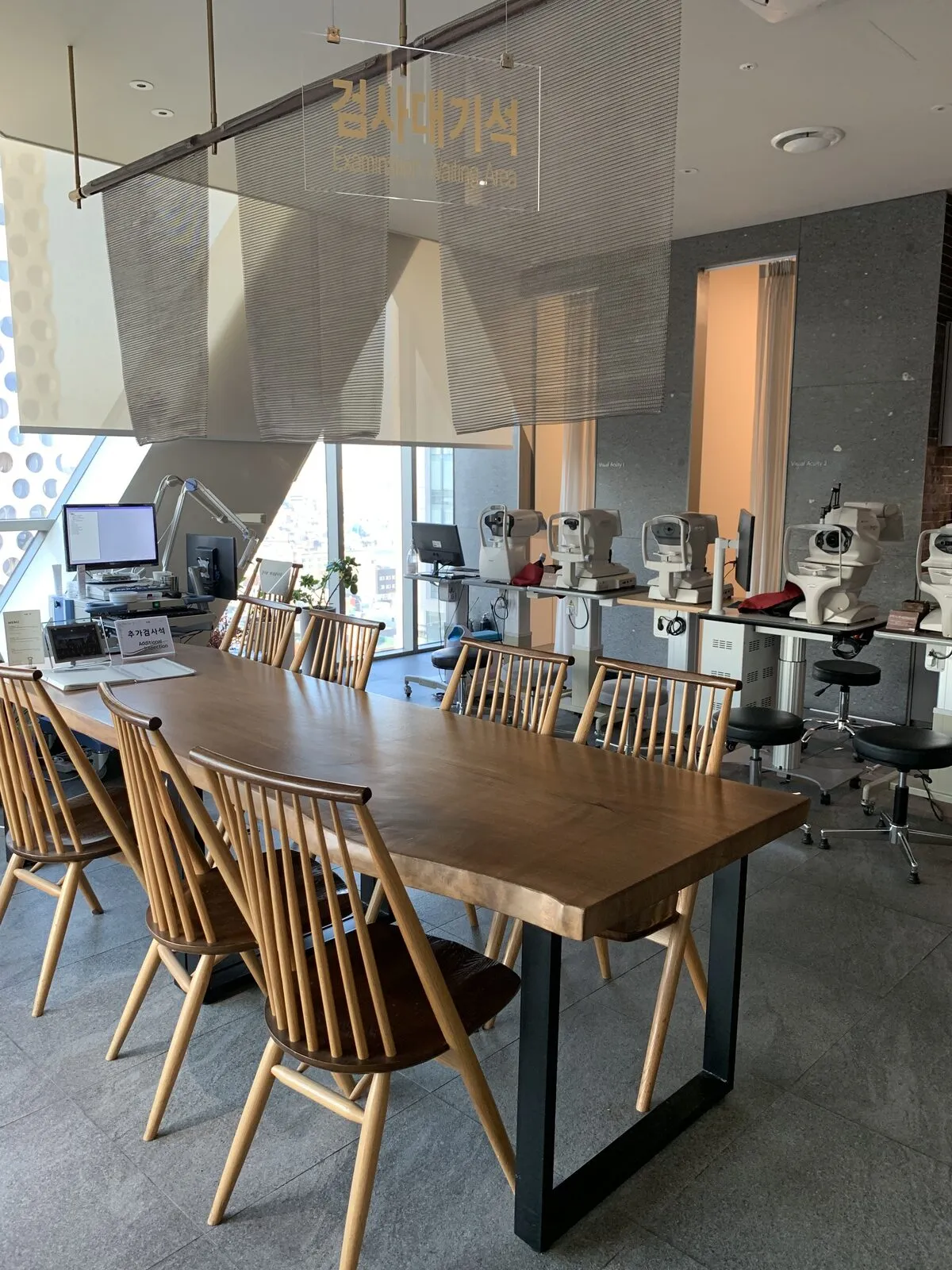
- Will I understand my results before deciding? Here: the exam runs around 20 tests, then the surgeon explains the results and plan in English through the interpreter.
- What happens after I fly home? Here: you leave with take-home medication and an explanation of its ingredients, and your progress is followed by video call or messenger.
Your days in Seoul, and the first nights of halos
You land at Incheon and reach the clinic in about 70 minutes; it's a one-minute walk from Sinnonhyeon Station on Gangnam-daero. On the Clear SMILE plan, the exam is in the morning and surgery in the afternoon, with the check-up the next day. The exam runs around 20 tests, so give it the whole morning. If drops are used to widen your pupils, near vision stays blurry for a few hours.
That first evening, every lamp along Gangnam-daero will carry a halo. Expect it, skip the night walk, and rest; the clinic's partner hotel is O'Cloud Hotel in Seocho-gu. The next morning's check-up is the one to keep before any long flight, and flying after LASIK is allowed from the day after surgery once that check-up is done. Keep artificial tears in your carry-on, since cabin air is dry.
One scheduling detail people miss: the clinic is closed on Sundays and Saturday hours end at 14:00, so a Saturday surgery leaves no next-day check-up. Friday hours run until 21:00. The exact number of days for your trip is confirmed in consultation, since exam results can change the plan.
Hours and treatments are listed on Healing Eye Clinic's English homepage. If you read Korean, the Korean-language Clear SMILE LASIK page covers the same procedure.

What helps once you're back home?
Use the take-home medication exactly as prescribed. Before you leave, you're given enough post-op medication along with an explanation of its ingredients, so a local pharmacist or eye doctor can find an equivalent if you need one. Keep using artificial tears often in the first weeks, because dryness feeds glare.
Track the trend, not the single night. Once a week, look at the same street light from the same spot and note whether the rings are smaller. Hold off on night driving until lights no longer hide signs or pedestrians and your vision meets your local licensing standard, and make the first drives at dusk on roads you know.
Some signs can't wait for a trend: pain that grows, vision getting worse, increasing redness or discharge, or light sensitivity that gets stronger by the day. See a local ophthalmologist that day and message us as well; we keep following your progress by video call or messenger after you fly home.
Keep your surgery report somewhere safe for life. Any future eye doctor, including one planning cataract surgery decades from now, will need those numbers. For the daily routine of drops, screens and showers, see aftercare at home after laser eye surgery in Korea.
Where I stand on night glare
Night glare is the side effect I'd rather talk through too early than too late. I don't recommend a surgery for its own sake, and when your pupil size, corneal thickness and prescription point toward lasting halos, I'll say so and show you what else fits. A good result begins in the exam room, well before anyone picks a surgery date.
You'll find us at 470 Gangnam-daero, 10–11F, Gangnam-gu, Seoul. The WhatsApp consultation is free: send a photo of your most recent eye record, the exam printout or your surgery report, with the same question, whether the glare you're worried about is likely to settle with these numbers.
— Dr. Kim Sun-young, Medical Director
Frequently asked questions
Is glare different after SMILE than after LASIK?
Both reshape the central cornea, so both can bring halos in the first weeks. Pupil size, the size of the correction and the tear film shape night glare more than the method's name. Clear SMILE keeps more of the corneal nerves, which makes dryness-related glare relatively less likely, but it doesn't change what a wide pupil does in the dark.
Can glasses fix night glare after laser surgery?
Only the part caused by a leftover prescription. A thin pair of driving glasses can sharpen lights if you're slightly nearsighted at night. An anti-reflective coating cuts reflections off the glasses themselves, but it won't remove halos that come from the cornea.
Are there eye drops for halos at night?
Some eye doctors prescribe drops that make the pupil smaller for a few hours, which can reduce halos on a night drive. They're a prescription decision with their own side effects, such as dimmer vision in the dark or a headache, so discuss them with an ophthalmologist who can examine you.
I had LASIK years ago and the glare is new. Is it the old surgery?
New glare years later often comes from something else, such as dry eye or an early cataract, which scatters light in a similar way. Have it examined and bring your original surgery report: those numbers matter if a lens is ever chosen for cataract surgery.
How long should I wait before treating glare as a lasting problem?
Three to six months is the usual point to judge it, because the cornea and tear film keep changing until then. Don't wait that long if glare comes with pain, worsening vision or growing redness; those need an eye doctor the same day.
Questions about your own case or available dates? English interpreter on site.
Ask us on WhatsAppMessage us on official LINE / WhatsApp for a special offer
Your exact candidacy and cost are confirmed in a free 1:1 consultation.