How Often Does LASIK Go Wrong? Serious Cases Are Under 1%
How often does LASIK go wrong? Serious problems affect about 0.4% of eyes. A Seoul eye surgeon explains when they show and how long to stay.

MS, Catholic Univ. College of Medicine · Ophthalmology specialist, Catholic Medical Center · Clinical Professor (Cornea & Cataract), Uijeongbu St. Mary's Hospital · 108th Korean Ophthalmological Society Research Award · KDCA epidemiology citation
Medically reviewed byDr. Kim Sun-young, Director· Medical Director
Edited by: Dr. Kim Sun-young
Contents
How often does LASIK go wrong, and if something does, will it show up before your flight home or after you've landed? Serious problems are uncommon: in one large set of more than 61,000 LASIK eyes, about 1 in 228 had a serious adverse event. The early complications usually show themselves within the first few days, while the rare corneal weakening surgeons worry about most can take months or years to appear.
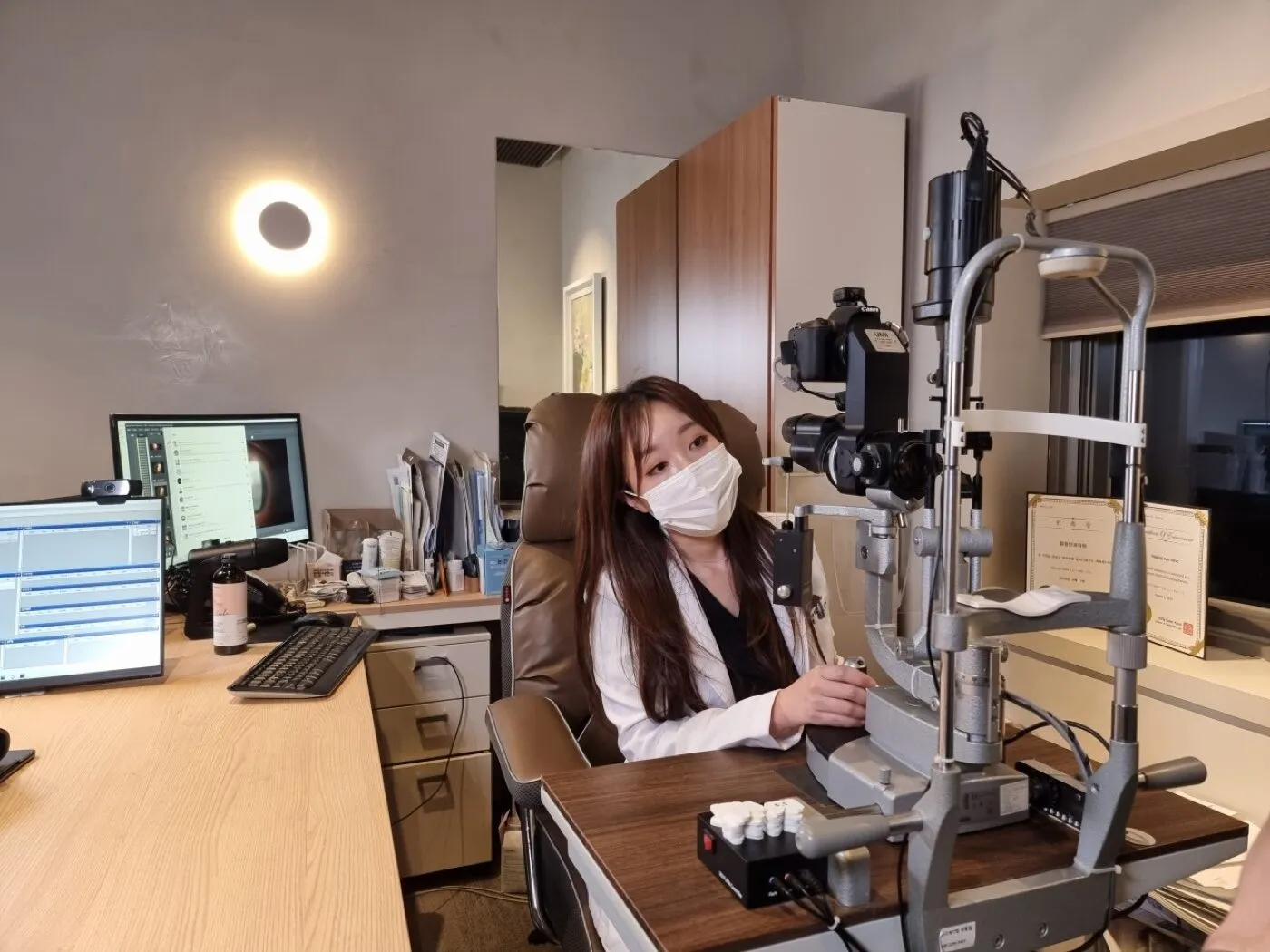
Hello, I'm Dr. Kim Sun-young, Medical Director at Healing Eye Clinic in Gangnam. I'm an ophthalmology specialist trained at the Catholic Medical Center, and my field is the cornea, glaucoma and cataract, which matters here because most of what can go wrong after laser surgery happens in the cornea. Whether you're looking at Clear SMILE LASIK or LASIK with a thin flap, one dedicated surgeon stays with you from the exam through surgery and every follow-up, and a medical interpreter for your language is provided at no extra charge.
If a surgeon at home told you your corneas are thin or your prescription is too high, send a photo of that exam printout on WhatsApp, ideally the page showing corneal thickness, and ask how much margin your cornea leaves for your prescription. The consultation on WhatsApp is free, and one photo is enough to start.
How often does LASIK go wrong, in actual numbers?
The American Academy of Ophthalmology's EyeWiki review of LASIK complications collects the figures I find most useful for this question. Across 61,833 LASIK eyes, adverse events of any kind were reported in 1.3%, roughly 1 in 79 eyes, and serious adverse events in 0.4%, roughly 1 in 228. Losing two or more lines on the eye chart, even with glasses on, was reported in 0.37% in combined LASIK and PRK groups. Infection sits at about 0.02% to 0.2%.
Those figures count real complications. They leave out what most people mean when they say LASIK went wrong for them, and those things are far more common. Dryness in the first weeks shows up in 60% to 70% of eyes early on. New halos, glare or starbursts at night were reported by up to 45% of people at three months who had none before surgery, and these usually settle within three to six months. Ending up slightly short of the target, called under-correction, is the most common refractive problem.
So the answer has two halves. Serious harm is rare, and temporary nuisance in the first weeks is normal.
Ask whether this applies to your eyes, which dates are open, and about the English interpreter.
Ask us on WhatsAppWhen each problem tends to show up
The timing matters as much as the rate, because it tells you which problems you'll meet in Seoul and which ones could start after you're home.
| When | What can show up | What it means for your trip |
|---|---|---|
| First 24 hours | A LASIK flap shifting out of place, most often in this window | The next-day check comes before any flight |
| Days 1–3 | Inflammation under the flap (DLK), mostly in the first few days; early dryness | Staying an extra day keeps you near your surgeon |
| Day 3 to week 2 | Infection, which usually presents from day 3 or 4 onward | This window often opens after you've flown home |
| Weeks 2–8 | Light sensitivity, more often after LASIK than after SMILE-type surgery | Usually treated with drops by your eye doctor at home |
| Months 1–6 | Night halos settling; prescription usually stable by about 3 months | Any touch-up decision waits until then |
On our side, the first check-up is the day after surgery, and flying is allowed from the day after surgery once that check is done. For Clear SMILE LASIK the shortest plan is 1 night, 2 days, with the exam and surgery on day one and the check-up on day two. For a less rushed trip I suggest 2 to 3 days, and the exact schedule is fitted to your flights in the consultation.
Here's a detail most schedules miss. The clinic closes on Sundays and holidays, so if your surgery falls on a Friday, the Saturday check fits, but day three lands on a day when the clinic is shut. If your leave allows it, a mid-week surgery keeps the whole days 1–3 window on weekdays.
The infection window is the other one to plan for. It opens around the time most people are back at work, so pack the take-home drops in your carry-on, use them exactly on schedule through the flight, and before you leave home, find the eye doctor you would call if your eye turned red and painful.
What if your surgeon at home said your corneas are too thin?
To be honest, the complication I think about most for people with strong prescriptions isn't on that table at all. Corneal ectasia, a gradual bulging of a cornea weakened by surgery, appears months to years later, and no next-day check can catch it. It's prevented in the exam room, by not removing more tissue than a cornea can spare.
Say you're 33, about -7.50 D in both eyes, with a corneal thickness at the low end of normal, and your surgeon in Chicago said no to LASIK. That surgeon may well be right. A flap plus the tissue a -7.50 correction removes could leave too little cornea underneath, and that's the setup in which ectasia becomes a real concern. I would want the thickness map and the topography before anything else, and if the shape shows early irregularity or signs of keratoconus, laser surgery is off the table for me too.
If the cornea is thin but regular, the options change. LASEK works on the surface and needs no flap, at the cost of a sorer first few days, which I describe in how long LASEK pain lasts. Clear SMILE LASIK shapes a thin lens of tissue inside the cornea and removes it through one small incision, keeping more of the corneal nerves; you can see how that day runs in SMILE eye surgery in Korea, step by step.
For very high myopia, an implantable lens (ICL) corrects vision without reshaping the cornea at all. Its own risks include raised eye pressure and an earlier cataract in some eyes, and how long an ICL lasts covers the long view.
What the exam measures before anything can go wrong
The pre-op exam is around 20 tests, and afterward your surgeon goes through the results and the plan with an interpreter. The measurements that bear most on complications are corneal thickness and shape, the cornea a plan would leave behind, pupil size, the tear film, and any warning signs of keratoconus. Large pupils are linked to night glare, so they get extra attention at the design stage. If dryness is severe, it may be treated first and surgery waits.
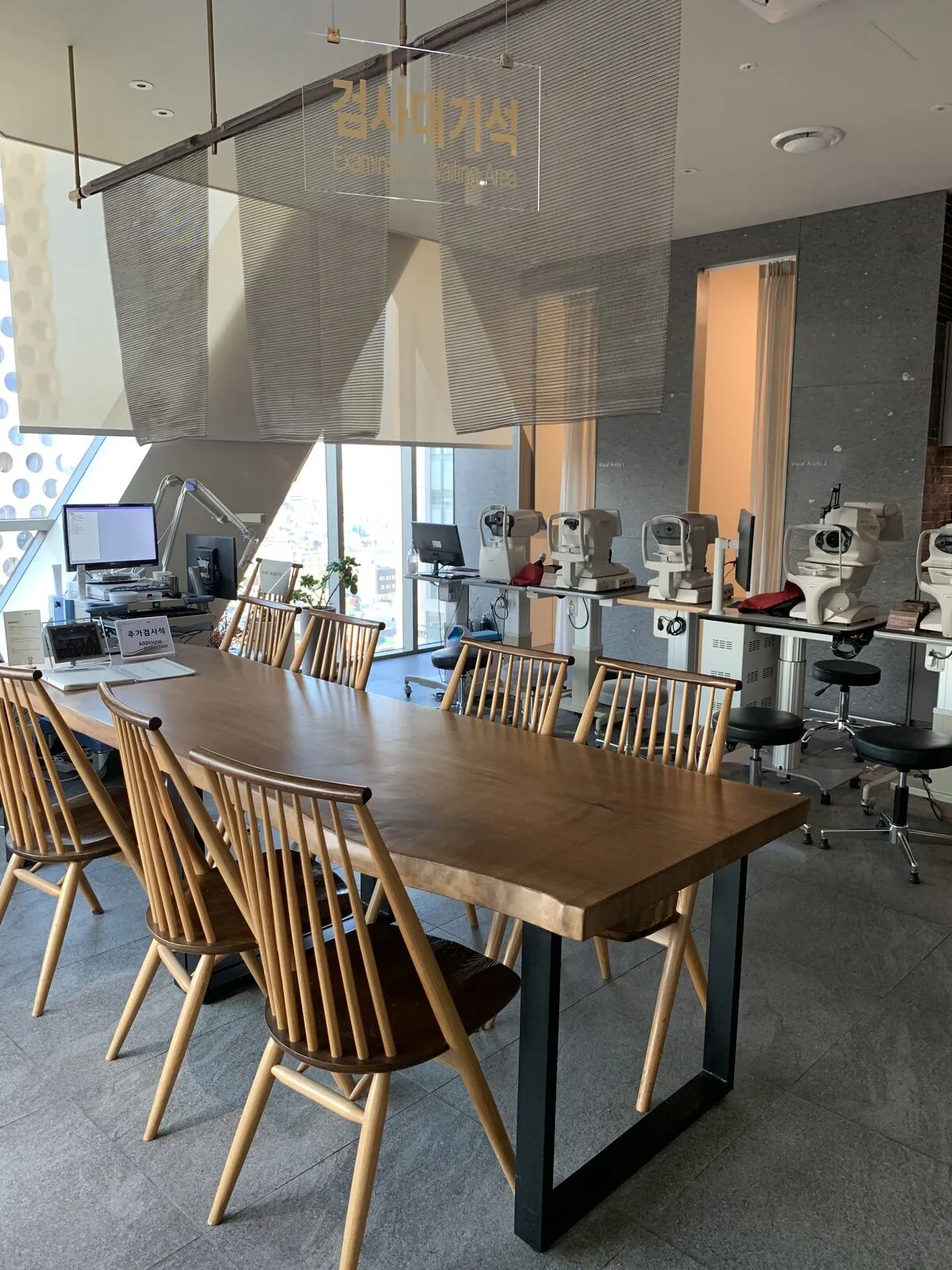
Healing Eye's English site lays out the exam and consultation steps if you want to see them before you write. If you read Korean, the clinic's Korean page on Clear SMILE LASIK covers the procedure in more depth. And if you're still weighing where to go, I've written separately about how to choose a LASIK clinic in Korea.
Dry eye, night halos and infection: who should wait
On surgery day, a gritty foreign-body feeling and light sensitivity are expected. Vision is mostly stable by days 2–3, most daily routines are back within the first week, and vision and cornea enter a stable phase around the first month. How quickly each of these settles differs from eye to eye, and dryness is the one most likely to linger.
As general medicine, these are reasons to wait or choose another route:
- a prescription that has changed in the past year
- pregnancy or breastfeeding
- a thin cornea, irregular topography or signs of keratoconus
- severe dry eye that hasn't been treated yet
- an autoimmune condition that can slow healing
After you fly home, you aren't left with only a phone number. Before you leave, you're given enough post-op medication to take home, with the ingredients explained so a local pharmacy can find an equivalent. After that you can check in by email or video call, and if you need to be seen locally, a referral letter for your eye doctor at home is provided.
Worsening pain, a red eye that's getting redder, or vision dropping after it had cleared, especially between days 3 and 14, means seeing an eye doctor that same day. Send the message too, but don't wait on it.
Can it be fixed if your vision drifts later?
Usually, yes, once things have settled. The prescription after LASIK is typically stable by about three months, and drift over the years tends to be slow: roughly a quarter of a diopter a year or less, more in eyes that started above -10 D. Healing Eye runs a dedicated LASIK/LASEK revision center, including for eyes first treated elsewhere, and whether a second treatment is safe comes back to the same question as the first one: how much cornea is left.
Where I stand on the risk
A good result starts in the exam room, long before surgery day, and for a strong prescription that's where most of what could go wrong is either prevented or ruled out. What decides this for you is how much cornea would be left under the correction your prescription needs. Nothing about that changes if you take a few months to think it over; your cornea will measure the same in spring.
Send a photo of your latest exam printout on WhatsApp, the page with corneal thickness if you have it, and ask how much margin your cornea leaves for your prescription. The WhatsApp consultation is free, and you can send any other exam records you have too, so a first opinion on suitability can be given by video or online consultation.
— Dr. Kim Sun-young, Medical Director
Frequently asked questions
Does a high prescription make LASIK go wrong more often?
The infection and inflammation rates don't change much with prescription, but two things do. A bigger correction removes more tissue, which raises the ectasia concern in a thinner cornea, and long-term drift is faster: in published follow-up it averaged about -0.12 D a year for myopia up to -10 D and about -0.25 D a year above that.
Can a LASIK flap move years after surgery?
It can, but it's rare. Flap displacement was reported in about 1 in 8,000 eyes over 12 months, most often in the first 24 hours, and late cases usually follow a direct blow to the eye. Eye protection for contact sports and racket sports is worth keeping as a habit.
Is Clear SMILE LASIK less likely to cause dry eye?
Dryness after it is relatively less likely, because more of the corneal structure and nerves are kept. It isn't absent, though, and if you already have dry eye, the tear film is measured and treated first before any method is chosen.
How soon can I fly home after surgery?
Flying is allowed from the day after surgery, once the next-day check-up is done. Cabin air is dry, so use artificial tears often during the flight and keep your prescribed drops in your carry-on.
I'm sensitive to light three weeks after surgery. Did something go wrong?
Light sensitivity that starts two to eight weeks after surgery is a recognised, usually temporary reaction, reported in about 5% of eyes after myopic LASIK.
Questions about your own case or available dates? English interpreter on site.
Ask us on WhatsAppMessage us on official LINE / WhatsApp for a special offer
Your exact candidacy and cost are confirmed in a free 1:1 consultation.