LASEK Pain: How Long Does It Really Last?
I'm Dr. Kim. Patients want one straight answer about LASEK pain — how long, how bad, and what helps. Here's the honest version, no scare tactics.

Dr. Kim Sun-young, Director
Cornea · Glaucoma · Cataract
Contents
"Just tell me straight — how much is it going to hurt, and for how long?"
I get this question more than almost any other about LASEK, usually half-whispered, often after someone's read a frightening forum thread at 2am. So let me answer it like a doctor who'd rather you arrive prepared than ambushed: LASEK does involve real discomfort, it's concentrated in a short window, and knowing exactly what to expect changes the whole experience.
The short, honest answer on LASEK pain and how long it lasts
The uncomfortable phase is mostly the first two to three days, with the peak usually around day one to two. Once the surface epithelium heals over and we remove the bandage contact lens around day three or four, the sharp discomfort drops off noticeably. What remains after that is typically mild — irritation, light sensitivity, dryness — not the kind of thing most people would call pain.
So when someone asks "LASEK pain, how long?" — the truthful headline is: a few rough days, not weeks.
Why those first days hurt at all
It helps to understand the cause, because pain you understand is pain you handle better.
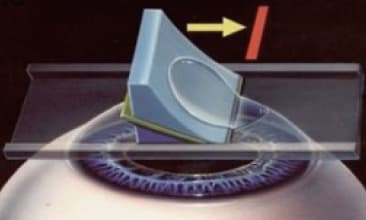
In LASEK we lift the thin surface layer of corneal cells, treat the tissue underneath with the laser, and then let that surface layer regrow over the next few days. The cornea is one of the most densely nerved surfaces in the body, so while that layer is healing back, those exposed nerve endings send the brain a steady "something's wrong here" signal. That's the grit, the burning, the watering, the urge to keep your eyes shut.
It's not damage. It's the surface doing exactly what it's supposed to do.
LASEK discomfort isn't a complication — it's the sensation of a healthy surface healing. That's why it fades on a predictable schedule.
A realistic hour-by-hour of the worst part
Let me map the rough stretch honestly:
- Surgery day, evening: As the numbing drops wear off, the gritty, watery, light-sensitive feeling sets in. This is the start of the peak.
- Day 1 to 2: Usually the most uncomfortable window. Eyes water, light feels harsh, and keeping them open is the hardest. Most people genuinely can't do much — and shouldn't try to.
- Day 3 to 4: The surface has typically healed across. We remove the bandage lenses, and most patients feel a clear, sometimes dramatic, improvement that same day.
What genuinely helps
The good news is that you're not just enduring this passively. Several things meaningfully blunt the discomfort:
The bandage contact lens itself is the biggest one — it shields those healing nerves like a smooth cover over a raw surface. On top of that, the prescribed drops, frequent lubricating tears, dark sunglasses indoors and out, and plain rest do real work. Cool, dim rooms feel far kinder than bright ones.
And sleep is underrated. While you're asleep your eyes are closed, lubricated, and not fighting light — which is why many patients find the second night is the turning point.
How this compares to LASIK and SMILE
I won't pretend LASEK is the gentlest option in the early going. Flap-based LASIK and flapless SMILE are noticeably more comfortable in the first days, because they don't leave a surface to regrow.
So why choose LASEK at all? Because for the right eye it's the better choice, not the consolation prize. If your cornea is on the thinner side, or your life involves contact sports, martial arts, or a real risk of an eye knock, having no flap is a genuine long-term advantage. I'd rather you trade a few uncomfortable days for the option that actually suits your eyes and your lifestyle.
What you're paying for beyond the procedure
The drops, the bandage-lens fitting and removal, and the close early follow-ups are all part of managing LASEK comfort and healing safely. When comparing quotes, check that this aftercare is included — that's what carries you through the painful window. International patients pay exactly the same fee as Korean patients, confirmed only after a proper exam.
The honest limitation
Here's what I can't tell you over a message: exactly how you will experience it. Pain perception varies genuinely between people — some breeze through day two, others find it harder — and so does healing speed, depending on your surface, your tear film, and your prescription. Anyone who promises you a pain-free LASEK is overselling.
What I can promise is that we'll prepare you properly, give you a clear drop schedule, stay reachable during the rough days, and check you when it matters. And before any of that, I'll tell you honestly whether LASEK is even the right procedure for your eyes — because if SMILE or LASIK suits you better, there's no reason to take the more uncomfortable road.
If you'd like an honest read, message us for free in English on WhatsApp or LINE — an English-speaking interpreter is part of our team. Send your prescription, age, and any dry-eye history, and we'll tell you what your real experience is likely to look like.
— Dr. Kim Sun-young, Medical Director, Healing Eye Clinic
Frequently asked questions
LASEK pain — how long does it last?
For most patients the genuinely uncomfortable phase is the first 2 to 3 days, peaking around day one to two, and then easing clearly once the surface heals and the bandage contact lens comes out around day three or four. After that it's usually mild irritation and dryness rather than pain. I can't promise zero discomfort — that would be dishonest — but the sharp part is short.
Is LASEK more painful than LASIK?
In the early days, yes, generally. LASEK heals on the surface, so the first few days involve more discomfort than flap-based LASIK or flapless SMILE. The trade-off is that there's no corneal flap, which is why LASEK suits thinner corneas and contact-heavy or active lifestyles.
What does the pain actually feel like?
Most people describe it as a strong gritty, burning, watery feeling — like a piece of sand under the eyelid you can't get out — plus real light sensitivity. It's not usually a deep aching pain. It comes in waves and is worst when the eyes are open or dry.
What can I do to manage the discomfort?
Prescribed drops, frequent lubrication, sunglasses, and honestly — sleep. The protective bandage contact lens does a lot of the work. Keeping your eyes closed and resting in dim light through the first two days helps more than anything. We go through your exact drop schedule before you leave.
When should discomfort worry me?
If pain suddenly worsens after it had been improving, or you get increasing redness, discharge, or a real drop in vision, contact us — don't wait it out. That pattern is uncommon, but it's the one I want to see promptly rather than have you tough out at home.
Message us on official LINE / WhatsApp for a special offer
Your exact candidacy and cost are confirmed in a free 1:1 consultation.