LASEK Recovery Timeline: What Actually Happens, Day by Day
I'm Dr. Kim. Here's the honest LASEK recovery timeline — the gritty first 4 days, the blurry first month, and when your vision really settles.

Dr. Kim Sun-young, Director
Cornea · Glaucoma · Cataract
Contents
A reader sent me a message that I think a lot of people are quietly wondering: "I've booked LASEK, and everyone keeps saying 'recovery is slower' — but slower how? What am I actually going to feel on day one, and when do I get my life back?"
Fair question. "Slower" is the word every clinic uses and almost nobody breaks down. So instead of a vague reassurance, let me walk you through the real LASEK recovery timeline the way I'd describe it to a patient sitting across from me — including the days that aren't fun.
Why LASEK heals the way it does
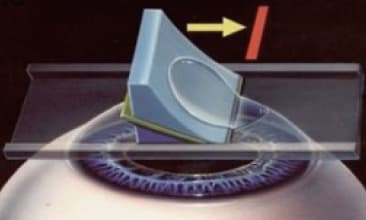
LASEK is a surface procedure. Instead of cutting a flap the way LASIK does, we gently lift the thin outer layer of cells — the epithelium — treat the cornea underneath with the laser, and then let that surface layer grow back on its own over the following days.
That single fact explains the entire LASEK recovery timeline. There's no flap to heal back down, which is the safety advantage. But the surface has to physically regrow, and that regrowth is what you feel in the first few days and what makes your vision wobble in the first few weeks.
LASEK trades a few uncomfortable early days for having no corneal flap at all — that's the deal, and it's a good one for the right eye.
Days 1 to 4: the honest part
I won't sugar-coat this stretch, because patients who expect it cope with it far better.
For the first three to four days you'll have a clear bandage contact lens in each eye protecting the healing surface. During this window most people feel a gritty, watery, "there's an eyelash I can't find" sensation, along with real light sensitivity. Your vision is foggy and shifts hour to hour. This is normal — it's the epithelium closing over.
You'll be using lubricating drops often, plus the medicated drops I prescribe. Rest with your eyes closed more than you think you need to. Screens are technically possible but genuinely unpleasant, so I tell people to plan for darkness, podcasts, and naps rather than catching up on email.
Around day three or four, once the surface has healed across, we remove the bandage lenses at a check-up. Most people feel a noticeable jump in comfort that same day.
Week 1 to 2: functional, but not finished
Once the bandage lenses are out, comfort climbs quickly. Vision becomes usable for daily life for most people somewhere in this window — enough to move around your day, often enough to think about returning to work.
But "usable" isn't "crisp." Expect fluctuation: clearer in the morning, hazier when tired, halos around lights at night, and dryness that has you reaching for artificial tears. None of that is failure. The surface is smooth but still maturing, and your tear film is recalibrating.
This is also when I keep you on a haze-prevention regimen and ask you to be strict about sun protection. Wraparound UV sunglasses outdoors aren't a fashion suggestion — UV exposure in these early weeks is the main thing that nudges the cornea toward haze.
Week 3 to month 1: settling in
By now daily life mostly feels normal. Many people are driving (after we confirm their measured vision), back at the gym for light work, and off the more intensive drops.
What lingers is the fine detail. Night vision is usually the last thing to fully behave — those halos soften gradually rather than switching off. If you do a lot of night driving, give it time before you judge the result.
Months 1 to 3: the quiet finish
This is the part people forget, because they already feel fine. Your vision keeps refining as the cornea fully stabilizes. For most prescriptions I consider the result essentially final around the three-month review, confirmed by topography and refraction. Higher corrections can take a little longer to lock in.
What the recovery period actually includes
A LASEK plan isn't just the laser minute — it's the bandage-lens check, the haze-prevention drops, the repeated follow-ups across those first months, and the aftercare that catches problems early. When you compare clinics, compare what's bundled into that whole timeline, not just the procedure name. We confirm the exact cost — the same fee a Korean patient pays — only after we've examined your eyes.
The limitation I always say out loud
Here's what I can't do: I can't promise your timeline from a message. Healing speed depends on your prescription, your corneal surface, your tear film, your age, even how diligently you use the drops. Two people who have surgery on the same morning can heal a few days apart, and that's normal.
What I can do is examine your eyes properly and tell you honestly whether LASEK is even the right procedure for you — because if your cornea would do better with SMILE or LASIK, I'll say so rather than sell you the slower road for no reason.
Planning your trip and your time off
If you're coming from abroad, the LASEK timeline shapes your trip more than LASIK does. The bandage-lens removal around day three to four really matters, so don't book a tight in-and-out visit.
- Don't fly out the same day as surgery — the next days need monitoring.
- Build in that day-three-or-four check-up before you leave.
- Pack dark sunglasses and plan for screen-light days at the start.
- Tell us your prescription and your travel dates so we can map the realistic schedule.
Message us any time, for free, in English on WhatsApp or LINE — an English-speaking interpreter is part of how we work here. Send your prescription, your age, and any dry-eye history, and we'll give you an honest first read on whether LASEK fits and what your timeline would realistically look like.
I'd be glad to look after your eyes through the whole of that recovery, not just the surgery minute.
— Dr. Kim Sun-young, Medical Director, Healing Eye Clinic
Frequently asked questions
What is the full LASEK recovery timeline?
The raw part — the part you feel — is the first 3 to 4 days while the surface epithelium heals over and the bandage contact lens comes out. Functional vision for daily life usually arrives over the first 1 to 2 weeks. But the LASEK recovery timeline keeps going quietly: your vision can keep sharpening and stabilizing for 1 to 3 months, sometimes a little longer for higher prescriptions.
When can I go back to work after LASEK?
Most office workers take about a week off and return once the bandage lens is out and the eyes feel settled. If your job is screen-heavy you'll want artificial tears on your desk for a while. I can't give you one fixed number — it depends on your job and how your surface heals — so we plan it together at your exam.
How long until I can see clearly enough to drive?
Often around 1 to 2 weeks, but legally and safely that depends on your measured vision at a follow-up, not the calendar. LASEK vision tends to fluctuate in the early weeks, so I'd rather check you than have you guess.
Is LASEK recovery slower than LASIK or SMILE?
Yes, honestly. Because LASEK works on the surface and lets the epithelium regrow, the early recovery is more uncomfortable and visually slower than flap-based LASIK or flapless SMILE. The trade-off is that there's no flap at all, which is why it suits thin corneas and certain active lifestyles.
When is the LASEK result considered final?
I usually call it settled around the 3-month mark for most prescriptions, after the surface has fully smoothed and any haze-prevention drops are tapered. Higher corrections can take a bit longer. We confirm it with your topography and refraction, not a feeling.
Message us on official LINE / WhatsApp for a special offer
Your exact candidacy and cost are confirmed in a free 1:1 consultation.