
Best ICL Surgeon in Korea? Here's What I'd Verify Before You Book the Flight
Best ICL surgeon Korea: how to judge a Seoul clinic from abroad — surgeon continuity, exam numbers, interpreter support, pricing and remote follow-up.

Contents
"I'm –11.00 with astigmatism and two different clinics at home have told me my corneas are too thin for laser. I can take eight days off work. How am I supposed to tell from Melbourne whether a clinic in Seoul is genuinely careful, or just genuinely good at marketing?"
That message arrived on a Tuesday morning, and it is the most sensible question an overseas patient can ask me. She wasn't asking me to sell her a procedure. She was asking how to audit one from 8,000 km away.
"Best ICL surgeon Korea" is a phrase almost every international patient types before they ever email me, and the honest answer is that no such ranking exists — there is no national league table for ICL, no scoreboard, and Korean medical advertising law rightly forbids me from calling myself or my clinic the best or number one. What does exist is a set of things you can verify in writing before you buy a plane ticket: who performs each stage of your care, which measurements they take and whether they'll show you the numbers, what language your consent conversation happens in, what the price includes, and what happens to you the day you fly home. Below is exactly what I would check if I were the patient.
What you can verify about an ICL surgeon from another country
Three things are checkable from your sofa.
Credentials and where they're published. Society membership tells you a surgeon is inside the professional conversation — in my case the Korean Ophthalmological Society, KEEDS, KCLSS and ESCRS, with training and a clinical professorship in cornea and cataract behind it. Look for a surgeon profile on the clinic's Korean site, not only the translated marketing page; our Korean head-office surgeon profiles list the same credentials we show you in English, and a mismatch between language versions is a real red flag.
Who owns your case. ICL is unusual in that the measuring and the operating are almost the same skill. The person who measured your anterior chamber depth and white-to-white diameter is the person best placed to judge, on day one, whether the lens is vaulting correctly. So ask by email: which named surgeon performs my exam, chooses my lens size and power, operates, and sees me the next morning? At our clinic that is one dedicated surgeon by policy. Elsewhere it may be a counselor, then an examining doctor, then an operating doctor. That model can work — but you should know it before you land, not after.
Whether they'll give you your own data. A clinic that intends to hand you a printed summary of your measurements is a clinic that expects to be checked.
You cannot verify a surgeon's skill from abroad, but you can verify their process — and with ICL, the process is most of the safety.
The exam decides ICL, not the surgery day
ICL sits inside the eye, in the space between your iris and your own natural lens, without reshaping the cornea at all — the mechanism is set out on our implantable lens (ICL) treatment page. Because the lens has to rest there for years without touching either structure, the numbers that matter are gathered before you ever reach an operating room: anterior chamber depth, white-to-white diameter, corneal endothelial cell count, pupil size and intraocular pressure.
So when you evaluate a clinic, evaluate its exam. Ask how long it takes, whether it happens on a separate day from surgery, and whether the surgeon — not a coordinator — walks you through the figures. I've written up the specific thresholds I use in my guide to ICL candidacy requirements; if a clinic can't tell you your own anterior chamber depth, it hasn't earned your cornea.
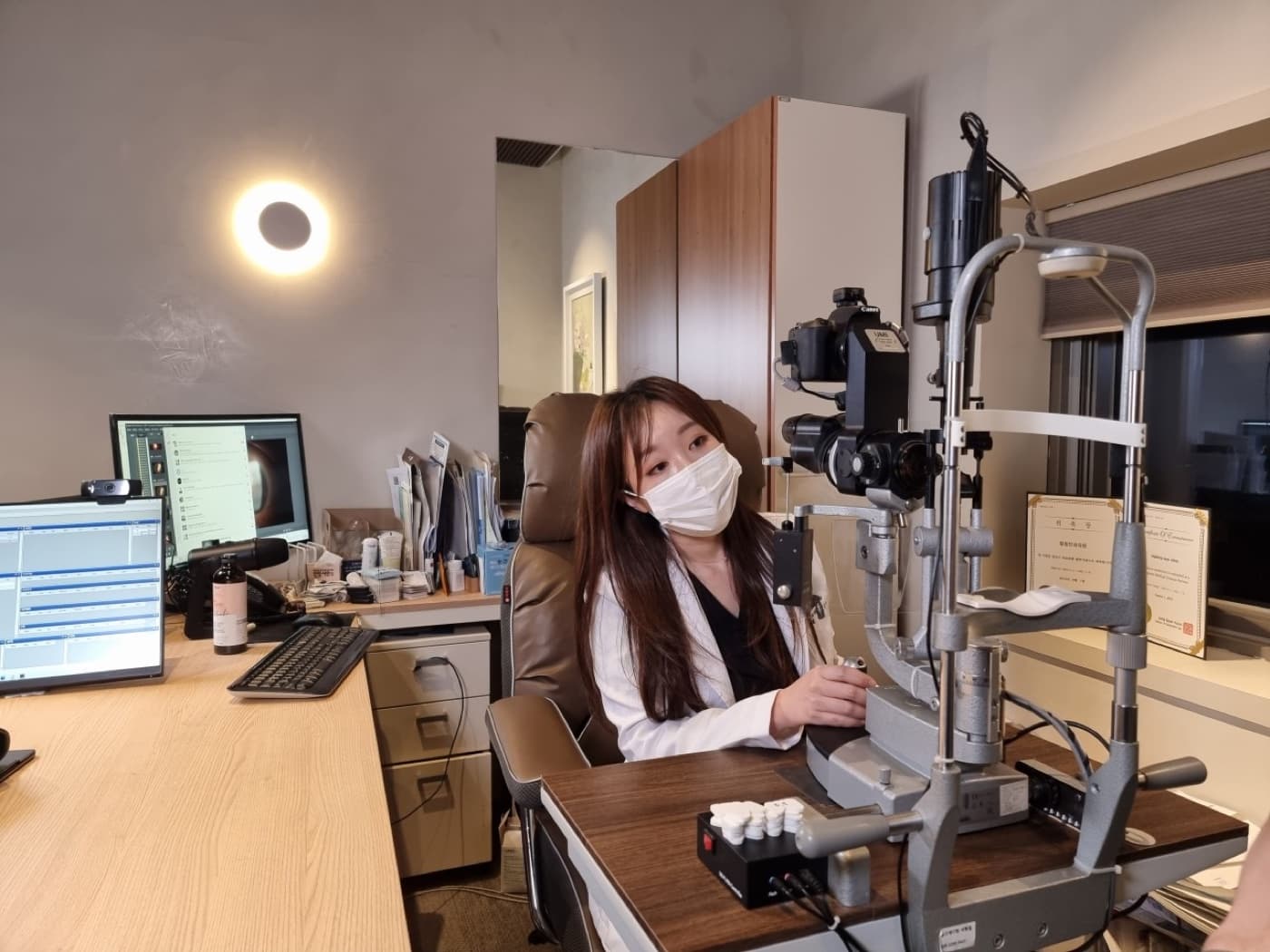
Stop your contact lenses first
One practical thing that overseas patients get wrong: arriving with contact lenses still in use distorts corneal readings, which distorts lens selection. We ask you to stop soft lenses well before the exam and longer for rigid or ortho-k lenses. Build that into your travel plan or your one exam day is wasted.
The questions I'd send by email — and the answers I'd want back
| What you ask the clinic | An answer that reassures me | An answer I'd push back on |
|---|---|---|
| Which surgeon does my exam, sizing, surgery and day-1 check? | One named surgeon for all four | "Our team will take care of you" |
| What exactly will you measure? | ACD, white-to-white, endothelial count, pupil size, IOP | "A full standard screening" |
| Which lens brand and model, and what size? | Named model, size chosen after the exam | Lens quoted before any measurement |
| Is the exam on a different day from surgery? | Yes, or at minimum hours apart with time to decide | Same-hour exam-to-surgery on a fixed package |
| What if I'm not a candidate? | Fee for the exam only, honest refusal, alternatives explained | Silence, or "everyone qualifies for something" |
| Do international patients pay the same as locals? | Published price list, identical | Bundled "international package" with no line items |
| What happens at month 6 when I'm home? | Written data summary + named checks for your local doctor | "Just email us if there's a problem" |
Interpreter support: the part that has to happen at the right moment
"English-speaking clinic" is a low bar. The bar that matters is when the interpreter is beside you. We have English, Japanese and Traditional Chinese interpreters on site, and they attend the diagnostic exam, the explanation of your measurements, the lens-selection discussion, the consent conversation and the post-operative check — not just the conversation about money.
This is where reversibility questions usually surface, because patients want to know what their exit route is before they agree to anything intraocular; that discussion is worth having in your own language, and I've laid out the realistic version in my article on whether ICL is reversible. Consent for a lens inside your eye should include the awkward questions: cataract risk over decades, endothelial cell loss, the possibility of a lens exchange if vaulting is too high or too low, pressure spikes in the first days, and glare or halos around lights at night — which are common early on and, for a minority, persist. If nobody has said those words to you before you sign, the consent wasn't real.
Price, and why "same as locals" is a checkable claim
Cost is where medical tourism gets murky, because a bundled "package" hides what's inside it. Our position is simple: international patients pay the published Korean price, and the list is public on our price page.
Published ICL pricing at Healing Eye (both eyes)
When you compare quotes between Seoul clinics, compare line items: exam, lens model, toric surcharge, drops, and how many post-op visits are included. A deeper breakdown of what drives the total, including why toric lenses cost more, is in my guide to ICL surgery cost in Korea for international patients.
Once you fly home: what "follow-up" has to mean
This is the question overseas patients ask last and should ask first. Most patients are back to ordinary daily activity within one to two days, but ICL follow-up isn't measured in days — it's measured in years, because we are monitoring lens position, eye pressure and endothelial cell count over time.
So we do two things. We schedule your trip so the early checks happen while you are still in Seoul, following the same written pre- and post-operative precautions as our Korean patients (our Korean aftercare and precautions page is the source document). And we hand you a data sheet — lens model, power, size, your pre-op measurements, your post-op pressure and vault — so an ophthalmologist in your own city can run the routine checks without guessing. Our lifetime check-up and responsibility guarantee means the case stays open on our side; if your local doctor finds something, send us the report and we'll correspond with them.
Ask any clinic what document you leave with. "Just email us" is not a follow-up plan.
Who I tell not to have ICL
Not everyone should have this surgery, and the list is specific: a shallow anterior chamber; a low endothelial cell count for your age; eye pressure that isn't controlled; a cataract already forming; an unstable prescription in a younger patient; active inflammation inside the eye; pregnancy or breastfeeding, where we wait. Large pupils plus a job that depends on night driving deserves a frank talk before anything is booked — I go through that trade-off honestly in my piece on ICL, halos and night vision. And if your circumstances make it impossible ever to have your eyes checked again after you leave Korea, I would rather you didn't have an intraocular lens at all.
Our Google rating is 4.8 from 154 reviews, which I mention not as proof of superiority but because you can read the patient reviews yourself, including the unenthusiastic ones.
Judge a clinic by what it refuses to do and what it puts in writing, not by how confident its website sounds.
Send me your questions before you send me your flight details. If your measurements say ICL isn't right for you, I will tell you so by email rather than after you've landed — and if they say it is, you'll know exactly why before you sit in my chair.
— Dr. Kim Sun-young, Medical Director, Healing Eye Clinic, Sinnonhyeon, Seoul
Frequently asked questions
How can I judge an ICL surgeon in Korea before I arrive?
You can verify three concrete things by email: who will actually perform your exam, lens sizing and surgery; which professional societies the surgeon belongs to and where they trained; and whether the clinic will send you your own measurement numbers after the exam. A clinic that answers all three in writing is showing you its process rather than its marketing. If the reply is only about price and a package, keep asking. I would rather a patient interrogate me by email for a week than fly in on a brochure.
Will the same surgeon see me from consultation through follow-up?
At our clinic that is policy, not a preference — one dedicated surgeon owns your case from the exam to the lens order to surgery and the early checks. It matters with ICL because the person who measured your anterior chamber depth and white-to-white diameter is the person best placed to judge whether the lens is sitting where it should on day one. In some larger practices, consultation, examination and surgery are handled by different people, which is a legitimate model but one you should know about in advance. Ask the question directly and get the surgeon's name in writing.
Do international patients pay more for ICL in Seoul?
At Healing Eye, international patients pay exactly the same published price as Korean patients — EVO ICL for both eyes is ₩5,500,000 and EVO ICL Toric is ₩6,000,000, with the full pre-operative exam at ₩150,000. What differs between clinics is what the number includes, so ask specifically whether the exam, the lens itself, the toric upgrade, post-op drops and the early follow-up visits are inside the quoted figure. A quote that is vague about the lens model is not a quote. Our price list is published rather than quoted case by case.
How does follow-up work once I've flown home?
We schedule your surgery so that the early checks happen while you are still in Seoul, then hand you a written summary: lens model, power, size, your pre-op measurements and the post-operative eye pressure and vault findings. That document is what lets an ophthalmologist or optometrist in your own city carry out the routine long-term checks — eye pressure, lens position, endothelial cell count. We keep the case open on our side too, and our lifetime check-up policy means you are welcome back whenever you are in Korea. If something changes at home, email us the local report and we will advise your doctor directly.
What does interpreter support actually cover?
We have English, Japanese and Traditional Chinese interpreters on site, and the part that matters is when they are present. Ask any clinic whether an interpreter attends the diagnostic exam, the surgeon's explanation of your numbers, the consent discussion and the day-after check — not only the initial price conversation. Consent for an intraocular procedure is not a formality; you should be able to ask an awkward question in your own language and get an unhedged answer. If a clinic can only offer translation by phone or chat app on surgery day, weigh that seriously.
Who should not have ICL, even after flying to Korea?
I decline ICL when the anterior chamber is too shallow to seat a lens safely, when the corneal endothelial cell count is low for the patient's age, when eye pressure is not controlled, when a cataract is already forming, or when the prescription is still shifting in a younger patient. Pregnancy or breastfeeding means waiting. Very large pupils combined with a job that depends on night driving deserve a frank conversation about halos before anything is booked. I have told patients who had already landed in Seoul that surgery was not right for them, and I would do it again.
Message us on official LINE / WhatsApp for a special offer
Your exact candidacy and cost are confirmed in a free 1:1 consultation.