ICL, Halos, and Night Vision: The Honest Answer I Give in Clinic
I'm Dr. Kim. Worried about ICL halos and night vision? Here's what's real, what fades, who's most affected, and the one thing I check to lower your risk.

Dr. Kim Sun-young, Director
Cornea · Glaucoma · Cataract
Contents
"Dr. Kim, my friend had lens surgery and now sees rings around every streetlight. Will that happen to me?"
A night-shift nurse from Singapore asked me this with real worry in her voice, because her job is fluorescent lights and dark corridors. It's one of the most common fears I hear about ICL, and it deserves a straight answer rather than reassurance. So let me tell you exactly what halos and night-vision changes are, why they happen, who feels them most, and what I actually do to keep them small.
First, what a "halo" even is
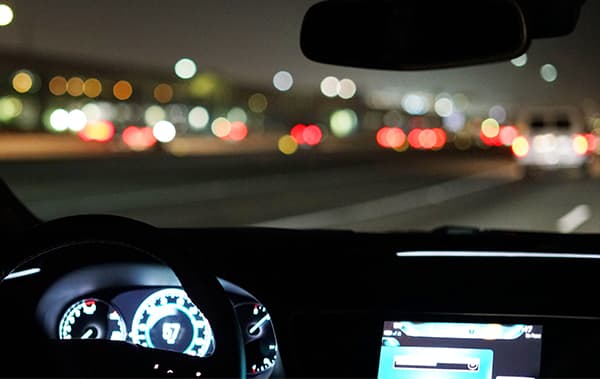
A halo is a soft ring of light around a bright source — a streetlamp, a headlight, a phone screen in a dark room. A starburst is the spoke-like version. Neither is damage to your eye. They're optical effects: light entering your eye at the edges and scattering slightly instead of focusing cleanly. Almost every kind of vision correction — glasses, contacts, LASIK, ICL — can produce some version of this. The honest conversation isn't "halos or no halos." It's "how much, for how long, and for whom."
Halos after ICL are an optical effect, not eye damage — and for most patients they fade as the eye settles and the brain adapts over the first few months.
Why ICL can cause them — it's about your pupil
Here's the mechanism in plain terms. The ICL has a clear optical zone in the middle that does the focusing. In daylight your pupil is small and sits comfortably inside that zone, so light passes cleanly. At night your pupil dilates. If it opens wider than the lens's clear zone, some light enters near the edge of the lens, scatters, and your brain reads that scatter as a ring or a burst around lights.
That's why this is so individual. Two patients with identical prescriptions can have very different experiences purely because one has small pupils and the other has large ones. It's also why your pupil diameter is something I measure carefully at screening — it's not a formality, it's a prediction of your night vision.
Who tends to notice it most
In my experience, the patients most likely to be aware of night halos are those with naturally large pupils, those with very high prescriptions, and everyone in the early weeks right after surgery while the eye is still calming down. People with average or small pupils often report little or nothing. None of this is a defect in you — it's anatomy meeting optics.

The part that reassures most: it usually fades
Two things work in your favor over time. First, the eye settles. The early post-op weeks, when drops and mild swelling are still in play, are when glare is most noticeable; as that resolves, so does much of the effect. Second — and this surprises people — your brain adapts. This is neural adaptation: the same way you stop seeing your own nose or stop hearing a ceiling fan, your visual system gradually learns to filter out a consistent halo. Most patients who are bothered at week two barely think about it by month three.
I won't pretend it disappears for absolutely everyone. A small number of patients remain aware of some glare long term, usually only in narrow situations like oncoming high-beams on a dark highway. That's the honest limitation, and you deserve to weigh it before surgery, not after.
What I do to keep the risk low
Most of the protection happens before you're ever on the table. Choosing the correct lens size so it centers well, selecting the right power, and matching all of that against your measured pupil size is where night-vision quality is largely decided. A lens that's well-sized and well-centered keeps your pupil inside the clear zone as much as physically possible. This is precisely why I'm cautious about quick online "you're a candidate" promises — without your pupil and anterior chamber numbers, no one can responsibly predict your night vision.
A fair comparison with LASIK at night
Patients often ask whether laser surgery would be "safer" for night vision. The honest answer is that both can cause halos, and the relevant factors differ. For very high prescriptions, the strong correction itself is what tends to drive night effects — and since high myopes are often better served by ICL anyway for corneal-safety reasons, ICL frequently remains the sounder overall choice even with the night-vision conversation factored in. It's not "ICL bad for night, LASIK good." It's "which procedure is right for your eyes, with night vision counted in."
What to do with this if night vision matters to you
If your livelihood or your peace of mind depends on clean night vision, don't decide from an article — yours or anyone's. Send me your prescription, your age, and a note that night driving or night work matters to you, in English on our official WhatsApp or LINE. I'll give you an initial sense of direction for free, and when you come in, your pupil size becomes part of the real decision. If your pupils are large enough that I'd worry, I'll tell you plainly, and we'll choose together — including the choice not to operate.
On cost, so you're not left guessing: I don't quote won figures in writing, because the price depends on the specific lens your eye needs and the follow-up included, and because international patients here pay exactly what Korean patients pay — no foreigner mark-up. You'll have the precise number after your exam.
The nurse from Singapore, by the way, had small pupils and a sensible prescription. I told her the truth, she came in, and she's back on her night shifts. But the answer was honest before it was reassuring — and that order matters to me.
— Dr. Kim Sun-young, Medical Director, Healing Eye Clinic
Frequently asked questions
Does everyone get halos after ICL?
No, but I won't tell you nobody does. Many patients notice some glare or rings around lights in the first weeks to months, and for most it fades as the eye and brain adapt. A minority remain aware of it long term, usually only in specific situations like oncoming headlights. Whether you notice it at all depends a lot on your pupil size and the lens position.
Why do halos happen with ICL?
At night your pupil widens. If it widens past the clear optical zone of the lens, light entering near the edge can scatter and create a ring or starburst. It's an optical effect, not damage to the eye — which is also why it often settles as you adjust and as your pupil behavior normalizes after surgery.
Will the halos go away?
For most patients they ease substantially over the first few months. The improvement comes from two things: the eye settling after surgery, and neural adaptation, where your brain learns to filter the effect the way it filters your own nose from your vision. I can't promise it vanishes completely for everyone, but persistent, bothersome halos are the exception.
Can I still drive at night after ICL?
Almost everyone returns to night driving comfortably. In the very early recovery I ask you to be cautious until the eye settles and drops are finished. If you drive professionally at night, tell me before surgery so we can weigh your pupil size and expectations honestly rather than discover it afterward.
How can I lower my risk of night-vision problems?
The biggest factor I can control is choosing the right lens size and power and centering it well, which is why measurements like pupil diameter and white-to-white matter so much at screening. If your pupils are very large, I'll tell you that frankly and factor it into the plan — or, occasionally, into a recommendation against ICL.
Message us on official LINE / WhatsApp for a special offer
Your exact candidacy and cost are confirmed in a free 1:1 consultation.