How Do I Know If I Need Cataract Surgery? Your Day Decides
How do I know if I need cataract surgery? When glare, dim light or reading beat your updated glasses. Ask on WhatsApp with your last eye report.

MS, Catholic Univ. College of Medicine · Ophthalmology specialist, Catholic Medical Center · Clinical Professor (Cornea & Cataract), Uijeongbu St. Mary's Hospital · 108th Korean Ophthalmological Society Research Award · KDCA epidemiology citation
Medically reviewed byDr. Kim Sun-young, Director· Medical Director
Edited by: Dr. Kim Sun-young
Contents
How do I know if I need cataract surgery, when my last eye check said the cataract is still early but oncoming headlights now smear across the windshield, and Seoul is a long flight away? You need surgery when the clouding keeps you from things you care about, such as driving after dark, reading or your work, and updated glasses no longer bring that back.
A chart line or a report that says “early” doesn't make the call on its own, which is why an early-looking cataract and a real case for cataract surgery can exist in the same eye.
Hello, I'm Dr. Kim Sun-young, Medical Director at Healing Eye Clinic in Gangnam, Seoul. I trained in ophthalmology at the Catholic Medical Center and was a clinical professor of cornea and cataract at Uijeongbu St. Mary's Hospital, so the lens and the cornea in front of it are my field. Here the same surgeon does your exam, surgery and aftercare, and an English interpreter joins the consultation at no extra charge, so nothing about your own eye gets lost between languages.
If you have a report from your eye doctor at home, send a photo of it on WhatsApp together with the two or three tasks that have become hard, like night driving or reading a menu in a dim restaurant.
Why doesn't the eye chart settle it?
Think of a windshield that has slowly collected a thin film. On a cloudy afternoon you hardly notice it. Drive toward a low sun or oncoming headlights at night and the film lights up, and the road disappears behind it. A cataract behaves the same way inside the eye. The natural lens is roughly 9 to 10 millimeters across, and as its proteins clump it starts scattering light, which hurts most against bright light and in low contrast.
The standard eye chart tests neither of those. It shows black letters on a white background in a controlled room, so a lens that scatters light can still read a line that looks respectable. Repeat the same chart with a bright light shining toward the eye, which is what a glare test does, and the result can drop by several lines.
The belief I'd most like to retire is that a cataract has to reach a certain size or stage before surgery makes sense. Grading tells me how cloudy the lens is. It doesn't tell me what that cloud is costing you. The US National Eye Institute puts it in practical terms: surgery is considered when vision loss makes everyday activities like driving, reading or watching TV hard.
Ask whether this applies to your eyes, which dates are open, and about the English interpreter.
Ask us on WhatsAppHow do I know if I need cataract surgery if the chart says I'm fine?
Start with what has changed in your days rather than the letters on the chart. Alongside the exam findings, these are the changes that usually point toward surgery:
- Headlights or low sun leave halos or a white smear, and you've begun avoiding driving after dark.
- You need a brighter lamp to read, or white things look slightly yellow or brown.
- Your glasses prescription has changed twice in a short time, or you can suddenly read without your reading glasses. A hardening center of the lens can make an eye more nearsighted, so that apparent improvement is usually the cataract at work.
- With one eye covered, a single streetlight or letter looks doubled or ghosted in the other.
- One eye has become much worse than the other, and steps and curbs are harder to judge.
- You no longer meet the driving vision standard where you live. In the UK, for example, a driver has to read a car number plate from 20 meters.
Here is the one thing I'd ask you to do before any consultation, at home or in Seoul. Write down three tasks, each as a concrete sentence: “I stopped driving to my sister's after dark in October,” or “I can't read the price tags at the pharmacy.” A sentence like that weighs more in my reasoning than any grade on a report.
If you've been very nearsighted since your teens, take that list seriously earlier than your friends would. Cataracts in highly myopic eyes often show up younger, sometimes in the fifties, and they tend to start in the center of the lens, where the prescription shift and the night glare come from.
Is waiting the right call for you?
If none of those changes describes your life, there's usually no penalty for waiting. In most eyes a cataract doesn't harm the eye simply by being there, and updated glasses, brighter lighting and anti-glare coatings can carry you a long way. Not pushing more treatment than you need is a principle I hold to; I'd rather see you again when the cataract has started to cost you something.
There are exceptions where waiting stops being harmless. A thickening lens can narrow the drainage angle of the eye and raise the pressure, which matters if you've been told your angles are narrow. A lens can become so cloudy that it blocks the view of the retina in someone who needs regular retinal checks for diabetes or macular disease. And failing the driving standard is a reason on its own, because it concerns other people on the road too.
What does a dilated exam show that you can't judge at home?
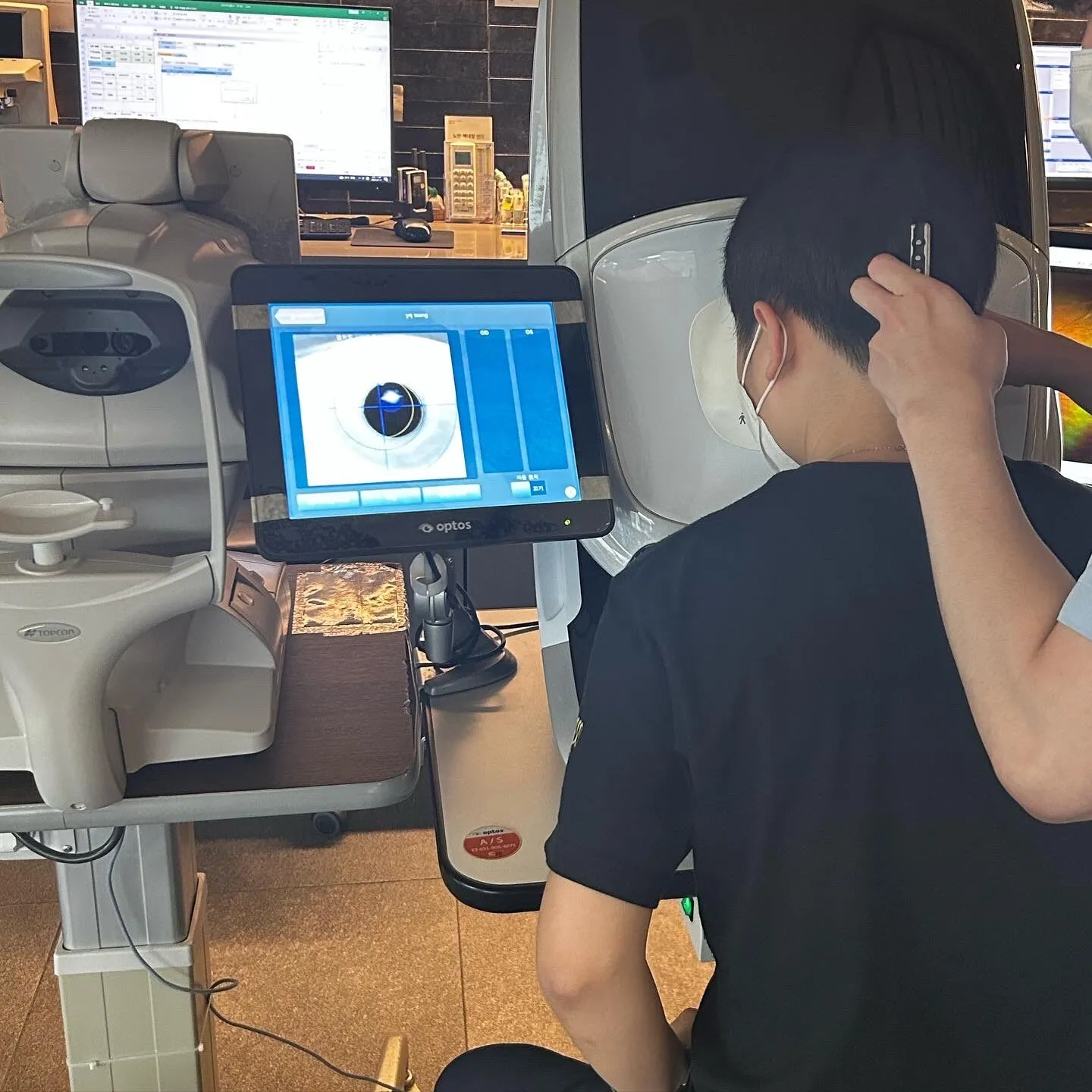
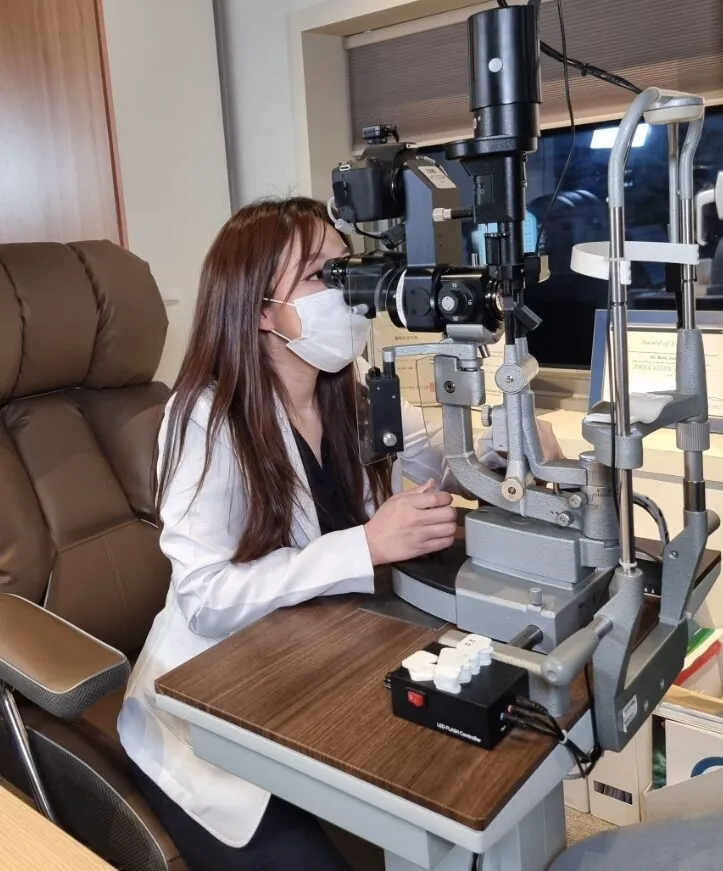
With the pupil widened, the slit lamp shows where the clouding sits. A cloud in the center of the lens tends to shift the prescription slowly. A cloud on the back surface, the posterior subcapsular type, can cause glare out of proportion to its size and is seen more in people with diabetes or long-term steroid use. Two people with the same grade on a report can have very different nights.
The exam also answers a question many reports skip: is the cataract really the reason for the blur? Dry eye, a problem at the macula, glaucoma or a weak inner layer of the cornea can all blur vision, and some of them change the plan. Cornea is my own field, and a cornea with a weak inner layer can be stressed by cataract surgery, which is something to know before you book anything. Measurements of the eye's length and curvature then decide the lens power.
If you had LASIK or LASEK years ago, those old records make the calculation more reliable, so dig them out now.
If surgery is the answer, the next decision is the lens. A monofocal lens sets one distance sharply; multifocal designs aim to reduce reading glasses as well, with more halo at night as a trade-off for some people. The clinic's Korean-language page on premium intraocular lenses lists the lens types in detail, the guide to cataract surgery in Korea walks through the choice in English, and the post on one eye or both in a single Seoul trip covers the order.
Finding out in Seoul: how the visit fits your days
From Incheon Airport the clinic is about 70 minutes away, at 470 Gangnam-daero, a one-minute walk from Sinnonhyeon Station. Land on a Thursday and you can sleep off the flight, because on Fridays the clinic is open until 21:00. That late slot suits this exam: dilating drops blur near vision and make daylight harsh for several hours, so an afternoon exam lets the blur wear off overnight instead of during a day you planned for walking around the city. Pack sunglasses for the walk back.
The partner hotel is O'Cloud Hotel in Seocho-gu. If the exam says surgery, the operation takes about 15 to 20 minutes per eye, and daily life usually returns within days while vision keeps settling. Hours shape the rest: Monday to Thursday 10:00 to 18:30, Saturday 10:00 to 14:00, a lunch break from 13:00 to 14:00, and closed on Sundays and Korean public holidays.
A return plan whose check-up lands on a Sunday won't work, so build the flight around a weekday or a Saturday morning.
How many days you stay is set in the consultation once the exam results are in. The post on how long to stay in Korea for cataract surgery shows the shapes a stay can take, and the cataract recovery timeline covers what the first weeks feel like. Treatments and every way to reach us are on Healing Eye Clinic's English homepage.
Infection, retinal swelling, a cloudy capsule: what can go wrong
In the first days, grittiness, watering, light sensitivity and some blur are expected and usually ease within a week or two. Months or years later, the thin capsule that holds the new lens can turn hazy and bring back a cataract-like blur. It's common, and a short laser treatment in the office clears it; an ophthalmologist at home can do it.
Less often, more serious problems occur: infection inside the eye, swelling at the center of the retina, raised eye pressure, or a retinal detachment, which is more likely in very nearsighted eyes. How each eye heals differs from person to person, which is why the exam beforehand matters as much as the surgery.
Some people are better off waiting or preparing first:
- diabetes that isn't well controlled, or active diabetic changes in the retina
- inflammation inside the eye that hasn't been quiet for some months
- an eyelid infection or heavy blepharitis, which should be treated first
- glaucoma whose pressure isn't yet stable
Once you're home, increasing pain, vision getting worse instead of better, a shower of new floaters, flashes or a curtain over part of your sight need an eye doctor that same day. You can also check in with us by email or video call, and if you need local care, we provide a referral letter for your eye doctor. Keep your surgical record and lens details with your passport so any doctor can see exactly what was done.
Presbyopia and Cataract Surgery Together: Fixing Two Problems in One Operation go further into what usually comes next.
Where I stand on the question
A cataract becomes a surgery question on the day it takes something from your life that new glasses can't give back, and a grade crossing a line on a report doesn't change that by itself. I would rather tell you “not yet” after a full exam than operate on an eye that still serves you, and I'd rather not leave you squinting through winter nights because a chart line looked acceptable.
Send a photo of your latest eye report, any old LASIK or LASEK records, and the month you could travel, with one question: is the trouble I have at night explained by the cataract, or by something else? What settles your case is where the clouding sits in your lens and what the cornea and retina around it look like, and that is what the exam in Seoul shows. Healing Eye Clinic is at 470 Gangnam-daero, 10–11F, Gangnam-gu, Seoul.
— Dr. Kim Sun-young, Medical Director
Frequently asked questions
Can eye drops dissolve a cataract instead of surgery?
No drop has been shown to clear a cataract once it has formed. Drops can ease dryness that adds to the blur, which is worth treating, but the clouded lens itself is only removed by surgery.
Is there an age when cataract surgery becomes necessary?
No. Age makes cataracts more likely, but the decision rests on how your vision affects your life. Some people need surgery in their fifties, especially if they're very nearsighted, while some people in their eighties still manage well with glasses.
I had LASIK years ago. Can I still have cataract surgery?
Yes, it's commonly done. Reshaping the cornea makes the lens power harder to calculate, so the result can land slightly off target and glasses for fine-tuning are sometimes needed. Your prescription and surgery records from before LASIK help most; ask your old clinic for them now, since some archive records after a number of years.
If only one eye bothers me, do I need surgery on both?
No. Each eye is judged on its own. If you're very nearsighted, though, surgery on one eye can leave a prescription gap between your eyes that's too large for comfortable glasses, so the second eye often comes up sooner than people expect.
Can a cataract become too advanced to operate on?
Rarely too advanced to operate, but a very dense lens takes more energy to remove, which can make surgery longer and early recovery slower. That's a practical reason not to wait years past the point where the cataract is already limiting you.
Questions about your own case or available dates? English interpreter on site.
Ask us on WhatsAppMessage us on official LINE / WhatsApp for a special offer
Your exact candidacy and cost are confirmed in a free 1:1 consultation.