
Is LASIK Common in Korea? Why, and What It Means for You
Is LASIK common in Korea? A Gangnam eye surgeon explains why vision correction is so popular here and why popularity still can't replace your own exam.

Dr. Kim Sun-young, Director
Cornea · Glaucoma · Cataract
Contents
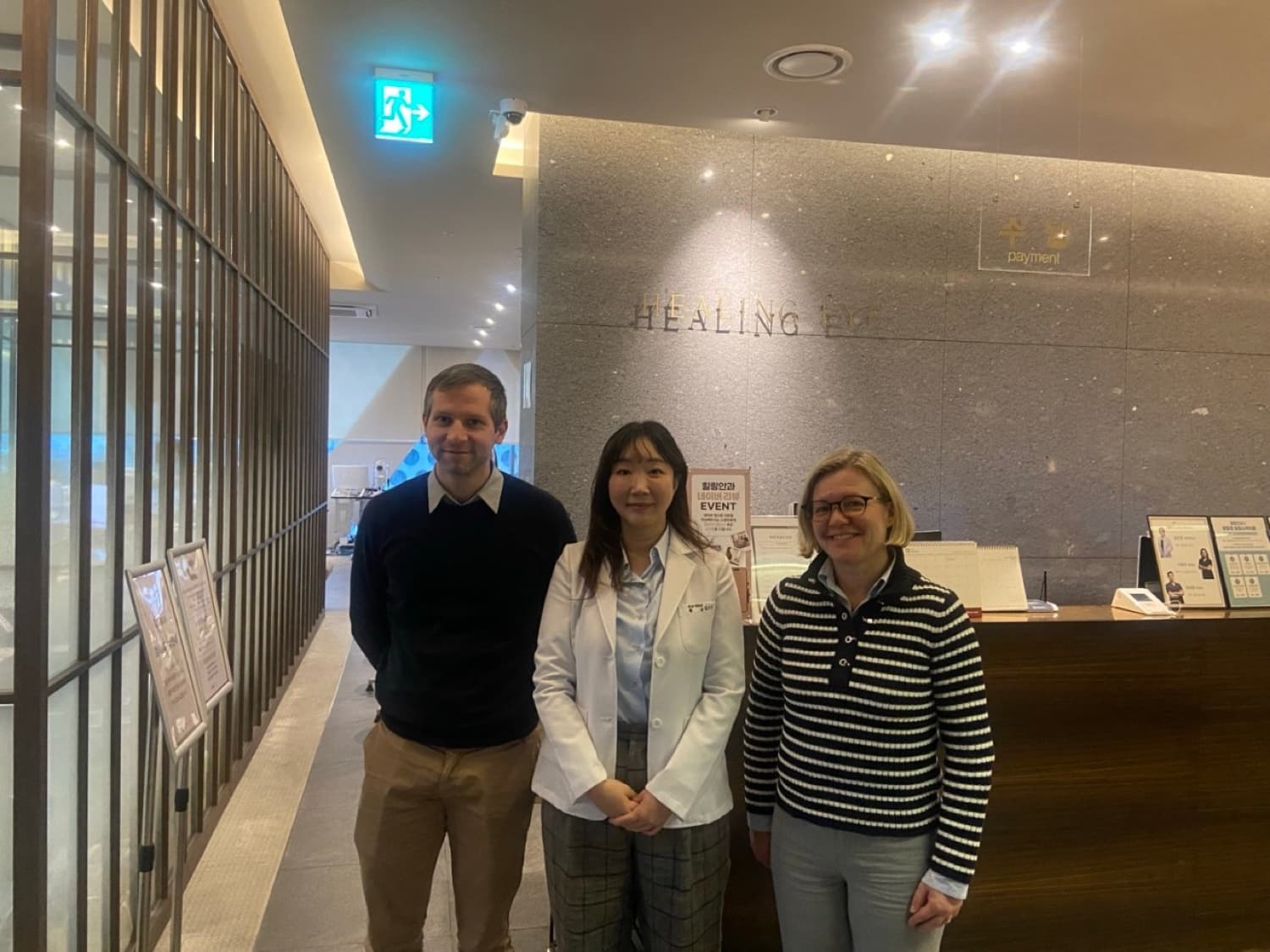
I'm Dr. Kim Sun-young, medical director of Healing Eye Clinic in Sinnonhyeon, Gangnam, Seoul. Before opening my own practice, I was a clinical professor of cornea and cataract surgery at a university hospital, and today I see international patients every week with an English interpreter beside me.
A question I hear from visitors almost every month goes like this: "Dr. Kim, it seems like everyone in Seoul has had their eyes done. Is that true?"
If you're searching is lasik common in korea, you've probably noticed the same thing — clinic signs everywhere in Gangnam, friends who came back without glasses. I understand why that's reassuring.
But let me say one thing honestly first: how common a surgery is tells you about the market, not about your eyes. Here's why it's so common, and what that actually means for you as a visitor.
Is LASIK common in Korea — and why?
Yes. Laser vision correction and lens implants are a normal part of life here, especially for people in their twenties and thirties. Three things drive that.
1. A lot of people are nearsighted
Myopia is widespread across East Asia, and many people here are strongly nearsighted from their school years. Glasses and contacts become a daily burden early.
When something bothers a large share of a population, a large industry grows to solve it. The demand came first; the clinics followed.
2. Clinics are concentrated and compete
In districts like Gangnam, many eye clinics operate within walking distance of each other. That density pushes clinics to publish prices and explain themselves.
It's like a street with ten bakeries: prices stay honest, but you still need to taste the bread. For you, competition means clearer prices — not that every clinic examines eyes the same way.
3. The system is fast
Here, a full exam, a decision and the surgery can happen within a few days. Koreans fit it into a long weekend; visitors fit it into a short trip.
Speed is convenient. It only works in your favor if the exam itself is not rushed.
LASIK is common in Korea because of high myopia, dense clinic competition and a fast exam-to-surgery system. None of those three things measures your cornea.
Popularity doesn't decide — the exam does
This is the principle I keep returning to.
When a surgery is common, it's tempting to assume it's right for you because it was right for your friend. But two corneas can look nothing alike on a map. So at our clinic, the doctor who examines you is the doctor who decides, operates and checks you the next day.
Things you can check rather than take on trust: we hold 4.8 stars from 154 Google reviews, international patients pay exactly what Korean patients pay, and I'm a full member of ESCRS, the European Society of Cataract and Refractive Surgeons. I mention these as evidence, not to boast. More on how we work is on the Korean site's LASIK page.
So which procedure do people here actually choose?
The common options are all performed every day. Which one fits depends on your measurements.
| Your eye | Usually considered |
|---|---|
| Mild to moderate myopia, healthy cornea | Clear LASIK or SMILE |
| Thinner cornea or contact sports | LASEK |
| Very high myopia or thin cornea | ICL |
What competition does to price. Our published prices: full exam ₩150,000, Premium LASIK or LASEK ₩1,990,000 (both eyes), Clear LASIK ₩2,700,000 (both eyes). The full list is on our price page. Whether that makes Korea cheaper for you depends on flights and nights — I walk through that in is LASIK cheaper in Korea, and an honest country comparison is in LASIK in Korea vs US.
Side effects, and who I don't operate on
A common surgery is still surgery.
- Dryness in the first weeks to months, managed with drops.
- Night glare and halos, usually easing over time.
- Regression, where some prescription returns and an enhancement may be needed.
I turn people away when the cornea is too thin, when the map shows early signs of keratoconus, when dry eye hasn't been treated, or when the prescription is still changing. Results and recovery vary from person to person.
If you're coming to Seoul for it
- At least three nights for LASIK or SMILE (exam, surgery, next-day check); four is safer. About a week for LASEK.
- Stop contact lenses at least a week before the exam for soft lenses, longer for rigid ones.
- We're one minute from Sinnonhyeon Station, about 70 minutes from Incheon Airport.
- Keep your flight changeable — the exam can change the plan.
How candidacy is decided from start to finish is in my LASIK in Korea surgeon guide.
Don't follow the crowd — follow your corneal map
It's true that LASIK is common here. That's useful: it means published prices, experienced teams and an efficient system.
But choose a clinic where the surgeon who reads your map is the one who operates, and who will tell you "not yet" when that's the truth. Send us your prescription, age and travel dates on WhatsApp; if surgery isn't right for your eyes, I'll tell you clearly.
I'd be glad to meet you in Seoul.
— Dr. Kim Sun-young, Medical Director, Healing Eye Clinic (Sinnonhyeon, Gangnam, Seoul)
Frequently asked questions
Is LASIK common in Korea?
Yes, vision correction is very common in Korea. Nearsightedness is widespread in East Asia, many clinics compete in areas like Gangnam, and the system moves quickly from exam to surgery, so many Koreans have laser surgery or ICL in their twenties and thirties.
Why is LASIK so popular in Korea?
Three reasons work together: a lot of people are nearsighted, often strongly; Seoul has a dense concentration of eye clinics competing on price and service; and an exam, decision and surgery can fit into a few days. Popularity reflects demand and access, not a special Korean technique.
Does popularity mean LASIK in Korea is safe for me?
No — popularity tells you about the market, not about your cornea. Whether laser surgery suits you depends on corneal thickness, corneal shape, prescription stability and tear film, which only a full exam can measure.
Is LASEK or SMILE more common than LASIK in Korea?
All of them are commonly performed, and the right one depends on your eye rather than on trends. Thinner corneas often point to LASEK, moderate myopia on a healthy cornea may suit SMILE, and very high myopia usually points to ICL.
Does all the competition make it cheaper?
It helps keep prices published and competitive. At our clinic the full exam is ₩150,000 and Premium LASIK or LASEK is ₩1,990,000 for both eyes, with the same price for Korean and international patients.
Message us on official LINE / WhatsApp for a special offer
Your exact candidacy and cost are confirmed in a free 1:1 consultation.