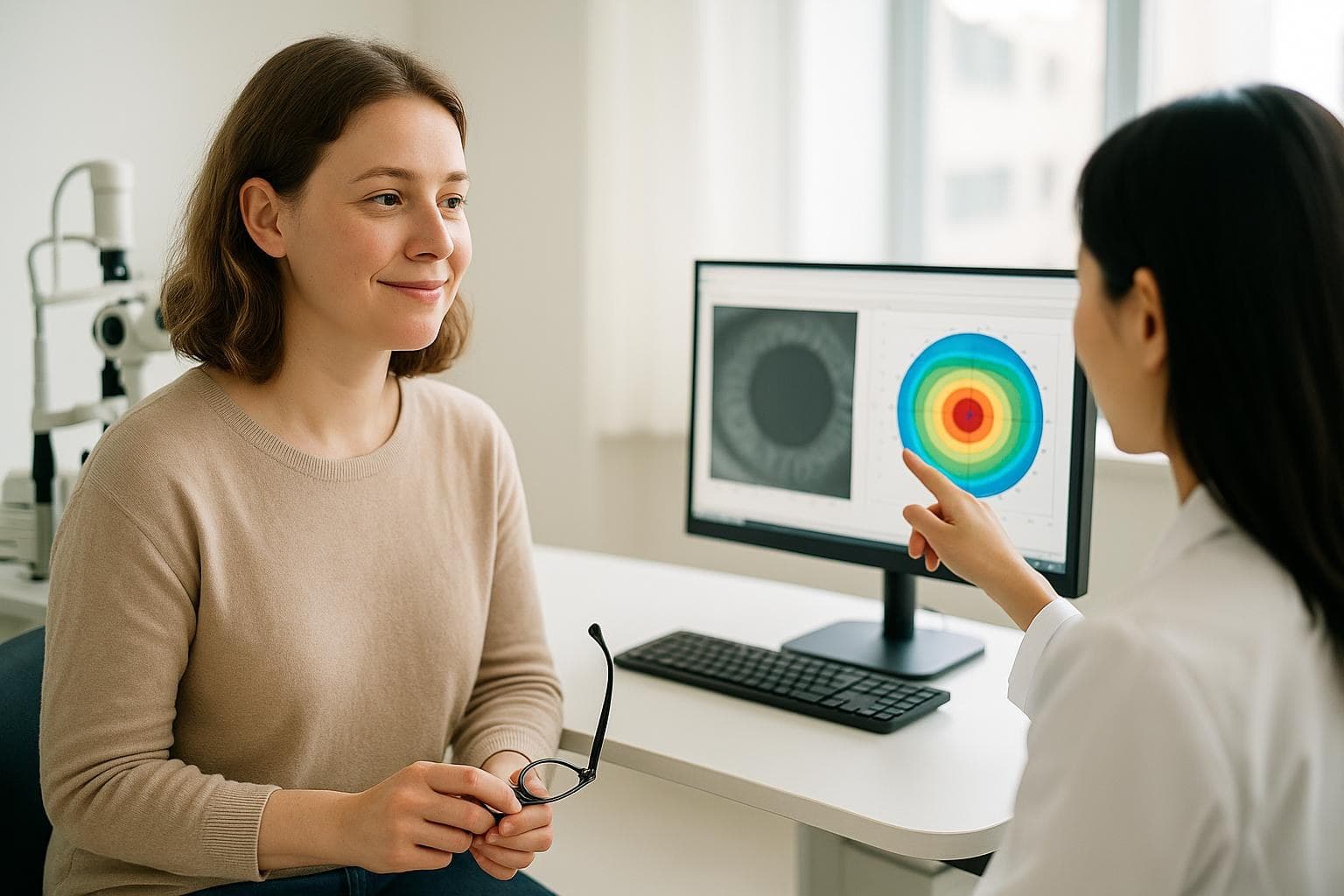
Is LASIK Cheaper in Korea? A Seoul Surgeon Breaks Down What the Price Really Covers
Is LASIK cheaper in Korea? A Gangnam surgeon explains what the quote includes, what quietly changes it, and how to compare prices honestly before you fly.

Dr. Kim Sun-young, Director
Cornea · Glaucoma · Cataract
Contents
"Your quote is less than half what I was given in Sydney. What did you leave out?"
That was the entire first line of an email I opened last spring. It is a fair question, and a slightly suspicious one — which is the right attitude to bring to any medical price. I would rather answer it in detail here than have someone book a flight on a number they do not understand.
Is LASIK cheaper in Korea? For most patients flying in from the US, Canada, Australia, Singapore or Western Europe, yes — the surgical fee in Seoul is usually well below what they were quoted at home, and the reasons are structural rather than a matter of cutting corners. Korea has an unusually high volume of refractive surgery, dense competition among clinics within a few subway stops of each other, and a convention of quoting both eyes as a single price rather than per eye. But "cheaper" only means something once you know what the number contains, what sits outside it, and what would make it change after you arrive.
A LASIK price is only comparable when you know exactly which line items it contains — surgical fee, exam, medications, follow-up, and revision policy.
What one Korean LASIK number actually contains
When a Korean clinic quotes you ₩2,700,000, that figure is for both eyes, and it is a surgical fee — not a package that silently includes everything. Here is how the pieces divide at our clinic, next to how the same items are often billed in North America and Australia.
| Line item | At Healing Eye | Commonly elsewhere |
|---|---|---|
| Surgical fee | One price, both eyes | Frequently quoted per eye |
| Comprehensive pre-op exam | ₩150,000, billed separately | Sometimes free, sometimes bundled |
| Surgeon's treatment design | Included in surgical fee | Occasionally priced as an upgrade |
| Standard post-op drops | Included | Often a separate pharmacy cost |
| Follow-up visits during your stay | Included | Usually included for 3–12 months |
| Interpreter support | Included, no surcharge | Agency fee, if used |
| Long-term follow-up | Lifelong check-ups per our policy | Varies widely — read the contract |
The two rows that cause the most confusion are the first and the last. A US quote of "$2,400" that turns out to be per eye is not cheaper than a Korean quote of ₩2,700,000 for two — and a low headline price with a twelve-month follow-up window is a different product from one with a long-term commitment attached.
Why our own LASIK prices in Seoul differ from each other
Patients often assume the price varies by clinic prestige. Mostly it varies by what is being done to your cornea.
Published prices, both eyes
What you are paying for at each tier
Fourth-generation Clear LASIK is priced above Premium LASIK because of how the flap is engineered and how much individual data goes into the correction profile — a thinner, more uniform flap and a laser pattern mapped to your own corneal measurements, which is described in detail on our Clear LASIK procedure page and on the Korean head office page for 4th-generation Clear LASIK. Where higher-order aberrations and night-time contrast are the concern — large pupils, a lot of night driving — the design work moves further toward wavefront analysis, which is what our personal custom LASIK page covers.
Higher price does not mean better for you. If your cornea is thin, or your work involves impact, a surface procedure at a lower price may be the safer choice. Budget should never select the procedure; the exam should.
The add-ons that are genuinely clinical
A few items are priced separately because not everyone needs them: corneal cross-linking (₩500,000, both eyes) where a cornea needs reinforcement, autologous serum drops (₩200,000) for a fragile tear film, SCOUT (₩200,000). I do not add these to make a number bigger. If your exam does not call for them, you will not see them on your bill. There is a longer walk-through of the items that quietly move a quote in our article on what Gangnam LASIK clinic prices include.
The costs that never appear on any clinic quote
This is where medical-tourism math actually gets decided. Round-trip airfare, five to seven nights of accommodation in Seoul, meals, transport, and — the one people forget — the working days you are not earning. Incheon Airport is about 70 minutes away and we are one minute from Sinnonhyeon Station, so local transport is cheap, but the days are not free.
Why five to seven days? Because you need a full exam day with the results properly discussed, a separate surgery day, a next-day check, and at least one more review before a long-haul flight. Return to daily life after Clear LASIK is generally 1–2 days, but healing is individual, and I have asked patients to move a flight rather than fly out with an eye I was not satisfied with. Our day-by-day LASIK recovery timeline is the piece I send to patients building their itinerary.
Why international patients pay the same as Korean patients
We publish one price list and apply it to everyone. There is no foreigner rate, no interpreter surcharge, and no "international package" that repackages the same surgery at a higher number. Our Japanese, Traditional Chinese and English interpreters are clinic staff, and their time is part of your care, not a line item.
I hold this position for a practical reason as much as an ethical one: the moment a clinic has two price sheets, the second one stops being about medicine. If you are booking through an agency, ask plainly whether the figure you were given is the clinic's price or the clinic's price plus a commission. That is not rude. It is the single question that explains most quote differences between two clinics in the same neighborhood.
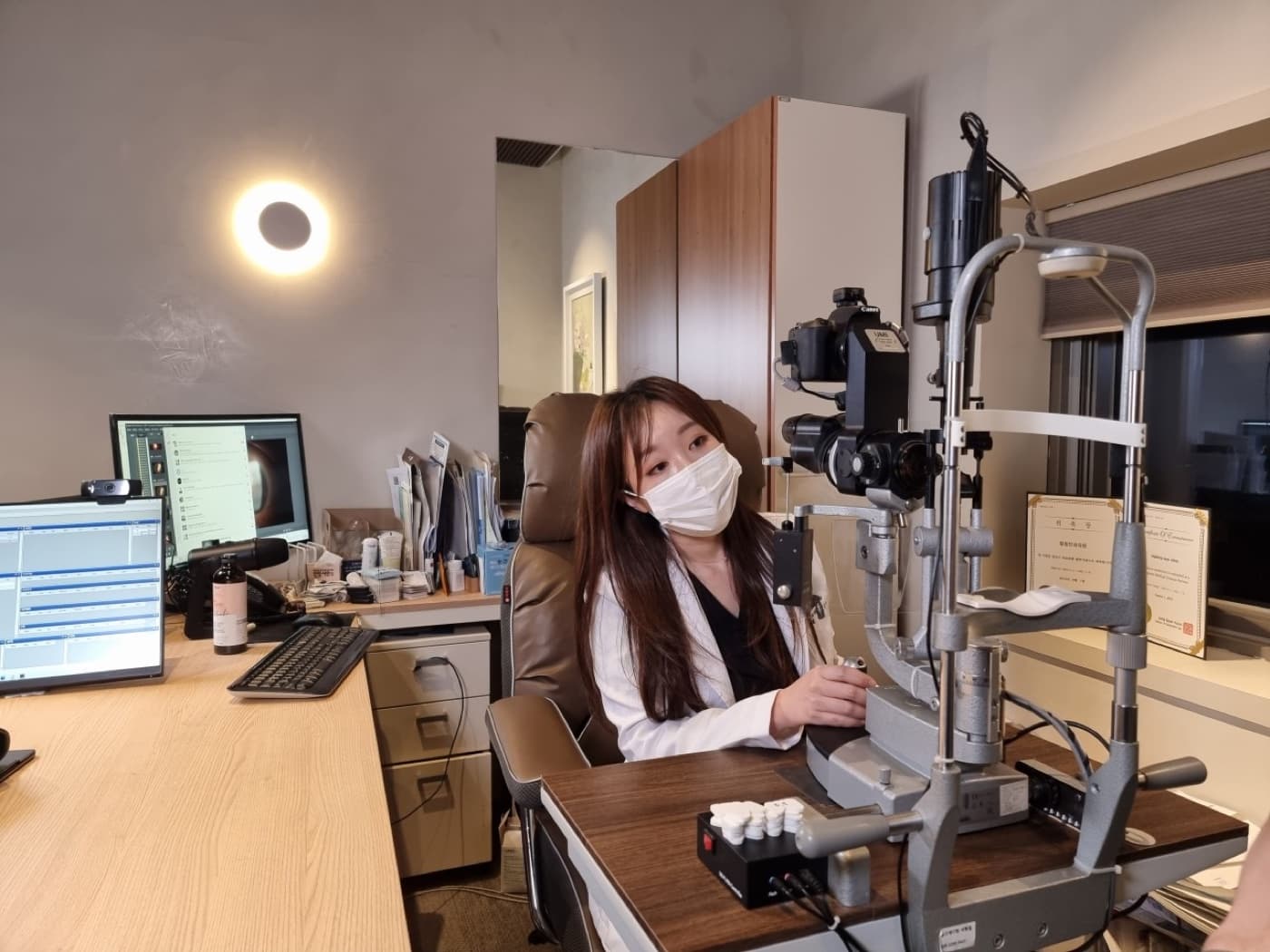
What a low price cannot buy: revision, regression, and honest risk
Every laser correction carries real trade-offs, and a cheap quote does not remove them. Dry eye is common in the early months and occasionally persists. Night-time glare, halos and starbursts can occur, particularly with large pupils. Some regression of the correction is possible, more often in higher prescriptions. Rarely, corneal ectasia — progressive weakening — is a serious risk we screen hard against, which is exactly what the pre-op exam exists to prevent. No surgeon can promise you a specific level of vision, and I will not.
So when you compare prices, compare what happens if something drifts. Our policy is lifelong check-ups and a responsibility guarantee after surgery, and we keep following overseas patients by video call or messenger once they are home. Whether re-treatment is appropriate depends on residual corneal thickness and prescription stability — it is never automatic, and I do turn people down. I go through those limits in our article on LASIK enhancement and regression, and the surgical side is on our LASIK and LASEK revision page.
When flying to Seoul is the wrong decision
Some people should not book this trip, and I would rather say so now than in my exam room.
- Corneal topography showing irregularity or early keratoconus signs — laser correction is off the table, and I will tell you that on exam day.
- A cornea too thin to leave a safe residual bed after the flap.
- A prescription that has shifted in the past 12 months.
- Active, uncontrolled dry eye or ocular surface disease that needs treatment first.
- A schedule with no flexibility, or a budget with no margin for a delayed flight.
About one in a number of the international patients I examine hears "not this procedure" or "not yet." If you want to know in advance what makes me say no, read our guide on whether you are a candidate for LASIK before you buy a ticket. A cheap surgery on the wrong eye is the most expensive thing in this article.
Compare the total trip cost against the total surgical package — including what happens years later — not one headline number against another.
If you send us your recent prescription and any exam records before you fly, I can usually tell you whether the trip is worth making at all. That conversation costs nothing, and occasionally it saves someone an airfare.
— Dr. Kim Sun-young, Medical Director, Healing Eye Clinic, Sinnonhyeon, Seoul
Frequently asked questions
Is LASIK cheaper in Korea than in the US or Australia?
For most patients flying in from North America, Australia or Western Europe, the surgical fee in Seoul is meaningfully lower than what they were quoted at home. The main reasons are structural: high procedure volume, national price competition, and the fact that Korean clinics quote both eyes as one number rather than per eye. That said, once you add flights, five to seven days of accommodation and time away from work, the gap narrows for some people. I always tell patients to compare the total cost of the trip, not the surgical fee alone.
Do foreigners pay more than Korean patients at Healing Eye Clinic?
No. Our policy is that international patients pay exactly the same published price as Korean patients, with no foreigner surcharge and no separate interpreter fee. Our Japanese, Traditional Chinese and English interpreters are part of the clinic, not an outsourced add-on you are billed for. If you are working with an agency, ask them in writing whether their quote is the clinic price or the clinic price plus their commission, because that difference is invisible on an invoice.
What does the LASIK price in Korea actually include?
At our clinic, the surgical fee covers the procedure for both eyes, the surgeon's design of your treatment profile, the operating-day care, your standard post-op medications and the scheduled follow-up visits during your stay in Korea. The comprehensive pre-operative exam is billed separately at ₩150,000. Some conditions, such as corneal cross-linking or autologous serum drops for a fragile tear film, are additional and are only recommended if your exam findings call for them. Always ask a clinic for the same breakdown in writing so you are comparing the same contents.
Why is Clear LASIK more expensive than Premium LASIK?
The price difference reflects the flap technology, the diagnostic data used to build the correction profile, and the amount of individual design work involved. Fourth-generation Clear LASIK is built around a thinner, more uniform flap with the laser profile mapped to your specific corneal data, at ₩2,700,000 for both eyes, while Premium LASIK & LASEK is ₩1,990,000. More expensive does not automatically mean better for you — for a thin cornea or a contact-sport job, a surface procedure may be the safer choice at a lower price. The exam decides, not your budget.
How many days should I stay in Korea for LASIK?
I ask international patients to plan for roughly five to seven days. That allows a full exam day with the results discussed properly, a separate surgery day, the next-day check, and at least one more review before you board a long flight. Return to daily life is generally 1–2 days after Clear LASIK, but healing varies and I would rather see you once more than sign you off early. If your schedule cannot absorb an extra day or two in case we need to delay surgery, the trip is too tight.
What happens if my vision drifts back after I fly home?
Some degree of regression is possible after any laser correction, more commonly in higher prescriptions, and it is one of the honest limits of this surgery. Our policy is lifelong check-ups and a responsibility guarantee after surgery, and we follow overseas patients by video call or messenger once they are home. Whether an enhancement is appropriate depends on how much residual corneal tissue you have and whether your prescription has been stable — it is not automatic, and for some eyes I will advise against it. Ask any clinic you are considering exactly what their equivalent policy covers and what it excludes.
Message us on official LINE / WhatsApp for a special offer
Your exact candidacy and cost are confirmed in a free 1:1 consultation.