LASIK for Astigmatism Limits Come Down to Four Numbers
Real lasik for astigmatism limits depend on cylinder, corneal thickness, topography and stability. See which option fits your eye before you fly.

Dr. Kim Sun-young, Director
Cornea · Glaucoma · Cataract
Medically reviewed byDr. Kim Sun-young, Director· Medical Director
Edited by: Dr. Kim Sun-young
Contents
I'm Dr. Kim Sun-young, Medical Director at Healing Eye Clinic in Gangnam, Seoul. If you've been told your astigmatism is "too much," here is how lasik for astigmatism limits actually work: there is no single cutoff on your prescription. Four findings on the exam set the ceiling together, and the cylinder number is only one of them.
| What gets measured | Why it can stop LASIK | What is usually considered instead |
|---|---|---|
| Cylinder plus sphere | A larger combined correction removes more tissue along one meridian | LASEK, or a toric ICL for high combined powers |
| Corneal thickness | Tissue under the treatment has to stay untouched and strong | LASEK or a toric ICL |
| Topography pattern | Irregular or keratoconus-like shapes are not a laser problem | Further evaluation, often no corneal laser at all |
| Stability | A cylinder that keeps shifting gives the laser a moving target | Waiting and measuring again |
| Tear film | A dry surface distorts the astigmatism reading itself | Treating the surface first, then re-measuring |
Read your own row this way. A flag in the first two lines usually changes which method fits. A flag in the topography line changes the whole conversation.
Why isn't there one astigmatism number that rules LASIK out?
The laser never treats astigmatism alone. It treats your full prescription, sphere and cylinder together, inside the cornea you actually have. A moderate cylinder in a thick, evenly shaped cornea can sit comfortably within LASIK range, while a smaller cylinder in a thin or uneven cornea may not.
People with strong prescriptions often arrive having read a figure on a forum and assumed it applies to them. That figure came from someone else's cornea. What matters for you is the depth of tissue your specific correction would remove and the healthy cornea that would remain afterward.
Correcting astigmatism means flattening the steeper meridian more than the flatter one, so tissue is removed unevenly. Stack a strong myopic sphere on top and the deepest point of the treatment goes deeper. That is why myopia plus astigmatism gets its own assessment, which I cover in what a surgeon checks with high myopia and astigmatism.
Regular and irregular astigmatism are different problems
Regular astigmatism is a cornea curved more in one direction than the other, with the two directions at right angles, a bit like the back of a spoon. A laser can reshape that. Irregular astigmatism has no clean pattern, and with it the cause matters more than the amount.
On a topography map, regular astigmatism shows up as a symmetric bowtie. What makes me slow down is a bowtie that is lopsided, with the lower lobe steeper than the upper one, or the two halves tilted away from a straight line. Those patterns can be early signs of keratoconus, a condition in which the cornea is already structurally weaker. Removing tissue from a cornea like that can weaken it further.
Our Clear LASIK candidacy notes say it directly: if topography shows irregularity or signs suggesting keratoconus, alternatives such as LASEK or an implantable lens are the safer direction than flap-based LASIK. Sometimes the right answer is no corneal surgery at all until a specialist has watched the cornea over time.
How does corneal thickness change the ceiling?
Thickness is the budget your correction spends. LASIK creates a thin flap and reshapes the tissue beneath it, and the layer left under the treatment has to stay strong enough to hold the cornea's shape for life. A combined myopia-and-astigmatism correction spends more of that budget than either one alone.
Pachymetry gives a central number, but the map matters too: where the thinnest point sits, and whether it lines up with a steep zone on topography. A cornea that is evenly on the thin side is a different finding from one whose thinnest point has drifted downward next to an area of steepening.
When the budget is tight, LASEK keeps more tissue in reserve because it treats the surface without creating a flap. The trade-off is a longer recovery with more discomfort in the first days, which matters if you're flying home soon after.
Which option fits which eye?
The person decides, not the procedure. Here is how the findings usually point:
- Regular astigmatism, enough thickness, stable for about a year: LASIK usually fits. Clear LASIK maps the exam data into the laser profile and suits people who need to get back to daily life within a day or two.
- Same eye, but night glare bothers you or the exam shows notable higher-order aberrations: Personal Custom LASIK analyzes those aberrations and is designed with night vision and contrast sensitivity in mind. If your aberrations are low, standard LASIK or LASEK can give a very good result on its own.
- Regular astigmatism but a thinner cornea, or a contact sport: LASEK, because no flap is made.
- A high combined prescription, or a cornea where any laser would take too much: a toric ICL corrects the cylinder with a lens placed inside the eye, leaving the corneal tissue in place. The details are in how a toric ICL works and who it suits.
- Irregular, keratoconus-like topography: a vision-correction laser is generally not the next step.
- A prescription still changing year to year: wait and measure again.
Risks and side effects when the cylinder is high
The main added risk is leftover astigmatism. The higher the cylinder, the more the result depends on the treatment lining up exactly with your axis, and a small misalignment or uneven healing can leave some cylinder behind that may need an enhancement once the eye has settled.
The other risks are the ones every LASIK patient should weigh. The American Academy of Ophthalmology lists dry eye, glare, halos and under- or overcorrection among the possible effects. Temporary dryness in the first weeks is common and is usually managed with artificial tears. Halos and starbursts at night tend to be more noticeable when the pupil is large in dim light, which is why pupil size is measured.
The rare but serious complication is ectasia, a progressive thinning and bulging of the cornea after surgery. Screening topography and thickness before surgery is how the risk is kept low, not eliminated.
Some eyes shouldn't have LASIK right now at all. The U.S. Food and Drug Administration lists an unstable prescription, thin corneas, large pupils, dry eyes and previous refractive surgery among the reasons LASIK may not be for you. Our own candidacy notes add significant dry eye, pregnancy or breastfeeding, and irregular topography. Results vary from eye to eye, and only the in-person exam decides.
When astigmatism appeared after an earlier surgery
Astigmatism that shows up after a previous LASIK or LASEK is a separate question. It is more often irregular, and part of the corneal budget has already been spent, so the limits are tighter than for a first operation.
Healing Eye runs a dedicated LASIK and LASEK revision center, where the plan is decided after a detailed exam and recovery varies by case. If this is your situation, the records from the first surgery help a great deal: the original prescription, the date and the method used. The clinic's Korean-language revision page describes the center as well.
What to have ready before planning a trip to Seoul
The exam measures corneal thickness, topography, pupil size and tear film, and the results and plan are explained with an on-site English interpreter. One dedicated doctor stays with you from the exam through surgery and aftercare, so the person reading your map is the one who follows your recovery.
Contact lenses, especially toric and rigid ones, temporarily reshape the cornea and can make the astigmatism on the map look different from what it really is. How many days to leave them out, and how long to stay in Seoul, are confirmed at consultation for your specific eyes.
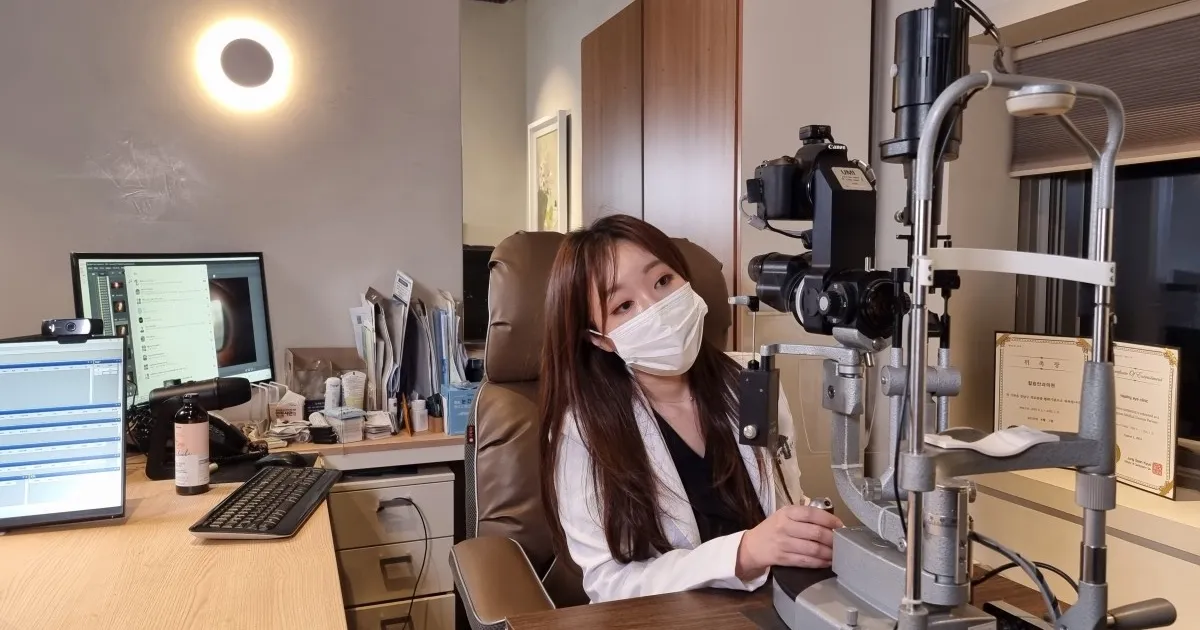
The clinic is at 470 Gangnam-daero, one minute's walk from Sinnonhyeon Station and about 70 minutes from Incheon Airport. Hours are Monday to Thursday 10:00 to 18:30, Friday until 21:00, and Saturday 10:00 to 14:00, closed Sundays and holidays.
If you have your last prescription, the line that matters is the cylinder and its axis, written something like -2.75 x 180. Send that one line on WhatsApp, along with your corneal thickness if another clinic already measured it. I'll look at whether LASIK, LASEK or a toric lens is worth discussing for those numbers, and which questions only the exam in Seoul can settle.
Frequently asked questions
Can LASIK correct myopia and astigmatism at the same time?
Yes. The laser treats sphere and cylinder in one profile during the same procedure. The combined correction is what decides the depth of tissue removed, so a strong myopia plus astigmatism prescription is assessed together, not one number at a time.
Can astigmatism come back after LASIK?
Some people notice a small amount of cylinder returning or remaining as the eye heals. When it is stable and the cornea still has enough thickness, an enhancement can sometimes be considered after the eye has settled. New astigmatism that keeps changing is a reason to recheck the topography.
Is a toric ICL better than LASIK for astigmatism?
Neither is better in general. A toric ICL suits high combined prescriptions or corneas too thin for a laser, because it leaves the corneal tissue in place. LASIK suits regular astigmatism in a cornea with enough thickness. Your exam results decide which one fits.
Does having astigmatism make LASIK recovery longer?
Recovery after Clear LASIK is usually a day or two back to daily life, with dryness common in the first weeks. Higher corrections can take longer for vision to feel fully settled, and recovery varies by person.
I wear toric contact lenses. Can I still be checked for LASIK?
Yes, but the lenses need to come out for a period before the exam, because they temporarily change the corneal shape and can distort the astigmatism reading. The exact number of days is confirmed at consultation.
Message us on official LINE / WhatsApp for a special offer
Your exact candidacy and cost are confirmed in a free 1:1 consultation.