
Toric ICL for Astigmatism: How It Works and Who It Suits
Wondering if a toric ICL can fix your astigmatism without touching the cornea? Here's how the lens corrects cylinder, and how I decide if it fits you.

Dr. Kim Sun-young, Director
Cornea · Glaucoma · Cataract
Contents
"I was told my cornea is too thin for laser, and that my astigmatism is too high anyway. Is a toric ICL for astigmatism actually a real option, or just something clinics upsell?"
It's a fair, slightly weary question — and the honest answer is that the toric ICL is very much a real, well-established option, not a sales gimmick. But like every procedure, it suits some eyes beautifully and isn't right for others. Let me explain how the lens actually corrects astigmatism, and how I decide whether it fits a particular patient.
What a toric ICL actually is
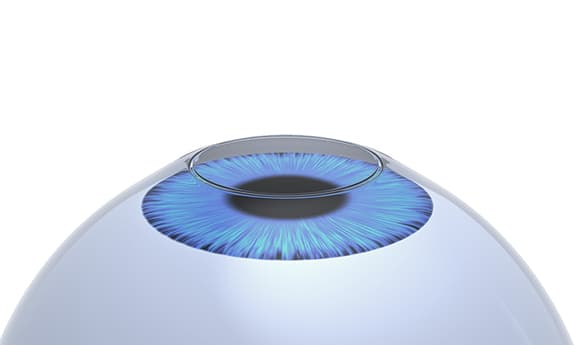
ICL stands for implantable collamer lens. Think of it as a permanent contact lens placed inside the eye — but instead of sitting on the surface like a soft contact, it rests just behind the iris and in front of your natural lens. Your own lens stays exactly where it is.
A standard ICL corrects near-sightedness. A toric ICL does that and corrects astigmatism, because it carries an additional cylindrical power built into the lens. Crucially, that cylinder only works if the lens is aligned to a precise axis inside your eye — the same axis as your astigmatism. Getting that alignment right is the whole craft of the procedure.
How it corrects astigmatism differently from laser
Here's the distinction that matters. Astigmatism means your cornea (or lens) isn't perfectly round — it's shaped more like the back of a spoon than a football, so light focuses at two different points instead of one.
Laser procedures correct this by removing corneal tissue to reshape that curve. A toric ICL takes a completely different route: it leaves your cornea untouched and instead places the correcting cylinder inside the eye, rotated to counteract your astigmatism's axis. Nothing is shaved off the cornea.
A toric ICL corrects astigmatism from inside the eye rather than by reshaping the cornea — which is why it's often considered for people with thinner corneas, higher prescriptions, or dry-eye concerns who aren't ideal laser candidates.
Who a toric ICL tends to suit
In my exam room, the patients who light up at this option usually share a few features. They often have a higher prescription, or a cornea that's too thin to safely lose tissue to a laser, or significant astigmatism alongside their near-sightedness. Some have dry eyes that make corneal procedures less appealing. Because the toric ICL doesn't reshape the corneal surface, it sidesteps several of those constraints.
The measurements I rely on before saying yes are specific: your degree and axis of astigmatism, your overall prescription, your anterior chamber depth (the space inside the eye where the lens will sit), and your endothelial cell count — the layer of cells lining the back of your cornea that we need to protect. These numbers, not your hopes or mine, decide candidacy.
The honest limitations
I won't pretend it's flawless for everyone. A toric ICL can rotate slightly after surgery, and because the correction depends on axis alignment, even a small rotation can reduce how well your astigmatism is corrected. Careful sizing makes this uncommon, and meaningful rotation can be corrected by repositioning — but it's a real, if small, consideration that I discuss honestly.
It's also an intraocular procedure, meaning we're working inside the eye, so candidacy depends on having enough internal space and a healthy endothelial cell count. If your anterior chamber is shallow or your cell count is borderline, I won't recommend it, and I'll tell you why.
Toric ICL versus other ways to handle astigmatism
Patients often ask how it compares to laser for astigmatism. The short version: if your cornea is healthy and thick enough and your astigmatism is within laser range, a corneal procedure may be simpler. If your cornea is thin, your prescription high, or your astigmatism beyond comfortable laser limits, the toric ICL often becomes the stronger choice. It's also reversible in the sense that the lens can be removed or exchanged, since your natural lens is untouched — though removal is still a planned surgery, not a casual undo.
Same surgeon, same price, honest answer
One thing I'd mention about how we work here: the surgeon who examines you is the one who performs your surgery and follows you afterward — no hand-offs. And international patients pay exactly the same as Korean patients, with no foreigner markup. The exact cost depends on the procedure and your follow-up plan, which we go through together at a free consultation.
If you've been told laser isn't for you, don't assume astigmatism correction is off the table. Message us free on our official WhatsApp or LINE with your prescription and any past clinic feedback. I'll give you an honest read on whether a toric ICL is genuinely worth exploring for your eyes — and if it isn't, I'll tell you what is.
— Dr. Kim Sun-young, Medical Director, Healing Eye Clinic
Frequently asked questions
What is a toric ICL?
It's an implantable collamer lens with a built-in cylindrical correction, placed inside the eye just behind the iris. A standard ICL corrects near-sightedness; a toric ICL also corrects astigmatism by adding cylinder power and being aligned to a specific axis in your eye. Your natural lens stays in place.
How is astigmatism corrected without reshaping the cornea?
Laser procedures correct astigmatism by reshaping corneal tissue. A toric ICL instead places the cylindrical correction inside the eye and rotates it to match your astigmatism's axis. Nothing is removed from the cornea, which is why it appeals to people with thinner corneas or higher prescriptions.
Can a toric ICL rotate out of position after surgery?
It can shift slightly, and a small amount of rotation can reduce how well the astigmatism is corrected. Careful sizing and precise axis alignment during surgery minimise this. We check the lens position at follow-up, and in the uncommon event of meaningful rotation, repositioning is possible.
Is a toric ICL reversible?
The lens can be removed or exchanged if needed, since your natural lens is untouched. That reversibility is one reason some patients prefer it. That said, removal is still surgery, so it isn't a casual undo — it's a planned procedure for specific reasons.
How do I find out if a toric ICL suits my astigmatism?
It needs measurement — your degree and axis of astigmatism, prescription, anterior chamber depth and endothelial cell count. Message us free on WhatsApp or LINE with your prescription, and I'll tell you whether a toric ICL is worth exploring or whether another option fits you better.
Message us on official LINE / WhatsApp for a special offer
Your exact candidacy and cost are confirmed in a free 1:1 consultation.