Can You Get LASIK With Astigmatism? The First Week, Mapped
Can you get LASIK with astigmatism? Usually yes. Here is the exam that decides it and how many days to plan in Seoul. Ask on WhatsApp.

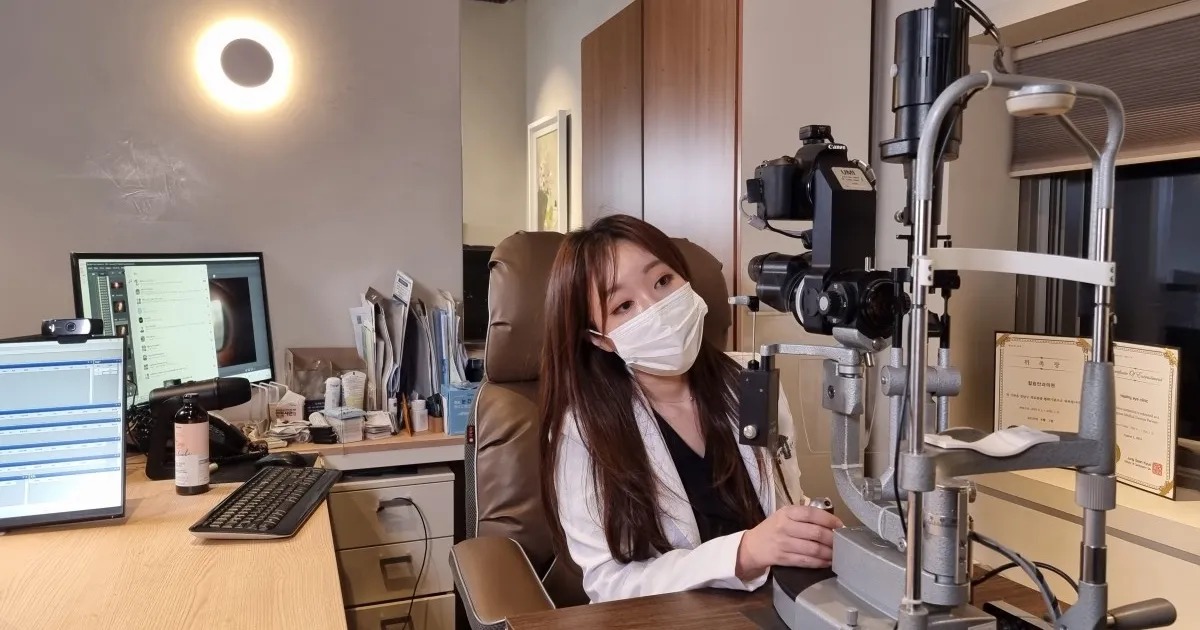
Dr. Kim Sun-young, Director
Cornea · Glaucoma · Cataract
Medically reviewed byDr. Kim Sun-young, Director· Medical Director
Edited by: Dr. Kim Sun-young
Contents
Can you get LASIK with astigmatism? In most cases, yes: the excimer laser reshapes the cornea so astigmatism is corrected along with nearsightedness or farsightedness. At our clinic one dedicated 1:1 surgeon handles your exam, surgery and follow-up.
I'm Dr. Kim Sun-young, Medical Director at Healing Eye Clinic in Gangnam, Seoul, and my specialty is cornea, glaucoma and cataract.
For a short trip that means one set of eyes on your cornea, from the first scan to the next-day check.
If you have your latest glasses prescription, send a photo of it on WhatsApp; the numbers that matter are the cylinder (CYL) and axis values.
What astigmatism changes in the surgical plan
Astigmatism means the front of the eye is curved more steeply in one direction than the other, and LASIK corrects it by reshaping that curvature with an excimer laser.
The laser profile is designed from the data gathered at your exam, so your astigmatism is part of the plan from the start. Clear LASIK, the fourth-generation approach, is described on the Clear LASIK treatment page. If you notice glare or halos at night, Personal Custom LASIK adds an analysis of higher-order aberrations on top of the standard prescription, with night vision and contrast sensitivity in mind.
For the mechanics of how the correction works, our post on whether LASIK can fix astigmatism goes further.
Which exam findings can turn a yes into a no?
A thin cornea, an irregular topography map, dry eye and a prescription that is still changing are the findings that most often change the answer. The exam covers corneal thickness and topography, pupil size, tear film, intraocular pressure and the endothelial cells.
If the cornea is thin, or topography shows irregularity or signs that suggest keratoconus, flap-based LASIK becomes the less safe choice and LASEK or an implantable lens (ICL) is considered instead. The American Academy of Ophthalmology's EyeWiki describes LASEK as a surface procedure, and ICL does not reshape the cornea at all. Higher astigmatism sometimes points to a toric lens; see Toric ICL for astigmatism and what a surgeon checks with high myopia and astigmatism.
The FDA's patient page on when LASIK is not for you names a prescription that changed in the past year, pregnancy or breastfeeding, dry eyes, large pupils and thin corneas among the things to screen for. Dry eye gets its own discussion in LASIK with dry eyes. Activities with frequent blows to the eyes, such as combat sports, also push the choice toward a flapless method.
So can you get LASIK with astigmatism if your cornea is borderline? Sometimes the same exam simply gives a different procedure as the answer.
Day by day: the first week after Clear LASIK
Most people see clearly from the next day and return to daily life within one to two days after Clear LASIK. The first one to two weeks still call for care with drops and a few activity limits.
| When | What to expect | What it means for the trip |
|---|---|---|
| Day of surgery | Dryness, slight tearing or a foreign-body feeling for a few hours; do not rub | Rest at the hotel; surgery on both eyes usually takes about ten minutes |
| Next day | Most people see clearly; the same surgeon checks your recovery | The visit that anchors your flight date |
| Weeks 1-2 | Drops on schedule; no rubbing, saunas, swimming or eye makeup; temporary dryness is common | Mostly handled at home with artificial tears |
| Later | Regular check-ups confirm the result stays stable | A follow-up plan for patients abroad is worked out at consultation |
LASEK has a longer and more uncomfortable recovery than Clear LASIK, so if your exam points there, the table above does not apply and the plan is built around that procedure instead.
How many days to plan in Seoul
Allow a few days for the detailed exam, the surgery and the next-day follow-up check; exam and surgery can often happen on the same visit. The exact count is set at consultation around your flights.
Opening hours shape the calendar: Monday to Thursday 10:00 to 18:30, Friday until 21:00, Saturday 10:00 to 14:00, closed Sundays and holidays. A Saturday surgery puts the next-day check on a closed Sunday, so choose the day with that in mind. The clinic is about 70 minutes from Incheon Airport and one minute from Sinnonhyeon Station, and a partner hotel, O'Cloud Hotel in Seocho-gu, is listed.
Japanese, Traditional Chinese and English interpreters are on site, so you can review the results in your own language before deciding. How many days to stop contact lenses beforehand is confirmed at consultation, because lenses can change the corneal shape that the astigmatism scan measures.
Send your flight window on WhatsApp together with the prescription photo. You get back a proposed order of exam, surgery and check-up days that fits the dates you can be in Seoul.
Risks that apply to astigmatic eyes
Dry eye, glare or halos at night, and a gradual drift back toward the old prescription are the usual issues, and a small amount of residual astigmatism is possible after any laser correction. Early dryness and night glare usually improve with time.
Dry eye is the one the FDA flags most plainly: LASIK tends to aggravate it. Large pupils can add glare and halos in the dark, which is why pupil size is measured before surgery. Regression has been studied in Korean patients; a paper in the Korean Journal of Ophthalmology looked at which factors affect long-term myopic regression after LASIK and LASEK.
Outcomes differ from eye to eye, and no one can promise a particular vision result.
Our Korean head-office site has the full Korean page on this if a family member reads Korean.
Before you book the flight
If you have had a corneal topography or an eye exam report elsewhere, a photo of it on WhatsApp saves a step.
Frequently asked questions
Does a high astigmatism number rule LASIK out?
Not by itself. The cylinder number is read together with corneal thickness, topography, pupil size and the tear film. If the cornea is thin or irregular, LASEK or an implantable lens such as a toric ICL may suit better.
Can astigmatism come back after LASIK?
Eyes can change over the years, and some people drift back toward the old prescription or keep a small amount of residual astigmatism. Regular check-ups catch this, and Healing Eye runs a revision centre for LASIK and LASEK.
Do I need to stop wearing contact lenses first?
Yes, usually, because lenses can alter the corneal shape that the exam measures. The exact number of days is confirmed at consultation.
When can I fly home after surgery?
Most people see clearly from the next day and resume daily life within one to two days after Clear LASIK. Your flight date is set around the next-day follow-up check, and the plan is confirmed at consultation.
Will there be an interpreter at the exam?
Healing Eye has on-site Japanese, Traditional Chinese and English interpreters, so you can go through your results and surgical plan in your own language before deciding.
Message us on official LINE / WhatsApp for a special offer
Your exact candidacy and cost are confirmed in a free 1:1 consultation.