
Multifocal Lens Implant Price in Korea: A Surgeon's Honest Guide
What drives the multifocal lens implant price in Korea — lens type, your eyes, and aftercare — plus why foreigners pay the same as locals here.

Dr. Kim Sun-young, Director
Cornea · Glaucoma · Cataract
Contents
A patient in her fifties once put it perfectly: "I'm tired of three pairs of glasses living in three different rooms." She'd come asking about a multifocal lens implant price in Korea, but what she actually wanted was her mornings back — to read a label, glance at her phone, and look up at a street sign without swapping lenses each time. That's the real reason most people sit in my chair asking about this. So let me answer the price question honestly, then the bigger question underneath it.
Why there's no single multifocal lens price
When someone asks me to name a figure for a multifocal lens implant, I have to slow them down — not to be evasive, but because the lens itself is the variable, and there's more than one.
A multifocal intraocular lens (IOL) replaces your eye's natural lens with an artificial one designed to give you usable vision at multiple distances. But "multifocal" is a family, not a single product:
- Trifocal lenses aim to cover near, intermediate, and far — good for someone who reads, works at a laptop, and drives.
- Extended-depth-of-focus (EDOF) lenses give a smoother range with often fewer night-time halos, trading a little near-reading crispness for comfort.
- Toric versions of these correct astigmatism at the same time, which adds to the lens cost but can be the difference between a sharp result and a blurry one.
Each of these sits at a different price tier because the lens technology and material genuinely differ. That's before we even factor in your individual eyes.
Your multifocal lens price is set first by which lens fits your eyes and lifestyle — there is no universal figure, only the figure that's right for your case.
What else moves the number
Beyond the lens, a few real factors shape your quote:
The health of your eye matters. If there's a cataract forming — which is common once presbyopia is this advanced — we often correct both at once, replacing a clouding lens and your reading vision in a single procedure. Your astigmatism decides whether you need a toric lens. And the depth of aftercare — the follow-up visits, the careful neuroadaptation period as your brain learns the new optics — belongs in the price conversation too.
What shapes your multifocal lens cost
The premium lens itself (trifocal / EDOF / toric) · whether it's combined with cataract surgery · your astigmatism and overall eye health · the surgeon's planning and your follow-up care. We confirm the lens at your exam, then give you one exact figure.
The honest trade-off I always explain
This is where I have to be a real doctor and not a salesperson. A multifocal lens can dramatically reduce how often you reach for glasses — that's the appeal, and for the right eye it's genuinely life-changing. But the same optics that let you see at several distances can produce more glare and halos around lights at night, especially in the early months.
For most people this settles as the brain adapts. For some — heavy night drivers, or eyes with large pupils — I'll steer toward an EDOF lens or even a monofocal, because the calmest night vision matters more to them than going fully glasses-free up close. There is no "best" lens in the abstract. There's only the best lens for your eyes and your day.
Why you pay the local price here
I want to be direct about this, because it's a worry I hear often: international patients sometimes get quoted more elsewhere. We don't do that.
At Healing Eye Clinic, the multifocal lens implant price for an international patient is exactly the same as for a Korean patient — same lens, same surgery, same number. No foreigner premium, no tourist menu. You can ask the price in consultation knowing it's the local figure.
A little context so the promise carries weight: we maintain a 4.8-star Google rating over 154-plus reviews, with many from overseas patients. My background is in cornea and cataract — specialist training at the Catholic Medical Center, a clinical professorship in cornea and cataract at Uijeongbu St. Mary's, and ESCRS membership. Premium lens work sits squarely in that world, and we use well-established premium IOL platforms for it.
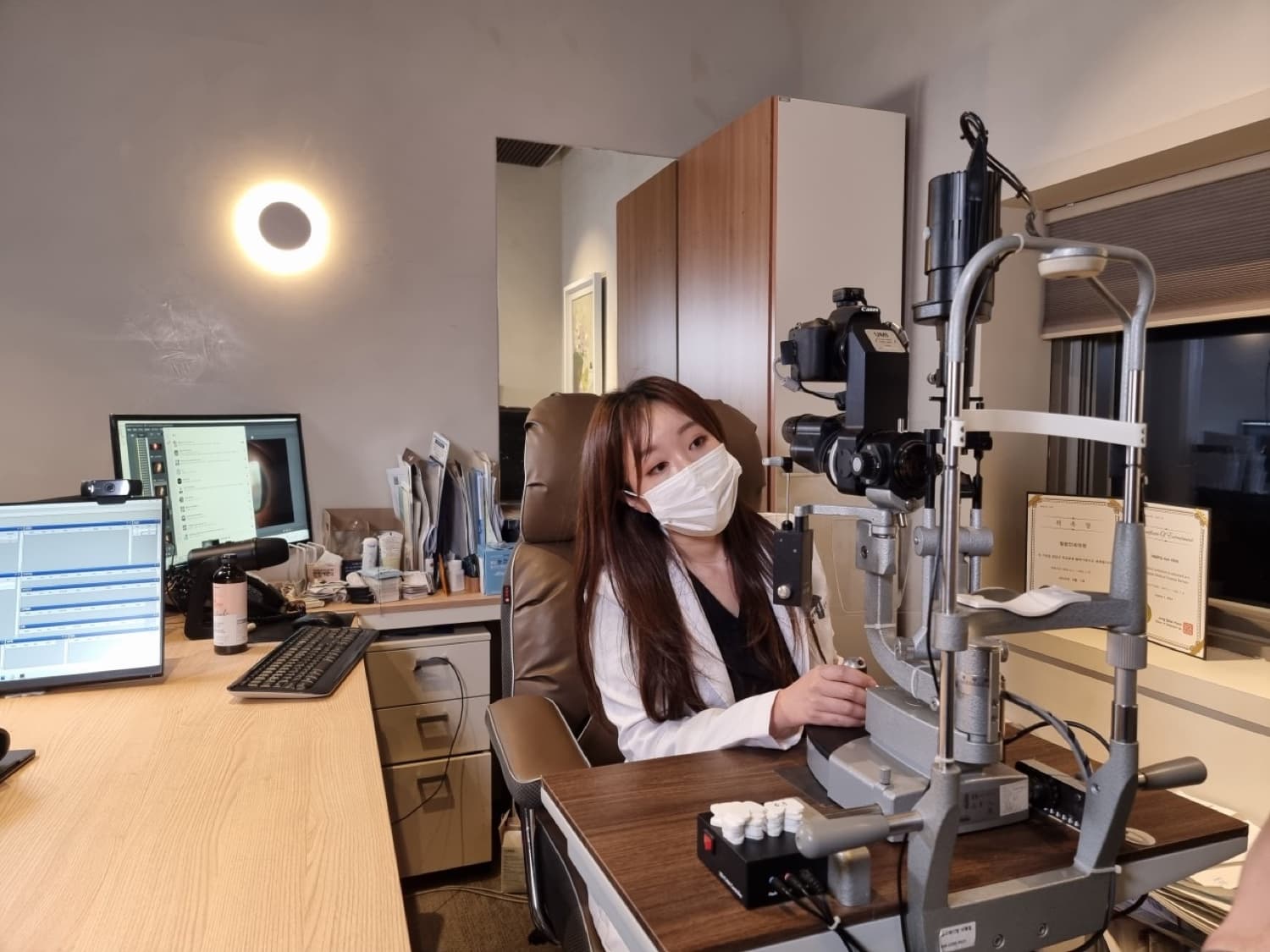
Planning your trip from abroad
Lens-based surgery runs on a slightly longer timeline than laser correction, so plan accordingly:
- We usually treat one eye at a time, with a check-up between, so build in several days rather than a quick in-and-out.
- We're one minute from Sinnonhyeon Station in Gangnam, about 70 minutes from Incheon Airport.
- Your vision keeps refining over the following weeks as you neuroadapt; the first follow-ups while you're here are important.
- We'll lay out the exact day-by-day schedule once we know your lens and your eyes.
Before you decide on a number
If there's one thing I'd leave you with, it's this: don't shop for a multifocal lens the way you'd shop for a phone. The cheapest lens that's wrong for your eyes is expensive in every way that counts; the right lens is the one your eyes were measured for.
Message us on our official WhatsApp or LINE — no appointment, no pressure. Tell us your age, your glasses situation, whether night driving matters to you, and any concerns. We'll reply in English with a realistic direction and an honest read on whether a multifocal lens, an EDOF, or simply waiting suits you best. And if it's not right for you, we'll say so plainly.
I'd be glad to help you see your mornings clearly again.
— Dr. Kim Sun-young, Medical Director, Healing Eye Clinic
Frequently asked questions
What is the multifocal lens implant price in Korea?
There isn't one number, and I won't invent one. The cost is driven mainly by which premium lens suits your eyes — trifocal, extended-depth-of-focus, or a toric version for astigmatism — and these sit at different tiers. Your eye health, whether it's combined with cataract surgery, and the aftercare included all factor in too. We confirm the lens after a full exam and give you an exact figure in the free consultation.
Do foreigners pay more for a multifocal lens implant in Korea?
At Healing Eye Clinic, no. International patients pay exactly the same as Korean patients — no foreigner mark-up, no tourist surcharge. The price you hear is the price a local pays.
Is a multifocal lens worth it over a standard monofocal?
It can be, if your goal is reduced dependence on glasses for both near and far. But it's not automatically right for everyone — multifocal optics can mean more glare or halos at night for some people. I'm honest about that trade-off before we choose, and for certain eyes a monofocal or extended-depth lens is the kinder choice.
How long do I need to stay in Korea for lens implant surgery?
Plan for several days, with room for follow-up checks. Lens-based surgery is usually done one eye at a time with review in between, so the schedule is a bit longer than laser surgery. We plan your exact dates together once we know your lens and eyes.
Can you tell me which multifocal lens I need before I arrive?
Not responsibly, no. The right lens depends on measurements — your eye's axial length, astigmatism, pupil behavior, retina and macula health. Message us your situation on WhatsApp or LINE and we'll give you a realistic direction, then confirm precisely at the exam.
Message us on official LINE / WhatsApp for a special offer
Your exact candidacy and cost are confirmed in a free 1:1 consultation.