Is There an Age Limit on Laser Eye Surgery? Your Rx Decides
Is there an age limit on laser eye surgery? 18 is the floor, but a stable prescription matters more. Dr. Kim Sun-young explains who fits at each age.

MS, Catholic Univ. College of Medicine · Ophthalmology specialist, Catholic Medical Center · Clinical Professor (Cornea & Cataract), Uijeongbu St. Mary's Hospital · 108th Korean Ophthalmological Society Research Award · KDCA epidemiology citation
Medically reviewed byDr. Kim Sun-young, Director· Medical Director
Edited by: Dr. Kim Sun-young
Contents
Is there an age limit on laser eye surgery, and could you be too young, or already too old, to fly to Seoul for it? There's one firm line, and it's the lower one: most surgeons and most laser approvals start at 18. There's no upper cutoff. Past 18, the question is whether your prescription has stayed the same for at least a year, and what your cornea and lens look like on exam day.
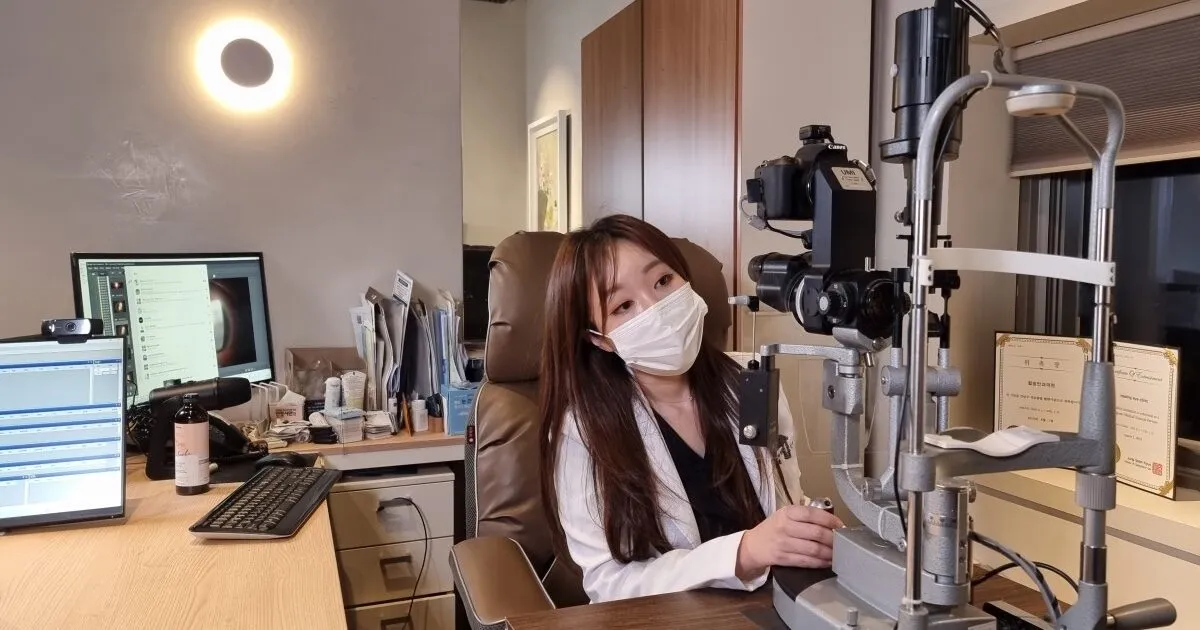
Hello, I'm Dr. Kim Sun-young, Medical Director of Healing Eye Clinic in Gangnam. I used to be Clinical Professor (Cornea & Cataract) at Uijeongbu St. Mary's Hospital, so I think about both ends of the age question: young eyes wondering about SMILE, and older eyes where the lens is starting to change. Here, one surgeon handles your exam, your surgery and your aftercare. International patients pay the same price as Korean patients, and a medical interpreter joins your consultation at no extra charge.
If you're in your early 20s, or your glasses changed recently, send a photo of your two most recent glasses prescriptions with their dates on WhatsApp and ask whether your prescription is stable enough yet. The consultation on WhatsApp is free.
Your prescription history counts for more than your birthday
Think about buying hiking boots for a 15-year-old. They can fit perfectly in the shop and still pinch by spring, because the foot is still growing. Laser surgery is a fitting like that: it reshapes the cornea to match how your eye focuses today. A nearsighted eye often keeps getting slightly longer into the early or mid 20s. If yours is still doing that, today's correction fits for now, and the nearsightedness creeps back later.
So the number that matters is how much your prescription has changed. Many refractive surgeons treat a shift of about 0.50 D or more within a year as a reason to wait. The US Food and Drug Administration lists a prescription that has changed in the past year as a reason laser vision correction may not be for you. It also notes that people in their early 20s or younger are more likely to have this kind of instability.
Age isn't the only thing that moves the numbers. Pregnancy and breastfeeding, poorly controlled diabetes and some medicines can do it too, and they matter at 35 as much as at 20.
Ask whether this applies to your eyes, which dates are open, and about the English interpreter.
Ask us on WhatsAppAm I too young at 19, 21 or 23?
At 18 or 19, most eyes need more time, unless you can show several years of the same numbers. In the early 20s it comes down to the individual eye.
Say you're 21, at university in Vancouver, and planning to spend part of winter break in Seoul. Your glasses read -3.25 two springs ago and -4.00 this spring. Your age isn't the issue. That 0.75 D jump is. If we operated now, we'd be correcting a target that's still moving. The likely outcome is distance vision that softens within a few years, and then a talk about re-treatment. I'd rather see one more year of matching numbers first. Now change one detail.
You're 23, and your last two prescriptions, a year apart, both say -4.00 with the same astigmatism. At that point your age doesn't hold you back, and the conversation turns to your cornea.
To be honest, at this end of the age range the date of birth worries me less than whether anyone can find the old prescriptions. Many people only keep the latest one. Before you travel, ask your optometrist for the earlier records; it's usually one email. Send glasses prescriptions rather than contact lens ones. Contact lens powers are adjusted for a lens sitting on the eye, so at higher prescriptions they read differently.
What the exam measures that age can't tell you
Once your prescription is stable, age matters much less and the eye itself decides. A full pre-op exam looks at corneal thickness and the shape map of the cornea (topography), which can show early keratoconus. It also checks the tear film, pupil size in dim light, and the health of the lens and retina. None of these can be guessed from a birthday.
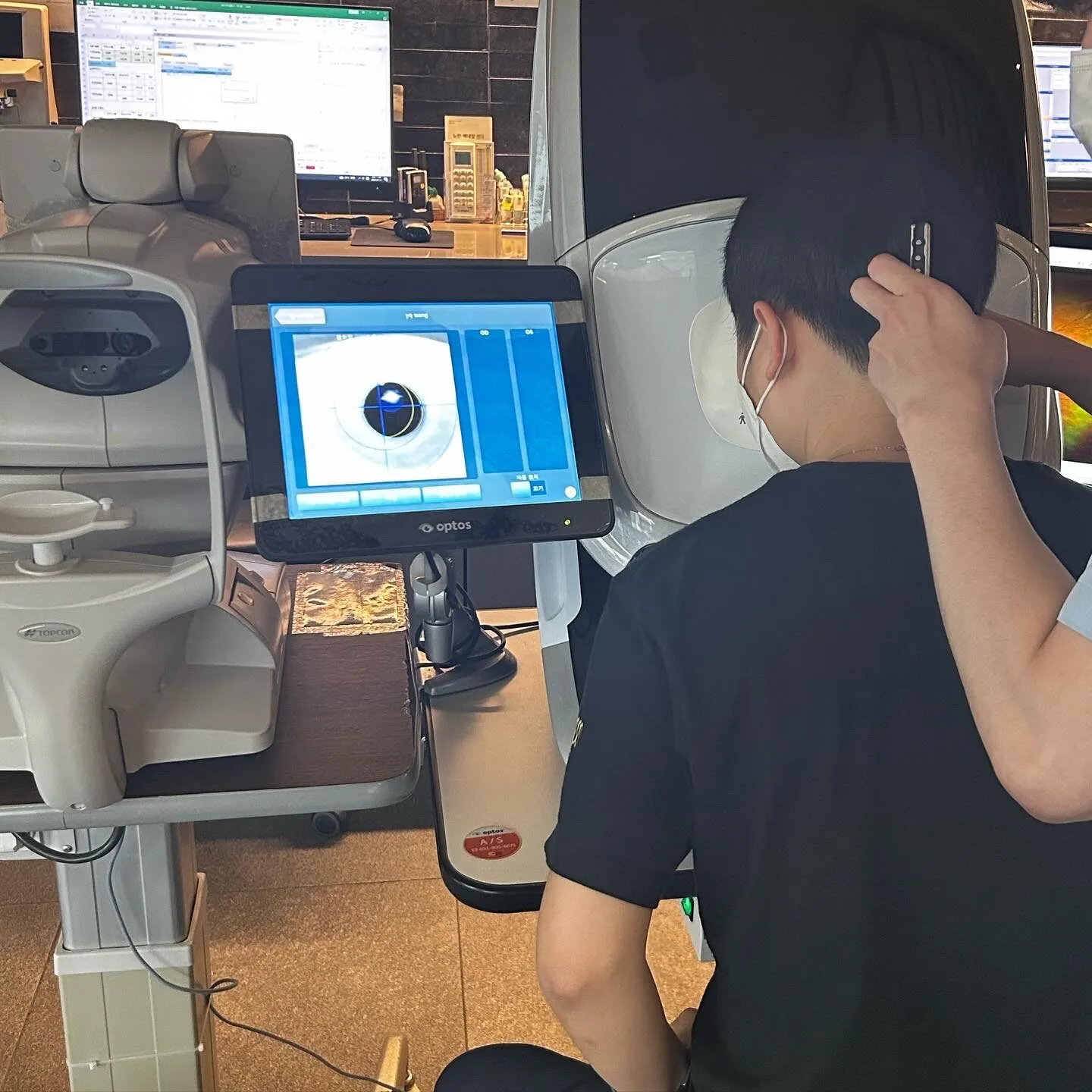
Each of these findings points to a different method. A thick, regular cornea with a moderate prescription often suits SMILE or LASIK; each step of SMILE is laid out in what happens during SMILE eye surgery in Korea. A thinner cornea, or a contact sport, can point to Perfect Healing LASEK. It keeps more corneal tissue but needs several days of recovery. With a very high prescription, or a cornea that can't spare tissue, an implantable lens (ICL) may come up.
It doesn't reshape the cornea, but it has risks of its own, including a higher chance of cataract and changes in eye pressure. The three routes are compared side by side in laser eye surgery in Korea, and when to skip it.
I don't recommend a method for its own sake. I choose it with you, from these measurements and from the life you lead. If one route doesn't fit your eyes, I'll say so and explain the others. The full list of procedures is on Healing Eye Clinic's English homepage.
Dry eye deserves its own mention, because it tends to get worse with age. Tear production often drops from the 40s onward, and laser surgery can make dryness worse for months. If dry eye already bothers you, read whether you can get LASIK with dry eyes before you book anything.
Is there an age limit on laser eye surgery after 40?
No, but the reason for asking changes. Somewhere between 40 and 45, almost everyone starts losing near focus, because the natural lens inside the eye stiffens. This is presbyopia, and laser surgery on the cornea doesn't stop it.
Here's the part that surprises people. If you've been nearsighted all your life, you may be used to taking your glasses off to read a menu or a phone. Correct your distance vision at 44, and that trick goes away. Reading glasses arrive within a few years, sometimes sooner. Some people are fine with this. Others feel they swapped one pair of glasses for another.
There are other options. Presbyopia-aimed versions of laser correction are on our menu. Another approach leaves one eye slightly nearsighted for reading, and you can try it with contact lenses first, before anyone commits to surgery.
Past 55, the lens often answers the question first
From the mid 50s, the exam more often finds early clouding in the natural lens. If it's there, reshaping the cornea treats the wrong layer. The cataract will keep progressing, and you'll need lens surgery anyway. Swapping the clouded lens for an intraocular lens can correct nearsightedness or farsightedness and astigmatism. With a premium lens, it can also correct presbyopia, all in one operation.
There's a point here for younger readers too. If you have laser surgery at 25, keep your pre-surgery prescription and corneal measurements for life. Decades later, a cataract surgeon choosing your lens power can calculate it more accurately with them, because a reshaped cornea throws off the standard formulas. Save them as a PDF in your email and forget about them until you need them.
Our main site also has a Korean-language page on the Clear LASIK procedure if you'd like to read the original description.
Dry eye, regression and night glare: risks that shift with age
At any age, the usual short-term effects are dryness, glare or halos around lights at night, and vision that fluctuates over the first weeks. Most of it settles over weeks to a few months. Age changes which of these you're more likely to get. Dry eye is more common after 40. Regression, where some nearsightedness comes back, is more likely when a young eye was still changing at the time of surgery. Night glare relates more to pupil size and the size of the treated zone than to age.
In general medicine, these are reasons to wait or choose another route:
- a prescription that changed in the past year
- pregnancy or breastfeeding
- signs of keratoconus, or a thin or irregular cornea
- poorly controlled diabetes or an autoimmune condition
- untreated severe dry eye
- early cataract, where lens surgery may be the better route
How strongly you feel any of these effects varies from person to person, which is why the measurements come before any recommendation. If a young eye drifts years later, a second treatment is sometimes possible. We run a LASIK and LASEK revision center, though whether there's enough cornea left for it comes down to measurement again. After you fly home, we keep following your progress by video call or messenger. Practical care for the first weeks is covered in aftercare at home after laser eye surgery in Korea.
Where I stand on age
At 18, age gets you in the door. After that, it's no longer a rule, just a clue about what to check. With young eyes I want to know about stability; past 40 I want to know about reading and about the lens. What decides this for you is whether your last two prescriptions, a year apart, match.
We're at 470 Gangnam-daero, one minute from Sinnonhyeon Station. To start, send a photo of those two glasses prescriptions with their dates on WhatsApp, and ask whether your prescription is stable enough for laser surgery now. The consultation there is free.
— Dr. Kim Sun-young, Medical Director
Frequently asked questions
Can a 17-year-old have laser eye surgery if their parents agree?
Usually not. Most laser approvals start at 18, and a teenage nearsighted eye is often still getting longer. If myopia is rising in a teenager, the conversation is about slowing it, for example with Ortho-K lenses worn overnight. We fit these as Dream Lens.
Will my vision get worse again as I get older after surgery?
Some nearsightedness can come back, especially if the eye was still changing at the time of surgery. Separately, presbyopia arrives in your 40s whether or not you've had surgery, so reading glasses are likely later on. That's the lens aging, not the laser wearing off.
If I have laser surgery in my 20s, can I still have cataract surgery later?
Yes. Having had laser surgery doesn't rule out cataract surgery. Lens power calculations are more accurate when the surgeon has your pre-laser prescription and corneal measurements, so keep a copy of those records for life.
Do I need to stop wearing contacts before the exam?
Usually, yes, because contact lenses can temporarily change the shape of the cornea and throw off the measurements. How many days depends on the lens type, so confirm this during your consultation before you book flights.
Can birth control or hormone changes affect whether I qualify?
Pregnancy and breastfeeding are clear reasons to wait, because the prescription can shift during that time. For other hormonal treatments, the practical test is the same as with age: whether your prescription has stayed stable across the past year.
Questions about your own case or available dates? English interpreter on site.
Ask us on WhatsAppMessage us on official LINE / WhatsApp for a special offer
Your exact candidacy and cost are confirmed in a free 1:1 consultation.