Can You Have Cataract Surgery More Than Once? Rarely Needed
Can you have cataract surgery more than once? The cataract can't regrow; later haze is usually the capsule, cleared by a short laser. Ask on WhatsApp.

Medically reviewed byDr. Kim Sun-young, Director· Medical Director
Edited by: Dr. Kim Sun-young
Contents
Can you have cataract surgery more than once, if the eye that was fixed a few years ago is turning cloudy again and the surgeon who did it is now a long flight away? On the same eye, almost never in the way people fear.
The cataract was your own lens, and once it's removed it cannot grow back. Haze that returns months or years later is usually the thin capsule behind the new lens, and a few minutes of outpatient laser usually clears it.
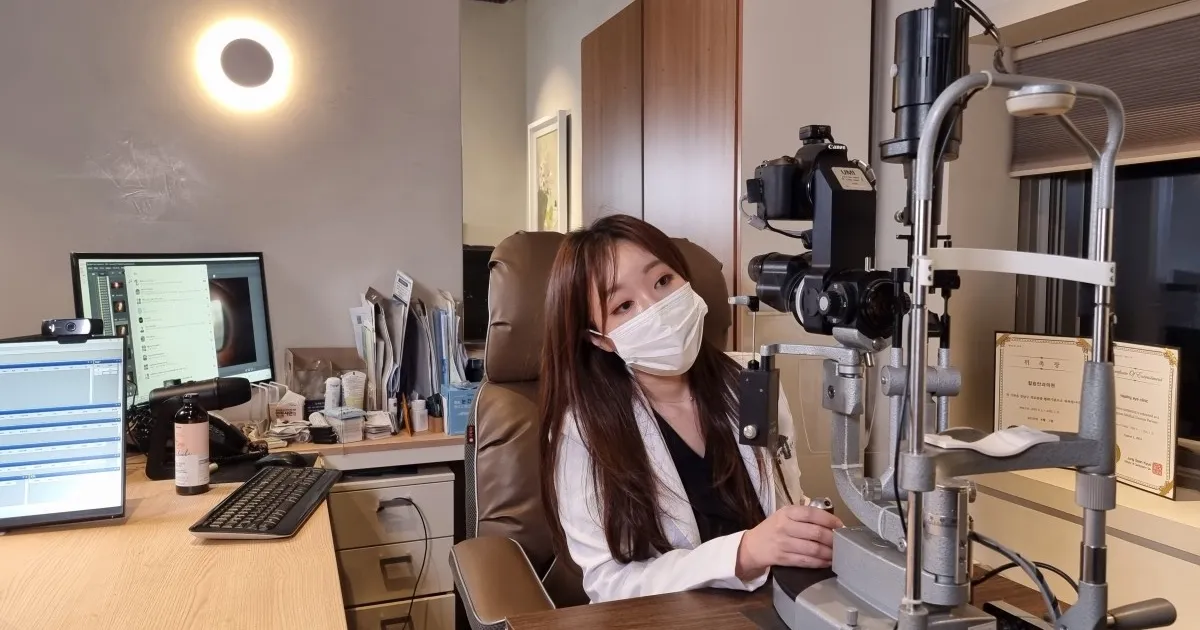
Hello, I'm Dr. Kim Sun-young, Medical Director at Healing Eye Clinic in Gangnam, Seoul. My field is cornea and cataract surgery, and my background includes the post of Clinical Professor (Cornea & Cataract) at Uijeongbu St. Mary's Hospital.
Here the same surgeon does your exam, your operation and your aftercare, so the person checking an eye on the follow-up visit is the one who chose its lens. A medical interpreter joins your consultation at no extra charge, and international patients pay the same as Korean patients.
If the fog is in an eye that's already been operated on, the most useful first message is a photo of the surgery report or discharge sheet, with the year of the operation.
Why can't the cataract itself come back?
A cataract is the lens inside your eye turning cloudy, the way a window slowly frosts with age. During surgery that cloudy lens is broken up and removed, and an artificial lens, called an IOL, is placed in the same spot. The IOL is acrylic or silicone. It doesn't age the way living tissue does, so the cataract has nothing to form in again.
What stays behind is the capsule, a clear membrane thinner than cling film that held your old lens and now holds the new one. Think of it as the plastic sleeve around a photograph: the photo has been swapped, but the sleeve is original. A few lens cells left on the sleeve can multiply and spread across the back of it, and light passing through gets scattered again.
That is posterior capsule opacification, often called a secondary cataract, and it feels exactly like the cataract returning: blur, glare from headlights, colors a little washed out. The US National Eye Institute describes it as a common development after cataract surgery that can appear months or years later and is treated with a laser rather than another operation. The nickname is where most of the fear comes from. It isn't a new cataract.
Ask whether this applies to your eyes, which dates are open, and about the English interpreter.
Ask us on WhatsAppWhen does more than once still apply?
There are three situations where people do end up with more than one procedure. Only one of them is a second operation on the same eye.
| Situation | What's happening | What usually fixes it |
|---|---|---|
| Your second eye | Each eye has its own lens; the other one keeps aging | Its own surgery, normally on a separate day |
| Haze in an operated eye | The capsule behind the IOL clouds over | A short laser that opens the center of the capsule |
| A problem with the lens | The IOL has shifted, the power is off, or a multifocal design causes effects you can't adapt to | Repositioning or exchanging the lens, or sometimes a laser touch-up on the cornea |
The first row surprises people less than it should. A cataract in one eye says nothing about how fast the other eye will follow, so a second eye can be ready years after the first or within months. If your other eye is still mild, the question of whether it's worth operating yet is the one I cover in how the timing of cataract surgery is decided.
The third row includes a corneal laser touch-up, which some surgeons use for a small leftover prescription after cataract surgery. How laser methods and lens methods differ in general is laid out in our table of every vision-correction option.
What is the laser for capsule haze like?
The treatment is called YAG laser capsulotomy. You sit at a machine much like the one used for an eye exam, the pupil is dilated, and the laser makes a small opening in the cloudy center of the capsule. There is no cut and no stitches, and the laser part takes a few minutes.
Most people see more clearly within a day, along with some new floaters for a while. Eye pressure can rise briefly afterward, which is why it's usually checked before you leave, and people with glaucoma may be given pressure-lowering drops.
Here is the part that can save you a flight. This laser is available in most general eye clinics, so if capsule haze is the only problem, it can usually be done close to home, with your original operative report in hand.
One exception matters. If you're unhappy with a multifocal lens and might want it exchanged, see a cataract surgeon about that before anyone opens the capsule. Once the back of the capsule has an opening, taking out a lens and placing a new one becomes harder, because the support the new lens would sit in is no longer intact.

Can you have cataract surgery more than once on the same eye?
Yes, but it's a different operation from the first one, and it's uncommon. The usual reasons are a lens that has moved out of position, sometimes years later and more often in eyes with weak lens-supporting fibers after injury or certain conditions; a lens power that left a large leftover prescription; or a multifocal or extended-range lens whose halos or loss of contrast someone can't adapt to.
What decides how involved an exchange is: how long the lens has been in, since the capsule tightens around it over months; whether the capsule is still intact; and the health of the cornea. The inner layer of the cornea, the endothelium, is a single sheet of cells that doesn't regenerate, and a second operation stresses it again. With my background in cornea, that layer is the part of this decision I weigh most.
If an exchange isn't the right answer for your eye, I'll say so and explain what else exists, such as glasses or a contact lens for a small leftover prescription.
Say you're 29, teaching English in Busan, and your mother in Auckland had her right eye done at home four years ago. On a video call she says that eye is foggy again and night driving has become hard, and she's been told her left eye will need surgery soon. The fog in the operated eye fits capsule haze, which her local eye doctor can confirm with a dilated exam and usually treat there. The left eye is the decision that might involve Seoul.
If you're planning that trip around a school break, bring her right-eye operative report with the lens model and power, because matching the second eye to the first matters for how her two eyes work together. What the whole trip involves is in what a cataract trip to Seoul looks like from start to finish.
Raised pressure, retinal detachment, swelling: the risks of going back in
After the capsule laser, the common reactions are new floaters, some glare, mild redness and a short rise in eye pressure, which usually settle within days. After a lens exchange, expect more inflammation and blur than after the first surgery, often for a few weeks.
Less common but serious: retinal detachment, which is more likely in very nearsighted eyes; swelling at the center of the retina (macular edema); and swelling of the cornea when its inner cell layer is already weak. How any one eye responds varies, which is why the exam comes first.
As general medicine, these situations call for waiting or extra care before a second procedure:
- inflammation in the eye that hasn't settled
- glaucoma that isn't well controlled
- high myopia, because of the retinal detachment risk
- diabetic eye disease or past macular swelling
- a weak corneal inner layer, for example from Fuchs' dystrophy
Once you're home, a sudden shower of new floaters, flashes of light, a curtain or shadow over part of your vision, eye pain, or a sharp drop in sight needs an eye doctor or emergency department the same day. Keep your operative report and lens card in your carry-on, so whoever sees you knows exactly what's inside the eye.
How do you plan a Seoul trip for the second eye?
The operation itself takes about 15 to 20 minutes per eye. Most people are back to daily life within days, and vision keeps settling gradually after that. How many days you should stay depends on your exam, so confirm it in the consultation before booking flights.
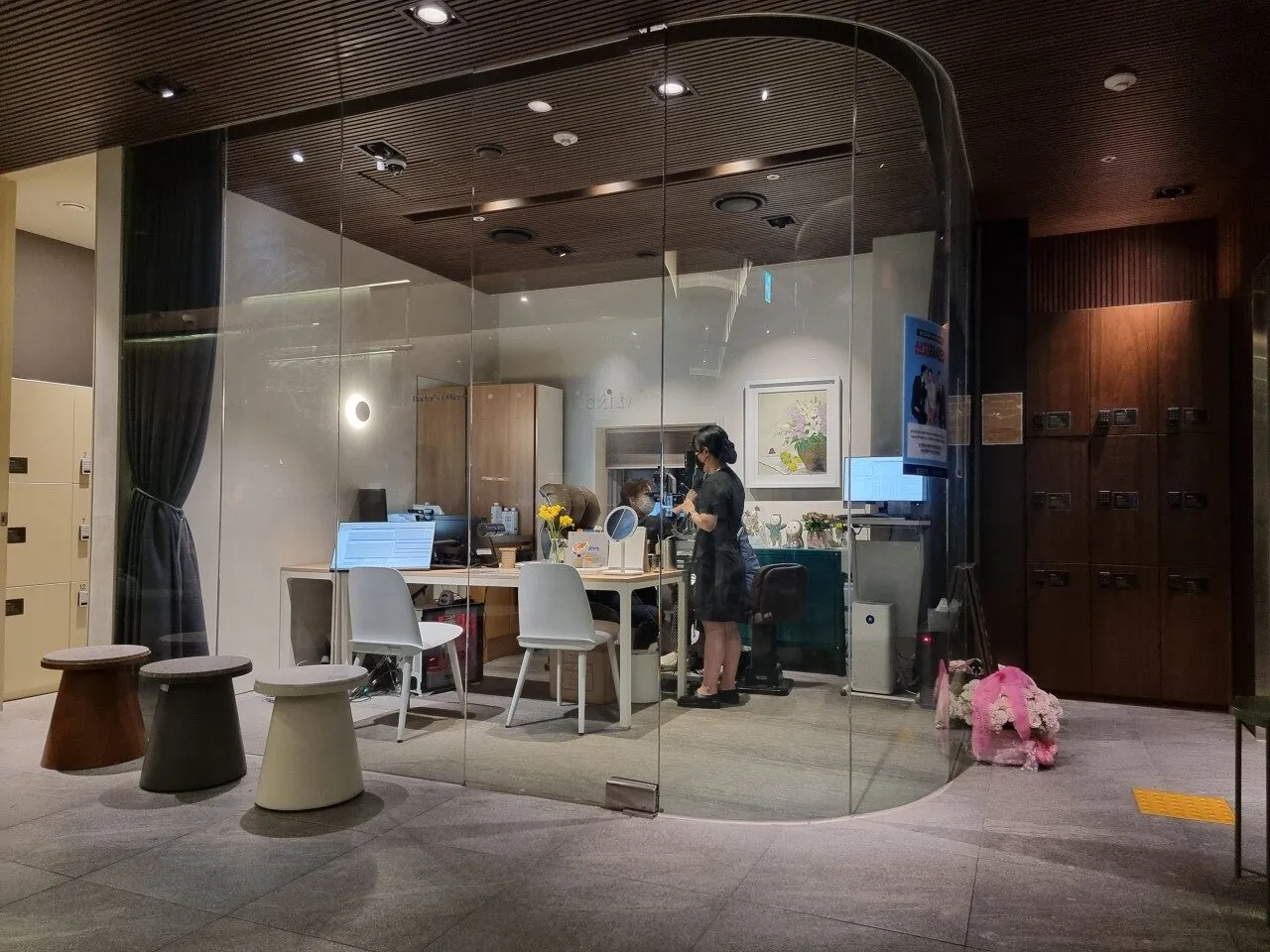
Our hours shape the calendar more than people expect: Monday to Thursday 10:00 to 18:30, Friday until 21:00, Saturday 10:00 to 14:00, with lunch from 13:00 to 14:00, and closed on Sundays and Korean public holidays. Land on a Saturday afternoon and the earliest exam is Monday; arrive on a Friday and the late clinic is still open. We're a one-minute walk from Sinnonhyeon Station.
What moves the cost is mostly the lens type for the second eye, whether extra measurements are needed because of earlier LASIK, and whether both eyes are being treated. The factors are set out in what changes the price of cataract surgery. The treatments and messenger channels are on the Healing Eye Clinic home page, and the lens types are described on our Korean main site's premium intraocular lens page, written in Korean.
What should you ask any clinic before a second procedure?
In short, it doesn't have to be us. Wherever you have an operated eye looked at, these answers tell you more than a brochure will:
- Does the exam include a dilated look at the retina, not only the lens and capsule?
- Will the doctor who examines you be the one who operates and follows up?
- Will you leave with an operative report that lists the lens model and power?
- Is the cornea's inner cell layer checked before any lens exchange?
- Who do you contact once you're home, and how?
- Is an interpreter in the room, and do foreign patients pay the same price?
Presbyopia and Cataract Surgery Together: Fixing Two Problems in One Operation go further into what usually comes next.
Where I stand when an operated eye clouds again
My view is that a cloudy eye after cataract surgery deserves a proper look before anyone talks about operating again, and most of the time the answer is smaller than people fear. A good result begins in the exam room rather than on surgery day, and that matters even more the second time an eye is touched. Nothing here has to be decided this month.
For an eye that has already been operated on, what settles the question is whether the capsule is intact and where the lens sits. For the eye that hasn't, it's how dense the cataract is and what your corneal measurements show. We're at 470 Gangnam-daero, 10–11F, Gangnam-gu, Seoul.
On WhatsApp, send the operative report or a photo of the lens card, the year of surgery and the weeks you could travel, and ask how follow-up works for a cataract patient once you're back home, along with how deposit and payment are handled, which is settled after the consultation.
— Dr. Kim Sun-young, Medical Director
Frequently asked questions
Does the laser for capsule haze hurt?
Most people feel nothing beyond the numbing and dilating drops and the bright light of the machine; some hear soft clicks. Near vision stays blurry for a few hours from the dilation, and new floaters can last days to weeks, so arrange for someone else to drive you that day.
Can the haze come back after the laser?
In adults it rarely does, because the laser clears the center of the membrane the cells were growing across. If vision fogs again after a capsulotomy, the cause is more often something else, such as dry eye, macular swelling or a retinal change, which is a reason for a full dilated exam.
Does a lens implant wear out and need replacing?
Modern IOLs are made to stay in the eye for life and aren't replaced on a schedule. Replacement comes up only for a specific problem, such as the lens shifting or a multifocal design you can't adapt to.
I had LASIK years ago. Does that change cataract surgery?
Yes. LASIK reshapes the cornea, which makes the lens-power calculation less precise unless the surgeon knows your numbers from before LASIK. Bring old LASIK records or pre-LASIK prescriptions if you have them; they lower the chance of a leftover prescription that could later lead to talk of a second procedure.
Can a cataract form later in my other eye?
Yes, if that eye hasn't been operated on. Each eye has its own lens and ages on its own timetable, and surgery on one eye doesn't speed up or slow down the cataract in the other.
Questions about your own case or available dates? English interpreter on site.
Ask us on WhatsAppMessage us on official LINE / WhatsApp for a special offer
Your exact candidacy and cost are confirmed in a free 1:1 consultation.