Does LASIK Hurt? 10 Minutes of Pressure, Hours of Grit
Asking "does lasik hurt" before flying to Seoul? What you feel on the table, the first evening, and which kinds of pain mean you should call.

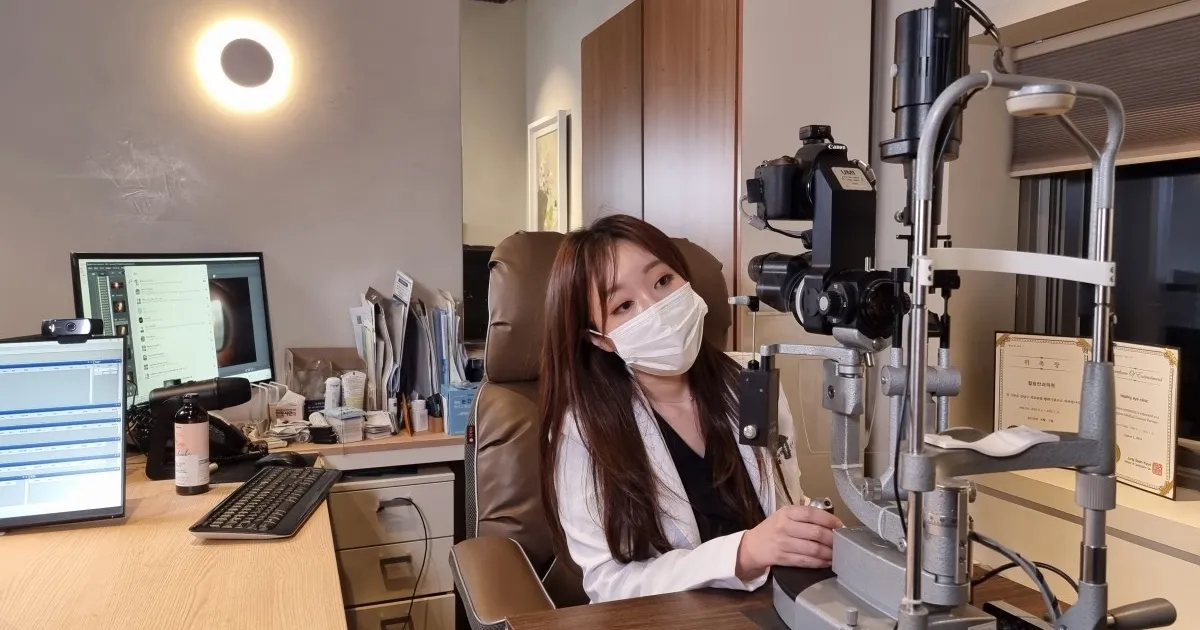
Dr. Kim Sun-young, Director
Cornea · Glaucoma · Cataract
Medically reviewed byDr. Kim Sun-young, Director· Medical Director
Edited by: Dr. Kim Sun-young
Contents
The short answer to "does lasik hurt" is that the surgery itself mostly doesn't: numbing drops do the work, and what people describe is pressure for a few minutes rather than pain. The stinging part comes afterwards, as a few hours of grit, tearing and burning. If you're flying in from abroad, the real worry is whether that settles before your flight home.
I'm Dr. Kim Sun-young, Medical Director at Healing Eye Clinic in Gangnam, and here the surgeon who examines your eyes is the same one who checks them the morning after surgery.
That next-day check matters for the pain question, because it's where ordinary first-night discomfort gets told apart from anything that needs attention. The exam, the surgery and that check all happen at 470 Gangnam-daero, one minute's walk from Sinnonhyeon Station, with an English interpreter on site.
If pain is the thing that has kept you from booking for years, send it to us as one question on WhatsApp, together with the month you're thinking of travelling.
What you actually feel during the ten minutes
Pressure, mostly. Both eyes together usually take about ten minutes, the eye is numbed with drops alone, and there is no injection.
The moment people remember is the start. A small holder keeps your lids open so a blink can't interrupt anything, and while the thin corneal flap is made, the U.S. Food and Drug Administration's patient guide on what to expect during LASIK describes a feeling of pressure on the eye and a short dimming of vision. That dimming is the part nervous patients find strangest, and it passes quickly.
The reshaping itself is done with an excimer laser (at our clinic, the AMARIS Red). You hear a steady ticking, you look at a light, and the laser time is brief. The flap is then laid back down and adheres on its own, with no stitches.
If you're in your 40s or 50s and have put this off for a decade, the fear usually isn't the laser. It's the idea of something touching your open eye. In practice the drops take that sensation away; what's left is the pressure.
How much does LASIK hurt that first evening?
For most people, it feels like sand or an eyelash under the lid for a few hours, with watering and some burning. The FDA lists burning, itching and a feeling of something in the eye as common right after surgery, and notes your doctor may suggest a mild pain reliever.
| When | What's common | What helps |
|---|---|---|
| Day of surgery | Dryness, tearing, foreign-body feeling for a few hours | Go straight to rest, keep eyes closed, never rub |
| Next day | Most people see clearly; mild dryness | The next-day follow-up with the same surgeon |
| First 1–2 weeks | Temporary dryness | Prescribed drops on schedule, artificial tears; no sauna, swimming or eye makeup for the advised period |
The single rule that protects you most on that first evening is the boring one: don't rub your eyes, even when they itch. The flap is settling, and rubbing is the habit that can move it.
Whose eyes tend to feel more discomfort afterwards?
At Healing Eye the exam measures corneal thickness, topography, pupil size and tear film before anyone talks about which surgery.
Tear film. If the tear film breaks up fast, or you already reach for drops every afternoon, the gritty phase tends to last longer and dryness can linger for weeks. That combination is worth treating first. There's more on that decision in the post on getting LASIK with dry eyes.
Corneal thickness and topography. A thin cornea or an irregular map, especially one with signs of keratoconus, points away from flap-based LASIK and towards LASEK or an implantable lens (ICL). Here's the uncomfortable trade-off: LASEK removes the surface layer, which has to regrow, and the American Academy of Ophthalmology's EyeWiki notes that surface procedures carry more post-operative pain than LASIK. So the option with the easier first week is not always the one your cornea allows. How long LASEK pain lasts covers that week in detail.
Age. Tear production often drops with age, so readers in their 40s and 50s are more likely to notice dryness. There's a second limit that has nothing to do with pain: the American Academy of Ophthalmology describes presbyopia, the loss of close focus, as a normal change that usually begins in the 40s. LASIK for distance doesn't stop it, so reading glasses may still be part of your life.
Lifestyle. If you do combat sports or anything with frequent blows to the face, a flapless method may suit you better than LASIK.
Risks and side effects: when pain is a warning sign
Pain that gets stronger instead of fading, or vision that gets worse instead of better, is not normal recovery. The FDA's guidance is plain: if you have severe pain, or your vision or other symptoms worsen, contact your doctor straight away rather than waiting for the next appointment.
The common, temporary effects are dryness, light sensitivity and some glare or halos around lights at night in the first weeks, and they usually improve with time. Less common problems include inflammation under the flap, infection, and a flap that shifts after rubbing or a knock to the eye. These are why the next-day check exists and why the rubbing rule matters so much.
The FDA also lists situations where LASIK may not be for you at all: a prescription that is still changing, pregnancy or breastfeeding, some autoimmune conditions, significant dry eye, thin corneas, and large pupils. How your own eyes respond varies from person to person, and candidacy is decided at the in-person exam.
If you're planning this around a fixed return flight, send your possible travel dates on WhatsApp along with your current glasses or contact lens prescription.
Planning the days around your flight home
Most people return to daily life within one to two days after Clear LASIK, and the next-day follow-up is the appointment your departure should be planned around. The exact number of days to stay in Korea is confirmed at the consultation, after the exam.
A plane cabin is dry, which is exactly what a healing eye doesn't love, so keep artificial tears and your prescribed drops in your hand luggage. The first one to two weeks still call for care at home: drops on schedule, no rubbing, no sauna or swimming, and no eye makeup for the period you're advised. Our main Korean site keeps a page of post-surgery precautions if you'd like the full list your interpreter can walk through with you.
Timing within the week can help. We're about 70 minutes from Incheon Airport, and on Fridays the clinic stays open until 21:00, which can matter if you land in the afternoon. Saturdays run from 10:00 to 14:00, and we're closed on Sundays and public holidays.
If you're still choosing between methods, the comparison of LASEK and LASIK sets out how the recovery differs. Our English-language clinic page lists the hours and the full treatment menu.
An old LASIK that still feels uncomfortable
Discomfort that lasts months after a LASIK done years ago is worth having examined, and it is often a dry-eye problem.
Healing Eye runs a dedicated LASIK and LASEK revision center for people whose vision declined or became uncomfortable after surgery elsewhere, and the first step there is finding the cause, since the plan and recovery depend on what the detailed exam shows.
If your vision has drifted rather than your comfort, the same detailed exam is where that question starts too.
Whichever group you're in, the next step is small. Take a photo of your latest prescription, or of your old surgery records if you've had LASIK before, and send it on WhatsApp with the one question you most want answered about pain. You'll get a reply in English, and you'll arrive at the exam already knowing what to ask.
Frequently asked questions
Am I awake during LASIK eye surgery?
Yes. The eye is numbed with drops, with no injection, and a small holder keeps your lids open so blinking isn't a problem. Most people feel pressure rather than pain, and both eyes usually take about ten minutes.
Does LASEK hurt more than LASIK?
Usually, yes. LASEK removes the surface layer of the cornea, which needs several days to regrow, and surface procedures are known for more post-operative discomfort than LASIK. It is still the safer route for some corneas, such as thin ones.
Can I fly home the day after LASIK?
Plan your departure around the next-day follow-up, where the same surgeon checks your recovery. Most people return to daily life within one to two days, but the number of days to stay in Korea is confirmed at your consultation. Carry artificial tears for the dry cabin air.
How long do eyes feel dry after LASIK?
Temporary dryness is common in the first one to two weeks and is managed with artificial tears and prescribed drops. People who already have dry eye before surgery are more likely to notice it for longer, which is why the tear film is measured at the exam.
What kind of pain after LASIK is not normal?
Pain that gets worse instead of fading, or vision that gets worse instead of better, needs attention right away. The FDA advises contacting your doctor immediately in that situation rather than waiting for the next scheduled visit.
Message us on official LINE / WhatsApp for a special offer
Your exact candidacy and cost are confirmed in a free 1:1 consultation.