EVO ICL for High Myopia: Why I Reach for It When Lasers Run Out
I'm Dr. Kim. For high myopia, EVO ICL often does what LASIK can't. Here's how the lens works, who it suits, the central port that changed things, and the honest limits.

Dr. Kim Sun-young, Director
Cornea · Glaucoma · Cataract
Contents
The patients who move me most are the ones who've been told no. "Dr. Kim, three clinics said my prescription is too high for surgery — am I just stuck in glasses forever?" A graphic designer from Kuala Lumpur said almost exactly that, at -11 in both eyes, half-resigned before she'd even sat down. She wasn't stuck. She was simply a laser-surgery no who was very likely an EVO ICL yes. High myopia is the situation where this lens earns its reputation, so let me explain why I reach for EVO ICL when lasers run out — and where the honesty lines are.
When the cornea simply runs out of room
To correct nearsightedness with LASIK or LASEK, the laser removes corneal tissue to flatten the front of the eye. The stronger your prescription, the more tissue must go. But your cornea has a finite, safe thickness, and once correcting your myopia would mean thinning it past that safe margin, reshaping it isn't an option I'm willing to take — the long-term stability of the eye matters more than convenience.
This is the wall high myopes hit. It's not that their eyes are unfixable; it's that carving isn't the right tool. EVO ICL solves the problem from a completely different direction.
High myopia often exceeds what a cornea can safely give up to a laser. EVO ICL corrects it without touching the cornea — which is why I reach for it exactly when LASIK runs out of room.
How EVO ICL works for a strong prescription
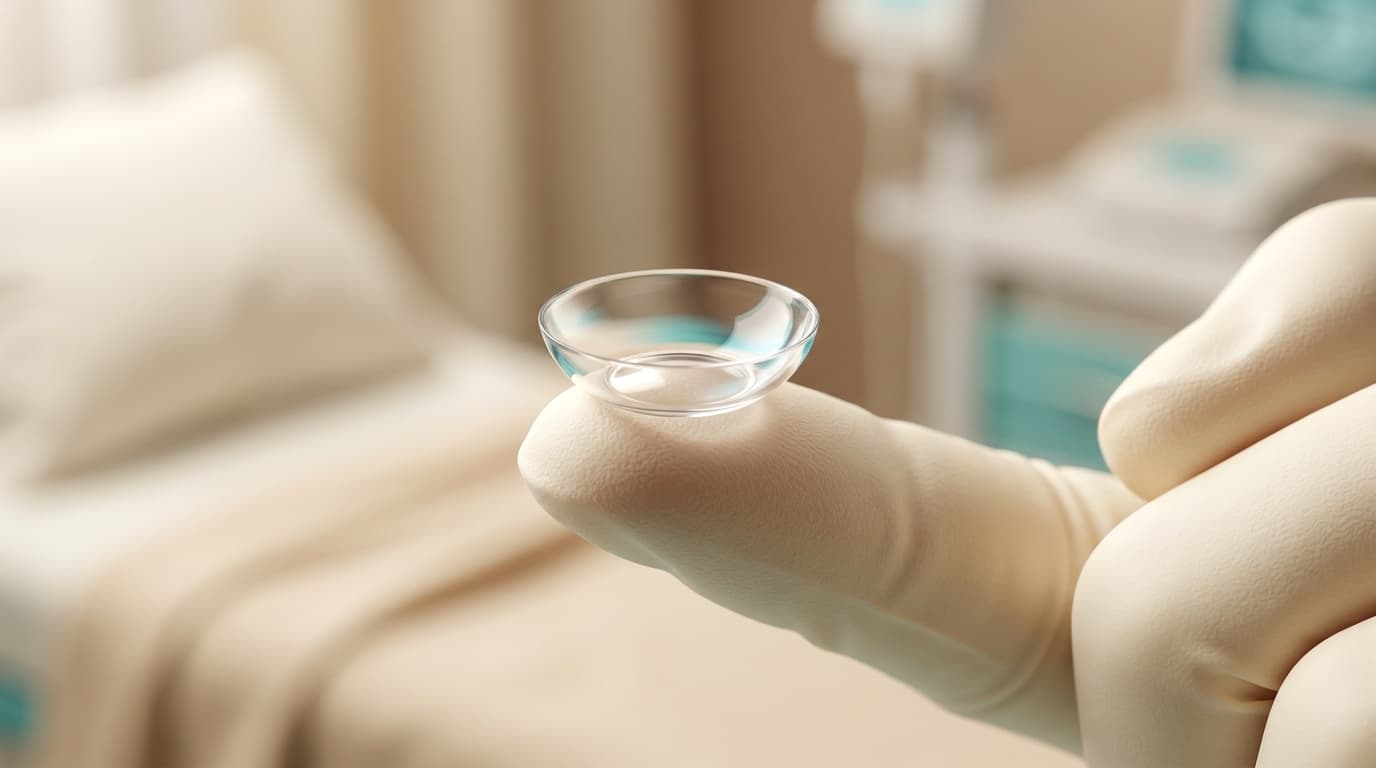
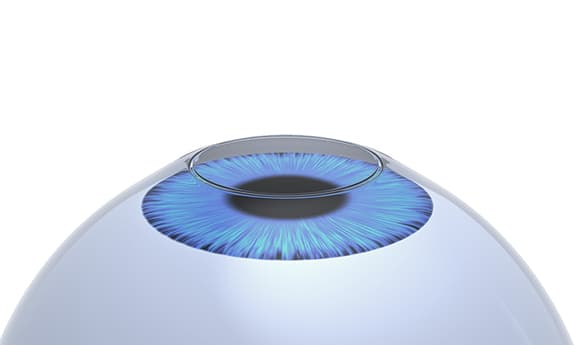
Instead of removing tissue, EVO ICL adds a lens. A soft, biocompatible implantable collamer lens is placed inside the eye, in front of your natural lens, and it does the focusing work your glasses used to do — from inside. Because it isn't limited by how much cornea you can spare, it corrects a far wider range of myopia than any laser. That's the whole reason it shines for high prescriptions: the strength of correction isn't constrained by your corneal thickness.
For my Kuala Lumpur patient, that distinction was everything. At -11, no responsible surgeon was going to laser her cornea. But her eye had healthy depth inside and a good endothelial cell count — so the lens had room to live safely, and her prescription was well within EVO's range.
What the "EVO" actually changed
Patients see "EVO" and assume it's just branding. It isn't only that. The defining update in the EVO generation is a tiny central port in the lens that lets the eye's natural fluid flow through it. Older implantable lenses sometimes needed a separate small procedure on the iris beforehand to keep that fluid moving and pressure balanced. The central port largely folded that step into the lens itself and has been associated with smoother pressure behavior afterward. The fundamental concept — a lens resting inside the eye — is unchanged; the EVO refinement made the surrounding logistics gentler.
Who, among high myopes, is a strong EVO ICL candidate
A high prescription makes you a candidate to assess, not an automatic yes. In the exam room, the high myopes who light up as strong EVO ICL candidates have enough anterior chamber depth for the lens to sit safely, a healthy endothelial cell count, stable prescriptions, and no untreated glaucoma. Pupil size gets weighed too, because larger pupils raise the chance of night glare. When those boxes are checked, EVO ICL is frequently the best vision a strong myope has ever had.
What drives the cost of EVO ICL for high myopia
The price depends on the specific EVO lens model and power your eye requires — and very high prescriptions sometimes need a particular lens range — plus the scope of your follow-up care. At Healing Eye, international patients pay exactly the same fee as Korean patients, with no foreigner mark-up. I won't print a won figure here, because the only accurate number comes after I've measured your eye, and the consultation is free.
The honest limitations for high prescriptions
I won't let the relief of "you're not stuck" turn into overselling. Two honest points for high myopes specifically. First, very strong corrections carry a somewhat higher chance of noticing glare or halos around lights at night, especially in the early months; for most it eases with time and neural adaptation, but you should know it going in. Second — and this has nothing to do with the surgery — highly myopic eyes tend to have thinner, more stretched retinas, which need lifelong monitoring regardless of whether you ever have ICL. I dilate and examine the retina at screening for exactly this reason. Good surgery doesn't end your eye care; it just frees you from glasses.
And the limitation that applies to everyone: I can't confirm any of this from your message. A strong prescription tells me you're worth assessing for EVO ICL — it doesn't tell me your anterior chamber depth or endothelial count. Only an in-person scan does.
If you've been told no elsewhere
If another clinic has turned you away for a high prescription, please don't read that as "surgery is impossible for me." Read it as "laser isn't the right tool for my eyes" — which is a different sentence with a different ending. Send me your prescription, your age, and any eye history, in English on our official WhatsApp or LINE, and I'll give you an honest initial sense of whether EVO ICL is worth flying in for. Plan on at least three days and two nights in Seoul so we can do the next-day check the morning after surgery.
The designer from Kuala Lumpur came in expecting another no. She left with a date on the calendar and, a few weeks later, with the clearest vision of her adult life. I tell her story not as a promise — your eyes are yours and only the exam decides — but because "too high for laser" and "out of options" are not the same thing, and far too many high myopes never learn the difference.
— Dr. Kim Sun-young, Medical Director, Healing Eye Clinic
Frequently asked questions
What counts as high myopia, and why does it change the surgery?
Roughly, high myopia means a strong nearsighted prescription beyond about -6 diopters, and very high beyond about -10. It matters because correcting a strong prescription with laser means removing more corneal tissue — and there's only so much cornea to safely remove. Past a certain point, reshaping the cornea isn't safe, and that's exactly where I turn to EVO ICL instead.
Why is EVO ICL good for high myopia specifically?
Because it doesn't touch the cornea at all. Instead of carving tissue you can't spare, EVO ICL adds a lens inside the eye that corrects a much wider range of nearsightedness than any laser. For strong prescriptions, that means sharp correction without thinning a cornea that's already being asked to do a lot.
What is the difference between EVO ICL and older ICL?
The headline change in EVO is a tiny central port in the lens that lets fluid flow naturally through the eye. Older lenses sometimes required a separate small iris procedure beforehand to maintain that flow; the central port largely removed that step and has been associated with smoother pressure behavior. The core idea — a lens inside the eye — is the same.
Is EVO ICL safe for very high prescriptions?
It's one of the better options precisely for very high prescriptions, but 'safe for you' still depends on your individual measurements — anterior chamber depth, endothelial cell count, and pupil size. A strong prescription makes EVO ICL a strong candidate procedure, but the final yes comes only after I've measured your eye.
Will my vision be perfect after EVO ICL for high myopia?
Most high myopes are genuinely thrilled with the clarity, often the best vision they've had. But I'm honest that very high prescriptions can come with some night glare or halos in the early months, and that the retina in highly myopic eyes needs lifelong attention regardless of surgery. I'd rather set true expectations than oversell a result.
Message us on official LINE / WhatsApp for a special offer
Your exact candidacy and cost are confirmed in a free 1:1 consultation.