EVO ICL Surgery in Korea: The Lens, the Numbers, the Day
EVO ICL surgery in Korea, explained by a Seoul surgeon: what EVO means in the lens design, the measurements behind candidacy, and how surgery day runs.

Dr. Kim Sun-young, Director
Cornea · Glaucoma · Cataract
Contents
I'm Dr. Kim Sun-young, medical director of Healing Eye Clinic in Sinnonhyeon, Gangnam, Seoul. I was a clinical professor of cornea and cataract surgery at a university hospital, and today I see international patients every week, with an English interpreter beside us from the first measurement to the operating room.
A question I get often from abroad goes like this: "Dr. Kim, my clinic at home mentioned EVO ICL. Is that different from regular ICL — and what actually happens on the day?"
If you're reading about evo icl surgery in korea, you're probably trying to picture it before you commit. I understand. A lens inside your eye is a much bigger idea than a laser on its surface.
So let me be honest first: the lens is the easy part to explain; the numbers that decide whether it fits you are what matter. Here is how I walk patients through it — the lens, the numbers, then the day.
What is EVO ICL surgery in Korea, exactly?
ICL stands for implantable Collamer lens. Collamer is a soft, biocompatible material, and the lens is very thin.
It sits between the iris and your own natural lens. No tissue is removed from the cornea, and your natural lens stays exactly where it is. We simply add a lens in front of it.
1. EVO is the lens design
EVO is the current design of the lens. Its key feature is a tiny opening in the centre.
That port lets the fluid inside the eye flow naturally around the lens. With older designs, a small laser opening in the iris was usually made beforehand for that purpose. With EVO, that extra step is usually not needed.
2. It corrects a wide range
Because laser has to remove tissue, it runs into a limit on how much prescription a cornea can carry. ICL doesn't have that limit.
That's why it's my usual answer for very high myopia — often beyond -10D — and for corneas too thin for laser. If you also have astigmatism, the Toric version corrects that too.
3. It can come out again
The lens can be removed or exchanged if it's ever needed. Think of it as adding a pane rather than regrinding the window.
That reversibility is a real reassurance for many patients. It isn't a reason to be casual about it, though — removal is still surgery.
EVO ICL adds a thin lens behind the iris and leaves the cornea and your natural lens untouched. The "EVO" design has a central port that usually removes the need for a laser opening in the iris beforehand.
The numbers that decide whether it fits
This is the part I never rush, and the reason ICL starts with a long exam.
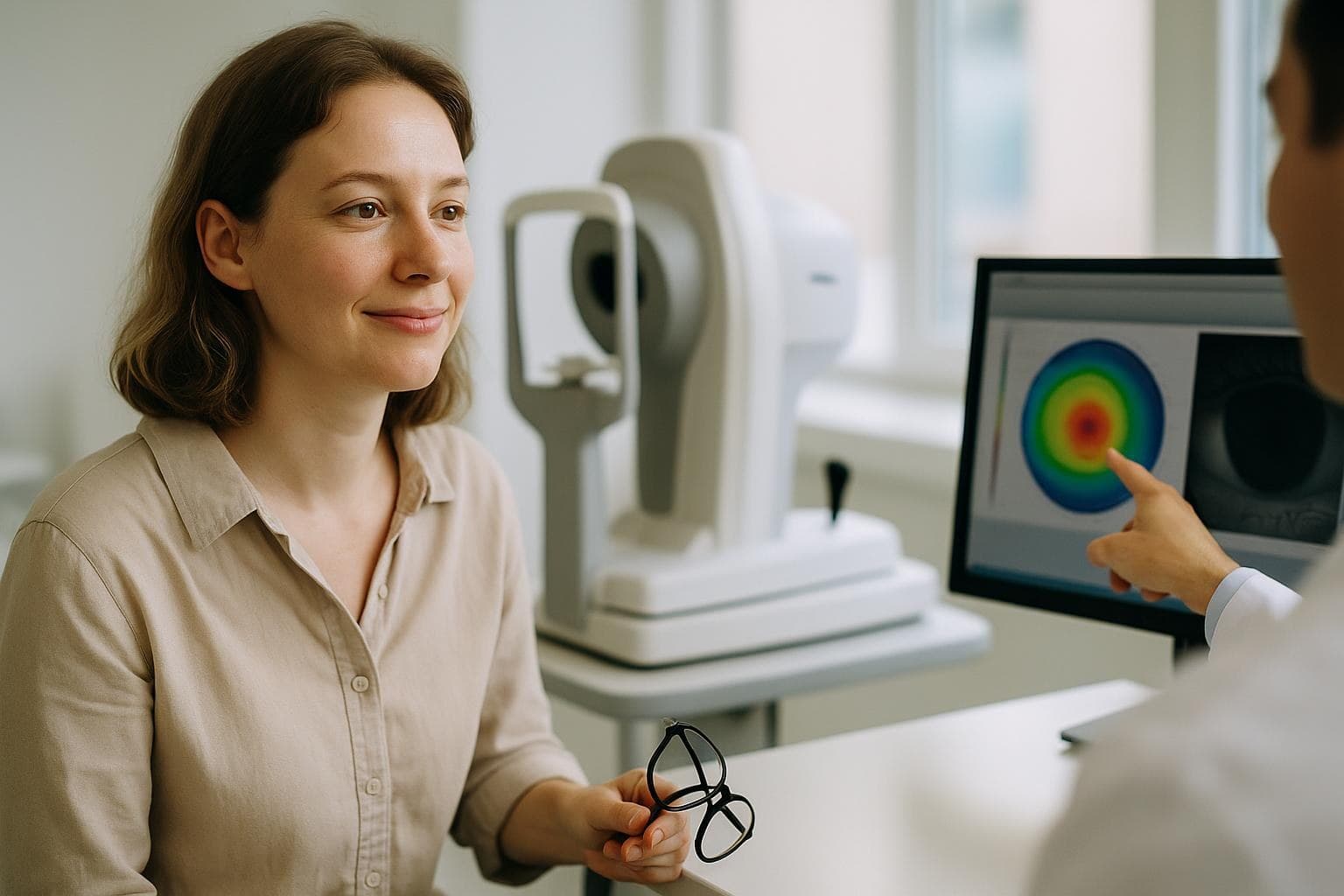
I measure the depth of the chamber the lens sits in, the diameter of the eye from edge to edge, the cell count of the cornea's inner layer, pupil size and eye pressure. Your prescription is measured, of course, but on its own it doesn't settle candidacy.
These figures decide the lens size and power, so that it rests at the right distance from your natural lens and iris and touches neither. If the chamber is shallow or the inner cell count is low, I hold off — whatever the prescription says.
What you can check before trusting us: international patients pay exactly what Korean patients pay, and we hold 4.8 stars from 154 reviews on Google. I'm a full member of the European Society of Cataract and Refractive Surgeons (ESCRS). I'm not listing these to impress you — only so you have something to verify.
How does the surgery day actually run?
Here is the day in order, as it usually goes at our clinic.
| Step | What happens |
|---|---|
| Before | Numbing drops — no needle |
| Opening | A very small incision at the edge of the cornea |
| Lens | Folded, inserted, then unfolded behind the iris |
| Finish | Usually no stitches; both eyes in about 15 minutes |
| Same day | Lens position and eye pressure checked |
| Next day | Position and pressure checked again |
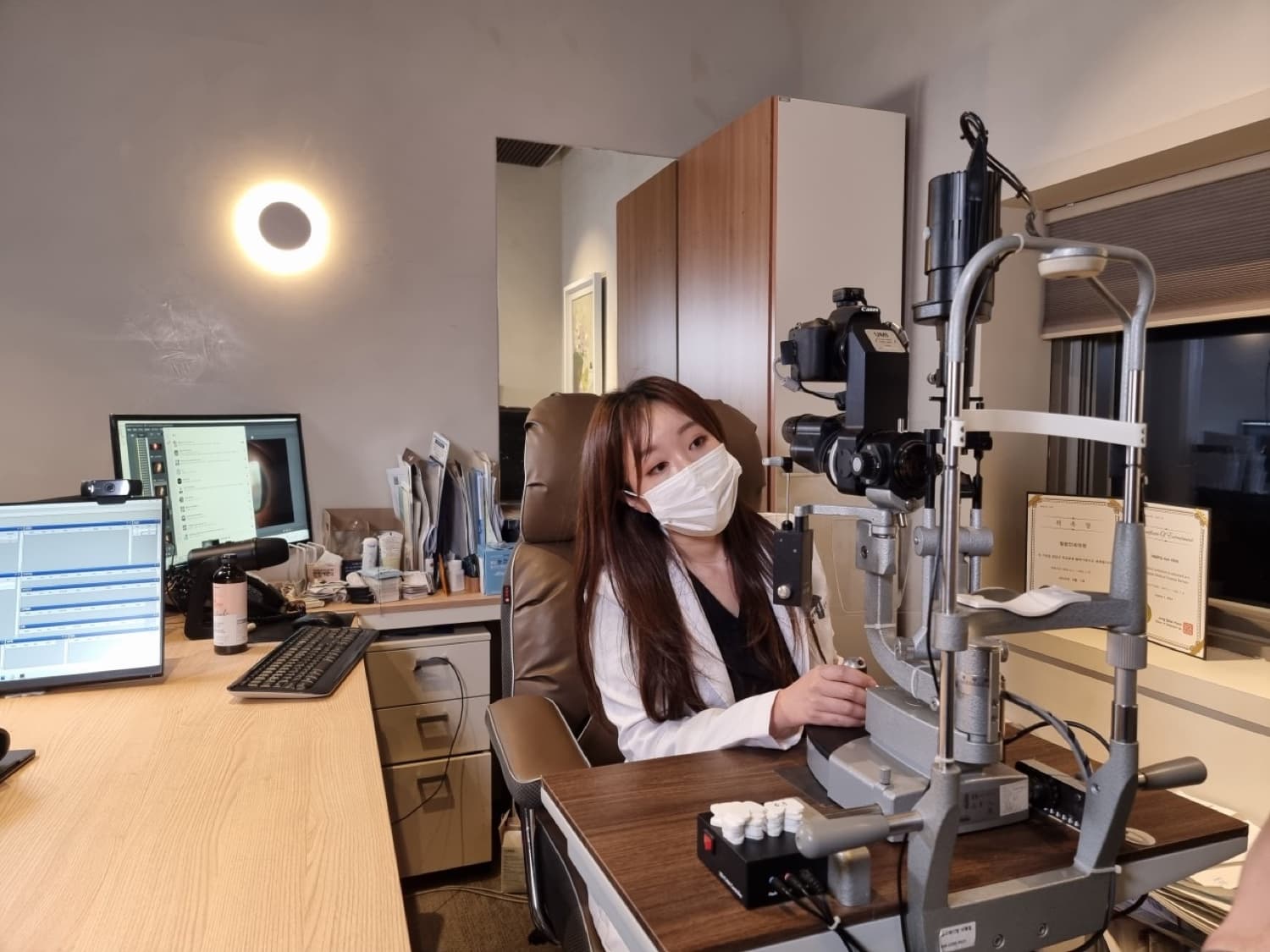
The same surgeon who measured your eye performs the ICL surgery and checks you afterwards. There's no hand-off between people.
Many patients notice clearer vision that same day, and most return to daily life within one to two days. Results and recovery vary from person to person.
What the lens costs, and why it sits above laser, is in EVO ICL surgery cost in Korea. The Korean head office also describes its ICL procedure for local patients.
Side effects, and who I turn away
ICL is surgery inside the eye, and I want you to hear the risks plainly.
- Night glare and halos. Some people notice them early on; many adapt over weeks.
- Eye pressure. That's why it's checked the same day, the next day and periodically afterwards.
- Inflammation or lens position. Uncommon, and the reason for drops on schedule and long-term checks.
I don't recommend ICL when LASIK or LASEK can already correct you safely — I won't push intraocular surgery you don't need. I also hold off with a shallow chamber, a low inner cell count, or glaucoma or uveitis risk factors until we've looked closely.
Planning the trip
- Stay: three to four nights as a base, plus one to two days if your lens has to be ordered.
- Contact lenses: stop at least a week before the exam for soft, longer for rigid.
- First weeks: drops on schedule for one to two weeks; no rubbing; avoid knocks to the eye.
- At home: eye pressure and the cornea's inner cells are checked periodically with your local doctor, using the written record we give you.
The route for a first-timer, from first message to flight home, is in ICL surgery in Korea. The Seoul logistics — airport, hotel, nights — are in ICL surgery in Seoul.
Don't choose the lens yet — choose the measurements
If you take one thing from this page, let it be this: EVO is a good lens design, but the measurements of your eye decide whether it's your answer.
It doesn't have to be our clinic. Choose one that shows you your own chamber depth and cell count, explains your lens size, and tells you when laser would do just as well.
Send us your prescription, your age and your travel window on WhatsApp. If ICL isn't right for your eyes, I'll say so plainly.
I hope to see you in Seoul.
— Dr. Kim Sun-young, Medical Director, Healing Eye Clinic (Sinnonhyeon, Gangnam, Seoul)
Frequently asked questions
What does EVO mean in EVO ICL?
EVO is the current design of the implantable Collamer lens, with a tiny opening in the centre of the lens. That port lets the eye's fluid flow naturally, which is why a separate laser opening in the iris before surgery is usually not needed with this design.
Am I a candidate for EVO ICL?
You may be if your myopia is very high — often beyond -10D — or your cornea is too thin for laser, and your eye has enough room for the lens. Chamber depth, eye diameter, the cornea's inner cell count, pupil size and eye pressure decide it, and only the exam measures them.
How long does EVO ICL surgery take?
Both eyes are usually finished in about fifteen minutes. Numbing drops are used instead of a needle, the lens goes in through a very small opening at the edge of the cornea, and stitches are usually unnecessary.
Does EVO ICL surgery hurt?
Most people feel pressure rather than pain, because the eye is numbed with drops. A brief foreign-body sensation or light sensitivity afterwards is common and usually settles quickly. Experiences vary from person to person.
When can I see clearly after EVO ICL?
Many patients notice clearer vision on the day itself, and most return to daily life within one to two days. Because the cornea isn't reshaped, vision tends to clear quickly, though night glare can take longer to settle.
Can an EVO ICL be removed?
Yes. The lens can be taken out or exchanged if it is ever needed, because your own natural lens and cornea are left in place. That reversibility is one of the main reasons people choose ICL.
Message us on official LINE / WhatsApp for a special offer
Your exact candidacy and cost are confirmed in a free 1:1 consultation.