How to Prepare for LASIK: Start With What Rules You Out
How to prepare for LASIK: bring dated prescriptions, pause contacts as told, and learn which exam numbers rule you out before you fly to Seoul.

MS, Catholic Univ. College of Medicine · Ophthalmology specialist, Catholic Medical Center · Clinical Professor (Cornea & Cataract), Uijeongbu St. Mary's Hospital · 108th Korean Ophthalmological Society Research Award · KDCA epidemiology citation
Medically reviewed byDr. Kim Sun-young, Director· Medical Director
Edited by: Dr. Kim Sun-young
Contents
Wondering how to prepare for LASIK in Seoul when the surgeon at home has already called your eyes 'borderline'? Most of the work happens before you book the flight. Switch from contacts to glasses for the period you're given, gather old prescriptions that show your eyes have held still, and expect the exam to choose between LASIK, another method or no surgery at all. Preparing well means being ready for any of those three answers.
Hello, I'm Dr. Kim Sun-young, Medical Director at Healing Eye Clinic in Gangnam. My background is cornea and cataract (Clinical Professor, Uijeongbu St. Mary's Hospital), and borderline eyes get decided on exactly that ground. For Clear SMILE LASIK and our other laser options, one dedicated surgeon stays with you from the exam through surgery and aftercare. You get a medical interpreter at no extra charge, and foreign patients pay the same price as Korean patients.
If you still have the printout from the exam that worried you, a phone photo of the corneal thickness and topography pages is enough to start. Send it on WhatsApp with your current glasses prescription.
Which exam numbers decide whether LASIK is even on the table?
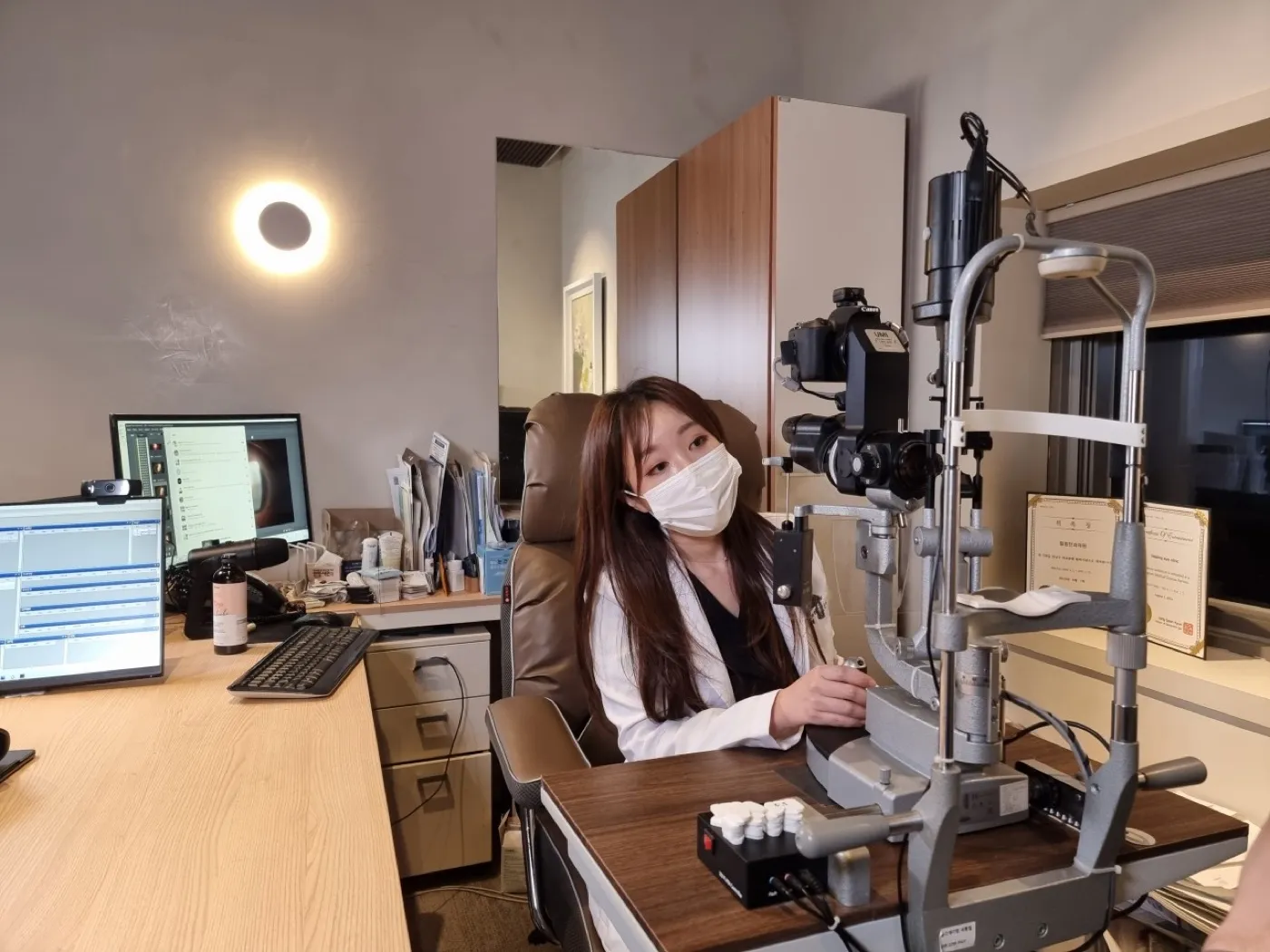
Preparing for LASIK is mostly preparing for a measurement. The pre-op exam runs to around 20 tests, and then your surgeon goes through the results and the plan with you and an interpreter. Five of those results do most of the deciding.
| What's measured | What it tells me | When it changes the plan |
|---|---|---|
| Corneal thickness | How much cornea would remain after your correction | Thin for the prescription: LASEK or ICL may be safer |
| Corneal topography | The shape of the cornea, point by point | Irregular steepening or signs of keratoconus: laser may be ruled out |
| Prescription history | Whether your eyes are still changing | Changed within about a year: wait |
| Tear film | How dry your eyes already are | Severe dry eye: treat it first |
| Pupil size in dim light | How wide the pupil opens at night | Large pupils: night glare gets more weight in the design |
Think of the cornea as a door you plane down so it closes properly. Taking off a little wood is fine. Take off more than the door can spare and it warps. In the same way, -8.00 D on a cornea that is already on the thin side is a different conversation from -3.00 D on that same cornea. I've written separately about how strong a prescription can be before LASIK stops making sense.
One tip if you were turned down at home: ask that clinic for copies of the topography and thickness printouts before your trip. Two maps taken months apart that agree with each other tell me far more than a single map, and a change between them is worth knowing about before you fly.
Ask whether this applies to your eyes, which dates are open, and about the English interpreter.
Ask us on WhatsAppWhat should you change in the weeks before the trip?
Three things: stop contact lenses for the period you're told, collect proof that your prescription has been stable, and write down every medicine and health condition you have. Each one changes what the exam can see.
Contact lenses press on the cornea and reshape it slightly for a while, so a map taken too soon after wearing them shows a cornea that isn't quite yours. The US Food and Drug Administration's patient guidance asks LASIK candidates to stop contacts and wear glasses full time before the baseline exam, and rigid lenses need a longer break than soft ones. Confirm the exact number of days for your lens type at your consultation, before you buy the ticket, and board the plane in glasses.
For stability, dig out old glasses prescriptions with dates on them, even an optician's receipt. Laser surgery generally needs a prescription that has held for about a year, and dated paperwork is the quickest way to show it.
Then make the list: pregnancy or breastfeeding, autoimmune conditions, diabetes, past eye injuries or eye surgery, and medicines that can slow healing, such as isotretinoin for acne or long-term steroids. Don't stop any of them on your own. Some only change the timing; others change which surgery makes sense.
On surgery day, skip eye makeup, face cream and perfume around the eyes. Pack sunglasses and artificial tears in your carry-on, because cabin air is dry and the drops are meant to be used often on the flight home.
When I'd tell you LASIK isn't the right surgery
If your cornea is thin for your prescription, or the topography shows early signs of keratoconus, I won't offer LASIK. I'll explain the alternatives the same day, and they are real options here.
LASEK reshapes the surface of the cornea and leaves more of its depth untouched; the trade is a slower, more uncomfortable first few days. Clear SMILE LASIK removes a thin lens of tissue through one small incision and keeps more of the corneal nerves, which suits some people who already have mild dryness. For very high myopia, an implantable lens (ICL) corrects vision without reshaping the cornea at all.
Dry eyes and dry eye: what to watch for
If your tear film is already poor, read about the trade-offs of LASIK with dry eyes first. With severe dry eye we may treat it first, and we have a dry-eye clinic for that. If you've had LASIK or LASEK before, bring the old surgery record: we run a dedicated revision center for eyes whose vision declined or became uncomfortable after surgery elsewhere.
Say you're 33, an ICU nurse in Manchester, at -7.50 D with astigmatism in both eyes, and your local clinic said your corneas were 'on the thin side' without giving you the numbers. The number that settles it is the thickness, read next to your prescription. If the cornea left after the correction is comfortably enough, the question becomes which laser fits your night shifts and the dry air on the ward.
If it isn't, I'd talk to you about ICL rather than squeezing a laser in, and you'd have that answer at the exam, well before surgery day.

If ICL or LASEK has already been mentioned to you, put that in your WhatsApp message along with your travel dates. Then ask what your numbers would need to show for laser to stay on the table.
Dryness, glare and regression: what to expect and who should wait
On surgery day some foreign-body feeling and light sensitivity are normal, and they usually settle quickly. Dryness is the most common complaint over the following weeks, sometimes months. Halos or glare around lights at night tend to be strongest early and ease for many people as the cornea enters a stable phase around the first month. With higher prescriptions, a small drift back toward short-sightedness (regression) can happen and may need glasses or a further procedure later. How strongly you notice any of this varies from person to person.
Who should wait, or skip laser altogether:
Risks and side effects to know
- Your prescription has changed within about the last year
- You're pregnant or breastfeeding
- You have severe dry eye that hasn't been treated yet
- Your corneas are thin or the topography shows signs of keratoconus
- You have an autoimmune disease or take medicine that slows healing, until it's been discussed
Before you leave Seoul, you're prescribed enough post-op medication to take home, and the ingredients are explained so a pharmacy at home can find an equivalent if needed. You can check in with us by email or video call. If you need to be seen locally, you get a referral letter for your eye doctor at home. Pain that's getting worse, a sudden drop in vision or redness that keeps increasing are reasons to see a local eye doctor that day, then message us with what they found.
How do your days in Seoul fit around the exam?
If your results allow it, the exam is in the morning, surgery in the afternoon and the check-up the next day, so the shortest plan is two days. Confirm how long you'll actually stay in the consultation. Flying is allowed from the day after surgery, once that check-up is done.
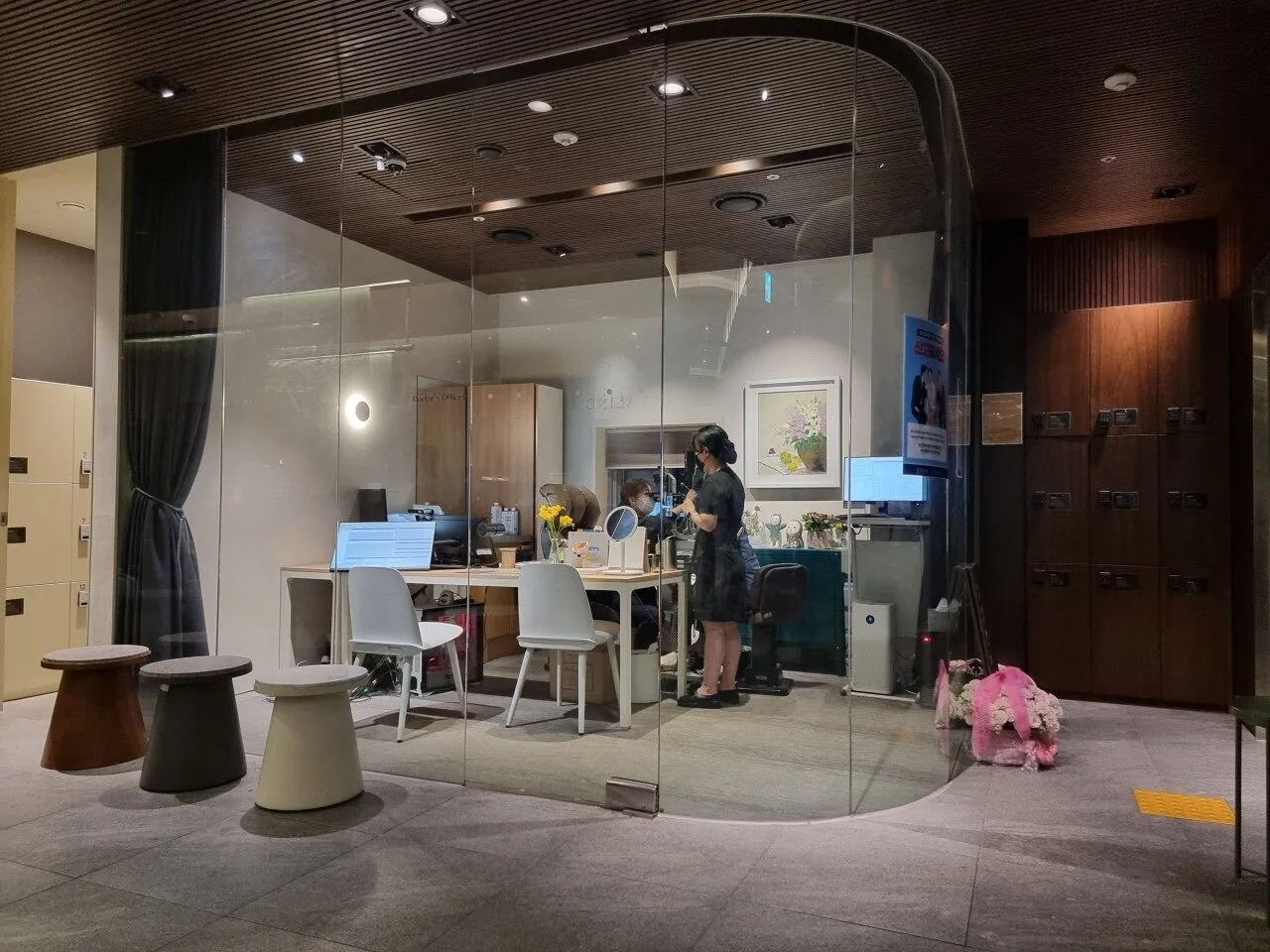
Try not to land on the morning of your exam. The clinic is a minute's walk from Sinnonhyeon Station and about 70 minutes from Incheon Airport, and our partner hotel, the O'Cloud Hotel, is in Seocho-gu.
Hours are Monday to Thursday 10:00–18:30, Friday until 21:00 and Saturday 10:00–14:00, with lunch from 13:00 to 14:00. Sundays and public holidays are closed.
The detailed pre-op exam is charged separately from surgery. The deposit and payment method are settled after the consultation, so ask about them in the same message as your dates. If you're comparing several quotes, what to check in a SMILE LASIK quote in Korea goes through the line items.
What should you ask any clinic before booking?
You can take these questions to any clinic in Seoul, ours included:
- Is the doctor who examines me the one who operates and sees me afterwards?
- Does the pre-op exam measure corneal thickness, topography, tear film and pupil size?
- If LASIK doesn't suit me, which alternatives can you do in-house?
- What medication do I leave with, and how do follow-ups work once I'm home?
- Will an interpreter explain my results, and do foreign patients pay the same price as local ones?
There's more on this in how to judge a LASIK clinic in Korea. Healing Eye Clinic's English site lists our treatments and hours, and the Korean-language Clear SMILE LASIK page on our Seoul main site describes the same procedure in Korean.
My view on how to prepare for LASIK is that the weeks before the trip matter less for the surgery than for the measurement. Clean numbers let me tell you yes, no or not yet, and a 'not yet' in the exam room is far better than a rushed yes. You don't have to decide any of this this month.
Send a photo of your glasses prescription and any exam printouts on WhatsApp, along with the month you're thinking of traveling, and ask whether your contact-lens break and your stay would fit around it. Your case comes down to how much cornea your correction would leave, and you'll go through that number with me and the interpreter at Healing Eye Clinic, 470 Gangnam-daero, 10–11F, Gangnam-gu, Seoul.
— Dr. Kim Sun-young, Medical Director
Frequently asked questions
Can I fly to Seoul in contacts and switch to glasses when I arrive?
No. The contact-lens break has to be finished before the exam, so switch to glasses at home and fly in them. Rigid lenses need a longer break than soft ones. Confirm the exact days for your lens type at the consultation, before you book flights.
Is the pre-op exam included in the surgery price?
The detailed pre-op exam is charged separately from surgery, and foreign patients pay the same as Korean patients. To find out what it would cost in your case, ask on WhatsApp and include your prescription.
I had LASIK years ago and my vision has drifted. Do I prepare differently?
Bring the old surgery record and any measurements from it. Healing Eye runs a dedicated revision center for eyes that changed after surgery elsewhere. A second laser treatment isn't always possible, because it depends on how much cornea is left.
Should I stop my regular medicines before LASIK?
Don't stop anything on your own. List every medicine you take, including acne treatment, steroids and drugs for autoimmune conditions. Some of them slow corneal healing and can change the timing or the choice of surgery.
Can I get an opinion before I book flights?
Yes. If you send existing exam records or photos, you can get a first opinion on suitability by video or online consultation. The final decision comes from the full exam in Seoul, because measurements taken on your eyes that day are what the surgery plan is built on.
Questions about your own case or available dates? English interpreter on site.
Ask us on WhatsAppMessage us on official LINE / WhatsApp for a special offer
Your exact candidacy and cost are confirmed in a free 1:1 consultation.