Is EVO ICL Surgery Painful? 3 Mistakes That Make It Worse
Is EVO ICL surgery painful? Numbing drops block sharp pain; you feel pressure, then a gritty eye for a day. A Seoul surgeon names 3 mistakes to avoid.

MS, Catholic Univ. College of Medicine · Ophthalmology specialist, Catholic Medical Center · Clinical Professor (Cornea & Cataract), Uijeongbu St. Mary's Hospital · 108th Korean Ophthalmological Society Research Award · KDCA epidemiology citation
Medically reviewed byDr. Kim Sun-young, Director· Medical Director
Edited by: Dr. Kim Sun-young
Contents
“Will I feel it when the lens goes in?” People usually ask that first about ICL, and the thought behind it is harder to say out loud: is EVO ICL surgery painful enough that I'll spend the night in a Seoul hotel, far from my own eye doctor, with an eye that won't stop aching? For most people it isn't. Numbing drops block sharp pain, so you feel pressure for a few minutes, then a gritty, light-sensitive eye that usually eases by the next morning.
Hello, I'm Dr. Kim Sun-young, Medical Director of Healing Eye Clinic in Gangnam. My field is cornea, glaucoma and cataract, and I was a clinical professor of cornea and cataract at Uijeongbu St. Mary's Hospital. That background matters if you were told at home that your corneas are too thin for laser and ICL (implantable lens) came up instead. Here the same surgeon does your exam, your surgery and your aftercare, so the doctor checking your eye pressure the next morning is the one who measured it before. You'll also have a medical interpreter for your language at no extra charge, which helps when you need to describe exactly where it aches.
If you have a recent eye-exam printout or glasses prescription, send a photo of it on WhatsApp with your question, for example whether a prescription like yours usually points to ICL or to laser. The consultation on WhatsApp is free, and you can ask before you book anything.
Is EVO ICL surgery painful while it's happening?
During the operation, most people notice pressure and bright light, and little else. Before anything touches the eye, it's numbed with anesthetic drops. A small holder keeps your lids open, you look at a light, and the folded lens goes in through an opening a few millimeters wide, then unfolds behind the iris, in front of your own lens.
ICL works without reshaping the cornea. That means there's no raw corneal surface left to sting afterward, which is the main source of pain after surface laser.
The closest everyday comparison is a filling at the dentist under local anesthetic: you feel the push and the movement, but the sharp part never reaches you. The difference is time. The operation here takes about 15 minutes for both eyes, and the moment most people remember is a few seconds of firm pressure while the lens is positioned.
Some surgeons add a mild sedative for very nervous patients. If that would help you, ask about it at your consultation. Many people say the lid holder bothered them more than anything that happened inside the eye.
Ask whether this applies to your eyes, which dates are open, and about the English interpreter.
Ask us on WhatsAppWhat does the first night after ICL feel like?
Once the drops wear off, expect a scratchy, something-in-the-eye feeling, watering and sensitivity to light. Vision is often hazy for the first few hours, and lights at night can have rings around them. Sunglasses, the prescribed drops and an early night are usually all it takes.
By the next morning, most people find their vision has come back. At the next-day visit I check where the lens sits and what your eye pressure is, because those two numbers tell me more about the eye than how it feels. Most people are back to ordinary daily life within one to two days, with eye drops continuing for about a month.
Mild soreness can usually be handled with a standard over-the-counter pain reliever if your surgeon agrees. Pain that builds through the evening is a different matter, and it gets its own section below.
Does ICL hurt more than LASIK or LASEK?
Usually not. Of the options I offer, surface laser (LASEK) tends to be the sorest for the first few days, because the outer layer of the cornea has to grow back over the treated area. LASIK and SMILE are typically uncomfortable for hours rather than days. ICL sits with that second group: the discomfort is short.
Where ICL differs is the kind of risk, not the amount of pain. Because the lens sits inside the eye, the concerns are eye pressure, infection, the cells lining the back of the cornea and, years later, cataract. Laser stays on the surface but removes corneal tissue, and in a thin or irregular cornea that can raise the chance of the cornea weakening, as well as dry eye. I've laid out the wider pros and cons of ICL for first-time patients in a separate post.
I don't recommend a surgery for its own sake. If your cornea has room for laser and your prescription is stable, laser may fit your eyes better. If it doesn't, ICL leaves the cornea untouched.
Three mistakes that make ICL recovery hurt more
Most of the avoidable discomfort after ICL comes from three things people do in the first weeks. Here is each one, and what to do instead.
1. Rubbing or pressing the eye
An itchy, gritty eye invites rubbing, and sleeping face-down presses on it all night. With a lens inside the eye, that pressure is exactly what you want to avoid. For one month, don't press or rub your eyes and don't sleep on your face. Wear the protective shield at night for the first one to two weeks, and when the itch builds, reach for the prescribed drops instead of your knuckle.
2. Calling a deep ache with a headache “normal soreness”
Surface grit is expected. A deep, dull ache in or behind the eye is not, especially with a headache, nausea, worsening blur or strong halos, because it can mean eye pressure is rising. People in a foreign city tend to sleep on it. Instead, contact the clinic that same day, and if it's outside clinic hours or you're already home, go to an eye emergency service.
3. Letting water, makeup or a missed drop into the first week
Tap water, eye makeup and a skipped drop schedule can turn a calm eye red and sore. Wait until day three to wash your face, shower normally and use basic skincare, and a full week for eye makeup. Swimming, contact sports and alcohol wait one month, and heavy drinking two months. Keep the drops going for the full course, about a month, even after the eye feels fine.
Which pain after ICL means pressure or infection?
Grit, watering, light sensitivity and rings around lights at night are the usual temporary effects. The grit tends to fade within a day or two. Night halos can take weeks to settle, partly because the pupil widens in the dark.
Less common is a rise in eye pressure in the early days, which is why it's measured at the next-day visit. Inflammation inside the eye can make it red and achy and is treated with drops. Rare but serious is infection inside the eye: pain, redness and falling vision that get worse a few days after surgery instead of better. That needs same-day care, wherever you are.
Some risks don't hurt at all, which is why checkups matter more than how the eye feels. The U.S. Food and Drug Administration lists loss of the cells lining the back of the cornea, cataract, raised eye pressure and glaucoma, and retinal detachment among the risks of phakic lenses like ICL. Cell loss is silent, so I ask everyone with an ICL to come back once a year to have those cells counted. How any one eye heals varies from person to person, and the exam is where that gets judged.
These are general reasons to hold off on ICL or skip it:
- Your prescription is still changing from year to year.
- The space in front of the iris (the anterior chamber) is shallow, leaving too little room for the lens.
- Your count of corneal lining cells is already low.
- You have active inflammation in the eye, uncontrolled glaucoma or diabetic eye disease.
- You're pregnant or breastfeeding, when a prescription can shift.
Age changes the picture too, because a natural lens eventually clouds into a cataract. If you're past 40, I've written about the checks worth making before ICL over 40.
After the flight home: who checks your eye
The ICL schedule here is the exam, the surgery and a next-day check, with one or two extra days if your lens has to be ordered. Confirm your dates at consultation before you buy the ticket. Check-ups after that fall at one week, one month and three months, then every six months, and the yearly count of corneal lining cells continues for as long as the lens is in.
Most of those visits happen at home. You can have them with a local ophthalmologist, and I provide your surgery record so they know which lens is in your eye and how it was placed. Book that local appointment before you fly to Seoul. Eye clinic waits can run long, and the one-week check is the one you least want to miss.
Your surgeon in Seoul stays the same person throughout, so a question after you're home goes back to the doctor who did your exam and your operation. Hours and directions are on Healing Eye Clinic's English homepage: Monday to Thursday 10:00–18:30, Friday until 21:00, Saturday 10:00–14:00, Korean time, closed Sundays and public holidays. Pain that can't wait for those hours goes to an eye emergency service near you.
For the lens itself and how surgery day runs, see EVO ICL in Korea: the lens and the day. If cost is still part of your decision, what the EVO ICL price pays for walks through the factors. Our main clinic in Korea also has a Korean-language ICL page covering the same procedure.
Where I stand on ICL pain
For most eyes, pain is the small part of the ICL decision. The part that deserves your time is whether your eye has room for the lens and whether your prescription has settled, and a good result begins in the exam room, not on surgery day. If ICL isn't right for you, I'll say so and explain the alternatives. There's no reason to decide this month. A lens that can stay in your eye until a cataract one day needs attention is worth a slower choice.
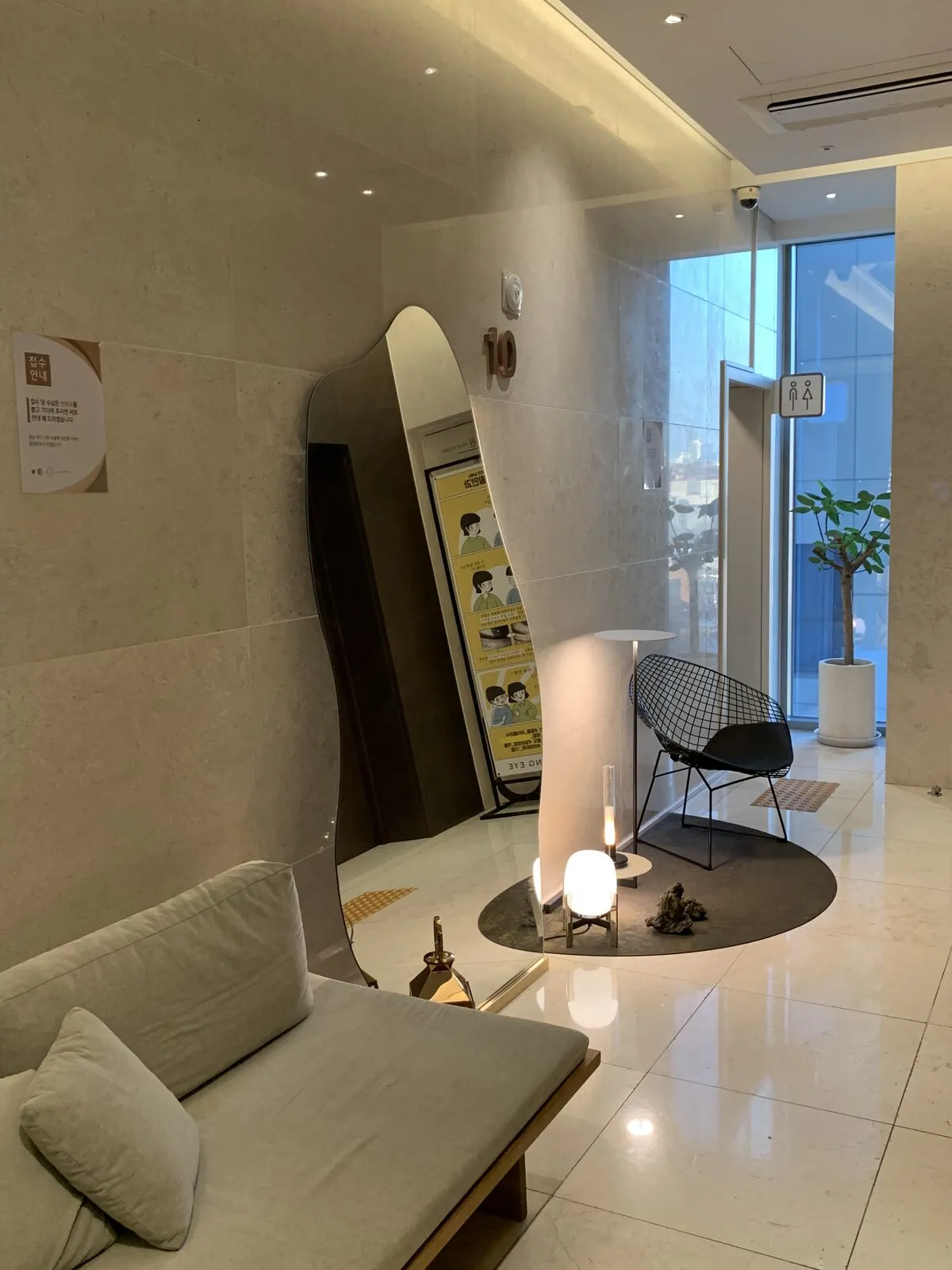
Healing Eye Clinic is at 470 Gangnam-daero, 10–11F, Gangnam-gu, Seoul, one minute on foot from Sinnonhyeon Station. When you're ready, send that same photo of your eye-exam printout or prescription on WhatsApp, with your question about whether numbers like yours point to ICL. The consultation there is free.
— Dr. Kim Sun-young, Medical Director
Frequently asked questions
Will I be awake during ICL?
Yes. ICL is usually done with numbing drops while you're awake and looking at a light, and here the operation takes about 15 minutes for both eyes. If nerves bother you more than the thought of pain, ask at your consultation whether a mild sedative is an option.
Can I fly home the day after ICL?
The schedule is exam, surgery and a next-day check, plus one or two days if your lens needs ordering. Plan the flight for after that next-day check, once lens position and eye pressure have been looked at, and confirm dates at consultation. Keep your drops in your carry-on, because cabin air dries the eye and dryness makes you want to rub.
Does Toric ICL feel different from regular ICL?
The feeling during and after surgery is much the same. A Toric ICL also corrects astigmatism, so it has to sit at a set angle. That's one more reason to avoid rubbing in the first month, since pressure on the eye can nudge the lens.
Is the eye pressure check after ICL uncomfortable?
Hardly. It's an air puff or a light touch of a probe after numbing drops, and it takes seconds. At most it startles you. It's also the test that catches the one kind of post-ICL pain that matters most.
If something goes wrong, can the lens come out?
Yes. ICL is reversible, and the lens can be removed or exchanged if needed. Removal is another operation inside the eye, so it isn't done casually. One reason for it is the corneal lining cells: if their count falls below 2,000 per square millimeter, the lens is taken out.
How long do halos at night last after ICL?
Rings around lights are common in the first weeks and tend to fade as the eye settles. Pupil size in dim light plays a part. If they're still strong after a few months, raise it at a check-up, because lens position and size can be looked at again.
Questions about your own case or available dates? English interpreter on site.
Ask us on WhatsAppMessage us on official LINE / WhatsApp for a special offer
Your exact candidacy and cost are confirmed in a free 1:1 consultation.